
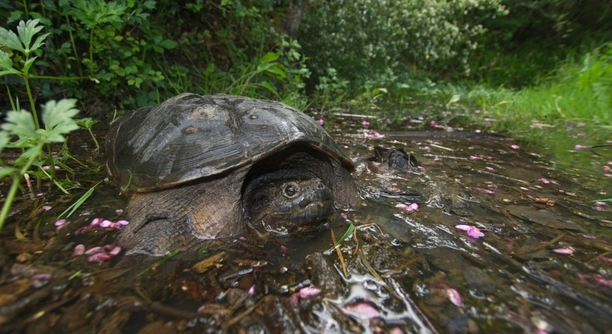
Common snapping turtles are fascinating creatures. Their behavior and interactions with humans often spark curiosity. Some wonder if these turtles can recognize different people and form connections with specific individuals over time.
Research suggests that while snapping turtles are not known to recognize individual humans like pets such as dogs or cats, they may respond to consistent interaction. Familiarity with certain stimuli, such as appearance and scent, could influence their behavior.
Understanding the nuances of turtle behavior can provide valuable insight into their interaction patterns. This article will explore how these creatures perceive their environment and human presence.
Understanding Snapping Turtle Behavior
Snapping turtles are solitary creatures, often found in freshwater habitats. Their behavior is influenced by their environment, food sources, and potential threats. While they do not form emotional bonds like pets, they can learn to associate certain people with food or other stimuli. In many cases, turtles may approach humans because they expect food, especially if they have been fed regularly by someone. The way they react can be different based on their past experiences, making their behavior somewhat predictable in certain situations.
These turtles have strong senses, particularly when it comes to smell and vision. They may be able to recognize certain human features or scents, even if they don’t show the same level of attachment seen in other animals. They are also known to be territorial and may react defensively if they feel threatened.
Understanding how snapping turtles react to humans requires careful observation. The key to predicting their responses lies in recognizing the patterns of interaction they establish based on prior encounters.
Do Snapping Turtles Show Recognition?
Snapping turtles are capable of recognizing specific stimuli, such as food and familiar surroundings, but they do not seem to recognize individual people. Their ability to distinguish between different humans is likely limited.
However, there are observations of turtles becoming accustomed to certain individuals. A turtle may begin to approach a person more readily if that person is associated with regular feeding. While this doesn’t signify recognition in the way humans experience it, it does demonstrate that snapping turtles are sensitive to consistent environmental factors. Their responses to humans may also vary based on previous experiences, including the treatment they received from other people.
Despite their apparent ability to recognize patterns, snapping turtles do not appear to form personal connections. They are more likely to respond to stimuli like food or repetitive actions, rather than to the specific identity of a person. The lack of emotional attachment to humans sets them apart from more commonly domesticated animals.
Can Snapping Turtles Recognize People?
Snapping turtles have the capacity to respond to familiar stimuli, such as food or specific environments. However, they don’t show the same level of recognition that domesticated animals do.
These turtles are driven primarily by their instincts and the need for survival. While they might become more comfortable around specific people due to consistent interactions, they don’t form lasting bonds or have an understanding of individuals. Their behavior is more linked to the routine of being fed or the environment they are placed in. Turtles are generally not social animals, and their actions are driven by self-preservation rather than emotional connections.
Recognizing a person would require a level of cognitive ability that snapping turtles do not possess. Instead, their actions are more directly tied to environmental factors. For instance, they may recognize certain movements or sounds associated with feeding but will not associate these cues with specific people. Their behavior towards humans is based on what they have learned to expect, not personal identification.
Are Snapping Turtles Territorial?
Snapping turtles are territorial by nature. They tend to establish their space in a particular area, especially during nesting season or when there is an abundance of food.
This territorial behavior is a way of ensuring they have access to resources such as food, shelter, and mates. When they feel their space is being threatened, they can become more aggressive, and their behavior towards other animals or humans may shift to a defensive stance. This territorial instinct is often more pronounced in males during breeding periods, as they are more protective of areas that provide ideal nesting grounds. Snapping turtles can also be more defensive around their favorite feeding spots, exhibiting aggression towards intruders.
Even though snapping turtles do not have complex social relationships, their territorial nature is evident. A turtle may retreat into its shell or become aggressive if it feels its territory is being encroached upon. This defensive behavior is essential for their survival, as it ensures they have a safe space to thrive.
The Role of Food in Snapping Turtle Interactions
Food plays a significant role in how snapping turtles interact with humans. They are quick to associate the presence of people with the expectation of a meal.
This connection is especially strong if the turtle has been regularly fed by a specific person. The turtle will likely begin to approach them when they sense food, as it has learned that these individuals are linked to food sources. This learned behavior is an important factor in human-turtle interactions, although it does not indicate true recognition of the person.
Snapping Turtle Responses to Repeated Interactions
Repeated interactions can influence how a snapping turtle behaves, but this effect is usually linked to feeding rather than familiarity with a person. Over time, the turtle might learn to associate a particular human with food, leading it to approach more readily. However, this is based on a pattern rather than an emotional connection.
Snapping turtles do not seem to form attachments to humans. Their behavior is primarily driven by the expectation of food rather than any recognition of specific individuals. A turtle will respond similarly to anyone who consistently offers food, regardless of whether they have seen that person before. Therefore, the turtle’s behavior is driven by learned associations rather than personal recognition.
Snapping Turtle Interaction with Other Species
Snapping turtles tend to keep to themselves, and their interactions with other species are usually minimal. They are solitary creatures by nature and prefer to maintain distance from both their own kind and other animals. While they might share territory with other wildlife, their approach to coexistence is largely indifferent.
In cases where snapping turtles encounter other species, they are likely to be defensive, particularly if they feel their space is being encroached upon. They will often retreat into their shells or display aggressive behaviors to ward off threats. These interactions tend to be brief, as snapping turtles are not social animals. Their primary concern is ensuring their safety and access to resources.
FAQ
Can snapping turtles recognize people?
Snapping turtles do not recognize people in the way dogs or cats do. They may learn to associate certain humans with food or other stimuli, but their behavior is based on patterns rather than identification. Turtles are driven by instinct, and their interactions are more about food or territory than emotional recognition.
How do snapping turtles interact with humans?
Snapping turtles tend to be cautious around humans. If they associate a person with food, they may become more approachable. However, their behavior will usually stay neutral unless they expect something. Turtles are not social animals, so any human interaction is often centered around feeding or environmental cues.
Do snapping turtles get attached to humans?
No, snapping turtles do not form attachments to humans. While they may recognize a pattern associated with feeding, they do not develop emotional bonds like dogs or cats. They are solitary creatures and focus primarily on survival, including finding food and maintaining their territory.
Why do snapping turtles approach humans?
Snapping turtles often approach humans because they associate them with food. If a person regularly feeds a turtle, the turtle may begin to approach them more frequently. This behavior is based on learned expectations rather than any emotional attachment or recognition of the person.
Do snapping turtles remember humans?
Snapping turtles do not have long-term memory in the way that some other animals do. They may remember a human for short periods if that person is consistently present and provides food, but this is based more on learned behavior than memory or recognition.
Are snapping turtles aggressive toward humans?
Snapping turtles can be aggressive if they feel threatened. If a human gets too close or tries to handle them, the turtle may respond defensively. They may snap or bite to protect themselves. However, if left undisturbed, snapping turtles are usually not aggressive and prefer to stay away from humans.
How long do snapping turtles live?
Snapping turtles have a long lifespan, often living between 30 and 50 years in the wild, with some reaching over 100 years. Their life expectancy can be influenced by environmental factors, such as food availability and the absence of predators. In captivity, they may live slightly longer due to controlled conditions.
Do snapping turtles form social bonds?
No, snapping turtles do not form social bonds. They are solitary animals and tend to avoid interaction with other turtles unless necessary, such as during mating or territorial disputes. They do not seek companionship and are content living alone in their habitats.
Can snapping turtles recognize their owners?
While snapping turtles can become accustomed to people, they do not recognize owners in the traditional sense. If a person feeds a turtle regularly, the turtle may associate them with food but will not form a deeper connection or recognize them as an “owner.”
What should you do if a snapping turtle attacks you?
If a snapping turtle attacks, the best course of action is to back away slowly. These turtles can be very protective and may lash out if they feel threatened. Avoid making sudden movements and give the turtle space to retreat back into its shell if it chooses to.
Do snapping turtles bite humans?
Snapping turtles can bite if they feel threatened or provoked. Their powerful jaws are capable of inflicting significant damage, and they are known for their quick, snapping motions. It’s best to avoid handling them or getting too close unless necessary.
What is the diet of a snapping turtle?
Snapping turtles are omnivores and eat a variety of foods. Their diet includes fish, aquatic plants, insects, and small amphibians. They are opportunistic feeders and will consume whatever is available in their environment. This flexibility in diet helps them thrive in various habitats.
Do snapping turtles need special care in captivity?
Yes, snapping turtles require specific care in captivity. They need a spacious tank with both water and land areas. The water should be kept clean, and they need UV lighting to ensure proper health. Additionally, their diet should be varied, and their environment must mimic their natural habitat as closely as possible.
How do snapping turtles communicate?
Snapping turtles communicate mostly through body language. They may hiss or make snapping sounds when threatened. They also use movements, such as retreating into their shells or lunging forward, to express aggression or discomfort. Their communication is mostly defensive or territorial in nature.
Can snapping turtles swim?
Yes, snapping turtles are excellent swimmers. They spend a significant amount of time in the water, where they hunt for food and find shelter. Their long, powerful legs and webbed feet make them strong swimmers, allowing them to navigate through various aquatic environments with ease.
What is the mating behavior of snapping turtles?
Snapping turtles mate in the spring and summer. During this time, males seek out females, and courtship may involve chasing and other displays of dominance. After mating, females will lay their eggs in sandy soil or gravel. The number of eggs laid can vary, but it’s usually between 20 to 40 eggs per clutch.
Are snapping turtles endangered?
In some regions, snapping turtles are considered vulnerable due to habitat loss, poaching, and pollution. However, in many areas, they are still abundant and not considered endangered. Efforts to protect their habitats and ensure clean water can help maintain their populations in the wild.
Do snapping turtles bask in the sun?
Yes, snapping turtles bask in the sun to regulate their body temperature. Like many reptiles, they need warmth to stay active and healthy. Basking on rocks or logs is a common behavior for snapping turtles when they need to warm up after spending time in cooler water.
What type of habitat do snapping turtles prefer?
Snapping turtles prefer slow-moving freshwater habitats, such as ponds, lakes, rivers, and marshes. They enjoy areas with soft, muddy bottoms where they can find food easily and hide if needed. They also need access to both water and land for basking and nesting.
Final Thoughts
Common snapping turtles are fascinating creatures with unique behaviors and characteristics. They are not domesticated animals and do not form bonds with humans, but they can learn to recognize certain patterns, such as being fed by a specific person. Despite their tough and aggressive appearance, snapping turtles are mainly driven by instincts rather than emotional attachments. They respond to food and environmental cues, not personal relationships with humans. These reptiles have evolved to be solitary creatures, focused on survival in their natural habitats.
Understanding snapping turtles requires recognizing their role in the ecosystem. They are opportunistic omnivores, feeding on a variety of plants, insects, and small animals. Their diet helps control populations of smaller aquatic creatures and maintain balance in their environment. Snapping turtles are also important indicators of water quality. If they thrive in a certain area, it often signals that the water is relatively clean. However, their populations face threats from habitat destruction, pollution, and human activity, making conservation efforts crucial for their survival.
While snapping turtles may not recognize individuals in the way pets like dogs do, they still display behaviors based on learned experiences. These turtles are capable of associating humans with food, which may lead to more frequent interactions. However, it’s essential to remember that snapping turtles are wild animals and should be treated with respect. Whether in the wild or in captivity, they need a suitable environment to thrive. Their presence in ecosystems is vital, and learning more about them can help ensure that they continue to play their important role in nature.

Hello,
If you enjoy the content that we create, please consider saying a "Thank You!" by leaving a tip.
Every little bit helps us continue crafting quality advice that supports the health, happiness, and well-being of pets around the world, for pets of all shapes, sizes, and species.
We really appreciate the kindness and support that you show us!