
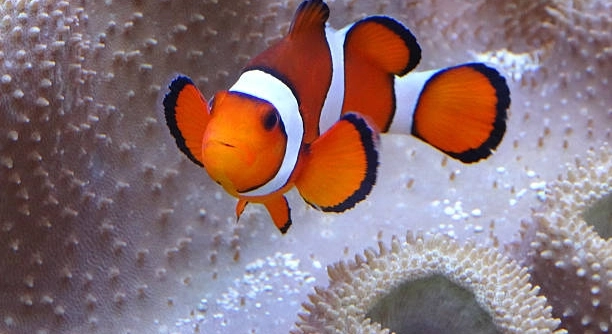
Clownfish are popular for their bright colors and unique behaviors in coral reefs. Many people find these fish fascinating and wonder about their inner lives. Understanding if they feel emotions adds a new layer to appreciating their nature.
Scientific studies suggest that clownfish do not experience emotions like humans do. Their brains lack the structures necessary for complex emotional processing. However, they can respond to environmental changes and social cues through instinctual behavior.
Exploring how clownfish behave helps us better understand their survival strategies and social interactions. This insight sheds light on the complexity of marine life beyond simple observation.
Understanding Clownfish Behavior and Responses
Clownfish display behaviors that suggest they react to their environment and other fish around them. They form strong social bonds within their groups and show signs of hierarchy. For example, dominant clownfish protect their territory and may chase away intruders. These behaviors help maintain order and ensure survival. Their responses to threats or changes are mostly instinctual rather than emotional. Clownfish also rely on visual and chemical signals to communicate. They can recognize familiar individuals and adjust their behavior accordingly. While they don’t feel emotions like humans, their actions show a capacity for adapting and interacting in complex ways. Observing these patterns gives insight into how they live and interact daily.
The behaviors of clownfish are primarily driven by survival instincts and social structure within their groups.
Recognizing these instinctual responses clarifies how clownfish function in their habitats. Their interactions involve competition and cooperation based on environmental pressures rather than emotional experiences. This helps explain their consistent, predictable behavior patterns observed by marine biologists. Studying these fish also highlights the distinction between instinctive reaction and emotional feeling, providing clearer understanding of animal behavior in aquatic species.
The Science Behind Animal Emotions
Animal emotions vary greatly among species depending on brain structure and complexity. Fish, including clownfish, have simpler nervous systems compared to mammals. This limits their ability to experience emotions as humans do. Instead, fish rely on sensory input to respond quickly to threats or opportunities. Their brain processes focus mainly on survival functions such as finding food, avoiding predators, and reproducing. While some animals show signs of basic feelings like stress or comfort, these are different from complex emotions like joy or sadness. Scientific research supports that fish behavior is more about reflex and conditioning than emotional awareness.
Research shows fish lack key brain regions responsible for emotional experience in mammals.
In fish, emotional processing centers like the amygdala and prefrontal cortex are underdeveloped or absent. Instead, their brains emphasize areas related to instinct and automatic responses. This means clownfish react to stimuli without the emotional depth seen in animals with more advanced brains. The lack of emotional centers does not mean they are unimportant creatures; their survival and social behaviors are well adapted to their environment. Understanding this biological limitation allows better care for aquarium species and informs ethical considerations about fish welfare. It also reshapes how humans relate to and interpret fish behavior, avoiding anthropomorphism.
Emotional Capacity Compared to Other Animals
Clownfish have a limited emotional range compared to mammals and birds. Their brain structure is simpler and focused mainly on survival. While mammals may show complex feelings, clownfish rely on instinctual reactions.
In animals like dogs or primates, emotional expression is linked to advanced brain areas. These animals can form attachments and show empathy or grief. Clownfish, however, lack such brain regions, so their behaviors are more about survival needs. They respond to threats or social cues without deeper feelings. This difference highlights how brain anatomy influences emotional capacity across species.
Understanding this gap helps clarify why clownfish actions seem mechanical rather than emotional. It also prevents projecting human feelings onto fish, ensuring more accurate interpretation of their behavior. Recognizing these limits encourages respectful and realistic expectations for fish in both the wild and captivity.
Observing Clownfish in Aquariums
Clownfish in aquariums display recognizable patterns like territory defense and social hierarchy. They often respond quickly to changes in their environment or presence of other fish. These reactions are survival mechanisms.
Aquarium owners notice clownfish become more active during feeding or when new objects are introduced. The fish also establish dominance, with the largest usually leading. These behaviors show their instinct to control space and resources. While they do not experience emotions, their consistent patterns make them interesting to watch and study. Careful observation provides clues about their natural needs and helps improve aquarium conditions.
Understanding their natural behaviors supports better care, avoiding stress or aggression. Creating a stable environment with proper social groups encourages healthy activity and longevity for captive clownfish.
The Role of Instinct in Clownfish Behavior
Instinct drives most clownfish actions, such as defending territory and choosing mates. These behaviors help them survive and reproduce effectively in their environment.
Their responses are automatic, shaped by evolution rather than conscious thought or emotion. Instinct ensures they react quickly to threats or opportunities without hesitation.
How Clownfish Communicate
Clownfish communicate mainly through body movements and color changes. These signals help maintain social order and warn others of danger or dominance.
Chemical signals also play a role in their communication, especially during mating seasons. These methods are essential for group cohesion and survival in the reef environment.
Limitations in Fish Emotional Studies
Studying fish emotions is challenging because of their different brain structures and communication styles. This makes it hard to measure feelings as understood in mammals.
Researchers often rely on behavior observation and physiological responses, which can be interpreted in various ways, making conclusions about fish emotions uncertain.
Clownfish and Stress Responses
Clownfish show clear signs of stress through changes in behavior and color. Stress can impact their health and social interactions negatively.
FAQ
Can clownfish feel pain?
Clownfish can respond to harmful stimuli, which means they likely feel pain in a basic way. Their nervous system detects injury, triggering reflexive actions to protect themselves. However, this does not mean they experience pain emotionally like humans. Their reaction is more about survival than suffering.
How do clownfish show stress?
Stress in clownfish appears through changes in color, reduced activity, or hiding more often. Stress can come from poor water quality, overcrowding, or aggressive tank mates. Prolonged stress can weaken their immune system and affect health. Monitoring their behavior helps maintain a stable environment.
Do clownfish recognize their owners?
Clownfish can learn to recognize people who feed them regularly. This recognition is based on routine and association rather than emotional bonding. They may swim toward a person’s presence expecting food but do not form affectionate attachments like mammals.
Can clownfish feel loneliness?
Clownfish are social but rely mostly on instinct to live in groups. There is no strong evidence they feel loneliness as humans do. Their social behavior is about protection and reproduction rather than emotional connection.
Why do clownfish form pairs?
Clownfish form pairs for breeding purposes. The dominant female and male work together to protect the nest and care for eggs. This pairing is driven by reproductive instincts, not by emotional attachment.
Are clownfish intelligent?
Clownfish have basic intelligence suited for survival in coral reefs. They learn from experience, such as recognizing threats or food sources. Their intelligence supports complex social behaviors but does not include emotional awareness.
Do clownfish communicate feelings?
Clownfish communicate through visual cues and chemical signals. These signals manage social hierarchy and reproductive readiness. What may look like emotional expression is actually instinctive communication for survival.
How long do clownfish live?
In the wild, clownfish can live up to 6 to 10 years. In well-maintained aquariums, they may live slightly longer. Their lifespan depends on factors like diet, environment, and stress levels.
Can clownfish change gender?
Yes, clownfish are sequential hermaphrodites. The dominant male can change to female if the dominant female dies. This gender change is controlled by social hierarchy and is vital for reproductive success.
What should I do if my clownfish seems sick?
If a clownfish shows signs of illness, such as unusual swimming or discoloration, check water quality first. Poor water conditions cause most health issues. Isolate sick fish to prevent disease spread and consult aquatic specialists for treatment advice.
How do clownfish interact with anemones?
Clownfish have a mutual relationship with anemones. They get protection from predators by living among anemone tentacles, which sting other fish. In return, clownfish keep the anemone clean and help circulate water around it. This interaction is instinct-driven.
Do clownfish have memories?
Clownfish can remember locations and routines, such as feeding times and territory boundaries. This memory helps them avoid danger and find food but is not linked to emotional memory like in mammals.
Can clownfish feel happiness or sadness?
Scientific evidence does not support that clownfish feel happiness or sadness. Their behaviors are survival-based and instinctual. What might appear as mood changes is usually a response to environmental factors like stress or comfort.
Are clownfish affected by changes in their environment?
Yes, clownfish react strongly to environmental changes such as water temperature, light, and habitat structure. These changes influence their behavior and health, but the response is based on survival needs rather than emotional reactions.
Is it okay to keep clownfish in home aquariums?
Keeping clownfish in home aquariums is common, but it requires proper care. They need stable water conditions, compatible tank mates, and appropriate diet. Understanding their natural behavior and needs ensures they thrive without unnecessary stress.
Clownfish are fascinating creatures that play an important role in their natural habitats. While many people wonder about their inner experiences, it is clear that clownfish do not feel emotions in the way humans understand them. Their behavior is driven mainly by instinct and survival needs. This means that while they react to their environment and other fish around them, these reactions are automatic rather than emotional. Recognizing this helps set realistic expectations when observing or caring for clownfish, whether in the wild or in aquariums.
Understanding clownfish behavior requires looking at their biology and brain structure. Unlike mammals and some birds, clownfish have simpler nervous systems that focus on basic survival functions. They respond quickly to threats, changes, and social cues, but these responses do not involve complex emotions such as happiness or sadness. Instead, clownfish use body movements, color changes, and chemical signals to communicate and maintain social order. Their behaviors are essential for defending territory, finding mates, and avoiding danger, but they should not be mistaken for emotional experiences.
Caring for clownfish, especially in home aquariums, benefits from this understanding. Providing a stable and healthy environment reduces stress and supports natural behaviors. Clownfish need proper tank conditions, compatible companions, and consistent care to thrive. Knowing that their actions are instinctual rather than emotional helps avoid projecting human feelings onto them, allowing for more appropriate care and appreciation. Overall, clownfish are remarkable animals with unique adaptations that suit their underwater life, even without the emotional depth seen in more complex animals.

Hello,
If you enjoy the content that we create, please consider saying a "Thank You!" by leaving a tip.
Every little bit helps us continue crafting quality advice that supports the health, happiness, and well-being of pets around the world, for pets of all shapes, sizes, and species.
We really appreciate the kindness and support that you show us!