
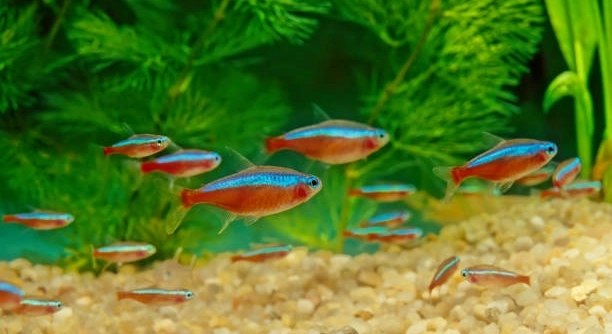
Are your neon tetras not schooling as smoothly as you hoped, or do they seem stressed and out of sync in the tank?
The key to healthier neon tetra schools lies in proper tank conditions, balanced feeding, consistent water parameters, and group dynamics. Providing a suitable environment helps reduce stress, encourages natural behavior, and supports long-term health.
From group size to lighting, each detail in their care plays a role in their happiness and well-being. Let’s look at what really matters.
Start with the Right Tank Setup
A stable and well-sized tank helps neon tetras feel safe and behave naturally. These fish do best in tanks that are at least 10 gallons, with gentle filtration and soft lighting. Avoid placing them in tanks that are too small or overcrowded. Neon tetras are schooling fish, and a tight group helps them feel secure. Decorate with live plants, driftwood, and hiding spots to create a sense of shelter. Darker substrates and shaded areas also help reduce stress. A secure lid is important since startled tetras may jump. Try to mimic their natural habitat as much as possible by avoiding harsh lighting and sudden changes in water flow. Keep the space open enough for them to swim freely as a group, but also structured enough to give them places to pause and rest. This kind of setup helps them thrive.
A plain tank with strong lights and little cover can make your tetras nervous and more likely to hide or become inactive.
When their space is calm and balanced, they tend to move in sync and show brighter colors. A good tank setup creates the base for their health and comfort. Once this is in place, everything else becomes easier to manage.
Keep Them in Proper Numbers
Neon tetras are happiest when kept in groups of at least six to eight. Smaller groups can cause them to feel unsafe and act timid.
Larger schools bring out their natural behaviors, like coordinated swimming and more vivid coloring. In small groups, they may hide more, become less active, or show signs of stress. These fish rely on the comfort of numbers to feel secure, and the more stable they feel, the better they’ll behave and look. A well-sized group gives them the social connection they need, helping reduce aggression and nervous behavior. If you have space for more, aim for ten or even twelve. Just make sure the tank can handle the added bioload. It’s important to keep the group size balanced with the space available and the strength of your filtration system. When tetras feel supported by their group, they settle in better and show their best behavior.
Maintain Stable Water Conditions
Neon tetras are sensitive to changes in water quality. Sudden shifts in pH, temperature, or ammonia levels can lead to stress and health issues. Regular testing and maintenance are key to keeping them safe and comfortable in their environment.
Keep the water temperature between 72°F and 78°F, with a pH range of 6.0 to 7.0. Use a reliable heater to avoid sudden drops in temperature, and check the thermometer regularly. Weekly water changes of 25% help control nitrate buildup and remove waste. Always treat tap water with a water conditioner to remove chlorine and heavy metals. Make changes slowly to avoid shocking the fish. A consistent cleaning routine and filter maintenance will help you stay ahead of issues before they cause harm.
Clean water helps neon tetras display their best colors and act more naturally. Cloudy water or rising nitrate levels can make them sluggish or sick. Stable conditions give them a sense of safety and reduce stress-related illness. If you notice signs like clamped fins or erratic swimming, test your water immediately and adjust carefully. Proper maintenance creates a strong foundation for their long-term health and supports the overall balance of your tank.
Feed a Balanced and Varied Diet
A healthy diet keeps neon tetras active and colorful. Relying only on flake food can leave them lacking key nutrients. They need a mix of high-quality flakes, micro pellets, and frozen or live foods.
Feed them small amounts twice a day, offering just enough for them to finish in a few minutes. Overfeeding can cloud the water and lead to ammonia spikes. Frozen daphnia, baby brine shrimp, and bloodworms make excellent supplements a few times a week. These protein-rich foods help boost energy and color. Rotate their diet to keep them interested and to support their immune system. Avoid feeding them only one type of food long-term. Pay attention to how they eat—if they ignore food or show bloating, adjust the portion or try something different. A balanced diet keeps them healthy, helps prevent disease, and encourages their natural schooling behavior.
Avoid Sudden Movements and Loud Noises
Neon tetras can be easily startled by quick hand movements or loud sounds near their tank. This kind of stress may cause them to scatter or hide for long periods, which affects their health over time.
Try to keep their space calm and consistent. Avoid tapping on the glass, moving decorations too often, or changing lighting suddenly. A peaceful setup encourages schooling and reduces stress.
Choose Compatible Tank Mates
Neon tetras do best with other peaceful fish. Avoid pairing them with aggressive or much larger species, as this can lead to fear and hiding. Good options include small rasboras, corydoras, and peaceful livebearers. If they’re constantly chased or outcompeted for food, they may become weak or stop schooling altogether. A calm tank promotes natural behaviors, helps them maintain bright colors, and lowers the chance of illness. When choosing new additions, always research their behavior and space needs. Compatibility plays a big role in keeping a school of tetras healthy, relaxed, and active.
Keep Lighting Soft and Consistent
Bright or flickering lights can stress neon tetras and make them hide more often. Use soft lighting and keep it on a regular schedule to support their natural rhythm and reduce anxiety.
FAQ
How many neon tetras should I keep together?
Neon tetras are schooling fish and should always be kept in groups of at least six. However, keeping eight to twelve is better, especially if your tank is large enough. Bigger schools help them feel more secure and allow them to show their natural swimming behavior. In smaller groups, they often become shy or stressed. When they don’t feel safe, they may hide, lose color, or even fall ill. Keeping a larger group creates a stronger social bond and supports their overall health and happiness in the tank.
Can neon tetras live with bettas?
It depends on the temperament of the betta. Some bettas can live peacefully with neon tetras, while others may see them as threats or chase them. Neon tetras are fast and tend to keep to themselves, but their bright colors can sometimes trigger aggression in bettas. If you want to try this combination, make sure your tank is large enough and well-decorated with plants and hiding spots. Monitor them closely for signs of stress or chasing. If you see fin-nipping or fear, it’s best to separate them.
Why are my neon tetras hiding all the time?
Hiding behavior usually points to stress. Common causes include poor water quality, sudden changes in temperature or pH, strong lighting, or aggressive tank mates. Another reason could be that your school is too small, making them feel unsafe. Make sure your tank is calm, clean, and well-planted. Check the water parameters regularly, and consider increasing the group size if you only have a few. When conditions improve, they often return to normal behavior.
How often should I feed neon tetras?
Feed your neon tetras twice a day in small amounts. Only give them what they can finish in about two minutes. Overfeeding leads to waste buildup and can harm water quality, which causes stress and illness. A mix of high-quality flakes or micro pellets with occasional treats like frozen daphnia or baby brine shrimp works best. A varied diet supports their immune system, keeps their colors vibrant, and encourages active swimming.
Why are my neon tetras not schooling?
If they’re not schooling, it may mean they feel stressed or unsafe. Check for things like water quality issues, tank mates that are too aggressive, or an environment that’s too bright or chaotic. They may also stop schooling if the group is too small. Tetras school to feel protected, so if they don’t sense danger or their group is scattered, they may swim independently. Creating a stable, low-stress tank often brings back schooling behavior.
How can I tell if my neon tetras are healthy?
Healthy neon tetras are active, swim in groups, and display bright colors. Their fins should be clear and not clamped, and their bodies free from white spots or swelling. They should have a good appetite and react when food is added. Signs of illness include dull color, floating oddly, hiding for long periods, clamped fins, or loss of appetite. Regularly observing your fish will help you catch issues early. Quick action and steady care usually make a big difference.
Do neon tetras need a filter and heater?
Yes, they need both. A heater keeps the water at a stable temperature, ideally between 72°F and 78°F. Sudden changes in temperature can lead to stress or illness. A filter keeps the water clean by removing waste and harmful substances. It also supports the growth of beneficial bacteria that help balance the tank. Without these, water conditions can become unsafe very quickly, especially in smaller tanks. Always choose a gentle filter so it doesn’t create strong currents that tire your fish.
Can I keep neon tetras in a bowl or small tank?
No, neon tetras are not suited for bowls or small tanks. They need space to swim in schools and require filtration, heating, and regular maintenance. A minimum of 10 gallons is recommended for a small group, but more space is better. Bowls often lack the ability to support stable water conditions, which leads to stress, illness, and shorter lifespans. Investing in a proper tank setup gives them a healthier, more stable environment.
How long do neon tetras live?
With proper care, neon tetras can live for 5 to 8 years. Factors like water quality, diet, stress levels, and tank size all play a role in their lifespan. Keeping their environment clean and consistent while feeding a balanced diet will help them stay healthy. Avoid overcrowding, sudden changes, and poor tank mates. When well cared for, neon tetras are hardy fish that can thrive for several years and continue to bring activity and color to your aquarium.
Final Thoughts
Caring for neon tetras can be simple once you understand what they need. These small fish do best in calm, clean tanks with steady water conditions and soft lighting. They are happiest when kept in schools of six or more and enjoy having space to swim together. Watching them move as a group is one of the most peaceful parts of keeping them. If they start hiding or losing color, it’s usually a sign that something in the tank needs to be fixed. A few small changes in their environment can often bring them back to normal quickly.
Feeding neon tetras a mix of quality flakes, micro pellets, and frozen foods helps keep them healthy and active. It also brings out their bright colors and supports natural behavior. Avoid overfeeding and always remove uneaten food so the water stays clean. Keeping a routine with feeding, water changes, and tank checks will help prevent most problems. When adding new tank mates, be sure they are peaceful and won’t compete for space or food. A calm tank encourages the tetras to behave normally and reduces the risk of stress-related illness.
Neon tetras may be small, but their needs are specific. They rely on stable conditions, proper group sizes, and a balanced diet to stay healthy. Once you have their tank set up correctly and learn what to look for, caring for them becomes much easier. Pay attention to their behavior, keep up with simple tank maintenance, and avoid sudden changes. With the right care, neon tetras can thrive for years and remain a colorful, peaceful part of your home aquarium.

Hello,
If you enjoy the content that we create, please consider saying a "Thank You!" by leaving a tip.
Every little bit helps us continue crafting quality advice that supports the health, happiness, and well-being of pets around the world, for pets of all shapes, sizes, and species.
We really appreciate the kindness and support that you show us!