
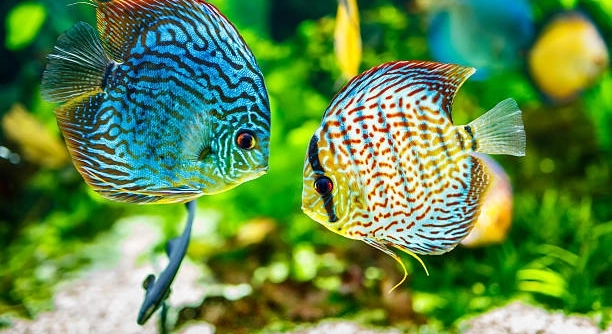
Do you ever find yourself wanting to mix colorful fish in your tank but aren’t sure if they’ll get along well together?
Discus fish can live with guppies, but it is not ideal due to differences in water temperature preferences, diet, and behavior. Discus thrive in warmer, more stable environments, while guppies are hardier and prefer cooler temperatures.
Understanding the compatibility between these two species will help you maintain a peaceful and healthy aquarium for all your fish.
Understanding the Differences Between Discus and Guppies
Discus and guppies are very different in their care needs. Discus fish prefer calm, warm waters around 82–86°F, while guppies are more comfortable in slightly cooler water, around 74–78°F. This temperature gap can be stressful for either species if kept together for long periods. Discus are also more sensitive to water changes and need stable, clean conditions with low nitrates. Guppies are more forgiving and easier to care for, which makes them popular among beginners. Discus tend to be shy and slow-moving, while guppies are active and fast swimmers. These differences can lead to feeding problems, as guppies may outcompete discus for food. Discus also need a high-protein diet, while guppies can thrive on flake foods. Mixing these two species in one tank often means that one group won’t get exactly what it needs. This can lead to poor health, stress, and even shortened lifespans over time.
Their needs simply don’t match up in most home tanks.
If you’re still thinking about keeping them together, you’ll need to make several adjustments to meet both of their needs. This includes temperature control, feeding routines, and close monitoring of water quality and fish behavior.
Risks of Keeping Discus and Guppies Together
The main issue is water temperature. Guppies can survive in warm water for a while, but long-term exposure to high heat may cause stress and a weaker immune system.
In mixed tanks, discus may also become territorial or stressed due to the guppies’ constant movement. Guppies, being more active and bold, can annoy slower discus, especially during feeding. Because discus are more delicate, they need a peaceful tank with little disturbance. If they feel threatened, they may hide and eat less, which weakens them over time. Another problem is disease risk. Guppies may carry bacteria or parasites that don’t affect them much but can harm discus. Quarantining new fish is always recommended, but it’s especially important when mixing species with such different needs. In addition, food competition becomes an issue. Guppies often dart around and grab food quickly, while discus are slow and careful eaters. This can lead to underfeeding the discus unless you feed them separately or use sinking pellets in quiet corners. These are just a few of the concerns to think about.
Tips for Making It Work
Keeping discus and guppies together is possible, but it takes effort and planning. You’ll need to adjust your tank conditions carefully to avoid stressing either species and be ready to step in if problems come up.
Start by setting the tank temperature around 82°F, which is the lowest comfortable point for discus and the highest that guppies can usually tolerate. Make sure your tank is at least 55 gallons to give discus enough space to feel secure. Add plenty of plants and decorations to break up sight lines and provide hiding spots. Feed the fish in different parts of the tank so the guppies don’t eat everything before the discus get their share. Keep a close eye on water parameters and clean the tank regularly. Test for ammonia, nitrites, and nitrates often. Use a high-quality filter and perform frequent partial water changes.
Watch how the fish act around each other, especially during feeding times. If the discus start hiding more or lose interest in food, it might be a sign that the setup isn’t working. Likewise, if guppies look tired or lose color, they may be too warm. Be ready to separate them if needed. Some people use tank dividers or keep them in the same system but in different tanks with shared filtration. This allows for shared water without direct contact. It can be a helpful way to enjoy both species without risking their health or comfort.
Better Alternatives to Guppies
Instead of guppies, consider tank mates that can live more comfortably with discus. Many peaceful, warm-water fish do better with discus than guppies.
Cardinal tetras, rummy nose tetras, and corydoras catfish are popular choices because they can thrive in higher temperatures and share a calm nature. These species tend to respect the discus’ space and won’t outcompete them for food. Keeping compatible fish reduces stress for everyone in the tank and helps maintain stable water quality. It also makes feeding routines much easier. Always research tank mates carefully and introduce them slowly.
Another good choice is keeping a discus-only tank. This lets you focus fully on their specific needs. You can still create an active, colorful display using different discus types. This also helps keep feeding and water conditions consistent. If you want variety without issues, adding a few compatible species in small numbers is the safest route. Some aquarists even keep shrimp or snails with discus, as they help with tank cleanliness and rarely cause any problems. No matter what you choose, always prioritize the health and comfort of the discus when stocking your aquarium.
Signs of Stress to Watch For
Discus may show stress by hiding more often, losing color, or skipping meals. These signs usually mean they’re uncomfortable in their environment or feel threatened by tank mates like guppies.
Guppies under stress may become less active, lose their bright colors, or start hovering near the surface more than usual.
What to Do if It’s Not Working
If things go wrong, it’s best to act quickly. First, test the water parameters to check for any changes in pH, ammonia, or temperature. If everything looks normal, observe the fish closely. Try feeding the discus separately using sinking pellets or feeding them when the guppies are distracted. If the discus continue to hide or won’t eat, you may need to separate the species. You can move the guppies to another tank or use a divider. Sometimes, just reducing the number of guppies helps calm things down. Make sure each fish type has enough space and hiding spots.
Final Thoughts
Keeping discus and guppies together isn’t impossible, but it’s not the easiest mix. Careful planning and close monitoring are key.
FAQ
Can guppies handle the high temperatures required for discus?
Guppies can tolerate warmer water for short periods, but it’s not ideal long term. Discus need temperatures around 82–86°F, while guppies do better in the 74–78°F range. Keeping guppies at discus temperatures may cause them stress, shorten their lifespan, and make them more prone to illness. Over time, warm water can weaken their immune systems and reduce breeding success. If you’re set on keeping both together, you’ll need to monitor their behavior closely. If guppies start losing energy, color, or appetite, it’s likely the temperature is too high for them.
Will guppies bother discus during feeding?
Yes, they often do. Guppies are fast and active, usually rushing to grab food as soon as it’s added. Discus are slower and prefer to eat calmly. This can make it hard for them to get enough food, especially if you feed flakes or floating pellets. You can try feeding discus in a different spot, using sinking food, or giving guppies food at the opposite end of the tank first. Some owners also feed discus when the lights are dim or when guppies are less active. But in general, feeding time is often a challenge with both species in one tank.
Are there any behavioral issues to expect between discus and guppies?
Yes, there can be. Guppies are curious and social, often swimming all over the tank. Discus are more shy and prefer calm, quiet surroundings. If guppies swim too close or move around constantly, it can make discus feel anxious. Stressed discus may hide, stop eating, or show faded colors. While guppies usually don’t act aggressively, their active behavior alone can be too much for discus. It’s not always a problem in every tank, but it happens often enough that it’s something to think about before mixing the two species.
Can guppies introduce diseases to discus?
Yes, this is one of the biggest concerns. Guppies are hardy and often carry bacteria or parasites without showing signs. These can be harmful or even deadly to discus, which are much more sensitive. It’s always best to quarantine new guppies before adding them to a discus tank. Even better, avoid mixing species from different sources or suppliers. Keep your tank clean, test water regularly, and watch for signs of illness. If you see a problem, act quickly by isolating the sick fish and treating the tank if needed.
How can I reduce stress in a mixed tank?
To reduce stress, create a peaceful and stable environment. Keep the tank large—55 gallons or more is best. Add plenty of plants and hiding places so fish can retreat when needed. Keep the water clean and maintain a consistent temperature. Feed fish in separate areas to make sure each species gets what it needs. Avoid overcrowding the tank. Most importantly, watch the fish daily. If discus are hiding more, not eating, or showing dull colors, something is wrong. Sometimes, it’s best to separate the fish and keep them in separate tanks.
What are better tank mates for discus?
Some fish do much better with discus than guppies do. Good tank mates include cardinal tetras, rummy nose tetras, corydoras catfish, and German blue rams. These species enjoy the same warm temperatures as discus and tend to be peaceful. They also don’t rush to the food as aggressively, which helps at feeding time. Snails and shrimp can also be useful, especially for helping with tank maintenance. Always research before adding any fish to your discus tank, and introduce them slowly. Compatibility is key to keeping the tank calm and the discus healthy.
Is a discus-only tank easier?
Yes, in many ways it is. A discus-only tank means you can focus completely on their needs without worrying about balancing care for other species. It’s easier to control feeding, temperature, and water quality. You can still enjoy variety by keeping different colors and types of discus. It may be less active than a mixed tank, but your discus will likely be healthier and show more natural behavior. For many people, a species-only tank ends up being the most rewarding option.
Final Thoughts
Keeping discus and guppies together can be done, but it is not easy. These two fish have very different needs, especially when it comes to water temperature and behavior. Discus are calm, slow swimmers that like warm water and a peaceful tank. Guppies are active, hardy, and used to cooler temperatures. These differences can lead to stress, poor feeding, and even illness if their needs are not fully met. It takes a lot of effort and careful planning to keep both species healthy in the same tank. You will need to watch them closely, make adjustments often, and be ready to separate them if needed.
There are safer options if you want to keep discus with other fish. Choosing species that prefer the same warm temperatures and calm environment is the best way to go. Fish like cardinal tetras, rummy nose tetras, and corydoras catfish are better suited as tank mates. They tend to be peaceful and do not compete as much during feeding. Another good choice is to keep only discus in the tank. This makes it easier to manage their care. You can still enjoy variety by selecting different colors and patterns of discus. Keeping their environment stable and stress-free helps them stay healthy and show their best colors.
In the end, it comes down to what kind of tank you want to maintain. If you enjoy managing a mixed tank and have the experience to do so, you may find success keeping discus and guppies together. But if you are looking for something simpler and more reliable, it is usually better to keep fish with similar needs. It’s not just about making them survive in the same tank—it’s about helping them thrive. Always put the health and comfort of your fish first. With proper care, discus can live long and stay active, bringing calm beauty to your aquarium.

Hello,
If you enjoy the content that we create, please consider saying a "Thank You!" by leaving a tip.
Every little bit helps us continue crafting quality advice that supports the health, happiness, and well-being of pets around the world, for pets of all shapes, sizes, and species.
We really appreciate the kindness and support that you show us!