
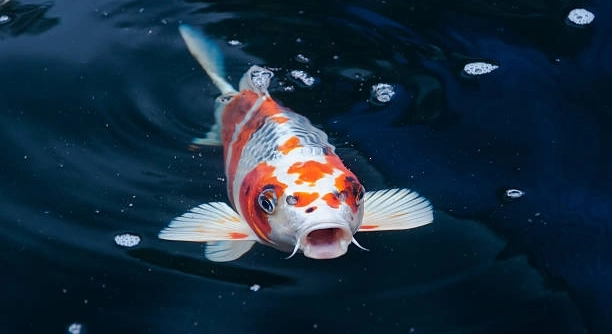
Do you find koi fish fascinating but wonder if there’s more to their movements than just swimming in circles?
Each koi has its own set of rhythmic patterns that reflect its personality, breed characteristics, and interactions with its environment. These subtle differences in movement can help owners better understand their koi’s health and behavior.
From gentle tail flicks to purposeful glides, each koi tells a silent story through its motions, offering insight into the unique rhythm of life within your pond.
Graceful Flicks of the Kohaku
The Kohaku koi is known for its simple red and white pattern, but its movement is far from plain. It swims with long, elegant flicks of its tail, gliding in straight lines that make it easy to spot among a group. Kohakus often move slowly at first, testing the water before fully engaging. These flicks are gentle yet purposeful, showing confidence and calm. Their rhythm rarely changes unless they are startled or hungry. When food is nearby, the flicks become quicker, but the pattern remains smooth. This consistent motion is comforting to watch and suggests a healthy, relaxed koi.
Kohakus tend to favor steady movement over sharp turns. They rarely dart or twist unless reacting to something sudden.
Observing a Kohaku helps owners recognize small signs of stress or changes in its environment. If the smooth rhythm shifts to erratic or choppy movements, it may be reacting to water quality or discomfort. On calm days, though, it returns to its trademark flick-and-glide pattern. This koi thrives in well-balanced ponds with stable temperatures and low noise levels. Even slight changes in rhythm can hint at subtle issues. Watching closely can help you adjust care before health problems arise. The Kohaku’s grace is not just pretty—it’s informative.
S-Shaped Swirls of the Showa
Showa koi have a bold look and a movement style that reflects it. They swim in wide, sweeping S-shapes that look almost playful.
These koi often shift direction mid-swim, using their whole body to create large curves through the water. The S-shaped rhythm is fluid but not slow. Showas are curious and often swim closer to the surface or edges, making these motions easy to observe. If they pause or flatten their movement, it may signal a change in mood or environment. Healthy Showas have strength in every turn, often using it to interact with other koi or explore their surroundings. They enjoy open space and are more active than many other types. Their wide movements can stir the water more than usual, which sometimes encourages other koi to swim more too. Watching their energetic style can reveal whether they are thriving or starting to withdraw from activity.
Sharp Twists of the Shusui
Shusui koi move with sharper angles than most other types. Their bodies bend more clearly when turning, making each twist look defined and fast. These movements often happen near the pond bottom or edges.
Unlike smoother koi, Shusui use sudden jerks to shift direction, especially when exploring. These sharp turns are more common during feeding or when startled, showing a natural alertness. Shusui may also break their rhythm suddenly, pausing before turning again. This stop-and-go behavior is normal but worth noting if it becomes excessive. The contrast in their movement is part of what makes them interesting to watch. Their pattern seems tied to their alert nature.
Shusui thrive in quieter ponds. Loud sounds or quick shadows can cause them to dart, adding to their sharp motion style. This reaction is not always a concern, but frequent changes in movement speed or direction could mean they are unsettled. Observing how often they pause or twist can help catch early signs of discomfort. A healthy Shusui will still show sudden motion, but in a way that looks purposeful rather than nervous. Keeping a calm space allows them to settle into a natural rhythm that’s easier to observe and understand.
Wavy Loops of the Ogon
Ogon koi show a glimmering flash as they move, making their looping swim patterns stand out. Their bodies ripple in waves, forming soft loops across the pond. These movements are both smooth and rhythmic.
They often circle in wide paths, looping back to the same spots with a calm, steady rhythm. This repeated looping is more than habit—it shows they feel safe in the space. When relaxed, their loops are slow and wide. When excited, the loops become tighter and faster, especially around feeding time. If the pattern breaks or the koi starts to linger in corners or avoid others, it could suggest a problem. Ogons are very responsive to changes in lighting and pond layout, which may also affect their loops.
Their shimmering scales can help you track their movement more easily than other koi. This makes it easier to notice slight changes in behavior. Wavy loops are normal, but frequent starts and stops might mean something is off in the environment. Ogons enjoy routine and respond well to predictable feeding and stable water. Their looping pattern becomes a signal of their overall comfort level. Watching these gentle waves gives clues about both the koi’s health and the state of the pond.
Fast Zigzags of the Asagi
Asagi koi swim in quick, zigzag patterns that keep them in near-constant motion. These bursts often happen near the surface, especially when insects or food particles are present.
They react fast to movement, which makes their zigzags feel more like short dashes than full turns. This quick style is normal.
Broad Sweeps of the Bekko
Bekko koi prefer open space and use slow, broad sweeps to move through the pond. They do not rush, and their tails move in wide arcs to guide their direction. These movements tend to be relaxed and predictable. When healthy, Bekko avoid tight turns or sudden starts. Their steady rhythm makes them easy to observe. Changes in sweep size or swim depth may show early signs of stress. If a Bekko starts hugging corners or moving in uneven patterns, it could be reacting to water issues, temperature shifts, or discomfort. Their broad strokes reflect balance, and any disruption matters.
Spiraling Bends of the Utsuri
Utsuri koi move in gentle spirals, using slow bends to turn and circle. They often swim close to plants or pond edges.
What causes koi to have unique swimming rhythms?
Koi develop unique swimming rhythms due to a combination of genetics, environment, and health. Different breeds naturally move in distinctive ways, which reflect their body shapes and fin placements. Environmental factors like water temperature, pond size, and water flow also influence how a koi swims. Health plays a key role too—if a koi feels stressed or sick, its movement patterns can change noticeably. For example, a healthy koi will have smooth, purposeful motions, while one that is unwell might swim erratically or sluggishly. Overall, these rhythms are a mix of natural behavior and response to their surroundings.
How can I tell if my koi’s movements are a sign of health problems?
Changes in your koi’s usual swimming patterns often indicate health issues. Watch for erratic or overly slow movements, excessive floating near the surface, or unusual resting spots. If a koi that usually swims smoothly starts darting sharply or showing long pauses between movements, it may be stressed or ill. Physical signs like clamped fins or a tilted posture often accompany these changes. Water quality is a common cause, so checking pH, ammonia, and oxygen levels helps identify problems early. Early detection through movement observation can prevent serious illness.
Do all koi swim in similar patterns within the same pond?
Not necessarily. Even in the same pond, koi exhibit individual swimming styles that reflect their breed and personality. Some may prefer slow, steady glides, while others move in quick bursts or sharp turns. Social dynamics also play a role—dominant koi often control prime swimming areas and might display more confident, bold movements. Submissive koi may stay near the edges and move cautiously. These differences create a dynamic pond environment where each koi’s rhythm adds to the whole.
Can environmental changes affect koi swimming rhythms?
Yes, environmental changes have a strong impact on how koi swim. Temperature shifts, changes in water quality, or alterations in pond layout can cause koi to adjust their movements. Cooler water slows their metabolism, resulting in slower, less active swimming. Poor water quality may cause koi to gasp at the surface or swim erratically. Adding new plants or decorations might prompt koi to explore more cautiously or seek shelter. Keeping a stable environment helps maintain consistent swimming rhythms and overall koi health.
What role does feeding play in koi swimming behavior?
Feeding greatly influences koi swimming patterns. Before feeding, koi often become more active and swim closer to the surface in anticipation. Their movements quicken, sometimes showing bursts or excited twists. After eating, koi tend to slow down and swim calmly, digesting their food. Overfeeding can cause lethargy or bloating, which may reduce swimming activity. Feeding schedules and portion control help keep koi’s swimming rhythms natural and healthy, avoiding stress or digestive issues.
How can observing koi movements improve pond care?
Watching koi swim regularly gives valuable clues about their health and environment. Changes in rhythm or behavior often signal water quality problems, illness, or stress. Early detection through movement allows prompt action, such as adjusting filtration or testing water chemistry. It also helps identify aggressive or injured koi quickly. Understanding individual movement patterns improves care by matching feeding, cleaning, and tank conditions to their needs. Careful observation turns koi swimming into a useful tool for maintaining a balanced, healthy pond.
Are certain koi breeds more active than others?
Yes, koi breeds vary in activity levels due to genetics and body type. For example, Showa and Asagi koi are usually more active, swimming fast and exploring their environment extensively. In contrast, Kohaku and Bekko koi tend to move more gracefully and calmly. These natural differences help koi owners set expectations for behavior and pond setup. Active koi may need larger spaces and stronger filtration, while calmer breeds thrive in quieter, smaller ponds. Knowing breed activity helps tailor care and environment to keep koi comfortable.
Can koi swimming rhythms change as they age?
Koi swimming rhythms do change as they grow older. Young koi are often more energetic and swim with quick, lively movements. As they mature, their movements tend to slow and become more deliberate. Older koi may prefer resting more and avoid sudden bursts of speed. These changes are natural and reflect their energy levels and physical condition. Monitoring how swimming evolves with age helps owners adjust feeding, pond conditions, and care routines to match the koi’s changing needs.
Understanding the unique rhythmic movements of each koi can really change how you see these beautiful fish. Every koi has its own way of swimming that shows a little bit about its personality, health, and breed. Watching how they move helps you learn more about what they might be feeling or what their environment is like. Paying attention to these patterns is an important part of caring for koi because it gives early hints if something might be wrong. It can also help you enjoy the peaceful moments when your koi swim with smooth and steady grace.
Each type of koi shows different swimming styles, from the gentle flicks of the Kohaku to the sharp twists of the Shusui. These patterns are not random but part of how koi naturally express themselves. They also change depending on how they feel and what is happening in their pond. For example, if a koi swims differently than usual, it could mean changes in water quality or health. By knowing what to look for, you can better support your koi and make sure their home is safe and comfortable. Simple changes like keeping the water clean or giving enough space can help maintain their natural rhythms.
In the end, koi are more than just colorful fish. Their movements tell stories that go beyond appearance. Taking time to observe these patterns creates a deeper connection between you and your koi. It also makes pond care more rewarding because you understand the signals your koi send. The more you learn about their swimming rhythms, the easier it becomes to provide a healthy environment where they can thrive. This knowledge turns everyday watching into a meaningful part of koi keeping, making the experience peaceful and satisfying.

Hello,
If you enjoy the content that we create, please consider saying a "Thank You!" by leaving a tip.
Every little bit helps us continue crafting quality advice that supports the health, happiness, and well-being of pets around the world, for pets of all shapes, sizes, and species.
We really appreciate the kindness and support that you show us!