
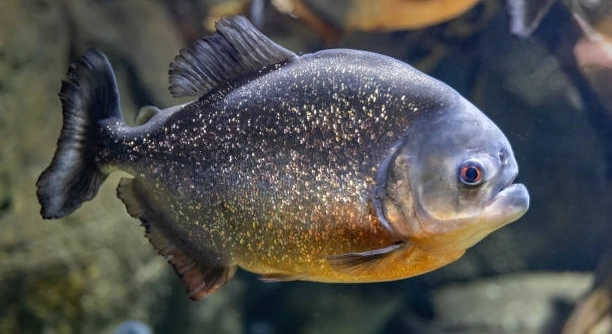
Have you ever thought of piranhas as nothing more than ferocious fish that shred everything in sight within seconds?
Despite their fearsome reputation, piranhas have occasionally exhibited behaviors that contradict their aggressive image. These rare instances, observed in both the wild and captivity, reveal moments of passivity, social cooperation, and even unexpected gentleness.
These surprising moments challenge common beliefs and offer a new way of understanding these complex creatures. Keep reading to learn about the times piranhas truly went against the grain.
A Peaceful Gathering at Feeding Time
In one well-documented case at a public aquarium, a large group of red-bellied piranhas displayed peaceful feeding behavior. Instead of the chaotic frenzy most expect, the fish took turns nibbling at the provided food. No fighting, splashing, or competition occurred. Researchers monitoring the tank noted that these piranhas had lived together for several years and developed a stable hierarchy. It seemed that their familiarity with each other helped reduce aggression. Staff had also implemented regular feeding schedules, which lowered the need for competition. This routine may have signaled to the fish that food was always available, so there was no reason to panic or attack during feeding time. This surprising behavior showed that piranhas, under the right conditions, could remain calm—even during meals.
This calm behavior challenged the belief that piranhas are mindless attackers. It showed that environment and familiarity can influence how they respond to food.
Feeding routines and a stable social group can sometimes encourage unusual calmness in piranhas. It proves that even aggressive species can adapt their behavior when their needs are consistently met. While this doesn’t mean piranhas are harmless, it does reveal they are more complex than commonly believed. Their behavior can change based on their environment and experiences.
Playing Nice with Tank Mates
At a zoo aquarium, several piranhas were kept in a shared tank with non-predatory fish for over a year without incident.
Observers expected aggressive behavior or at least tension between the species. But the piranhas rarely chased or bit the other fish. The tank design gave each species space to avoid contact, and keepers noted that this helped reduce stress and unwanted interactions. The piranhas were well-fed and appeared to ignore the other species completely. One theory is that the abundance of food and space made hunting unnecessary. Another is that the piranhas did not see the other fish as threats or food due to their size or behavior. This unusual peace suggests that aggression in piranhas is not automatic. Environmental factors like space, tank setup, and feeding frequency all influenced the result. While it’s not always safe to mix species, in controlled situations, piranhas can live quietly alongside other fish without attacking them.
Displaying Curiosity Over Aggression
In one observation, a group of piranhas in a research tank ignored smaller prey fish introduced into their environment. Instead of attacking, they followed them slowly, appearing more curious than hungry or territorial.
The researchers noted that the piranhas were already full, which could have affected their behavior. But what stood out was how long they simply observed the new fish. They moved in small groups, occasionally circling, but never striking. This calm behavior lasted for days. It seemed like they were analyzing the newcomers rather than reacting on instinct. This example added to growing evidence that piranhas are not always triggered by the presence of smaller fish. Instead, hunger, mood, and novelty seem to play a role. Their response wasn’t fear or aggression—it was calm curiosity, even in the presence of potential food or intruders in their space.
This behavior raised questions about how piranhas make decisions. Rather than reacting immediately, they may assess changes in their environment. This suggests that they have some level of processing that goes beyond basic instincts. Curiosity may not be a common trait assigned to piranhas, but in certain settings, they act in ways that look more thoughtful than threatening. It reveals a different side to their nature—observant, aware, and calm.
Ignoring a Wounded Fish
In a tank at a university lab, a piranha group showed no interest in a smaller tank mate that had minor injuries. This was monitored closely, expecting an aggressive response.
Staff had seen piranhas respond violently to blood or injury before, but this time, nothing happened. The injured fish swam slowly and kept to itself. Normally, this behavior could trigger predatory instincts, but the piranhas barely acknowledged its presence. Some circled it once or twice, then swam away. The tank’s conditions were calm, and all fish had been recently fed. The researchers believed that regular feeding combined with a stress-free environment played a big role. It seemed that, without competition or hunger, the usual instincts were less active. The group dynamic also mattered—they had lived together for months without conflict. These combined factors led to an unexpected, peaceful outcome. Instead of chaos, there was quiet acceptance of the wounded fish.
Choosing Plants Over Protein
In a controlled tank study, piranhas were offered both meat and plant options. Several individuals showed a clear preference for plant material. They nibbled on leafy greens and fruits, ignoring the protein options nearby.
This behavior surprised the researchers, who expected only minimal interest in plants. But the fish returned to the greens repeatedly, even when meat was refreshed in the tank.
Staying Still During a Disturbance
During routine tank maintenance, staff expected the piranhas to dart around or show stress. Instead, they remained still, hiding among plants or rocks.
This behavior continued even when tools stirred the water. Their reaction was calm and quiet, far from what most people would expect.
Refusing to Eat Live Prey
In one experiment, live feeder fish were introduced to a group of red-bellied piranhas. None of the piranhas attacked, even after several hours.
They swam past the fish without interest. Later, when offered prepared food, they ate without hesitation.
Why do piranhas sometimes act less aggressively than expected?
Piranhas are often seen as fierce predators, but their behavior depends on many factors. Hunger is a major driver of aggression—when they are well-fed, they show less interest in attacking. Environmental conditions also matter. In tanks or areas where food is abundant and predictable, piranhas may feel less pressure to compete or fight. Social structure plays a role too. Groups that have established a clear hierarchy tend to be more peaceful. Familiarity with each other reduces stress and unnecessary aggression. Stress from overcrowding or poor conditions, on the other hand, often triggers their aggressive instincts. So, when piranhas seem calm or even curious, it is usually because their needs are met, and they do not feel threatened.
Can piranhas live peacefully with other fish species?
Yes, but it depends heavily on the species involved and the environment. Piranhas generally prefer similar-sized fish and tend to avoid attacking fish that are not seen as food or competition. In captivity, when space is sufficient and food is regularly provided, piranhas have been observed coexisting with non-predatory species without aggression. The tank design also helps—if fish have hiding spots or enough room to avoid one another, stress is lower, reducing attacks. However, mixing piranhas with smaller or more vulnerable fish is risky and often results in aggression. Controlled environments with proper care can sometimes support peaceful cohabitation, but it is not guaranteed.
Do piranhas ever show signs of curiosity rather than aggression?
Yes, piranhas can display curiosity. Observations in research tanks have shown that when introduced to new fish or objects, they may follow and circle without attacking. This behavior often happens when the piranhas are not hungry or stressed. Instead of reacting immediately with aggression, they seem to assess the situation calmly. This shows a level of awareness and decision-making that is not often attributed to them. While curiosity is not their primary trait, it can appear under certain conditions, especially when their environment is stable and their needs are met.
Why do some piranhas prefer plant matter over meat?
Though piranhas are known as carnivores, some species or individuals eat plant material when available. Studies have shown that in captivity, they will nibble on fruits, leaves, or algae. This might be related to nutritional balance or availability of food sources. In the wild, their diet can be more varied than just meat, especially during certain seasons when prey is scarce. Eating plants may help with digestion or provide essential vitamins. It’s a reminder that piranhas are opportunistic feeders and can adapt their diets depending on what is accessible.
How do piranhas respond to injured or weak fish nearby?
Contrary to popular belief, piranhas do not always attack injured or weak fish immediately. In some controlled environments, injured fish have been ignored for long periods. This usually happens when the piranhas are well-fed and not stressed. Their hunting instincts are less triggered when food is not scarce. Social stability in the tank also helps prevent opportunistic attacks. That said, in wild conditions or when hungry, injured fish are more vulnerable. So, their response depends on hunger, stress, and group dynamics.
What factors reduce aggression in piranha groups?
Several factors can lower aggression in piranha groups. Consistent and sufficient feeding reduces competition for food, which is a main cause of fighting. Providing enough space for each fish to have its own territory helps reduce conflicts. Social hierarchy also plays a role—when ranks are clear, fish show less fighting. Environmental stability, like calm water and minimal disturbances, lowers stress. Long-term familiarity among individuals strengthens peaceful relations. These conditions create a less threatening atmosphere, allowing piranhas to act less aggressively than expected.
Is it safe to keep piranhas in a community tank with other species?
Keeping piranhas with other fish can be safe if the right conditions are met. The tank needs to be large, with plenty of hiding spots and space for all species to avoid stress. Feeding should be regular and abundant to reduce hunting impulses. Choosing tank mates that are too small or that resemble prey is not advisable. Non-aggressive, similar-sized fish are better companions. Still, it requires careful monitoring because piranhas’ behavior can change quickly depending on hunger or environment. Caution and proper care are key to minimizing risk in community tanks.
Do piranhas always attack during feeding time?
Not always. In controlled settings where feeding is regular and predictable, piranhas may feed calmly without aggression. Groups familiar with each other often develop feeding order, taking turns to eat. This reduces chaos and fighting. In the wild, feeding behavior can be more frenzied, especially when food is scarce. But the idea that piranhas always attack wildly during feeding is a misconception. Their feeding style depends on hunger, social dynamics, and environmental conditions.
How do stress and overcrowding affect piranha behavior?
Stress and overcrowding are major triggers for aggression in piranhas. When too many fish are kept in a small space, competition for food and territory increases. This leads to frequent fights, injuries, and overall poor health. Stress weakens their immune system and heightens defensive behaviors. Providing enough space, clean water, and consistent feeding reduces stress. A calm environment supports less aggressive interactions. Overcrowding is one of the most common causes of abnormal piranha aggression in captivity.
What makes piranhas different from their fearsome reputation?
Piranhas are often painted as mindless killers, but they have complex social behaviors. They are capable of cooperation, curiosity, and even tolerance under the right conditions. Their aggression is usually linked to survival needs like food or defense, not constant hostility. These fish adapt their behavior depending on hunger, environment, and social groups. Understanding their real behavior helps reduce fear and highlights the importance of proper care in captivity. Piranhas are more than just predators—they are adaptable creatures with a range of responses.
Piranhas are often seen as fierce and dangerous fish, but their behavior is more complex than many people think. While they do have strong jaws and sharp teeth, they do not always act aggressively. Many studies and observations have shown that piranhas can be calm, curious, and even peaceful in certain situations. Their actions depend on factors like hunger, environment, social groups, and stress levels. This means that the way they behave is not fixed, but can change depending on their surroundings and how they feel. Understanding this helps us see piranhas in a new light beyond just being scary predators.
The environment plays a big role in shaping piranha behavior. When they live in a place where food is easy to find and there is enough space, they tend to be less aggressive. In tanks or natural areas with plenty of resources, piranhas often avoid fighting and show more social cooperation. They can develop clear hierarchies within groups, which lowers tension. On the other hand, when they are hungry, stressed, or crowded, they become more aggressive. These conditions make them feel threatened and cause them to act in ways that fit their survival needs. This shows that their aggressive nature is a response to challenges, not their default mode.
Learning about the different ways piranhas behave can help us appreciate them better. They are not just wild hunters but adaptable animals with a variety of behaviors. Knowing that piranhas can be curious, calm, or even plant-eaters in some cases changes how we think about them. For anyone caring for piranhas or studying them, it is important to create a stable and healthy environment. This can reduce stress and aggression, making their behavior easier to understand and manage. Overall, piranhas deserve recognition for their complexity, not just their fearsome reputation.

Hello,
If you enjoy the content that we create, please consider saying a "Thank You!" by leaving a tip.
Every little bit helps us continue crafting quality advice that supports the health, happiness, and well-being of pets around the world, for pets of all shapes, sizes, and species.
We really appreciate the kindness and support that you show us!