
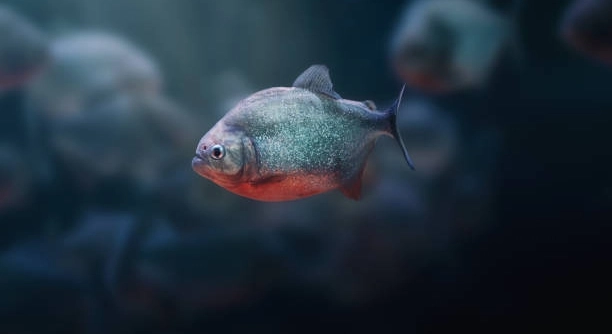
Piranhas are often seen as fierce and aggressive fish, but there are many things they simply ignore in their environment. Understanding these behaviors helps to see them in a clearer, less scary light. They act with purpose, not randomness.
Piranhas ignore certain stimuli because these factors do not affect their survival or daily needs. Their selective attention allows them to conserve energy and focus on relevant threats or food sources. This behavior is shaped by evolution and environmental demands.
Knowing what piranhas overlook reveals interesting details about their nature and habits. It also helps to understand their role in their ecosystems more deeply and accurately.
The Movement of Large Objects
Piranhas are not interested in large, slow-moving objects in their environment. They tend to focus on small, quick movements that signal potential prey or danger. Large objects like rocks, logs, or even big fish passing by do not usually provoke a reaction. This behavior helps piranhas avoid wasting energy chasing things that are not food or threats. Instead, they conserve their energy for hunting smaller, easier targets. Their sharp senses are tuned to detect sudden movements or disturbances in the water, which are more likely to mean something important. Observing a piranha tank, you’ll notice they stay calm around bigger items unless there’s rapid movement or changes. This selective response is part of how they survive in often crowded or complex habitats, allowing them to be efficient hunters without unnecessary distractions.
Large objects do not usually attract piranhas because they offer no immediate value or danger to the fish.
Ignoring large, slow movements helps piranhas save energy and focus on what truly matters for survival. This selective attention improves their hunting efficiency and keeps them alert to more pressing changes in their environment, like sudden movements from smaller fish or threats nearby.
Sounds Outside Their Territory
Piranhas often ignore noises that come from outside their immediate area. They rely more on water vibrations and visual cues than distant sounds. Sounds from far away or above water do not affect them much because their senses are adapted to underwater conditions. This makes sense since many sounds travel differently underwater and distant noises may not indicate danger or food nearby. Piranhas are cautious but also practical in their reactions. They focus on stimuli that directly impact their environment. For example, a nearby splash or struggling fish grabs their attention much faster than distant human noises or boat engines. This focus allows them to stay calm and avoid unnecessary stress from irrelevant sounds.
Sounds beyond their territory have little impact on piranhas’ behavior, as they prioritize close, meaningful signals.
Piranhas have a keen ability to filter out irrelevant noise, concentrating only on sounds and vibrations within their immediate vicinity. This focus is crucial for their survival because it prevents distraction and conserves energy. Their sensory systems have evolved to prioritize local cues that indicate food or threats. By ignoring distant sounds, piranhas can maintain steady hunting and defense behaviors without becoming anxious over harmless disturbances. This selective hearing allows them to thrive in busy river environments where many noises overlap. It also means piranhas can coexist with many environmental sounds without panic, staying alert only to what really matters underwater.
Changes in Water Temperature
Piranhas often ignore small fluctuations in water temperature. Minor changes within their normal habitat range do not bother them much. They adapt well to gradual shifts as part of their environment.
Their bodies are built to handle typical temperature changes in rivers and lakes. Sudden, extreme shifts can stress them, but slight variations are normal. Piranhas adjust their activity levels depending on temperature, becoming more active in warmer water and less so in cooler conditions. This ability helps them survive seasonal changes without reacting to every small shift. Ignoring minor temperature changes prevents unnecessary energy use and keeps them focused on feeding and defending their space.
This adaptability means piranhas don’t react to every change in temperature, only to those that truly affect their survival. It’s a natural way to conserve energy and maintain balance in their environment.
Human Presence Near Water
Piranhas generally ignore humans standing near water unless there is direct disturbance. They focus on what happens in the water, not outside of it.
Most piranhas don’t see humans as threats if people remain still or move calmly near the water’s edge. Loud noises, splashing, or throwing objects into the water are more likely to provoke a response. When humans are quiet observers, piranhas usually stay indifferent. This behavior shows their focus is on immediate underwater events, not distant or indirect disturbances. They are aware of their surroundings but selective in reacting to avoid wasting energy on non-threatening activities. Piranhas adapt to environments with regular human activity by ignoring those who pose no real danger or disrupt the water too little.
Bright Colors
Piranhas mostly ignore bright colors that don’t resemble food or danger. They focus more on movement than on color alone.
Bright objects that stay still usually don’t catch their attention. Their hunting relies on quick visual cues, not just color.
Water Currents
Piranhas tolerate normal water currents and rarely react to them. They are adapted to flowing rivers and streams where currents are common.
Strong currents that disrupt their hunting or resting may cause them to move, but gentle currents are part of their everyday environment.
Shadows Passing Overhead
Shadows moving above the water often don’t alarm piranhas unless they signal immediate danger. They ignore harmless passing shadows.
This behavior helps piranhas avoid stress from every shadow, focusing only on threats that affect their safety or feeding chances.
Why don’t piranhas react to large slow objects?
Piranhas focus on things that matter for their survival, like food or threats. Large, slow-moving objects usually don’t fit these categories, so piranhas ignore them. This behavior helps conserve energy and reduces unnecessary stress. Reacting only to sudden, relevant changes in their surroundings keeps them efficient hunters.
How do piranhas sense their environment?
Piranhas use a mix of vision, smell, and sensitivity to water vibrations. Their eyes detect movement more than color or shape, and their lateral line system senses vibrations in the water. These combined senses allow them to quickly detect prey or threats nearby while ignoring irrelevant stimuli like distant noises or still objects.
Do piranhas react to human noises?
Usually, piranhas ignore distant or above-water noises from humans. Their hearing is adapted to underwater vibrations, so sounds outside their immediate area often don’t bother them. However, loud splashes or disturbances directly in the water can attract their attention because these may signal food or danger.
Why are piranhas not scared by small changes in temperature?
Piranhas are adapted to environments where water temperature fluctuates naturally. Minor changes within their tolerance range don’t affect them much. They only respond to extreme or sudden temperature shifts that could threaten their health or survival, ignoring everyday variations that don’t impact their behavior.
Do piranhas notice bright colors?
Piranhas are more focused on movement than color. Bright colors alone rarely grab their attention unless paired with quick motions or food-like shapes. This helps them avoid unnecessary reactions to harmless objects that just happen to be bright or unusual.
Why do piranhas ignore shadows passing overhead?
Passing shadows don’t always mean danger, so piranhas don’t react to every one. They focus their energy on real threats or prey. Ignoring harmless shadows allows them to stay calm and avoid wasting energy on false alarms.
Can piranhas sense changes in water currents?
Piranhas live in rivers and streams, so they’re used to currents. They don’t react to normal water flow because it’s part of their habitat. Strong currents that disrupt their ability to hunt or rest may cause them to move, but gentle currents don’t bother them.
What happens if humans disturb the water near piranhas?
If humans splash or disturb the water, piranhas will often react because these movements can signal prey or danger. But calm presence near water, without disturbance, usually goes unnoticed by them. They can learn to ignore repeated harmless activity to save energy.
How do piranhas conserve energy by ignoring some things?
By ignoring irrelevant objects, sounds, or changes, piranhas avoid wasting energy on unnecessary reactions. This selective focus helps them stay alert only to important signals like prey movement or predators. Energy conservation is key for their survival in competitive environments.
Are piranhas aggressive all the time?
No, piranhas are not constantly aggressive. They tend to be more cautious and selective, only attacking when hungry or threatened. Ignoring many stimuli is part of their calm behavior until something important catches their attention. This helps them survive without constant stress.
Piranhas are often seen as aggressive and dangerous fish, but their behavior is much more balanced than most people think. They focus on what matters to their survival and ignore many things that do not affect them. This selective attention helps them conserve energy and stay calm in their natural habitat. By understanding what piranhas ignore and why, it becomes easier to see them as creatures simply doing what they need to live well. Their reactions are not random but purposeful, based on years of adaptation to their environment.
One important thing to remember is that piranhas respond mostly to movement, sound, and changes that directly affect them. Large objects, bright colors, or shadows that don’t signal danger or food don’t usually get their attention. Minor changes in temperature or normal water currents are also something they accept as part of their daily life. This helps them avoid unnecessary stress and stay focused on important activities like hunting and protecting themselves. Their ability to filter out irrelevant stimuli is a key reason why they survive well in rivers and lakes with many distractions.
Knowing these behaviors can change how we think about piranhas. Instead of seeing them as always aggressive, we can appreciate their calm and careful nature. They react when needed and ignore what is not useful. This balanced way of living is important for all animals to avoid wasting energy and staying safe. Understanding piranhas better can help reduce fear and promote respect for their role in the ecosystem. It reminds us that nature is full of smart and efficient ways to live, even in creatures with tough reputations.

Hello,
If you enjoy the content that we create, please consider saying a "Thank You!" by leaving a tip.
Every little bit helps us continue crafting quality advice that supports the health, happiness, and well-being of pets around the world, for pets of all shapes, sizes, and species.
We really appreciate the kindness and support that you show us!