
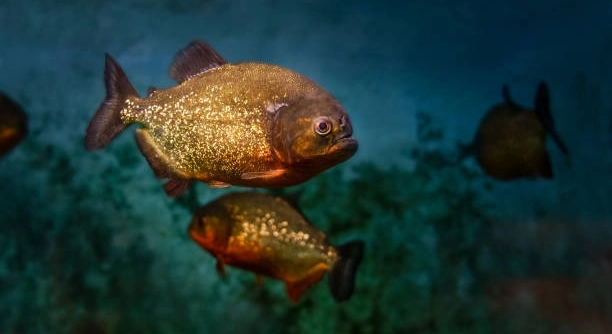
Piranhas are known for their sharp teeth and quick feeding habits. These fish use several different positions when they gather around food. Understanding how they feed can help explain their behavior in the wild and in tanks.
Piranhas use seven distinct feeding positions to approach and consume food, including frontal bites, side attacks, and group feeding. These positions maximize efficiency and minimize risk while allowing them to share or compete for food resources.
Learning about these feeding styles helps us better appreciate piranhas’ complex social and survival strategies in their natural environment.
Frontal Feeding Position
The frontal feeding position is one of the most common ways piranhas attack their food. In this position, a piranha approaches the prey or food source head-on, using its sharp teeth to deliver quick bites. This position allows the fish to control the attack and monitor the target carefully. When feeding this way, piranhas often rely on speed and precision, avoiding prolonged struggles that could cause injury. This technique is efficient for smaller or slower prey, as the fish can bite repeatedly in rapid succession. The frontal position also helps the piranha to defend its catch from other competitors nearby, making it an important tactic during feeding time.
This position shows how piranhas use direct confrontation as a way to secure food quickly and effectively.
Piranhas feeding frontally demonstrate a balance of aggression and control. They time their bites carefully to avoid wasting energy. By attacking head-on, they maximize their chances of grabbing food first and defending it from others. This feeding style is often seen when food is scarce or when a single piranha tries to keep others away from a valuable source.
Side Feeding Position
Side feeding is less aggressive but still highly effective.
When using the side feeding position, piranhas approach their target at an angle rather than head-on. This allows them to use their body’s flexibility and sharp teeth to make slashing bites along the side of their prey. This method can be useful for tearing chunks of meat or attacking larger prey that cannot be bitten from the front easily. Side feeding can also help piranhas avoid direct confrontation with stronger opponents, reducing the risk of injury. In groups, some piranhas will use this position to weaken prey before others finish the meal. This feeding style shows how piranhas adapt their approach based on the size and type of food available.
Side feeding is a smart tactic that helps piranhas feed more safely and efficiently in certain situations.
Group Feeding Position
Group feeding occurs when several piranhas attack a food source at once. This allows them to overwhelm prey quickly and share the meal among many individuals. It is a cooperative but competitive behavior.
In this position, piranhas swim closely together, biting simultaneously or in rapid sequence. The group creates a feeding frenzy that reduces the chance of any one fish being excluded from the meal. It also increases their overall feeding efficiency by breaking down large prey faster. Despite the chaos, piranhas often maintain some order, with dominant fish feeding first and others waiting their turn. This position highlights the social nature of piranhas and their ability to work as a group under pressure.
Group feeding is a survival strategy that balances competition with cooperation. It helps piranhas secure food during times when it is limited, ensuring that many can eat instead of just a few.
Bottom Feeding Position
Bottom feeding is a technique where piranhas search for food resting on or near the riverbed. They often sift through mud, debris, or plant material to find edible scraps.
This position lets piranhas access food that might be missed by other fish. By feeding near the bottom, they reduce competition and find insects, small fish, or organic matter hiding in the sediment. The fish use their sharp teeth to pick and bite through material carefully. Bottom feeding also helps piranhas stay less exposed to predators since they are close to cover. This method shows their adaptability in finding food in different environments and conditions. It’s a slower, more patient feeding style compared to the aggressive surface attacks.
Feeding near the bottom allows piranhas to take advantage of resources that others overlook, helping them survive when surface food is scarce.
Ambush Feeding Position
Ambush feeding happens when piranhas wait quietly before striking suddenly. This position relies on patience and surprise.
Piranhas stay still near hiding spots and wait for prey to come close. When the moment is right, they launch a fast attack, using the element of surprise to catch food easily.
Surface Feeding Position
Surface feeding involves piranhas taking food from the water’s surface. They nip at floating insects, plants, or scraps. This feeding style lets them access food that falls into the water and helps them stay alert to movement above.
Opportunistic Feeding Position
Piranhas are opportunistic feeders, meaning they take advantage of any available food. They don’t stick to one position but adapt based on what’s easiest or safest to get.
Being flexible with feeding positions increases their chances of survival in changing environments. They may switch between aggressive bites and cautious nibbles depending on the situation.
Solitary Feeding Position
Some piranhas feed alone to avoid competition. Solitary feeding lets them focus on a single food source without interference from others.
FAQ
How do piranhas decide which feeding position to use?
Piranhas choose their feeding position based on the type of food, the situation, and the presence of other fish. If the food is small and slow, they may attack frontally or from the side. When food is large or shared, group feeding becomes common. They also consider safety, sometimes feeding near the bottom or ambushing when danger is nearby. Their choices show a balance between efficiency and survival.
Are some feeding positions more aggressive than others?
Yes, feeding frontally or in groups tends to be more aggressive. These positions involve quick, forceful bites and sometimes competition between piranhas. On the other hand, bottom feeding and surface feeding are calmer and slower. Ambush feeding uses surprise rather than aggression, while solitary feeding reduces conflict. The level of aggression depends on how much competition there is and the type of food available.
Do piranhas always feed in groups?
No, piranhas do not always feed in groups. While group feeding is common when food is large or plentiful, individual fish may feed alone when food is scarce or competition is high. Solitary feeding helps avoid fights and allows a piranha to focus on one meal. This balance between group and solitary feeding helps them survive under different conditions.
How does the environment affect piranhas’ feeding behavior?
The environment plays a big role in feeding behavior. In murky water, ambush feeding is more common because piranhas can hide better. In clear water, they may rely on frontal or side attacks. Availability of food at the surface, bottom, or open water also influences their feeding style. Seasonal changes can affect food sources, making piranhas adapt their positions to what’s available.
Can piranhas eat plants, or do they only eat meat?
Piranhas mainly eat meat, such as fish, insects, and small animals, but some species also consume plants. Surface feeding sometimes involves nibbling on floating plants or fruit. Their teeth and jaws are mostly designed for tearing flesh, but they can digest plant matter as a supplement, especially when animal prey is scarce. This varied diet helps them survive in different habitats.
Do feeding positions change as piranhas grow?
Feeding positions can change as piranhas grow. Younger or smaller piranhas often use safer positions like bottom feeding or solitary feeding to avoid competition and injury. Larger, mature piranhas may become more aggressive, using frontal or group feeding to secure bigger meals. Growth affects their strength and confidence, which changes how they approach food.
How do piranhas avoid injuring each other during group feeding?
Piranhas use quick, precise bites to minimize injury to themselves and others. Although feeding in groups looks chaotic, they often respect social order. Dominant fish feed first, and others wait their turn or feed on leftovers. Their sharp teeth are meant for prey, not other piranhas, so they try to avoid biting each other. This reduces risk while sharing a meal.
Is it common for piranhas to fight over food?
Fighting can happen, especially when food is limited. Piranhas show aggression to protect their meal or claim better feeding spots. However, many feeding positions and group dynamics help reduce direct conflict. Cooperation in group feeding and solitary feeding strategies help balance competition. Fighting is part of their survival but is not constant during feeding.
What role do piranhas’ teeth play in their feeding positions?
Their sharp, triangular teeth are crucial for all feeding positions. These teeth allow piranhas to bite quickly and tear flesh efficiently. In frontal and side feeding, teeth cut through prey rapidly. For bottom and surface feeding, they help pick at small food pieces. Teeth shape their ability to use different positions and adapt to various food types, making them effective predators.
How does feeding behavior affect piranhas’ social interactions?
Feeding behavior is closely tied to social structure. Group feeding requires coordination and tolerance, while solitary feeding limits social contact. Feeding positions can signal dominance or submission. Aggressive feeding shows strength, while waiting or feeding quietly shows respect for others. These behaviors shape group dynamics, helping piranhas survive as both individuals and members of a community.
Final Thoughts
Piranhas have many ways of feeding, and each method serves a purpose. They use different positions depending on the food, their surroundings, and the company they keep. Some positions are fast and aggressive, like frontal attacks or group feeding, while others are slower and more cautious, like bottom feeding or solitary feeding. This variety helps piranhas survive in many different situations. It shows that these fish are not just mindless predators, but smart and adaptable animals.
Their feeding behavior also tells us about how piranhas interact with each other. When they feed together, they balance competition with cooperation. Group feeding may look wild, but there is often an order that helps reduce fights. At other times, piranhas choose to feed alone to avoid conflict and focus on their meal. This balance between working with others and keeping distance helps the whole group survive. It also shows the complexity of their social lives beneath the surface.
Understanding piranhas’ feeding positions gives us a clearer picture of how they live and survive. It helps us appreciate their skills and strategies instead of just seeing them as dangerous fish. By paying attention to these behaviors, we learn more about how animals adapt to their environment. It also reminds us that even creatures with a fierce reputation have layers of behavior that serve different needs. Piranhas are interesting animals, and their feeding styles are just one part of what makes them unique.

Hello,
If you enjoy the content that we create, please consider saying a "Thank You!" by leaving a tip.
Every little bit helps us continue crafting quality advice that supports the health, happiness, and well-being of pets around the world, for pets of all shapes, sizes, and species.
We really appreciate the kindness and support that you show us!