
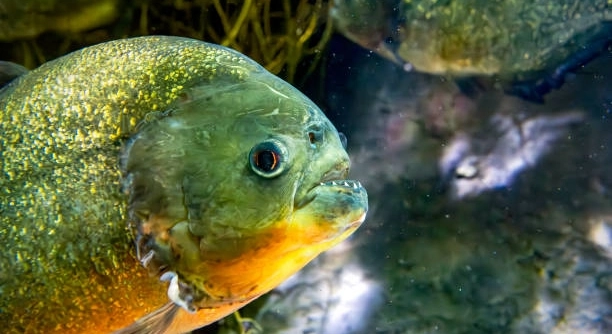
Piranhas are often seen as fierce predators, but their perception abilities remain largely misunderstood. These fish use more than just sharp teeth to survive; their senses play a crucial role in how they interact with their environment and other creatures.
Piranhas possess a complex sensory system that includes keen eyesight, acute smell, and the ability to detect electrical signals in water. These capabilities enable them to hunt efficiently, navigate murky waters, and communicate within their schools.
Exploring these lesser-known aspects of piranha perception reveals new insights about their behavior and survival strategies in the wild. This article uncovers seven intriguing facts about how piranhas sense the world around them.
The Role of Vision in Piranha Perception
Piranhas rely heavily on their eyesight to locate prey and navigate their environment. Their eyes are adapted to detect movement and changes in light, which helps them spot potential food even in low-visibility water. Unlike many fish, piranhas have eyes positioned on the sides of their heads, giving them a wide field of view. This allows them to monitor threats and prey simultaneously. Their visual acuity is sharp enough to distinguish shapes and contrast, essential for hunting and avoiding danger. Additionally, piranhas can adjust to different light conditions, improving their ability to hunt at dawn, dusk, or in murky waters. This adaptability is key to their survival in diverse habitats.
Visual cues are vital for piranhas to identify prey and communicate with other members of their school. Their vision supports both hunting and social interactions.
Despite their reputation for aggression, piranhas use vision mainly for survival, not constant attack. Their eyesight plays a critical role in detecting movement and assessing threats. This sensory ability also helps them coordinate group behavior, enhancing safety and efficiency when hunting or fleeing predators. Understanding how vision supports their lifestyle offers a clearer picture of their behavior beyond their sharp teeth.
Electrical Sense Enhances Environmental Awareness
Piranhas possess a specialized sensory system that detects electrical signals in water. This ability helps them sense movements and vibrations caused by other animals or environmental changes.
This electroreception allows piranhas to locate prey hidden under sediment or in murky water where vision is limited. The sensory organs, called the ampullae of Lorenzini, are spread around their head and body. These receptors pick up weak electric fields generated by muscle contractions and nerve impulses in other organisms. This sense is especially useful at night or in turbid waters, making piranhas efficient hunters regardless of visibility.
The electrical sense also assists in navigation by detecting obstacles and helping piranhas maintain their position in schools. This adaptation increases their chances of survival by improving their ability to respond quickly to threats and opportunities. The electroreceptive system complements their other senses, making them well-equipped predators in challenging environments. It highlights the complexity of their sensory world, which goes far beyond just sight and smell.
The Importance of Smell in Piranha Hunting
Piranhas have a highly developed sense of smell that plays a critical role in locating food. They can detect blood and other chemical signals in the water from long distances. This ability helps them respond quickly to potential meals.
The olfactory system of piranhas is very sensitive, allowing them to pick up scents that indicate wounded or stressed prey nearby. This is crucial because water can quickly disperse these chemical cues, making speed essential. Smell works alongside their vision and electrical sensing to form a comprehensive hunting strategy. This combination ensures piranhas can find food efficiently even when visibility is poor or prey is hidden. Their ability to detect faint chemical signals gives them an advantage in competitive environments.
Using smell to track prey also supports social feeding behavior. When one piranha detects blood or other scents, it can attract others, leading to coordinated hunting. This group response increases the chance of capturing prey quickly, demonstrating how smell contributes to both individual survival and collective efficiency.
Piranha Perception and Social Behavior
Piranhas use their senses to communicate and maintain social order within their groups. Sensory input helps regulate interactions and reduce conflict.
Sensing each other through visual and electrical signals, piranhas establish dominance and coordinate movements to avoid unnecessary fights. This reduces energy waste and improves group cohesion. Their sensory systems enable them to react to threats collectively, strengthening their defense. The perception abilities that support hunting also allow piranhas to interact smoothly within their schools, balancing aggression with cooperation. This social aspect of their sensory world shows that perception is not only about survival but also about maintaining harmony. Their ability to read subtle cues keeps the group functioning effectively in a competitive habitat.
Sensory Adaptations for Murky Waters
Piranhas have adapted to thrive in environments with low visibility. Their multiple senses compensate when sight is limited.
These adaptations allow piranhas to hunt and navigate effectively, even in muddy or dark waters. Their combined sensory abilities provide reliable information in challenging conditions.
Piranha Communication Through Sensory Signals
Piranhas communicate using subtle sensory signals, including body movements and electrical pulses. These signals help coordinate group activities. Communication reduces unnecessary aggression and supports social organization within schools.
Sensory Response to Threats
Piranhas quickly detect danger through sensory cues like vibrations and changes in water pressure. This rapid response improves their chances of escape or defense against predators.
FAQ
How do piranhas use their senses to hunt?
Piranhas rely on a combination of eyesight, smell, and electrical sensing to locate prey. Their sharp vision helps them detect movement, while their keen sense of smell tracks blood or chemical signals in the water. Electrical receptors allow them to sense muscle movements of hidden prey. This multisensory approach makes their hunting efficient even in murky or dark conditions.
Can piranhas see well in the dark?
Piranhas have adapted to low-light environments but do not have true night vision like some animals. Their eyes adjust to varying light levels, allowing them to see better at dawn or dusk. When visibility drops too low, they rely more on smell and electrical sensing to detect prey or danger.
What is electroreception, and how does it help piranhas?
Electroreception is the ability to detect electric fields generated by other animals. Piranhas use this sense to find prey hidden under sediment or in dark water. Specialized organs called ampullae of Lorenzini detect weak electrical signals from muscle contractions and nerve impulses, giving piranhas an advantage when sight and smell are limited.
How do piranhas communicate with each other?
Piranhas communicate through body language, movement patterns, and electrical signals. These sensory cues help establish social order and coordinate group hunting or defense. By reading subtle signals, piranhas avoid unnecessary fights and maintain group cohesion.
Do piranhas rely more on smell or sight?
Both senses are important, but their use depends on the environment. In clear water, vision plays a larger role. In turbid or dark water, smell becomes more critical. Their sensory systems complement each other, allowing them to adapt to different hunting conditions effectively.
How sensitive is a piranha’s sense of smell?
Piranhas can detect blood and other chemical signals from long distances. Their olfactory system is finely tuned to pick up faint traces that indicate injured or stressed prey nearby. This sensitivity enables them to respond quickly to feeding opportunities.
Are piranhas aggressive because of their senses?
Piranha aggression is often misunderstood. Their sensory abilities help them survive by detecting food and threats rather than promoting constant attacks. Sensory signals also help them regulate social behavior and reduce unnecessary aggression within their groups.
Can piranhas detect predators using their senses?
Yes. Piranhas use vibrations, electrical signals, and visual cues to sense approaching predators. Their rapid response to these sensory inputs increases their chances of escaping danger or defending themselves effectively.
Do piranhas use senses for navigation?
Piranhas use all their senses to navigate complex environments. Vision helps avoid obstacles, smell can signal the presence of other fish or food, and electroreception aids in sensing nearby objects or animals. Together, these senses help them move safely through their habitats.
How do environmental changes affect piranha perception?
Changes in water clarity, temperature, and pollution can impact sensory effectiveness. Murky or polluted water reduces visual range, making smell and electroreception more important. Temperature changes can alter sensory function as well. Piranhas rely on their adaptable senses to cope with these environmental variations.
Are there differences in sensory abilities between piranha species?
Some variations exist among species, often reflecting habitat differences. Species living in clearer waters may depend more on vision, while those in murkier environments may have enhanced smell or electroreception. However, the basic sensory capabilities remain consistent across most piranhas.
How do piranhas use sensory input during social feeding?
When one piranha detects blood or prey, its behavior and chemical signals attract others. This sensory-driven group response increases feeding success. Coordinated hunting reduces energy expenditure and helps piranhas secure food efficiently within their schools.
Is electroreception unique to piranhas?
No. Electroreception exists in several fish species, including sharks and rays. It is especially useful in aquatic environments where visibility is limited. For piranhas, this sense complements vision and smell, creating a well-rounded sensory system.
Do juvenile piranhas have the same sensory abilities as adults?
Juveniles have developing sensory systems similar to adults but may not be as efficient initially. As they grow, their senses become sharper and more finely tuned, improving their ability to hunt and avoid threats.
How do scientists study piranha perception?
Research methods include behavioral experiments, anatomical studies, and monitoring sensory responses under different conditions. Scientists observe how piranhas react to stimuli like light, scent, and electrical fields to understand their sensory capacities better.
These answers clarify how piranhas depend on a complex combination of senses for survival, hunting, and social behavior. Their perception is finely adapted to varied and often challenging aquatic environments.
Final Thoughts
Piranhas are often seen as simple, aggressive fish, but their perception is more complex than most people realize. Their ability to use multiple senses—such as sight, smell, and electroreception—allows them to survive and thrive in a variety of environments. These senses work together to help them find food, avoid predators, and communicate with each other. Understanding how piranhas perceive their surroundings offers a clearer picture of their behavior and ecology beyond the usual stereotypes.
The combination of senses also shows how adaptable piranhas are. In clear water, vision is important, but when conditions change and the water becomes murky or dark, smell and electrical sensing become essential. This sensory flexibility supports their ability to live in diverse habitats and cope with environmental changes. Their social behavior is also shaped by these sensory inputs, helping them maintain group cohesion and reduce unnecessary conflicts. This balance of aggression and cooperation is linked closely to their sensory world.
Learning about piranha perception can change the way we view these fish. They are not just fierce predators but animals with refined sensory skills that support survival and social living. This knowledge helps explain their success in the wild and encourages a more respectful understanding of their role in aquatic ecosystems. Recognizing their sensory capabilities also highlights the importance of protecting their habitats, as changes in water quality or environment can affect how well they sense and respond to the world around them.

Hello,
If you enjoy the content that we create, please consider saying a "Thank You!" by leaving a tip.
Every little bit helps us continue crafting quality advice that supports the health, happiness, and well-being of pets around the world, for pets of all shapes, sizes, and species.
We really appreciate the kindness and support that you show us!