
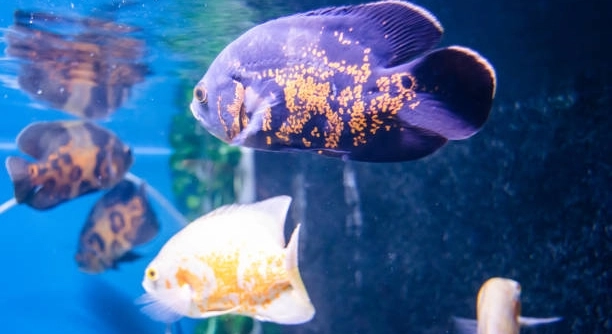
Oscar fish are fascinating creatures, known for their intelligence and unique behaviors. Many fish owners often wonder how their Oscars interact with their environment, including whether they respond to human voices.
Oscar fish can indeed react to human voices. They are highly perceptive and can recognize sounds, especially familiar ones like their owners’ voices. This sensitivity is likely linked to their ability to distinguish sounds in their natural habitat.
Oscar fish are not only aware of their surroundings but can also build bonds with their owners. Their responses to sounds and interactions reveal a level of connection that goes beyond simple instinct.
How Oscar Fish Hear Sounds
Oscar fish, like most fish, rely heavily on their senses to interact with their environment. Their hearing abilities are different from those of land animals, but they are still quite impressive. Oscars have a sensitive inner ear and can detect vibrations in the water. This means they can hear sounds, especially when these vibrations are caused by movements around their tank. While they don’t “hear” in the same way humans do, their ability to perceive sound and vibration helps them identify changes in their environment. When you speak near their tank, they can sense the sound waves traveling through the water, making them aware of your presence.
Oscar fish may respond to sounds they find familiar, like the sound of your voice or even certain noises associated with feeding times. They don’t recognize words, but they can learn to associate the sound of their owners’ voices with something positive, like food or attention.
Oscars are social creatures, and over time, they can become accustomed to certain sounds. This behavior is not limited to just hearing their owner’s voice but extends to general environmental sounds. Their acute sense of hearing helps them detect these noises and react accordingly.
How Oscars React to Human Voices
Oscars can develop a connection to the sounds that come from their owners. They may swim toward the sound of your voice, especially when they hear it frequently. Over time, they can even anticipate events like feeding when they hear specific sounds.
The relationship between Oscars and human voices is influenced by repetition and consistency. When the same sounds are made regularly, Oscars learn to associate these with food or attention. For example, if you speak to them before feeding, they may start to swim toward you when they hear your voice, recognizing it as a signal for food.
These interactions show how intelligent Oscar fish can be. They are capable of recognizing patterns and learning from them. Over time, they may even develop a bond with their owners, showing signs of excitement when they hear familiar sounds. Understanding this can enhance your relationship with your Oscar fish, making your interactions more rewarding.
How Oscar Fish Process Sound
Oscar fish can process sound differently than land animals. While they don’t have external ears, their internal ear structure allows them to pick up vibrations and sounds through the water. This ability helps them stay alert to changes in their environment, whether from potential threats or familiar sources like their owners.
These vibrations are transmitted through the fish’s lateral line, a sensory organ running down its body. This organ helps them detect movement and changes in the water. While it may not be the same as hearing in humans, it serves a similar purpose in helping Oscars respond to their environment.
Oscar fish can also sense vibrations from their owner’s voice, especially if the sound is consistent and frequent. Over time, this can lead to a level of recognition where the fish associates certain sounds with events, such as feeding time or interaction. Their reaction to these sounds can be seen in their behavior, like approaching the glass or swimming more actively when they hear familiar voices.
How to Communicate with Oscar Fish
Interacting with Oscar fish can be an enjoyable experience if done consistently. One way to bond with them is through your voice. Speaking to your Oscar regularly can help them recognize your presence, even when they don’t directly see you.
Oscar fish are intelligent and can learn to associate certain sounds with specific actions. For instance, speaking softly near their tank can make them aware of when it’s feeding time. They may start to respond by swimming toward you, showing that they are recognizing and reacting to your voice. Keeping a calm and steady tone can help reinforce this behavior.
Through regular communication, you’ll be able to build a connection with your Oscar. While they might not understand the meaning of your words, they will begin to connect the sound of your voice with comfort and routine, improving your bond.
The Role of Environment in Sound Detection
Oscar fish’s ability to hear and respond to sounds is influenced by their environment. The tank’s size, water quality, and the presence of objects like decorations or plants can all affect how well they detect sounds. A cluttered or noisy tank may create more distractions, reducing their sensitivity to specific sounds.
The acoustics of the water are another factor. In larger tanks, sound waves may dissipate more, making it harder for Oscars to hear. In contrast, smaller tanks or quiet environments allow sound to travel more directly. Clean water also helps maintain better overall sensitivity, enabling Oscars to react more quickly to sounds.
How to Improve Interaction with Oscar Fish
To improve your interactions, make sure the environment is conducive to Oscar fish hearing your voice. A quiet tank with minimal distractions helps them focus on sound cues. You can also talk to them consistently to strengthen the bond. Over time, they may begin to recognize your voice more easily.
The Influence of Tank Size on Behavior
The size of your Oscar’s tank can impact their ability to hear and respond to sound. In smaller tanks, sounds travel more clearly, making it easier for Oscars to detect them. In a larger tank, they might miss out on more subtle cues.
FAQ
Do Oscar fish recognize their owners’ voices?
Oscar fish can learn to recognize familiar sounds, including their owners’ voices. While they don’t understand words, they can associate the sound of your voice with actions like feeding time. Over time, they may swim toward you when they hear you speak, especially if they associate the sound with something positive, like food or attention. Repeating the same sounds or speaking to them regularly will help them form this connection.
Can Oscar fish distinguish between different sounds?
Yes, Oscar fish can distinguish between different sounds. They rely on their lateral line and internal ear structure to pick up vibrations in the water. Over time, they can differentiate between the sounds of food being prepared, the sound of their owner’s voice, or other environmental noises. The more consistent and distinct the sound, the more likely they are to recognize it.
How do Oscar fish react to loud sounds?
Oscar fish may become startled or stressed by loud, sudden noises. As sensitive creatures, they rely on their ability to sense vibrations in the water to understand their environment. A loud sound may make them swim erratically or hide, as they instinctively seek safety. Keeping the tank environment calm and minimizing loud noises is essential for their well-being.
Why do Oscar fish swim toward their owner’s voice?
Oscar fish swim toward their owner’s voice because they associate it with food, attention, or positive experiences. Over time, they learn to link the sound of their owner speaking with feeding time or social interaction. This behavior shows that Oscars are capable of recognizing familiar sounds and responding to them accordingly.
How can I bond with my Oscar fish using sound?
To bond with your Oscar fish using sound, start by talking to them regularly in a calm and soothing voice. Consistency is key. When you feed them, speak to them before or during the process. Your Oscar will eventually start associating your voice with food, and you may see them swimming toward you when they hear you. This connection can build trust and strengthen the bond between you and your fish.
Do Oscar fish respond to music?
Oscar fish can react to music, but their response is more likely to be influenced by the vibrations and rhythms they perceive through the water. While they may not enjoy music in the way humans do, they can detect sound patterns. Some Oscars may become curious or move more actively when exposed to music, especially if the vibrations are consistent. It’s important to keep the volume at a reasonable level to avoid stressing them out.
Can Oscar fish hear high-pitched sounds?
Oscar fish are more sensitive to low and mid-range frequencies, but they can still detect some high-pitched sounds. Their ability to hear high-pitched sounds is not as developed as humans, but they can sense vibrations from these frequencies. However, they are better at detecting sounds in the frequency range that corresponds to their natural environment, such as the sounds made by prey or other fish.
How do Oscar fish communicate with each other?
Oscar fish communicate with each other primarily through body language and vibrations. They use visual cues, such as changes in body color or postures, to convey emotions like aggression or submission. They also use sounds and vibrations in the water to communicate, especially in social settings or during breeding. While not vocal, Oscars rely on their sensitivity to environmental vibrations to understand each other.
Are Oscar fish sensitive to noises outside the tank?
Yes, Oscar fish can be sensitive to noises outside their tank. While they can’t hear sounds as humans do, the vibrations from external noises travel through the water. Loud sounds from the outside, such as banging or heavy footsteps, may cause them to react, showing signs of stress or fear. Keeping the area around the tank quiet can help reduce unnecessary stress for your Oscar.
How can I tell if my Oscar fish is stressed by sound?
If your Oscar fish is stressed by sound, you may notice changes in its behavior. It may swim erratically, hide more frequently, or appear agitated. Stress from sound can also cause a decrease in appetite or changes in the fish’s color. If you notice these signs, try to identify the source of the noise and reduce it to create a more comfortable environment for your Oscar.
Final Thoughts
Oscar fish are intelligent and sensitive creatures, capable of recognizing and responding to sounds, especially those they associate with food or attention. While they don’t understand language in the way humans do, they can still pick up on patterns and connections. Speaking to them regularly can help build a bond, as they begin to recognize your voice and associate it with positive experiences, like feeding. With enough consistency, Oscars will start swimming toward you when they hear familiar sounds, showing their ability to form a connection.
However, it’s important to remember that Oscars also respond to their environment, and not just the sounds. The tank’s size, water quality, and any external noises all play a role in how well they can hear and react. A quieter environment with minimal distractions will allow your Oscar to better hear your voice and respond accordingly. Loud or sudden noises, especially those outside the tank, can stress them out, so it’s crucial to maintain a peaceful space for them.
In the end, understanding how Oscar fish react to sound helps improve your relationship with them. They may not communicate in the same way as humans or land animals, but their ability to recognize familiar sounds shows their intelligence and sensitivity. By speaking to them consistently and creating a calm environment, you can build trust and strengthen the bond between you and your Oscar fish.

Hello,
If you enjoy the content that we create, please consider saying a "Thank You!" by leaving a tip.
Every little bit helps us continue crafting quality advice that supports the health, happiness, and well-being of pets around the world, for pets of all shapes, sizes, and species.
We really appreciate the kindness and support that you show us!