
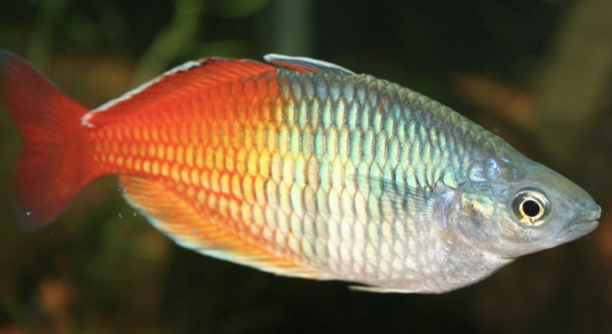
Rainbow fish are colorful and active creatures that are often admired in aquariums. These fish exhibit fascinating behaviors that intrigue researchers and hobbyists alike. One aspect that sparks curiosity is their ability to track moving objects.
Rainbow fish have shown the ability to track moving objects through visual stimuli. They use their keen eyesight and rapid movements to respond to changes in their environment. This behavior is crucial for survival in the wild, aiding in predator avoidance.
There are various factors at play when it comes to understanding how rainbow fish track moving objects. Their vision plays a key role in detecting motion, making them adaptable to shifting surroundings.
How Rainbow Fish Use Their Eyesight to Track Moving Objects
Rainbow fish rely heavily on their eyesight to track moving objects in their environment. Their eyes are adapted to detect quick movements, which is essential for survival. In the wild, this skill helps them identify predators and avoid danger. The fish’s vision is sharp, allowing them to spot the slightest changes in their surroundings. Their eyes are designed to detect a wide range of colors, giving them an advantage when spotting moving prey or threats. This visual ability is also crucial for communication between other fish, as they use their movements to send signals.
Fish can see a broad spectrum of light, including colors humans cannot perceive. This helps them spot motion with greater ease. It also makes them effective at navigating through murky waters where visibility is low. Their color sensitivity allows them to adjust to varying light levels, enabling better tracking of objects in both bright and dim conditions.
Understanding how rainbow fish rely on their sight to track moving objects gives insight into their behavior and survival tactics. Their keen vision aids in predator detection and communication, allowing them to stay alert and react quickly to threats.
Environmental Factors Affecting Tracking Behavior
Light plays a significant role in how rainbow fish track moving objects. The intensity and direction of light can influence their ability to detect movement, especially in deeper or more turbid water.
Aside from vision, the surrounding environment also affects the fish’s tracking abilities. Factors like water clarity and light levels can influence how well rainbow fish respond to movement. In clearer waters, they can track faster and with more precision, while murky waters may limit their range of detection. Environmental disturbances like currents or other fish activity can also impact how rainbow fish focus on moving objects, affecting their ability to stay alert to threats.
How Rainbow Fish React to Moving Objects
Rainbow fish typically react to moving objects by swimming toward or away from them, depending on the situation. This reaction is largely instinctual, helping them survive in their natural habitat. They can quickly assess the potential threat or opportunity and adjust their movements accordingly. Their fast reflexes make them efficient in avoiding predators or catching prey. This ability is part of their survival toolkit, allowing them to be agile and responsive in the ever-changing aquatic environment.
These fish also use their reactions to communicate with each other. When a fellow fish moves suddenly, others may follow suit, creating a coordinated movement. This is common when they feel threatened, signaling to others to take action. Their ability to synchronize movements helps the group stay safe. Whether it’s evading a predator or hunting for food, their quick responses are vital for group survival. Additionally, they show similar reactions when a human interacts with their tank, sometimes swimming excitedly towards the movement.
Fish don’t just respond randomly. Their movements are often calculated and based on past experiences, allowing them to react appropriately to different situations. Over time, rainbow fish learn to distinguish between harmless movements and potential threats. This learned behavior is crucial for their survival, showing that even small fish can adapt and thrive in diverse environments.
The Role of Their Environment in Tracking
The environment has a significant impact on how rainbow fish track and respond to moving objects. Light intensity, water clarity, and even tank size all play a role in their ability to react effectively. In clear water, they can see and track objects more easily, allowing for quicker responses to movement. On the other hand, murky waters reduce their visual range, making it more difficult for them to detect changes in their surroundings.
Temperature also plays a role in how rainbow fish perceive their environment. Warmer waters tend to make them more active, increasing their responsiveness to moving objects. Cooler waters can slow them down, affecting their tracking abilities. The presence of other fish or objects in the water can also impact their ability to stay focused on a moving object. Fish in crowded tanks may be distracted by other movements, making it harder for them to focus on a single object. Despite these challenges, rainbow fish adapt well to their surroundings, adjusting their behavior based on the conditions of their environment.
The Impact of Tank Size on Tracking Abilities
The size of the tank can affect how well rainbow fish track moving objects. In larger tanks, fish have more space to swim and react, which can improve their ability to track and escape from moving objects. However, smaller tanks may limit their movement, making them less agile and slower to respond.
Rainbow fish in cramped tanks may also experience more stress, which can negatively affect their behavior. The limited space reduces their ability to escape quickly from perceived threats, slowing their reactions. A bigger tank provides a better environment for them to display natural tracking and swimming behaviors, improving their overall well-being.
How Moving Objects Affect Fish Behavior
When an object moves in their environment, rainbow fish instinctively react by swimming toward or following it. This behavior is part of their natural instinct to track prey or avoid threats. Depending on the object, the fish might swim in a coordinated fashion with others, enhancing their chances of survival.
Rainbow fish are particularly sensitive to changes in their environment. Even small movements, like a hand near their tank, can trigger a response. This reaction is not only driven by instincts but also by their curiosity, which encourages them to explore their surroundings.
Tracking in Captivity vs. the Wild
Tracking behaviors may differ between rainbow fish in the wild and those kept in captivity. In the wild, the fish need to track fast-moving prey or predators constantly. In captivity, their movement might be more limited due to the environment. However, they still exhibit tracking behaviors, especially when fed or interacted with.
FAQ
Can rainbow fish see in low light conditions?
Rainbow fish can see in low light, but their vision is more effective in brighter environments. They have specialized eyes that allow them to detect movement in dimmer waters. However, their ability to track objects decreases as the lighting dims. In aquariums, providing proper lighting can help rainbow fish maintain their tracking abilities, making them more responsive to movement.
Do rainbow fish have good memory?
Rainbow fish have a basic form of memory, especially when it comes to recognizing their environment and food sources. They can remember places where they have been fed or encountered danger. However, their memory isn’t as advanced as more complex animals, and they rely more on instinct than learned behavior for tracking moving objects.
How fast can rainbow fish track moving objects?
Rainbow fish are quick swimmers and can react rapidly to moving objects. Their speed and agility allow them to track objects within seconds, whether it’s prey or a perceived threat. They rely on both visual cues and fast reflexes to make quick decisions about how to move in response to objects in their environment.
Do rainbow fish use their sense of smell to track moving objects?
While rainbow fish primarily rely on their vision to track moving objects, they also have a strong sense of smell. This sense can help them detect food or predators nearby. However, when it comes to tracking specific moving objects, vision plays a more significant role than smell, allowing them to respond faster and with more precision.
Can rainbow fish recognize humans?
Rainbow fish can recognize humans, especially if they are fed regularly by the same person. They may swim towards you when they see your hand or notice your approach to the tank, anticipating food. While they don’t form emotional bonds like mammals, they associate certain humans with food and will react accordingly.
Do rainbow fish track other fish?
Yes, rainbow fish can track the movement of other fish in their tank. They are social animals, and they often swim in groups, following the movements of other fish. This behavior can be triggered by the presence of food, a change in their environment, or a perceived threat. They respond to the movements of other fish by swimming together in a coordinated way.
Why do rainbow fish chase each other?
Rainbow fish may chase each other for various reasons, most commonly due to territorial behavior or mating rituals. Male rainbow fish often chase females during the breeding season to court them. Sometimes, chasing behavior can also be a sign of dominance, especially in a confined environment where space is limited.
Do rainbow fish track moving food?
Yes, rainbow fish are very adept at tracking moving food. Their strong vision allows them to follow food as it moves through the water, making them responsive to feeding. This behavior is particularly evident when they are fed live food, like small shrimp or worms, as they actively chase and track it.
How do rainbow fish track fast-moving objects?
Rainbow fish track fast-moving objects using their sharp eyesight and quick reflexes. When something moves quickly in their environment, their brain processes the movement, triggering an immediate response. This allows them to swim quickly and efficiently in the direction of the object, whether it’s a predator or food.
Do rainbow fish get stressed by moving objects?
Rainbow fish can get stressed by sudden or erratic movements in their environment, especially if they feel threatened. Constant movement in their tank, like fast hands or moving objects, can cause them to become anxious. It’s important to ensure their environment remains calm and stable to prevent unnecessary stress. Regular interaction should be gentle and purposeful, especially when feeding or cleaning their tank.
How does tank decoration affect rainbow fish tracking behavior?
Tank decorations, such as plants, rocks, and structures, can provide hiding spots for rainbow fish, reducing their stress and allowing them to feel secure. These decorations also create a more dynamic environment, encouraging the fish to use their tracking abilities to navigate and explore. However, too many obstacles can make it harder for them to track fast-moving objects, as they may become distracted or obstructed.
Can rainbow fish track moving objects outside their tank?
Rainbow fish can often track movements outside their tank, especially if they notice something large or sudden. For example, if a person walks past the tank or if there’s a change in lighting, rainbow fish may follow that movement with their eyes. Their vision and curiosity can make them aware of events outside their tank, but they won’t be able to interact with those objects as they would within their environment.
Are rainbow fish sensitive to vibrations?
Yes, rainbow fish are sensitive to vibrations in the water, which can affect how they react to moving objects. Vibrations from nearby activity or changes in the environment may alert them to potential threats. However, their visual tracking ability remains their primary method of detecting moving objects. Vibrations can simply serve as an additional cue that something is occurring around them.
Do rainbow fish track objects when they’re not hungry?
Yes, rainbow fish will still track objects even when they are not hungry. Their tracking behavior is driven by both their instinct to explore and their need to stay aware of their surroundings. This helps them detect predators, interact with other fish, and find new territories. Their curiosity and survival instincts keep them alert, regardless of hunger.
How does the behavior of other fish affect rainbow fish tracking?
Rainbow fish often track the movement of other fish in their tank, especially if they are part of a school. The movement of other fish can trigger a coordinated response, where the group reacts as one unit to changes in their environment. This behavior can also influence how individual fish track moving objects, as they may follow the lead of more dominant fish in the tank.
Final Thoughts
Rainbow fish are fascinating creatures, especially when it comes to their ability to track moving objects. Their keen eyesight and quick reflexes make them highly adaptable in their natural environment. Whether they are evading predators, hunting for food, or responding to the presence of other fish, these fish rely heavily on their vision to detect movement. In aquariums, their behavior can be observed when they interact with their surroundings, whether it’s tracking food or reacting to changes in the environment. Understanding how rainbow fish use their senses to navigate and track moving objects sheds light on their overall behavior and survival strategies.
The role of their environment, including light conditions and tank size, plays a significant part in how effectively they track objects. In a well-lit, spacious tank, rainbow fish can move more freely, enhancing their ability to track and respond to movement. On the other hand, cramped or poorly lit spaces may limit their natural behaviors and reduce their ability to track fast-moving objects. Environmental factors such as water clarity, temperature, and the presence of other fish also contribute to how rainbow fish react to movement. These factors influence not only their ability to track objects but also their overall well-being in captivity.
Rainbow fish show a fascinating combination of instinct and learned behavior when it comes to tracking moving objects. Their reactions are essential for survival, whether in the wild or in an aquarium. Observing them closely can give us a better understanding of how these small but dynamic creatures interact with their surroundings. Although their memory and cognitive abilities may be basic, their sharp vision and quick reflexes make them well-equipped to respond to changes in their environment. By paying attention to the factors that affect their behavior, we can create a more enriching and supportive environment for rainbow fish to thrive in.

Hello,
If you enjoy the content that we create, please consider saying a "Thank You!" by leaving a tip.
Every little bit helps us continue crafting quality advice that supports the health, happiness, and well-being of pets around the world, for pets of all shapes, sizes, and species.
We really appreciate the kindness and support that you show us!