
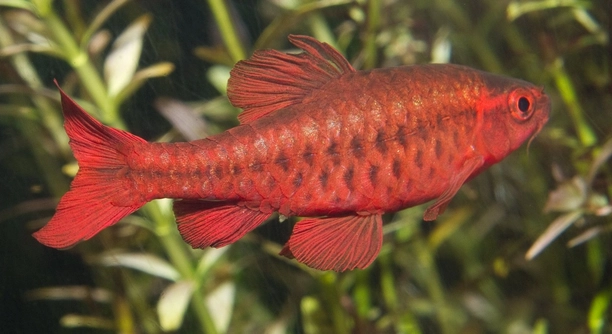
Cherry barbs are often found swimming alone in aquariums, which can leave owners wondering why. Understanding their behavior can help create a better environment for these fish to thrive.
The primary reason your cherry barb may be alone is due to their natural social structure. These fish are often shy and prefer to avoid larger, more aggressive tank mates. Stress and territoriality can also lead to isolation.
Understanding these behaviors can help you create a more suitable environment for your cherry barb, ensuring it feels safe and comfortable.
Why Do Cherry Barbs Prefer to Be Alone?
Cherry barbs are naturally social fish, but their tendency to stay alone can stem from a few different factors. In the wild, these fish tend to live in groups, but the environment of a home aquarium can be quite different. Stress from large, more aggressive tank mates or a lack of proper hiding spots can cause them to isolate themselves. Additionally, if they are kept with fish that aren’t compatible, cherry barbs may prefer solitude to avoid feeling threatened.
A lack of proper environment and tank mates can make a cherry barb feel insecure and stressed. When this happens, it’s common for them to swim alone, seeking comfort in the corners of the tank or hiding spaces.
Providing a peaceful and suitable tank setup can make a huge difference in the behavior of your cherry barb. Make sure the tank has plenty of hiding spots, plants, and compatible fish to encourage your cherry barb to interact with others and thrive.
Do Tank Conditions Affect Their Behavior?
Tank conditions play a crucial role in the behavior of cherry barbs. Poor water quality, improper lighting, and a lack of adequate tank size can cause these fish to become stressed, leading to isolation. If the water is too warm or acidic, it may make them uncomfortable. Additionally, cherry barbs are quite sensitive to changes in water parameters.
Maintaining a clean tank with stable water conditions can help reduce the chances of your cherry barb being isolated. A good filtration system and regular water changes are essential for their well-being.
Make sure your tank has proper water parameters like temperature, pH, and hardness levels that suit cherry barbs. By keeping these factors in balance, your fish will feel more at ease and may be more willing to interact with others.
Tank Mates and Compatibility
Cherry barbs prefer to live with peaceful tank mates. If they are kept with more aggressive or larger fish, they may become stressed and retreat into isolation. It’s important to pair them with similarly peaceful species that won’t intimidate them.
Tank mates such as tetras, small rasboras, and other calm community fish are great companions for cherry barbs. When choosing tank mates, always ensure that the fish have similar water parameter needs. Aggressive or territorial fish can easily overwhelm a cherry barb, making it feel unsafe. Overcrowding the tank also leads to stress.
Incompatible tank mates are a common reason for a cherry barb’s solitude. When adding new fish, observe their interactions closely. If there’s any sign of aggression or stress from your cherry barb, it’s time to reconsider its companions. A peaceful, well-balanced tank will ensure your cherry barb’s well-being.
How to Encourage Social Behavior in Your Cherry Barb
To encourage your cherry barb to interact with other fish, consider adding more cherry barbs to the tank. These fish are social within their own species, and adding a group can reduce loneliness and increase activity. A small school of cherry barbs can create a more dynamic environment.
Adding plants and decorations will also give your fish more space to explore, which encourages natural behaviors. The more they feel secure, the more likely they are to come out of hiding and interact with others. Creating a well-planted, spacious tank allows for comfortable movement and socializing.
Maintaining a healthy balance of tank mates, along with creating a calm and enriching environment, will help foster social behaviors in your cherry barb. Make sure the tank is well-maintained, and provide plenty of hiding spots and room to swim freely.
Stress and Environmental Factors
Stress from sudden changes in the environment can make your cherry barb retreat. This can include water temperature shifts, poor water quality, or even loud noises from outside the tank. Cherry barbs are sensitive to their surroundings.
If they are stressed, your cherry barb may hide more often and appear isolated. To reduce stress, keep the tank in a quiet area, avoid sudden changes in water parameters, and ensure the water is clean and stable. Regular maintenance and gradual changes will help them adjust more easily, fostering a healthier environment.
Water Quality and Parameters
Maintaining stable water conditions is essential for keeping cherry barbs active. These fish thrive in slightly acidic to neutral water, with temperatures between 74°F and 80°F. Any drastic changes in water quality or parameters can cause them stress.
Make sure to monitor water parameters regularly with a test kit. Proper filtration and water changes are key to maintaining a healthy environment. When water quality is kept in check, cherry barbs will feel more secure and may be more likely to engage with their tank mates. Stability is the key to their well-being.
Tank Size and Space
An overcrowded tank can lead to stress and cause your cherry barb to isolate itself. Giving your fish enough space to swim comfortably is essential. A tank size of at least 20 gallons for a small school of cherry barbs is recommended.
A cramped tank leads to poor water quality and a lack of territory, which can make your fish feel unsafe. Ensure that your cherry barb has plenty of room to swim and explore. This will help create a more relaxed environment where it can interact with other fish without feeling overwhelmed.
FAQ
Why is my cherry barb staying alone all the time?
Cherry barbs may isolate themselves due to stress or the tank environment not being suitable. If there are aggressive tank mates, poor water conditions, or a lack of hiding spaces, the fish may retreat. Cherry barbs feel safer when they can escape to a hiding spot or if they are in a peaceful environment. It’s important to provide a calm, secure tank setup with appropriate tank mates and hiding spots to encourage social behavior.
How many cherry barbs should I keep together?
Cherry barbs are social fish and thrive in groups. It’s best to keep at least five to six cherry barbs in a tank to encourage natural social behaviors. When kept in a group, they will interact with one another and feel more secure, reducing the likelihood of isolation. A small school provides comfort, making them less likely to hide or become stressed.
Can cherry barbs live with other fish?
Yes, cherry barbs can live peacefully with other calm community fish. They do well with species like tetras, rasboras, and other small, peaceful fish. However, they may become stressed around larger or more aggressive fish. When choosing tank mates, always ensure compatibility in size, temperament, and water parameter needs. Avoid aggressive fish that may chase or bully your cherry barb.
What should I do if my cherry barb is hiding all the time?
If your cherry barb is constantly hiding, it’s likely experiencing stress or discomfort. Ensure that the tank has plenty of hiding spots and a peaceful environment. Check the water parameters—temperature, pH, and hardness—to make sure they’re within the ideal range for cherry barbs. Also, evaluate whether the tank mates are too aggressive or territorial, as this can cause isolation. If the issue persists, consider rearranging the tank or adding more compatible fish to make the environment more comfortable.
How can I help my cherry barb be more social?
To encourage your cherry barb to be more social, try adding more of its species to the tank. Cherry barbs are more likely to engage in social behaviors when kept in groups. They are naturally schoolers, and having companions will make them feel safer and more likely to interact. Additionally, adding plants and decorations can provide more exploration opportunities, making them feel more at ease in their environment. Always ensure the tank is peaceful and not overcrowded.
Are cherry barbs territorial?
Cherry barbs are not overly territorial, but they may establish small areas within the tank. However, they are more likely to be passive and avoid confrontation. If they are kept with aggressive or territorial fish, they may retreat to avoid stress. Keeping a peaceful tank setup with enough hiding spots will help minimize any territorial behaviors and promote a sense of security.
How often should I change the water for my cherry barb?
Water changes are essential for keeping cherry barbs healthy. It’s recommended to change 20-30% of the tank water every week. This helps maintain water quality and remove toxins or waste products that can build up. Regular water changes are particularly important in smaller tanks, where the water quality can degrade faster. Always use a water conditioner to remove chlorine or chloramine when performing water changes.
What temperature is best for cherry barbs?
Cherry barbs thrive in water temperatures between 74°F and 80°F. Keeping the temperature stable within this range helps maintain their health and encourages normal behavior. Fluctuations in temperature can cause stress, so it’s important to monitor the water temperature regularly. A reliable heater and thermometer can help ensure the tank remains within the optimal temperature range.
Can cherry barbs breed in a home aquarium?
Yes, cherry barbs can breed in a home aquarium, but it requires the right conditions. To encourage breeding, maintain excellent water quality, provide plenty of plants, and ensure the water temperature is around 78°F. Cherry barbs are egg layers, and the females may lay eggs on plants or in the substrate. Once the eggs are laid, remove the parents, as they may eat the eggs. With proper care, the eggs will hatch into tiny fry.
Why does my cherry barb have faded colors?
Faded colors in cherry barbs can be a sign of stress, poor water quality, or illness. Ensure that the tank is clean, the water parameters are stable, and the fish is not being bullied by tank mates. Additionally, cherry barbs may lose some color if they are not in ideal lighting conditions. Providing proper nutrition and a low-stress environment will help restore their vibrant colors.
How can I tell if my cherry barb is sick?
Sick cherry barbs may exhibit signs like faded colors, loss of appetite, swimming erratically, or staying near the surface of the water. If your cherry barb appears lethargic or is not eating, it’s important to check the water quality and look for any signs of illness. Common fish diseases include ich, fin rot, and internal parasites. If symptoms persist, it may be best to isolate the fish and treat it with the appropriate medication.
Do cherry barbs prefer a planted tank?
Yes, cherry barbs enjoy a well-planted tank. Plants provide hiding spots and help create a natural environment where they can feel secure. They also appreciate the extra surface area for grazing. Live plants like java fern, anubias, and moss are good choices for a cherry barb tank. These plants also help maintain water quality by absorbing excess nutrients and improving oxygen levels.
Can cherry barbs tolerate low light?
Cherry barbs can tolerate low light but do better with moderate lighting. Low light conditions may cause the colors of your cherry barb to fade, and they may become less active. A moderate lighting setup encourages normal behavior and promotes plant growth, which is beneficial for your fish’s overall well-being. Use low to medium-intensity lighting to create a comfortable environment.
Final Thoughts
Cherry barbs are generally peaceful and social fish that thrive in a stable and well-maintained environment. If your cherry barb is constantly alone or hiding, it’s likely due to stress, poor water quality, or incompatible tank mates. Understanding the needs of your fish is crucial to helping it feel comfortable and secure. Small changes in the tank environment, like improving water quality, adding more hiding spots, or ensuring the presence of other peaceful fish, can go a long way in encouraging social behavior and reducing isolation.
To support the well-being of your cherry barb, make sure to maintain stable water conditions. This includes monitoring water temperature, pH, and hardness. A balanced tank with enough space for all fish is also essential. Keeping a group of cherry barbs, rather than a single one, will help encourage natural social behaviors. It’s important to select compatible tank mates, as aggressive or territorial fish can cause stress, leading to your cherry barb isolating itself. A peaceful tank environment will allow your fish to thrive and interact more with its tank mates.
Lastly, pay attention to your cherry barb’s diet and overall health. A healthy, well-fed fish is more likely to be active and social. If your cherry barb continues to isolate itself despite addressing environmental factors, consider consulting with an aquarium professional to rule out any underlying health issues. With the right care and attention, your cherry barb can live a long, happy life and interact with its fellow tank mates.

Hello,
If you enjoy the content that we create, please consider saying a "Thank You!" by leaving a tip.
Every little bit helps us continue crafting quality advice that supports the health, happiness, and well-being of pets around the world, for pets of all shapes, sizes, and species.
We really appreciate the kindness and support that you show us!