
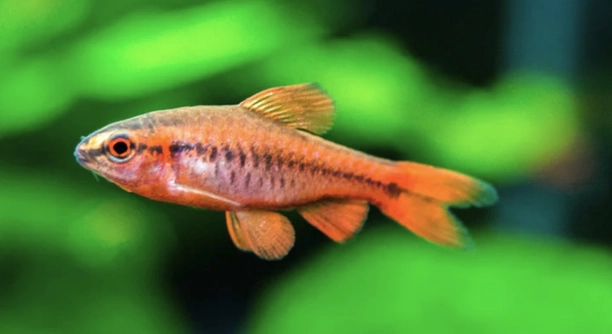
Cherry Barbs are a popular choice for aquarium enthusiasts, but their intelligence is often overlooked. These small fish have unique traits that make them stand out. Understanding their cognitive abilities can provide a better experience for both the fish and their owners.
Cherry Barbs are capable of learning and adapting to their environment. They exhibit behaviors that indicate problem-solving, social interaction, and even recognition of their owners. Their intelligence is subtle but notable, especially in controlled environments.
Their intelligence can surprise those who think of them as just another ornamental fish. By understanding their behaviors and cognitive abilities, you can improve the care and environment you provide for these fascinating creatures.
Social Behaviors and Problem-Solving
Cherry Barbs are known for their social nature, often swimming in groups. They show a strong sense of community, often sticking together and communicating through subtle movements. These behaviors suggest that they can recognize their companions and form bonds within their groups. This social structure is essential to their well-being, as isolation can stress them out. The more you observe their interactions, the more you’ll notice the intelligence they display.
Cherry Barbs also demonstrate a level of problem-solving when it comes to navigating their environment. They are quick to learn where food is placed, and they’ll remember this spot the next time.
They also exhibit strategies for avoiding danger, showing a sense of spatial awareness. If there is a source of stress, like a new tank mate or unfamiliar object, they will often react cautiously, circling the area before deciding to approach. This ability to assess situations highlights their adaptive nature. The way they handle changes in their surroundings reveals that they are not simply acting on instinct but are thinking and reacting to stimuli.
Learning and Memory Capabilities
Cherry Barbs have a noticeable memory for their tank surroundings, especially when it comes to feeding. They quickly learn the routine and can anticipate feeding times, showing recognition of their keeper’s actions. This ability is often underestimated by owners who might assume that all fish behave the same way.
Studies have shown that fish like Cherry Barbs can also learn by observing others. When new fish are introduced to a tank, the existing Cherry Barbs may take note of their behaviors, mimicking actions like feeding or avoiding a specific area. This learning through observation is a sign of intelligence beyond basic instinct.
What’s even more impressive is their capacity to remember and adapt to changes in their habitat. Cherry Barbs can adjust to changes in water conditions, such as slight shifts in temperature or pH, and will demonstrate the ability to seek out areas in the tank where they feel most comfortable. This suggests that their memory extends beyond just food-related events and plays a key role in their overall survival.
Recognition of Owners and Familiarity
Cherry Barbs have the ability to recognize their owners. Over time, they can learn to associate you with food or other positive experiences. They may swim to the front of the tank when they see you approaching, eagerly waiting for feeding time.
The recognition doesn’t stop at feeding times. These fish are capable of distinguishing between different people, especially if there’s a consistent caretaker. They often show excitement or curiosity when they see the person who regularly interacts with them. This kind of behavior is a clear indication of their intelligence.
It’s fascinating how Cherry Barbs show comfort with familiar faces. While it might seem like a simple reaction to food, the way they remember and respond to their owners indicates that they can build trust and attachment. Their ability to adapt to social cues and develop these associations proves they’re more aware than they’re often given credit for.
Interaction with Tankmates
Cherry Barbs display impressive social skills when interacting with other fish. They have a hierarchical structure in their groups, where certain individuals become more dominant. This shows they are not only aware of each other but also know their place within the group.
When kept in a tank with other species, Cherry Barbs generally get along well, but they are known to interact based on compatibility. They tend to gravitate toward peaceful tankmates and avoid more aggressive species. This preference suggests that they can discern which fish are safe to be around, a sign of problem-solving and decision-making skills.
Their interactions aren’t just about avoiding conflict, either. Cherry Barbs engage in playful behavior with tankmates, sometimes chasing each other or exploring the tank together. This indicates a level of cognitive flexibility, as they can adjust their behavior depending on the company they keep. Such social dynamics show that these little fish are capable of complex interactions within their environment.
Exploration and Curiosity
Cherry Barbs show a natural curiosity about their environment. They are often seen exploring every corner of the tank, inspecting new objects, plants, and decorations. This behavior reflects their need to understand and adapt to their surroundings.
Their curiosity isn’t just random; it’s driven by a desire to learn. They tend to interact with new items, cautiously at first, before becoming comfortable with them. This behavior suggests that they are capable of exploration with purpose, rather than acting purely on instinct.
Communication Skills
Cherry Barbs communicate with each other through subtle body movements and postures. They often display visual signals when trying to communicate, such as flaring their fins or changing their swimming patterns. These actions help them interact with tankmates, signaling dominance or submission.
This kind of communication shows they have social intelligence, understanding both body language and environmental cues. Cherry Barbs also adapt their behaviors to communicate based on the situation, making their interactions even more intricate.
Environmental Adaptability
Cherry Barbs can quickly adjust to different water conditions in their tank. If there’s a change in temperature or pH, they may initially react by swimming cautiously but adapt as they get used to the new environment. This ability to adapt to shifts in their surroundings is another sign of their intelligence.
Their ability to acclimate quickly helps them survive in a range of environments, demonstrating that they are not just reactive, but able to process and adapt to new conditions.
FAQ
How intelligent are Cherry Barbs compared to other fish?
Cherry Barbs are fairly intelligent when compared to other freshwater fish. While they may not show the same level of cognitive complexity as some species, they certainly demonstrate problem-solving abilities, memory, and social behaviors. These fish can learn routines, recognize their owners, and adapt to changes in their environment. Their intelligence is subtle but noticeable, especially in a tank where you can observe their behaviors closely. In comparison to many other aquarium fish, they stand out due to their ability to communicate with each other and show signs of emotional awareness, like forming social bonds.
Can Cherry Barbs recognize their owners?
Yes, Cherry Barbs can recognize their owners. They are capable of learning to associate you with feeding times and other positive interactions. Over time, they may swim to the front of the tank when they see you, eager for attention or food. This recognition isn’t limited to food alone; they also respond differently to familiar faces, suggesting that they can distinguish between people. This ability to recognize and remember their owners is a clear indication of their cognitive abilities. They can even show excitement or curiosity when they see the person who regularly cares for them.
What kind of social behaviors do Cherry Barbs exhibit?
Cherry Barbs exhibit various social behaviors within their groups. They form strong bonds with other fish and often swim together in schools. Their social structure includes hierarchies where certain individuals are more dominant. These fish interact with each other through body language, such as chasing or displaying dominance with fin flaring. When kept with other species, they tend to choose peaceful tankmates and avoid aggression. This ability to assess the social dynamics of their tank environment shows that Cherry Barbs are more socially aware than many realize.
Do Cherry Barbs have good memory?
Cherry Barbs have impressive memory, especially when it comes to their feeding routines. They can quickly learn where food is placed and even anticipate feeding times based on your actions. They also have the ability to recognize changes in their environment, such as new objects or tank mates, and remember them over time. This memory helps them adapt to their tank, making them more comfortable in familiar environments. When it comes to social memory, they remember other fish within their group and interact accordingly, based on previous experiences. Their ability to retain information and recall it when needed highlights their cognitive flexibility.
Can Cherry Barbs learn from other fish?
Yes, Cherry Barbs can learn from observing other fish. This type of social learning is common in many species, including fish. When a new fish is introduced to a tank, Cherry Barbs may observe its behaviors and mimic certain actions, such as feeding patterns or ways to interact with objects in the tank. This ability to learn from others shows that they are not just acting on instinct but are capable of adapting based on experiences and observations. It is an important part of their ability to interact within a social group and adapt to their environment.
How do Cherry Barbs communicate with each other?
Cherry Barbs communicate with each other primarily through body language and subtle movements. They may flare their fins, change their swimming patterns, or swim in particular formations to signal different intentions. For example, a more dominant fish might display its fins to assert its position in the group, while others may retreat or swim in a different direction. These non-verbal cues are essential for maintaining harmony within the group. Their communication is based on visual signals, and their ability to convey different messages helps them navigate social interactions with other tankmates.
How do Cherry Barbs handle changes in their environment?
Cherry Barbs are adaptable and can adjust to changes in their environment. They can handle slight shifts in water temperature, pH, and other environmental factors, although drastic changes may cause them stress. When faced with new objects in their tank, they may initially show cautious behavior, swimming around and inspecting the changes. Over time, they get used to these new additions and incorporate them into their routine. This adaptability is a sign of their intelligence, as they are capable of processing new information and adjusting their behavior accordingly. It’s important to monitor their reactions when changes occur to ensure they remain comfortable and stress-free.
Are Cherry Barbs good at problem-solving?
Cherry Barbs have the ability to solve simple problems, especially when it comes to finding food or navigating their environment. They are known to quickly learn where food is placed and can anticipate feeding times. Additionally, when faced with obstacles, such as objects in their tank, they tend to explore and figure out how to maneuver around them. While their problem-solving skills may not be as advanced as some other species, their ability to learn from experience and adapt to their surroundings shows a level of cognitive flexibility that goes beyond basic instinct.
What is the social hierarchy like in a group of Cherry Barbs?
In a group of Cherry Barbs, a social hierarchy naturally forms, with some individuals asserting dominance over others. The more dominant fish often display their authority by flaring their fins, swimming in front of others, or chasing less dominant fish. While these interactions can seem aggressive, they are part of normal social behavior. The less dominant fish usually avoid confrontation, choosing to swim in the background or out of the way of the more dominant individuals. This hierarchy helps maintain order within the group, and it’s a clear indication that Cherry Barbs are aware of their position and can navigate complex social dynamics.
Do Cherry Barbs form bonds with each other?
Yes, Cherry Barbs do form bonds with each other, especially when kept in groups. They tend to swim together and display behaviors that suggest they recognize and enjoy the company of their tankmates. These social bonds are an essential part of their behavior, as they thrive in schools where they feel secure and protected. The presence of other Cherry Barbs provides a sense of safety and comfort, reducing stress and promoting natural behaviors. The bonds they form with each other are a testament to their intelligence and social nature.
Final Thoughts
Cherry Barbs are more intelligent than many people give them credit for. While they may seem like simple, ornamental fish at first glance, their ability to learn, adapt, and form bonds with both their environment and their owners shows a deeper level of awareness. These fish can recognize their owners, remember feeding routines, and adapt to changes in their environment, all of which point to a level of cognitive function that is often overlooked. Their social nature, memory, and problem-solving abilities set them apart from other species in the aquarium hobby, making them more interesting to observe and care for.
One of the most notable aspects of Cherry Barbs is their ability to communicate and interact with one another. They form social structures, establish dominance hierarchies, and engage in playful or cautious behaviors based on their interactions with other fish. This social intelligence allows them to live harmoniously in groups, and even with other species, provided they are compatible. Understanding this behavior can help fish owners create a more enriching environment for their Cherry Barbs, leading to a healthier and more balanced tank ecosystem.
In conclusion, Cherry Barbs are not just simple fish; they are capable of a range of behaviors that indicate intelligence. Their ability to recognize their owners, adapt to environmental changes, and interact meaningfully with other fish makes them fascinating creatures to care for. For anyone interested in aquarium fish, Cherry Barbs offer a great opportunity to observe the intelligence of freshwater species. By paying closer attention to their behavior, owners can create a more engaging and fulfilling experience for both the fish and themselves.

Hello,
If you enjoy the content that we create, please consider saying a "Thank You!" by leaving a tip.
Every little bit helps us continue crafting quality advice that supports the health, happiness, and well-being of pets around the world, for pets of all shapes, sizes, and species.
We really appreciate the kindness and support that you show us!