
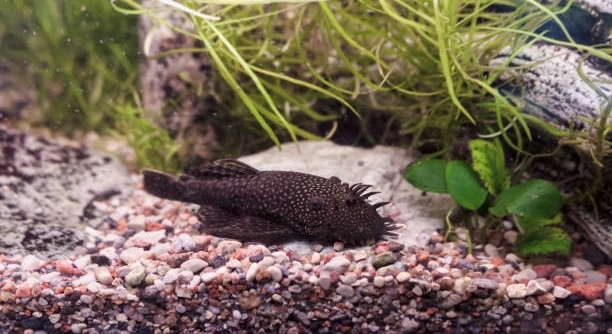
Plecostomus fish, also known as plecos, are popular aquarium residents. They are known for their unique appearance and algae-eating habits. But how well do these fish adapt to different environments, especially in the dark? Let’s take a closer look.
Plecostomus fish rely on their sense of touch, smell, and other sensory abilities to navigate their surroundings in low-light conditions. Although they do not have true night vision, they can use these senses to find food and avoid obstacles in the dark.
These remarkable fish may not see well in total darkness, but their ability to explore and adapt in low-light environments is quite fascinating. Understanding how they interact with their surroundings will reveal more about their survival skills.
How Plecostomus Fish Navigate in the Dark
Plecostomus fish are equipped with specialized sensory tools that help them thrive in environments with little to no light. While they lack true night vision like some nocturnal creatures, they rely on other senses to detect their surroundings. Their sensory organs, such as the lateral line, allow them to pick up vibrations and movements in the water. This makes it easier for them to navigate and avoid danger even in dark conditions. Their ability to sense changes in water pressure and detect food particles further enhances their survival.
These fish also use their sense of smell and touch to explore and feed. They have barbels around their mouths that are highly sensitive to touch, helping them find food and explore their environment. In darker environments, they rely on these senses more than their eyesight.
While they may not be able to see clearly in the dark, plecos are well-adapted to manage their surroundings through other means. Their sensory abilities help them thrive, making them resilient in low-light settings.
Adaptations to Low-Light Environments
Plecostomus fish have a natural advantage in low-light conditions. Their lack of reliance on vision is complemented by an enhanced ability to use their other senses. This adaptation helps them avoid predators and find food even when visibility is poor. Their remarkable ability to thrive in the dark is a key reason why they’re such popular aquarium pets.
Plecos are generally nocturnal, so they tend to be more active during the evening or in low-light conditions. This means they are naturally inclined to operate in environments where light levels are minimal. As a result, they have developed the necessary skills to survive without relying heavily on sight. By using their other senses, they manage to navigate and feed effectively in these conditions. In nature, they often inhabit caves and crevices, where darkness is the norm, further showcasing their ability to adapt to these environments.
The Role of the Lateral Line System
The lateral line is a key feature that allows plecos to detect vibrations and movement in the water. This system helps them navigate in dark or murky environments where visibility is limited. The lateral line works by sensing pressure changes around the fish, guiding them to food and away from potential threats.
The lateral line system is located along the sides of the fish’s body, running from head to tail. It contains specialized sensory cells that detect water movements. By sensing these changes, plecos can identify nearby objects and creatures without relying on sight. This adaptation is especially useful when they are in dimly lit or murky waters, where other fish might struggle to orient themselves.
This sensory tool allows plecos to be highly aware of their surroundings, even when light is minimal. It helps them find food and navigate through tight spaces. While vision may be limited, the lateral line compensates for this by providing valuable environmental feedback.
How Plecos Use Their Barbels
Plecostomus fish have barbels, or whisker-like structures, around their mouths. These barbels are highly sensitive to touch and are used for locating food, exploring, and interacting with their environment. In the absence of good vision, these barbels play a critical role in helping plecos survive in dark conditions.
The barbels help plecos detect food in low-light conditions by sensing vibrations and chemical signals released by potential food sources. This tactile sense is vital, especially since they feed on algae, biofilm, and organic matter that might be hard to spot in the dark. They may even touch different surfaces, including rocks and plants, to find nourishment.
The barbels also help plecos sense potential threats. If something touches or disturbs them, they can quickly react and move away from the danger. This heightened sense of touch makes their barbels an essential adaptation for survival in both dark and well-lit conditions. It’s clear that these whiskers play a large part in their ability to thrive in the dark.
Pleco’s Nighttime Feeding Habits
Plecos are primarily nocturnal, meaning they are most active at night. They tend to leave their hiding spots during the evening to search for food. Their senses, especially the lateral line and barbels, help them find food in low-light environments with ease.
At night, plecos feed on algae, biofilm, and other organic matter they find on surfaces. Their ability to detect these food sources in the dark is crucial. The absence of light doesn’t stop them from eating as they use their keen sense of touch and smell to find nourishment.
Their nighttime activity also helps avoid competition with other fish that are more active during the day. By feeding at night, plecos can maximize their food intake without interference, making them well-suited for aquarium environments where light and feeding schedules can vary.
Sensory Adaptations for Survival
Plecos have developed remarkable sensory adaptations that help them thrive in dark environments. These fish rely more on touch and smell than on sight. Their barbels and lateral line system give them a heightened awareness of their surroundings, even when they cannot see clearly.
These adaptations make plecos excellent at navigating murky waters or dimly lit areas. They can detect slight movements, changes in water pressure, and chemical cues from food. In addition, their tactile senses allow them to explore surfaces like rocks and plants, ensuring they always find food and avoid predators, regardless of light conditions.
In an aquarium, these adaptations allow plecos to remain active, even if there isn’t much light. Their survival in low-light conditions proves just how well they’ve adapted to their environment.
Challenges in Aquariums
While plecos are well-adapted to dark conditions, they can face challenges in artificial environments like aquariums. Poor water quality, overcrowded tanks, or lack of hiding spots can interfere with their natural behavior. It’s essential to provide a suitable environment for them to thrive.
FAQ
Can plecos see in complete darkness?
Plecos do not have the ability to see in complete darkness. Instead, they rely on other sensory systems, such as the lateral line and their barbels, to navigate in low-light or dark environments. Their sense of touch and vibration detection allows them to interact with their surroundings even when they cannot see. This makes them well-suited for environments with minimal light, but they are not capable of seeing in total darkness.
Do plecos rely on their eyes to find food?
While plecos do have eyes, they don’t rely heavily on them to find food. Their primary means of locating food is through their highly sensitive barbels and lateral line system. The barbels, located around their mouths, can detect chemical cues and touch, helping them find algae, biofilm, and other organic matter in dark environments. In aquariums or natural habitats with low light, these sensory adaptations become much more important than their vision.
Are plecos truly blind in the dark?
Plecos are not blind in the dark, but their vision is limited in low-light conditions. They can detect light and movement, but their eyes are not as useful in total darkness. Instead, they depend more on their other senses, like touch and vibration, to navigate and feed. Their eyes are still functional, just not the main tool they use for survival in dark or murky waters.
Do plecos get stressed in the dark?
Plecos typically do not get stressed in the dark, as they are naturally nocturnal. In fact, they prefer low-light conditions, which is why they are often more active at night. However, if the environment is not suitable—like if the tank is too small, too crowded, or has poor water quality—this could cause stress, regardless of light levels. Ensuring they have enough hiding spots and a stable environment is key to keeping them healthy.
How do plecos navigate at night?
Plecos navigate at night using their specialized sensory abilities. Their lateral line system allows them to detect changes in water pressure caused by movement, while their barbels help them feel around for food and obstacles. These adaptations make them highly skilled at moving through dark environments where their eyesight is not as effective.
Do plecos need light at all?
While plecos don’t need much light, they do benefit from some ambient lighting to help regulate their natural day-night cycle. Since they are nocturnal, they don’t require bright light during the day, but having a cycle of light and dark is important for their overall health. Overexposure to bright light can stress them, while a lack of any light might disturb their circadian rhythm, potentially affecting their feeding and activity levels.
Can plecos survive without light in an aquarium?
Yes, plecos can survive without light in an aquarium, but it’s important to replicate their natural environment as much as possible. They are adapted to low-light or dark environments, so they don’t need bright lights to thrive. However, the aquarium should still have a proper light cycle to ensure they maintain healthy biological rhythms. Too much light can stress them, while too little can affect their ability to find food.
Do plecos only feed at night?
Plecos are primarily nocturnal, meaning they are most active and do most of their feeding during the night. They tend to hide in the day and venture out to search for food when the lights are off. Their nighttime feeding habits are driven by their adaptation to low-light environments, and their sensitivity to touch and smell allows them to find food even in dark conditions. However, they may occasionally forage during the day if the light is dim enough.
How can I make sure my pleco is comfortable in the dark?
To make sure your pleco is comfortable in the dark, it’s important to provide them with an environment that mimics their natural habitat. Ensure there are plenty of hiding spots, like caves or dense plants, where they can feel safe. Also, maintaining a stable water quality and temperature is essential to their well-being. If you’re using aquarium lights, avoid excessive brightness and keep lighting on a consistent cycle to support their natural rhythms.
Do plecos require a special tank setup for low-light conditions?
Plecos don’t require a special tank setup for low-light conditions, but it’s best to provide a few features that cater to their needs. Including areas with minimal light, like caves or shaded spots, will help them feel more secure. Additionally, maintaining good water quality and providing plenty of surfaces for algae and biofilm growth will support their diet. They don’t need bright lights, and providing a more natural, subdued lighting environment will help them feel at ease.
Are plecos active during the day in aquariums?
Although plecos are nocturnal, they may become somewhat active during the day in an aquarium, especially if the environment is dark or dim. However, they usually stay hidden in caves or behind decorations during daylight hours, coming out mainly when it’s dark or the tank light is off. It’s not uncommon for them to emerge to graze on algae or interact with the environment during quieter parts of the day. However, their most active time is generally at night.
Can plecos see other fish in the dark?
Plecos can detect movement and changes in water pressure, which allows them to be aware of other fish around them even in dark conditions. While they don’t have detailed vision in low light, they can still sense the presence of other creatures through their lateral line system. This helps them avoid potential threats and navigate around the tank without bumping into other fish.
Final Thoughts
Plecostomus fish, or plecos, have developed a range of unique adaptations to help them survive in environments with little to no light. While they don’t have night vision, they rely on their enhanced senses of touch, smell, and the lateral line system to find food and avoid dangers. These abilities make them highly efficient in navigating dark or murky waters where their eyesight is limited. In an aquarium, they use their whisker-like barbels to explore their surroundings and sense vibrations in the water. This makes them well-suited for low-light conditions, which is why they tend to be most active during the night.
Although plecos can’t see clearly in complete darkness, their other sensory abilities compensate for this limitation. Their lateral line system allows them to sense vibrations in the water, which helps them detect movements from other fish or objects in their environment. Their barbels also play a crucial role in helping them find food, as they can sense chemical signals released by algae or organic matter. These adaptations enable plecos to thrive in conditions where sight would otherwise be ineffective. In a way, their reliance on touch and vibration is what allows them to move with ease, even in murky or dark spaces.
For those keeping plecos in aquariums, understanding how they navigate in the dark is key to ensuring they feel comfortable and secure in their environment. Providing plenty of hiding spots and maintaining low to moderate lighting helps mimic their natural habitat. Although they don’t require a special tank setup for low-light conditions, offering spaces where they can hide and feel safe will allow them to thrive. Additionally, keeping the water clean and providing enough algae or organic matter for them to feed on is essential for their health. By accommodating their nocturnal habits and sensory needs, you can ensure that your pleco remains a happy and healthy part of your aquarium.

Hello,
If you enjoy the content that we create, please consider saying a "Thank You!" by leaving a tip.
Every little bit helps us continue crafting quality advice that supports the health, happiness, and well-being of pets around the world, for pets of all shapes, sizes, and species.
We really appreciate the kindness and support that you show us!