
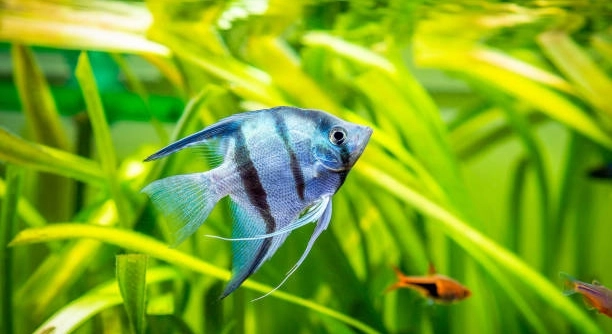
Do you ever find yourself locking eyes with your angelfish and wondering why it seems so focused on you lately?
Angelfish often appear to watch their owners due to a mix of instinct, environmental awareness, and food anticipation. Their behavior may also reflect learned responses, territorial instincts, or simply natural curiosity, especially in a consistent and stimulating setting.
From natural instincts to subtle environmental cues, each reason helps explain this behavior in a simple, thoughtful way.
They Might Be Expecting Food
Angelfish quickly learn to associate people with feeding times. If you usually feed your fish around the same time each day, they’ll begin to recognize your presence as a sign that food is coming. Over time, they may swim toward you or stay near the front of the tank, appearing to watch you closely. This behavior isn’t aggressive or unusual—it’s a response to a learned routine. Just like dogs wait near the kitchen when dinner’s being made, angelfish keep an eye on the person who fills their tank with flakes or pellets. Their memory is stronger than some think, and once a pattern is established, it becomes a natural part of their behavior. This can also explain why they become more active when you approach, especially if you tend to follow the same routine every day. For them, you’re simply a part of their environment—and a useful one.
Feeding routines shape how angelfish react to movement near their tank.
Their actions can seem personal, but they’re mostly driven by consistency, especially when food is involved. A sudden break in schedule may confuse them or make them more alert when they see you. Observing them during feeding helps you understand how much their behavior is connected to simple habits.
They’re Naturally Curious
Angelfish are naturally observant and intelligent. This makes them more likely to pay attention to what’s going on around their tank.
They may fixate on movement, shadows, or colors outside their tank. When you’re near, they often become more alert. This isn’t always about food—it can be genuine interest in their environment. Fish like angelfish are sensitive to changes and can recognize familiar shapes or routines. If you’re the one who regularly checks their water or handles the tank, they’ll begin to recognize you. It’s not uncommon for them to swim forward when you enter the room or even follow your movements from side to side. This sort of response is subtle but shows how aware they are of the space beyond the glass. While not the same as a pet that seeks affection, angelfish still respond to patterns and stimuli in ways that feel surprisingly personal. Their “watching” behavior might just be their way of staying aware.
They Could Be Protecting Their Territory
Angelfish are known to be territorial, especially in confined tanks. If they see you often near their space, they may feel the need to stay alert. Their staring might be a form of monitoring or guarding behavior rather than curiosity or affection.
This protective behavior is more common in tanks where space is limited or where there are other fish nearby. Angelfish may become more defensive if they’ve recently laid eggs or if they feel another fish is too close to their preferred spot. You might notice flaring fins, darting movements, or even attempts to “stand ground” by hovering in the same area. When you’re close to the tank, they might be making sure you’re not a threat to their territory. While this may look like simple staring, it’s a part of how angelfish manage their space. Their behavior is often more complex than people expect from a small aquatic pet.
If this territorial behavior becomes more intense, it can affect their overall temperament. They might act aggressively toward tank mates, stay close to one area, or react more sharply to your movements. Adding more hiding spots or rearranging tank décor can help reduce this stress. Giving them a sense of security often makes them calmer and less reactive over time.
They Recognize Movement and Light
Angelfish have strong visual awareness and are sensitive to light and movement around them. They often respond to changes outside the tank and may fixate on people walking by, phones lighting up, or reflections on the glass.
In brightly lit rooms or during the day, angelfish pick up on even small motions. If you pass by the tank often, they might begin to track your movements as a regular activity. Over time, this turns into a learned behavior where they respond to your presence. Bright screens, sudden light changes, or even the flicker from a television can catch their attention. The tank’s placement plays a big role—if it’s near a busy spot, they’ll naturally become more responsive. They’re not necessarily trying to interact with you—they’re simply reacting to the environment and trying to understand what’s happening. Their constant awareness might feel personal, but it’s mostly instinct and habit working together.
They Might Be Bored
Angelfish can get bored in tanks without much stimulation. If there’s not enough plant cover, hiding spots, or interaction, they may become more focused on external movement, including you. Watching you could simply be a way to pass time.
Boredom often shows up as pacing, staring, or repetitive swimming. Without variation in their environment, they latch onto any movement outside the tank. Even small gestures like walking past or adjusting lights can become the most interesting part of their day.
They’re Reacting to Your Behavior
Angelfish may not bond like cats or dogs, but they do respond to patterns. If you regularly feed, clean, or talk near the tank, they associate you with those actions. This builds a level of familiarity. Over time, your routine becomes part of theirs. They watch because they expect something to follow. Whether it’s food or just interaction, they notice the connection. Their attention is often triggered by small habits you don’t realize you’ve established. Consistency creates a sense of trust or comfort, even if it doesn’t look like affection in the typical sense.
They Could Be Sensing Vibrations
Angelfish are sensitive to vibrations in and around their tank. Footsteps, music, or even speaking nearby can draw their attention. They may look toward the source, especially if it becomes part of their daily experience.
FAQ
Do angelfish really recognize their owners?
Angelfish may not recognize faces the way humans do, but they can learn patterns and respond to familiar behavior. If you feed them regularly or move near their tank often, they can associate you with those actions. Over time, they may swim to the front when they see you or follow your movement. This doesn’t mean they recognize your face, but they do notice your presence and what it means. Their responses come from repetition and routine rather than emotion or memory in the human sense.
Why do my angelfish always stare at me during feeding time?
They’ve made a strong connection between your presence and being fed. Many fish learn to anticipate feeding based on cues like shadows, footsteps, or the sound of a lid opening. Angelfish are no different. If feeding happens around the same time each day, or you have a specific habit before feeding, they’ll start watching closely. That stare is part expectation and part learned response. They’re focused and alert because they’re waiting for food, not because they’re trying to communicate in a deeper way.
Is it normal for angelfish to follow me from side to side?
Yes, this is common and usually harmless. Angelfish often track movement, especially when it’s coming from someone they see often. If they follow you across the tank, they might be curious or waiting to be fed. It’s also part of their natural behavior to stay aware of their surroundings. In some cases, it’s a mix of boredom and recognition. It’s usually not a problem unless it’s paired with signs of stress, like glass surfing or hiding suddenly.
Can staring mean something is wrong with my angelfish?
Sometimes. If your angelfish is staring and also acting oddly—like clamped fins, gasping, or staying near the surface—it could be a sign of stress or illness. Constant staring without movement or response could mean the fish is uncomfortable or disoriented. Always check your water conditions, tank size, and tank mates to rule out health or environment issues. If everything seems normal and the fish is eating and swimming well, staring is usually nothing to worry about.
Why does my angelfish seem more focused on me at certain times of the day?
Angelfish can become more active during certain times, especially around feeding or when there’s more light. If you tend to interact with them during those times, they may become more focused then. Their internal rhythm and memory of daily patterns play a role. You might notice them staring more during late morning or early evening, especially if that’s when you’re most active near the tank.
Are angelfish intelligent enough to form habits?
Yes, in their own way. Angelfish are observant and can pick up on routine. They may not have deep memory, but they can form associations and respond accordingly. This is why feeding them at the same time each day or keeping a regular tank maintenance schedule helps. They thrive when things feel predictable. They may begin to wait in a certain corner before feeding or respond to the sound of a cabinet opening.
Should I be concerned if my angelfish stares at me all the time?
If your angelfish is acting normally otherwise—eating well, swimming actively, and not showing signs of stress—it’s not a concern. Some angelfish are more aware of their surroundings than others. Constant staring may just be a part of their personality. However, if the staring is paired with odd or new behavior, it’s a good idea to check water quality and observe other fish in the tank. Sometimes, staring is just the most visible part of their attention-seeking or alert state.
Final Thoughts
Angelfish are known for their graceful movements and striking appearance, but their behavior can also leave you with questions. If your angelfish seems to be watching you, it’s often a mix of curiosity, recognition of patterns, and a simple response to daily routines. Fish like angelfish learn to associate movement near their tank with feeding or other interactions. When they stare or follow you, it doesn’t always mean something is wrong—it might just be their way of staying alert or waiting for food. Their awareness is limited to what they see and experience regularly, and they react based on those habits.
Still, it’s helpful to watch for signs that go beyond staring. If your angelfish is acting out of the ordinary, like showing signs of stress, avoiding food, or hiding too often, there may be other causes behind the behavior. Tank conditions, water quality, tank mates, and lighting can all play a role. Sometimes, staring can be a side effect of boredom, especially if there isn’t much stimulation in the tank. A larger tank, more hiding spaces, or even a slight change in décor can make a difference. Keeping an eye on their overall behavior is just as important as noting how often they seem to be watching you.
There’s no need to overthink it if your angelfish seems to stare often but is otherwise active and healthy. Many fish keepers notice similar behavior and see it as a sign that their fish are used to their presence. It can even become part of your routine—seeing your fish come forward when you pass the tank or move closer when it’s feeding time. These actions may not be deep or emotional in the human sense, but they reflect how fish respond to consistency and routine. In the end, your angelfish is simply responding to the environment you’ve created. As long as the tank is clean, peaceful, and comfortable, these little behaviors are just a natural part of fishkeeping.

Hello,
If you enjoy the content that we create, please consider saying a "Thank You!" by leaving a tip.
Every little bit helps us continue crafting quality advice that supports the health, happiness, and well-being of pets around the world, for pets of all shapes, sizes, and species.
We really appreciate the kindness and support that you show us!