
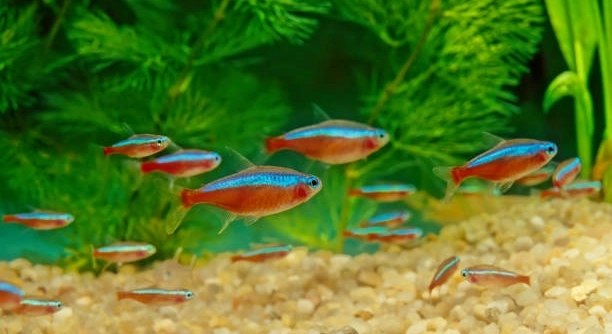
Are your neon tetras swimming in a tank that feels too artificial or plain, lacking the look of a natural habitat?
To make a neon tetra tank look more natural, add live plants, use a dark substrate, include driftwood, arrange decorations asymmetrically, and avoid bright, artificial colors. These changes create a more balanced and realistic environment.
These small adjustments can help your tank feel more like a peaceful stream and less like a display case.
Add Live Plants for a Natural Touch
Live plants instantly soften the look of a neon tetra tank. They mimic the vegetation found in their native Amazonian waters and offer more than just decoration. Plants like Java fern, Amazon sword, and anubias are beginner-friendly and thrive in similar conditions as neon tetras. These plants also help with water quality by absorbing waste and producing oxygen. A well-planted tank creates hiding spots and shaded areas, making your tetras feel more secure and relaxed. Position taller plants in the back and shorter ones in the front to keep the view open. Avoid plastic plants with sharp edges that could harm your fish. Choose a mix of leaf shapes and shades of green to give the setup more depth. You don’t need to overdo it—just a few healthy, well-placed plants can make a noticeable difference. Maintenance is simple, and the result is a calmer, more balanced tank.
Live plants also reduce algae by competing for nutrients. This keeps the tank looking cleaner for longer.
You can also use floating plants like frogbit or water lettuce to add cover from above, which tetras appreciate. Their long roots create extra cover and make the tank feel more layered and peaceful.
Use Natural Substrate and Driftwood
Start by switching out brightly colored gravel for a more natural substrate like sand or fine gravel in earthy tones. This change alone can make the tank look much closer to a real riverbed.
Adding driftwood enhances the natural appearance and gives your tetras places to explore or rest near. Choose pieces with smooth edges and soak them before adding to the tank to prevent floating. Driftwood also releases tannins into the water, which slightly darken it and create a soft, amber tint. This mimics the blackwater conditions of their native rivers. The release of tannins may also have mild antibacterial benefits. Combined with live plants and natural substrate, driftwood brings in variety and structure. It also makes the tank look less staged and more like a slice of nature. Anchor it well so it doesn’t shift over time. You can even attach mosses or small plants to the wood for added texture. Just be sure to avoid overcrowding—open swimming space is important for neon tetras. Proper balance between decor and open water keeps the setup both natural and functional.
Arrange Decorations Asymmetrically
Symmetrical setups can feel too staged and unnatural. Instead, place decorations in off-center clusters, with varying heights and shapes to create flow. Asymmetry draws the eye more naturally and mimics how things appear in real rivers and streams.
Use rocks, wood, and plants to build small scenes within the tank. Try grouping items in uneven numbers—like three stones of different sizes in one corner. This breaks up the layout visually and makes it look more relaxed. Leave open space on one side for swimming. Create depth by layering taller decorations in the back and shorter ones in the front. Use visual weight to keep the tank balanced, not crowded. Avoid spreading everything evenly across the tank. Instead, focus on one or two main areas and build around them gradually. This approach helps your tank look more lived-in and less like a display.
Try adding details like leaf litter or smooth river stones in specific spots. These subtle touches can add realism without taking up too much space. They also provide more hiding places and make your fish feel safe. Stick with natural colors and materials to keep everything looking soft and earthy.
Choose Gentle Lighting and Backgrounds
Strong lighting can make your tank look too harsh and exposed. Softer lights bring out the colors of your neon tetras while helping plants grow. A dimmer tone gives the tank a calm feel that mimics shaded waters.
Use LED lights with adjustable settings so you can control the brightness and warmth. Aim for a soft white or slightly warm tone—this highlights the tetras’ colors without making everything look washed out. Position the light to create gentle shading, not a bright spotlight. A timer helps maintain a stable day-night cycle. For the background, skip colorful prints and go with plain black, dark gray, or a natural photo-style scene. A dark background enhances the fish’s bright coloring and makes the tank look deeper. Avoid placing the tank in areas with direct sunlight, as this can cause glare and excess algae. Pairing gentle lighting with a simple background makes a big difference in the overall feel of the tank.
Avoid Bright, Artificial Colors
Bright blue gravel or neon decorations can distract from the natural beauty of your tank. These colors don’t exist in the tetra’s native environment and can make the space feel less peaceful. Stick to neutral shades like browns, greens, and soft grays for a calmer, balanced look.
Plastic plants with unnatural colors can look out of place and make your tank feel fake. Choose items that blend in with your live plants or mimic natural textures. Keep things simple and earthy so your fish and real plants stand out more. The goal is to create a setting that feels soft and grounded.
Add Leaf Litter or Botanicals
Scattering dried Indian almond leaves or soft botanicals like alder cones adds realism and comfort to your tank. These materials release tannins into the water, creating a warm, tea-colored tone similar to the blackwater rivers neon tetras come from. Leaf litter also offers hiding places and helps lower stress. Arrange a few leaves in open areas, making sure they don’t block water flow. Replace them slowly over time as they break down. Avoid using too many at once, as this could lower water quality. Choose clean, pesticide-free materials only. The extra detail makes your tank feel more complete and gives your fish a sense of familiarity.
Keep the Tank Calm and Uncluttered
Too many decorations or plants can make the tank feel cramped. Neon tetras like space to swim in groups, so leave open areas clear. A calm, uncluttered layout helps them move naturally and keeps the tank feeling fresh.
FAQ
What kind of plants look most natural in a neon tetra tank?
Soft, flowing plants like Java fern, Anubias, and Amazon sword blend well with a natural layout. These plants have gentle textures and don’t overwhelm the tank. Floating plants like Salvinia or frogbit can also help mimic a shaded, calm environment. Stick with green varieties and avoid brightly colored ones. Using different heights creates visual layers. Taller plants go in the back, with shorter ones in front. This adds depth and gives your tetras places to hide. Pick slow-growing species if you want to avoid constant trimming. You can also mix in moss for a soft, earthy floor cover.
Should I use real wood or fake decorations?
Real wood gives the tank a much more natural look. It also helps soften the water, which is great for neon tetras. Choose safe driftwood like mopani or spider wood, and boil it first to remove tannins and possible pests. Real wood supports beneficial bacteria and adds character to the layout. Fake decorations often have sharp edges and bright colors that can stand out too much. If you do use artificial pieces, go with ones that mimic natural shapes and tones. Just be sure they’re made for aquariums and won’t affect water quality.
How much leaf litter should I add?
Start with just a few Indian almond leaves or a handful of oak leaves. Place them in one corner or near decorations. As they break down, they’ll release tannins and lower the pH slightly, which suits neon tetras well. Too much at once can cloud the water or lower oxygen levels. Watch your fish—if they’re swimming well and eating normally, you’re on the right track. Replace the leaves as they decay over time. You don’t need a thick layer, just enough to add a natural feel and give your tetras hiding spots. Always use untreated, pesticide-free leaves.
Can I use a background for a more natural look?
Yes, a simple background can make a big difference. Solid black or dark gray works well and brings out the bright colors of your tetras. It also gives the tank more depth and helps hide equipment like wires or filters. Avoid bright patterns or photos with too many colors—they distract from the fish. You can even use a printed forest or river scene, as long as the colors are muted. If you want something more flexible, try painting the outside of the back glass with matte black paint. It’s subtle and looks clean.
Do I need to use special lighting?
You don’t need anything too fancy. A good-quality LED light with adjustable brightness is enough. Look for one that’s not overly bright and leans toward soft white or warm tones. Harsh lighting can make the tank look fake and may stress your tetras. Some lights even let you mimic sunrise and sunset settings, which adds to the natural vibe. Stick to a regular schedule—about 8 hours a day is usually enough. Pairing soft lighting with floating plants helps filter the light and gives the tank a gentle glow that your fish will appreciate.
Is it okay to mix neon tetras with other fish?
Yes, but choose calm, peaceful tankmates. Good options include small rasboras, corydoras, and otocinclus catfish. Avoid larger or aggressive fish that might nip at the tetras’ fins. Keep in mind that neon tetras feel safest in groups, so always keep at least six together—more is better. A calm tank with compatible species helps reduce stress and allows natural behavior. Make sure there’s enough space and hiding spots for everyone. Watch for signs of bullying or crowding and adjust your stocking if needed. A peaceful community makes the whole setup look more balanced and relaxed.
How often should I rearrange the tank layout?
Try not to move things around too often. Constant changes can stress your fish. Neon tetras like stability and will feel more comfortable once they’ve memorized their surroundings. Rearrange only when cleaning or updating parts of the tank. When you do make changes, keep one side familiar by leaving part of the layout untouched. This helps your tetras adjust more easily. Avoid removing all decorations or plants at once. If you want to refresh the look, do it slowly over time—swap out one piece at a time instead of redoing the whole tank.
Final Thoughts
Making a neon tetra tank look more natural doesn’t have to be complicated. With the right setup, you can create a peaceful space that feels close to their natural habitat. Small changes like adding live plants, using real wood, and softening the lighting can bring a big difference to the tank’s look and feel. Natural materials create a more relaxed space for the fish, and they also make the tank more enjoyable to look at. It’s all about balance—keeping it simple, realistic, and suited to the needs of your tetras.
Keeping the tank clean, calm, and consistent helps neon tetras stay healthy. These fish do best in a stable environment with gentle lighting and soft water. Too many bright colors, fake items, or loud filters can throw off that balance. A natural setup not only improves their well-being but also encourages natural behavior. You’ll notice your tetras schooling more, exploring hiding spots, and looking more vibrant. Simple details like a black background, floating plants, and scattered leaf litter can help your tank feel more like a quiet stream rather than just a glass box with decorations.
It’s okay to start small. You don’t need to add everything at once. Begin with one or two changes, like replacing plastic plants with real ones or using driftwood instead of ornaments. Watch how your fish respond and build from there. Natural tanks are not only pretty but often easier to care for in the long run. Once things are set up, they tend to need less cleaning and fewer adjustments. The goal is to create a healthy, stable place that looks natural and feels right for the fish. If it looks calm, it likely feels calm to them too. Making these small choices one step at a time can help you enjoy the process and see the tank slowly come together in a natural way.

Hello,
If you enjoy the content that we create, please consider saying a "Thank You!" by leaving a tip.
Every little bit helps us continue crafting quality advice that supports the health, happiness, and well-being of pets around the world, for pets of all shapes, sizes, and species.
We really appreciate the kindness and support that you show us!