
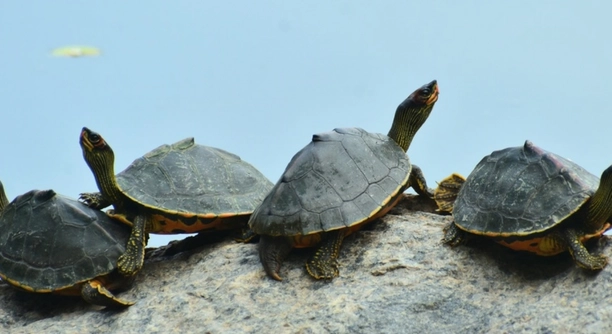
Tortoises are wonderful pets, and the Indian Roofed Tortoise, in particular, requires a suitable living space to thrive. Understanding the importance of a spacious tank is essential for their well-being.
A tank that is too small for your Indian Roofed Tortoise can lead to stress, stunted growth, and health issues. Their tank should be large enough to allow for movement, proper heating, and an enriched environment.
Providing an ideal tank size is crucial for your tortoise’s comfort and health. Keep reading to learn the signs that indicate your pet’s tank may be too small.
1. Limited Space for Movement
If your tortoise’s tank is too small, it will likely have trouble moving around freely. Tortoises are naturally curious creatures, and they enjoy exploring their environment. A cramped tank can prevent them from getting the exercise they need, which can lead to stress and even health problems. Without room to walk, your tortoise may also struggle to find a comfortable spot to bask or hide, which are crucial behaviors for their well-being.
A lack of space can lead to frustration and slow down their physical development. Even simple actions, like stretching their legs or turning around, become difficult when the space is inadequate. This can result in an unhappy, lethargic tortoise.
It’s also important to remember that a small tank may not provide enough room for your tortoise to find food or water easily. A spacious tank supports better access to resources, which helps your pet stay healthy and active.
2. Lack of Proper Heating and Lighting
A small tank often makes it harder to maintain consistent heating and lighting. These are essential for your tortoise’s digestion and overall health. With a cramped space, the heat source can’t distribute evenly, creating warm and cold spots that are uncomfortable for your pet.
Tortoises need a basking area with proper lighting, and a small tank limits the options for setting up these crucial zones. Without sufficient heat, your tortoise can suffer from a weakened immune system or digestive problems. It’s important to have both a basking spot and cooler areas where the tortoise can regulate its body temperature.
Without proper lighting and heating, your tortoise may also struggle with shedding issues or even metabolic bone disease. Ensuring a balanced temperature gradient is essential for your tortoise’s health. The more space the tank provides, the easier it will be to manage these factors and support a healthier, happier pet.
3. Insufficient Hiding Spots
Your tortoise needs a place to retreat when it feels stressed or overwhelmed. A small tank may not provide enough hiding spots to meet its needs. Without a secure hiding place, your tortoise may feel exposed and anxious, leading to behavioral issues.
Hiding is a natural behavior that allows your tortoise to feel safe and comfortable. It’s important to provide a hiding spot in the form of a small cave or a tunnel. When the tank is too small, there’s limited space to create this vital area, leaving your tortoise without the comfort it needs.
Having the right hiding spot also helps your tortoise regulate its temperature. The hiding spot should be cooler than the basking area to create a comfortable thermal gradient. Without this, your tortoise may become stressed or uncomfortable, which can harm its health in the long run.
4. Limited Space for Substrate
A small tank restricts the amount of substrate your tortoise can have. Substrate plays a crucial role in your pet’s habitat by helping with temperature regulation and providing a comfortable surface for digging. With insufficient substrate, your tortoise’s environment can become less suitable for its natural behaviors.
The type of substrate also matters. Your tortoise may enjoy burrowing or digging, and a shallow layer of substrate doesn’t allow for these behaviors. Without enough space for proper substrate, your tortoise may feel frustrated and stressed. It’s important to have enough room for a thick layer of bedding that encourages natural activities like digging.
When your tortoise doesn’t have the space to express natural behaviors, it can cause mental and physical stress. A spacious tank with a deep substrate layer allows for a more comfortable and enriching environment. This helps your tortoise thrive physically and emotionally, avoiding potential health issues.
5. Poor Ventilation
A small tank often doesn’t provide proper ventilation, which is essential for maintaining a healthy environment. Without enough airflow, humidity levels can become too high, leading to mold growth and poor air quality. This can make your tortoise’s habitat unhealthy, affecting its skin and respiratory health.
Ventilation is vital to prevent stagnant air, which can cause your tortoise to struggle with breathing. A small tank can restrict airflow, causing the space to feel stuffy and uncomfortable. Proper ventilation helps regulate humidity and ensures your pet has access to fresh air, reducing the risk of respiratory infections.
6. Lack of Exercise Space
Exercise is important for your tortoise’s health, but a small tank limits its ability to move around and stay active. Tortoises need enough space to roam, stretch, and explore, which helps maintain healthy muscle function and bone strength. Without this, your tortoise may become lethargic or overweight.
When a tank is too small, your tortoise won’t have the freedom to perform essential activities like walking or climbing. This lack of movement can lead to joint problems and overall poor health. Providing a larger tank with ample space ensures your tortoise can stay active and healthy.
7. Inadequate Space for Accessories
Your tortoise’s tank should include various accessories to make the environment more enriching. A small tank limits your ability to add things like ramps, basking platforms, or hiding spots. These items are essential for your tortoise’s mental stimulation and comfort, helping it feel secure and entertained.
The more space you provide, the more room you have to incorporate enrichment items that your tortoise needs to thrive. A larger tank allows for the right amount of decoration and practicality, supporting a well-rounded and happy pet.
FAQ
How big should my Indian Roofed Tortoise’s tank be?
For an Indian Roofed Tortoise, a tank should be at least 40 to 60 gallons for one adult tortoise. If you have a juvenile, you can start with a smaller tank, but you’ll need to upgrade as your tortoise grows. A larger tank allows enough space for the tortoise to move freely and exercise, which is essential for its well-being. As a rule of thumb, the bigger, the better, as long as you can provide the proper heating, lighting, and substrate. A spacious tank promotes healthier movement, digestion, and overall activity levels.
Can I use a glass tank for my tortoise?
Yes, you can use a glass tank for your Indian Roofed Tortoise. Glass tanks are commonly used because they are easy to clean and provide good visibility of your pet. However, you need to ensure there’s proper ventilation. If the glass tank is not well-ventilated, the air can become stale, which is harmful to your tortoise’s health. Adding ventilation holes or using a mesh lid can help improve airflow and humidity regulation. Make sure the glass tank is large enough to accommodate your tortoise’s space needs.
What substrate should I use for my tortoise?
For an Indian Roofed Tortoise, you should use a substrate that is easy to clean, absorbent, and allows for natural behavior like digging. Some good options include coconut coir, cypress mulch, or a mix of sand and soil. Avoid using gravel, as it may cause impaction if ingested. The substrate should be deep enough to allow your tortoise to dig and burrow, which is a natural behavior. Ensure the substrate is kept dry, and spot clean it regularly to keep the tank hygienic.
How often should I clean my tortoise’s tank?
You should clean your Indian Roofed Tortoise’s tank at least once a week, but spot cleaning should be done daily. Remove any uneaten food, waste, or debris to keep the habitat fresh. Substrate should be replaced or cleaned thoroughly every month or so, depending on how dirty it gets. Regular cleaning prevents the buildup of bacteria, fungus, and mold, which can cause health issues for your tortoise. The water bowl should be cleaned daily and filled with fresh, clean water.
Is it necessary to have UVB lighting for my tortoise?
Yes, UVB lighting is crucial for your Indian Roofed Tortoise. It helps your tortoise synthesize vitamin D3, which is needed for calcium absorption and overall bone health. Without proper UVB light, your tortoise could develop metabolic bone disease, a condition that weakens its bones. Make sure to use a UVB light designed for reptiles, and place it over the basking area to mimic sunlight. The UVB light should be replaced every 6-12 months, as its effectiveness decreases over time, even if the bulb still emits visible light.
How can I tell if my tortoise is stressed?
Stress in an Indian Roofed Tortoise can be caused by many factors, including insufficient space, improper temperatures, or lack of hiding spots. Signs of stress include lethargy, loss of appetite, excessive hiding, and frequent attempts to escape its tank. If your tortoise is pacing or rubbing its face against the tank walls, it could be trying to get out because it’s unhappy with its environment. A stressed tortoise may also exhibit changes in behavior, such as increased aggression or refusal to eat.
Can I keep more than one tortoise in the same tank?
It’s generally not recommended to house multiple tortoises in the same tank unless it is very large and you can provide enough space and resources for each one. Tortoises can be territorial, and keeping them together in a small space can lead to fights, stress, and injury. If you do decide to keep more than one, make sure each tortoise has its own basking area, hiding spots, and food sources to avoid competition. It’s best to monitor their behavior carefully to ensure they are getting along.
What temperature should my tortoise’s tank be?
Your Indian Roofed Tortoise needs a temperature gradient in its tank, with a warm basking area and a cooler area for it to regulate its body temperature. The basking spot should be around 90-95°F (32-35°C), while the cooler area should range between 75-80°F (24-27°C). Nighttime temperatures can drop to around 70-75°F (21-24°C). A heat lamp or ceramic heat emitter can be used to provide warmth, while a thermometer will help you monitor and maintain the proper temperatures.
How often should I feed my tortoise?
Indian Roofed Tortoises should be fed daily, but the amount of food will vary based on their age and size. Adult tortoises typically eat once a day, while younger tortoises may require more frequent meals. Their diet should consist mostly of dark leafy greens like collard greens, dandelion greens, and kale, along with occasional fruits and vegetables. Avoid feeding them too much fruit, as it can upset their digestive system. Always provide fresh water in a shallow dish for them to drink and soak in.
Can I take my tortoise outside?
Yes, you can take your Indian Roofed Tortoise outside, but it should be supervised. Make sure the area is safe and free from potential predators or hazards. Tortoises enjoy the natural sunlight and will benefit from the UVB rays, but you should never leave them outside unsupervised. The temperature should be appropriate for your tortoise, and the ground should be secure, as tortoises may try to escape. Always monitor your tortoise closely to prevent it from getting lost or injured.
Final Thoughts
Ensuring your Indian Roofed Tortoise has enough space is crucial for its health and well-being. A tank that’s too small can lead to stress, poor growth, and a variety of health issues. It’s important to consider not just the size of the tank, but also how it affects your tortoise’s behavior, comfort, and ability to thrive. When your tortoise has enough room to move, explore, and exhibit natural behaviors like digging and basking, it will lead a healthier, happier life.
A larger tank not only provides enough space for your tortoise to exercise and find a hiding spot but also ensures that the environment is better suited for maintaining proper heating and lighting. Adequate space allows you to create different zones within the tank, such as a basking area, a cooler zone, and a place to hide. These areas are important for regulating body temperature and giving your tortoise the comfort it needs to stay physically and mentally healthy. By providing a spacious tank, you’re also helping to reduce stress that comes from feeling confined in a cramped space.
In the end, your Indian Roofed Tortoise relies on you to provide the right environment to ensure its well-being. A properly sized tank, with plenty of space for your tortoise to move around, stay active, and access essential resources, is key. Monitoring your tortoise’s behavior and making adjustments to its habitat as it grows will go a long way in promoting its health. The effort you put into creating the right environment will pay off with a long, healthy, and content tortoise.

Hello,
If you enjoy the content that we create, please consider saying a "Thank You!" by leaving a tip.
Every little bit helps us continue crafting quality advice that supports the health, happiness, and well-being of pets around the world, for pets of all shapes, sizes, and species.
We really appreciate the kindness and support that you show us!