
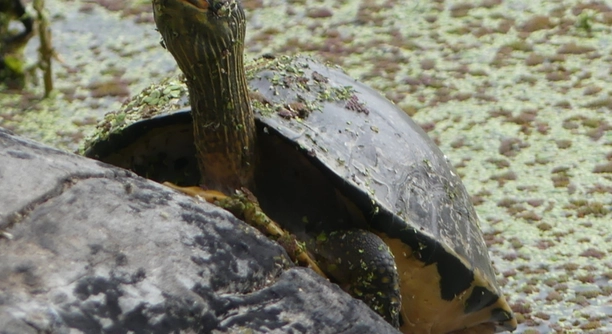
Identifying the gender of an Indian Roofed Tortoise can be tricky. While these creatures are fascinating, knowing their gender is essential for proper care and understanding their behavior. Let’s explore how you can tell them apart.
To determine the gender of an Indian Roofed Tortoise, observe key physical differences. Males tend to have a longer tail, a concave plastron, and a more colorful body, while females are generally smaller and have a flatter plastron.
These simple traits will guide you in identifying whether your tortoise is male or female. With a few observations, you can easily tell them apart.
Tail Length and Shape
When you look at an Indian Roofed Tortoise, the tail can be a great indicator of gender. Males have noticeably longer and thicker tails, while females’ tails are shorter and thinner. The tail’s length is a simple and clear way to start distinguishing the two. Male tortoises use their long tails to help with mating, which is why this feature is more prominent. The tail usually extends beyond the edge of the shell for males, while the tail of a female typically stays closer to the body.
It’s important to check the tail closely, especially when the tortoise is active and moving around. In a relaxed state, the difference may not be so obvious. However, when males are looking for mates, their tails are more likely to be in a visible, extended position.
A longer tail on a male tortoise is also often accompanied by slight behavioral differences. For instance, males are more likely to attempt to mate, which becomes easier to notice as they age. This characteristic provides a significant clue to the tortoise’s gender.
Plastron Shape
The plastron is another area that helps identify gender differences. Males typically have a concave plastron, meaning it curves inward. This feature allows the male to mount females during mating. On the other hand, females have a flatter plastron, which gives them more room to carry eggs. This difference is visible once the tortoise is turned over, and it’s one of the most reliable methods to determine the sex.
A concave plastron helps males maintain stability while mating. It’s a structural feature that has evolved specifically for reproduction. In contrast, females require a flatter plastron for easier egg development and laying. Therefore, this shape plays an important role in distinguishing male and female tortoises. As tortoises grow, this characteristic becomes more defined.
While the tail and plastron differences are quite obvious, age can also impact the accuracy of these traits. Younger tortoises may not exhibit these features as clearly as adults. However, by observing these traits closely as the tortoise matures, you can begin to confidently identify its gender.
Body Size
Male Indian Roofed Tortoises tend to be smaller than females. Females usually grow larger and bulkier, as they need the extra size to carry eggs. This size difference can be seen from a young age but becomes more pronounced as they mature. Males are more compact, while females have a rounder, fuller shape.
Females will often exceed the males in length and weight. This difference isn’t just about appearance; it has practical uses. A larger female is more capable of laying and carrying eggs, which is essential for her reproductive success. Male tortoises, being smaller, focus more on mating and defending territory. Over time, these size differences will become even clearer as the tortoises continue to grow.
As you observe your tortoises, it’s helpful to note that females can grow up to 30 cm, while males usually stay around 20-25 cm. If you measure your tortoise, the difference in size can give you a solid indication of its gender. Larger size indicates a female, while the smaller size points to a male.
Behavior and Activity Level
The behavior of male and female Indian Roofed Tortoises is quite different, especially when it comes to mating season. Males are more active, constantly looking for mates. You’ll often see them pacing around, making sounds, or even attempting to mount females. In contrast, females tend to be calmer and more focused on eating or resting. Males may chase females, especially during the breeding season, which is a clear indication of their gender.
Male tortoises are generally more territorial and exhibit dominant behaviors. They may engage in battles with other males to establish hierarchy. These behaviors can become more noticeable as they age and gain confidence. The male’s desire to mate will also make him more active, as he spends more time trying to attract a female.
On the other hand, females typically stay closer to their food sources and are less inclined to roam for extended periods. While males are often seen moving around more frequently, females will show less interest in traveling large distances unless they are searching for a suitable spot to lay eggs.
Shell Shape
The shell shape can also be an indicator of gender in Indian Roofed Tortoises. Males usually have a more elongated, narrower shell, while females have a broader, rounder shell. The shape is linked to their needs: males need to be more agile, while females require more space to carry eggs.
The broader shell in females allows for the development of eggs inside their body. This is especially noticeable in adult females, as the shell’s shape changes to accommodate their reproductive needs. The male’s narrower shell helps him maneuver more easily while seeking mates or defending territory.
Coloration
Males tend to have brighter, more vivid colors compared to females. Their shells may show more contrast, often with darker and lighter patches that stand out more. Females, in contrast, have a more muted color palette, often with less striking patterns.
The male’s vivid coloration serves as a signal to attract mates. Females don’t require such vivid colors, as their primary role is to carry and lay eggs. Over time, as males mature, their color becomes even more noticeable, helping them assert dominance and attract females during mating season.
FAQ
How can I tell if my tortoise is male or female?
You can identify the gender of an Indian Roofed Tortoise by looking at several physical traits. Males generally have longer tails, a concave plastron, and a smaller, more compact body. Females have a shorter tail, a flatter plastron, and tend to be larger overall. Additionally, males often have more vivid coloration, especially as they mature.
Does size always determine gender?
Size is a reliable indicator of gender in Indian Roofed Tortoises. Males are typically smaller, around 20-25 cm, while females can grow up to 30 cm or more. The size difference becomes more evident as the tortoises grow older, but it is not always the sole factor for identification.
Can behavior help determine gender?
Yes, behavior is another clue. Male tortoises are more active, especially during mating season. They often chase females, attempt to mount, and may engage in territorial displays with other males. Females are generally calmer and more focused on eating or resting, except when they need to lay eggs.
Do male tortoises make more noise?
Male tortoises can be more vocal, especially when they are trying to attract a mate. They may make hissing or grunting sounds, particularly when they are in competition with other males. These vocalizations are less common in females, who do not need to display this behavior to attract mates.
At what age do gender differences become noticeable?
Gender differences in Indian Roofed Tortoises usually become noticeable around 3-4 years of age. Before this, it can be hard to distinguish between males and females, as both sexes can appear similar in size and shape. However, as they mature, the differences in size, shell shape, tail length, and behavior become more pronounced.
Can the shell shape really tell the gender?
Yes, shell shape is a clear indicator of gender. Males tend to have a narrower, more elongated shell, while females have a broader, rounder shell. This difference is linked to their biological roles. The female’s broader shell provides space for eggs, while the male’s shell helps him be more agile during mating.
Do Indian Roofed Tortoises require a mate for breeding?
Yes, Indian Roofed Tortoises need both a male and a female to breed. Males court females through behavior like chasing and mounting. After mating, the female will lay eggs, which she will bury in a suitable location. The eggs will hatch after several weeks to months, depending on temperature conditions.
Are there any environmental factors that affect gender identification?
No, environmental factors do not directly affect gender identification in Indian Roofed Tortoises. However, it’s important to note that the tortoises’ behavior and physical traits might vary slightly depending on the climate and their habitat. Still, the general characteristics remain consistent and reliable for gender identification.
Can I house male and female tortoises together?
Yes, you can house male and female tortoises together, but keep in mind that males can become very territorial, especially during mating season. This can lead to stress or aggression. If you plan on keeping both sexes, ensure there’s enough space and hiding spots for each tortoise to reduce conflicts.
How often do Indian Roofed Tortoises breed?
Indian Roofed Tortoises breed during specific seasons, typically during the warmer months. Males may attempt to mate with females multiple times during this period. Females, however, may only lay eggs once or twice a year, depending on their health and environmental conditions. It’s important to provide a suitable environment for breeding if you wish to encourage it.
What happens if I have multiple males together?
If you keep multiple males together, they may compete for territory and mates, leading to aggressive behavior. Male tortoises are highly territorial and may display dominance by chasing or even physically fighting each other. It’s better to house multiple males separately or with females to avoid constant conflict.
Can the tail help me differentiate between sexes at all ages?
The tail difference is one of the clearest indicators of gender, but it becomes most noticeable as the tortoise matures. Young tortoises may have tails that are similar in size and shape. As they age, the male’s tail will grow longer and thicker, making it easier to distinguish.
What do I do if I’m unsure about my tortoise’s gender?
If you’re unsure, observing the tortoise’s behavior and physical traits over time will help. Check the tail length, shell shape, and size difference between your tortoises. If you’re still unsure, consult a veterinarian who specializes in reptiles. They can help confirm the gender through physical examination.
Final Thoughts
Identifying the gender of an Indian Roofed Tortoise can seem difficult at first, but once you know what to look for, it becomes much easier. By paying attention to physical traits like the tail length, plastron shape, and overall size, you can distinguish between males and females with confidence. While some differences, like behavior, may be more noticeable during the breeding season, others are visible from a young age and become more obvious as the tortoise grows.
It’s important to remember that gender identification takes patience. For younger tortoises, the differences might not be as clear, and it may take time for the gender traits to develop fully. The tail, for instance, can be hard to differentiate in young tortoises, and the plastron shape doesn’t become more defined until they are older. However, as they mature, these traits become more apparent, making it easier for you to identify whether your tortoise is male or female.
Ultimately, understanding the gender of your Indian Roofed Tortoise can help you provide the best care. Recognizing their differences allows you to meet their specific needs, especially when it comes to habitat, diet, and breeding. Whether you’re just beginning to care for tortoises or are a more experienced keeper, knowing how to identify their gender is an essential part of being a responsible pet owner. It helps ensure that your tortoise is well cared for and that you understand the behaviors and needs specific to each gender.

Hello,
If you enjoy the content that we create, please consider saying a "Thank You!" by leaving a tip.
Every little bit helps us continue crafting quality advice that supports the health, happiness, and well-being of pets around the world, for pets of all shapes, sizes, and species.
We really appreciate the kindness and support that you show us!