
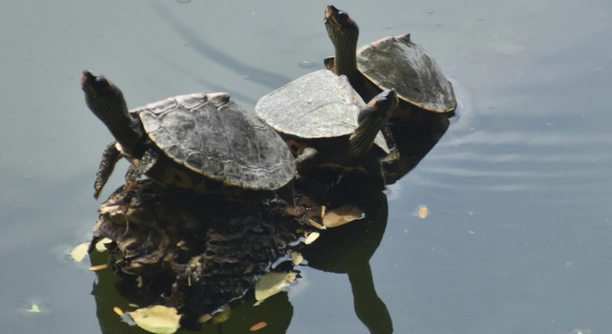
The Indian Roofed Tortoise is known for its fascinating mating behaviors. Understanding these patterns is crucial for anyone interested in keeping or observing this species. Here’s a closer look at what makes their mating habits unique.
Indian Roofed Tortoises engage in a highly ritualistic mating process, with males demonstrating dominance through vocalizations and physical displays. During mating, males often chase females, showing persistent behavior that helps them secure a mate. This process ensures successful reproduction.
These insights will help you better understand the tortoise’s behavior and its implications for conservation and care.
Male Mating Displays and Competition
Male Indian Roofed Tortoises engage in several behaviors to compete for the attention of a female. These behaviors include vocalizations, chasing, and displaying physical dominance. The males may use their shells to push and nudge other males out of the way, ensuring their chance to mate. This aggressive competition plays a significant role in the natural selection process. Males that are more persistent and physically dominant are more likely to attract females and successfully reproduce. These behaviors highlight the importance of strength and stamina in the tortoise’s mating rituals. In the wild, these displays help establish territories and influence the balance of tortoise populations.
The competition among males for mates is a critical aspect of their mating process. It’s an essential part of the species’ survival, ensuring that only the fittest males reproduce.
Understanding these mating displays can assist in managing captive populations. It also sheds light on how male tortoises assert themselves in the wild. The aggressive behaviors exhibited are not random but are a product of evolutionary pressure.
Female Behavior and Mate Selection
Females of this species are selective during mating. While males may aggressively pursue them, females are known to be more passive in their approach. The selection process involves a complex assessment, as females tend to choose mates based on physical strength and the ability to perform elaborate displays. These behaviors signal that the male is a capable and healthy mate. Females may avoid males that show signs of weakness or poor health, ensuring their offspring have the best chance of survival.
Females also play a significant role in the continuation of the species by choosing mates that demonstrate qualities essential for survival. Their selection process is crucial for maintaining genetic health and the future of the species. By observing these behaviors, one can gain insight into how survival instincts influence reproduction.
Mating Rituals and Behavior Patterns
Mating rituals of Indian Roofed Tortoises are an intricate part of their reproductive success. These rituals often involve males chasing females, pushing each other aside, and performing specific physical movements. The rituals are more than just mating attempts; they are essential for attracting the right mate.
Males engage in a series of physical displays to prove their strength and stamina. These actions are not only about securing a mate but also about signaling their genetic fitness. The males’ ability to sustain their efforts in these rituals influences the chances of successful reproduction. Females often choose mates based on how well males perform these displays.
The intensity of the male’s pursuit signals their readiness to reproduce. If a male’s display is weak, a female may lose interest and move away. In some cases, females will only mate with the most persistent males, ensuring that only the strongest genes are passed on. These behaviors ensure the survival of the species.
The Role of the Mating Season
The mating season is an essential period for the Indian Roofed Tortoise. This time frame allows males and females to meet, mate, and reproduce. Seasonal changes influence the tortoises’ behavior, making them more active and likely to engage in mating. The mating season usually takes place during the warmer months, aligning with the tortoises’ natural breeding cycle.
During the mating season, males become more territorial. They actively search for females, often engaging in aggressive displays to assert dominance. These actions are necessary to secure a mate and ensure the continuation of their genetic line. The warmer temperatures play a role in stimulating these behaviors, triggering heightened reproductive activity.
The season not only influences mating but also the tortoises’ overall health. During this time, males are under significant physical stress as they compete with each other. However, these behaviors are crucial for ensuring that only the strongest individuals reproduce. As such, the mating season is a key element in their reproductive strategy.
Post-Mating Behavior
After mating, male Indian Roofed Tortoises often leave the female alone. They may return to their territory or continue searching for other females. The female, however, will focus on finding a suitable location to lay her eggs. The post-mating period is an important time for the reproductive cycle.
Males rarely stay with the female after mating. Once their task is done, they often leave her to continue with her reproductive duties. This behavior ensures that males don’t expend unnecessary energy and can focus on seeking out other potential mates for future breeding opportunities.
Egg-Laying Process
Once a female has successfully mated, she prepares to lay her eggs. She will search for a safe and quiet location to dig a nest. The nesting process is important for the protection and survival of the eggs, as she carefully buries them after laying.
The female carefully selects a site for egg-laying, often in loose soil. She digs a small, deep hole where she deposits her eggs, ensuring they are well-covered. This process ensures that her offspring have the best chance of surviving predators and environmental challenges. Protection is key.
Nesting Site Selection
Choosing the right nesting site is critical for the success of the offspring. Females seek out quiet and undisturbed locations to lay their eggs. The site needs to offer security from predators and proper conditions for incubation. A good nesting site increases the likelihood of the eggs hatching successfully.
FAQ
What is the mating season for Indian Roofed Tortoises?
The mating season for Indian Roofed Tortoises typically occurs during the warmer months, usually between spring and early summer. This period aligns with their natural breeding cycle, and it triggers increased activity in both males and females. The warmer temperatures are crucial for stimulating reproductive behavior in these tortoises, encouraging males to actively seek out females.
During this time, males become more aggressive in their pursuit of mates. They perform various physical displays to demonstrate their strength and fitness, which are key factors in female selection. The mating season is a critical time for both males and females to ensure successful reproduction and continuation of the species.
How do male Indian Roofed Tortoises attract females?
Male Indian Roofed Tortoises attract females primarily through aggressive displays and vocalizations. Males may chase females and push other males aside in their effort to secure a mate. The physical dominance and persistence shown during these displays are important factors in gaining the female’s attention.
Males may also make specific vocalizations to signal their presence and readiness to mate. These sounds are used to communicate with potential mates, signaling their fitness. Females often choose males based on the strength and endurance shown during these rituals, which ensures that only the most capable males reproduce.
How long does the mating process last for Indian Roofed Tortoises?
The mating process for Indian Roofed Tortoises can vary in length depending on various factors, such as the males’ displays and the females’ willingness to mate. The actual mating typically lasts for a short period, often no more than 10-15 minutes. However, the courtship rituals before mating can take much longer, with males engaging in aggressive behavior to prove their strength and stamina.
Once mating occurs, males usually leave the female to continue their search for other mates. The female, however, will focus on finding a suitable location to lay her eggs. The entire process, from courtship to egg-laying, spans several weeks and is crucial for the reproductive cycle.
Do Indian Roofed Tortoises mate for life?
No, Indian Roofed Tortoises do not mate for life. After mating, males often leave the female to search for other mates. The males do not engage in any further care or protection of the female or the eggs. The mating process is more about securing the opportunity to reproduce rather than forming long-lasting bonds.
Females are typically solitary during the egg-laying process and do not rely on the male for any assistance in raising the offspring. The focus for both males and females is to ensure the successful continuation of their genetic line, which is facilitated through repeated mating opportunities during each mating season.
How many eggs do Indian Roofed Tortoises lay?
Indian Roofed Tortoises typically lay between 2 and 6 eggs per clutch. The number can vary depending on the size and health of the female. The eggs are usually laid in a carefully chosen nesting site, where they are buried to protect them from predators and environmental elements.
The female will bury the eggs deep in the soil, ensuring they remain hidden and safe. The incubation period for the eggs generally lasts between 60 and 120 days, depending on the temperature and humidity levels of the nesting site. Once hatched, the young tortoises are left to fend for themselves.
What is the incubation period for Indian Roofed Tortoise eggs?
The incubation period for Indian Roofed Tortoise eggs typically lasts between 60 to 120 days, depending on environmental factors such as temperature and humidity. Warmer temperatures generally result in shorter incubation periods, while cooler conditions may extend the time it takes for the eggs to hatch.
During this period, the female does not provide any further care for the eggs. The eggs remain buried in the nesting site, where they are protected from predators. Once the eggs hatch, the young tortoises emerge and begin their life journey on their own.
How does the temperature affect the hatchling sex ratio in Indian Roofed Tortoises?
Temperature plays a significant role in determining the sex of Indian Roofed Tortoise hatchlings. This phenomenon is known as temperature-dependent sex determination (TSD). Higher temperatures during incubation tend to produce more female tortoises, while lower temperatures lead to more males.
The temperature within the nesting site is crucial in determining the sex ratio of the offspring. Females tend to prefer nesting sites with specific temperature ranges, as it ensures the optimal conditions for their eggs to hatch successfully. However, climate change and fluctuations in temperature could impact this delicate balance, potentially affecting the species’ reproductive success in the future.
How do Indian Roofed Tortoises protect their eggs?
Indian Roofed Tortoises protect their eggs primarily through their nesting behaviors. After laying their eggs, females carefully bury them in deep, secure holes to shield them from predators and environmental hazards. The eggs remain hidden beneath the surface until they hatch, offering a degree of protection.
In addition to physical protection, the female may choose nesting sites that are naturally shielded from the sun, reducing the risk of overheating. The eggs are also protected by the surrounding soil, which helps maintain a stable temperature and humidity level. This protection is essential for the survival of the young tortoises after they hatch.
Do Indian Roofed Tortoises care for their young?
Indian Roofed Tortoises do not provide parental care after their eggs hatch. Once the young tortoises emerge from the eggs, they are left to fend for themselves. The female does not stay with her offspring and has no role in nurturing or guiding them.
The hatchlings must rely on their instincts and the environment for survival. They are born with the ability to find food and avoid predators on their own. This lack of parental involvement is common among many reptile species, where the focus is on laying and protecting eggs rather than raising the young.
Final Thoughts
Indian Roofed Tortoises have fascinating and unique mating habits that are shaped by their environment and biological needs. Mating behavior in these tortoises is driven by the males’ physical displays and the females’ search for suitable mates. The courtship is intense, with males competing for female attention through aggression and persistence. These behaviors help ensure that only the strongest and most capable males reproduce, passing on their genes to the next generation. The females, on the other hand, are more focused on selecting the best mate and ensuring the survival of their eggs after fertilization.
The process of egg-laying and nest selection is another critical part of their reproductive cycle. Once mating is complete, the female tortoise moves on to find a secure and quiet place to lay her eggs. She digs a deep hole in loose soil, where she deposits the eggs, ensuring they are hidden and protected from predators. The nest site is essential for the success of the hatchlings. It needs to provide the right conditions for incubation, as the temperature and humidity in the soil play a significant role in determining the sex of the offspring. This process reflects the tortoise’s instinct to create a safe environment for the next generation, even though no parental care is provided after the eggs are laid.
While their mating habits are complex, the lack of parental care after hatching is a key aspect of Indian Roofed Tortoise reproduction. The young are born with the instincts necessary for survival, such as finding food and avoiding danger. This highlights the tortoises’ reliance on their environment and natural instincts rather than parental guidance. Understanding these behaviors helps us appreciate the ways these tortoises ensure their species continues to thrive in the wild, despite the many challenges they face.

Hello,
If you enjoy the content that we create, please consider saying a "Thank You!" by leaving a tip.
Every little bit helps us continue crafting quality advice that supports the health, happiness, and well-being of pets around the world, for pets of all shapes, sizes, and species.
We really appreciate the kindness and support that you show us!