
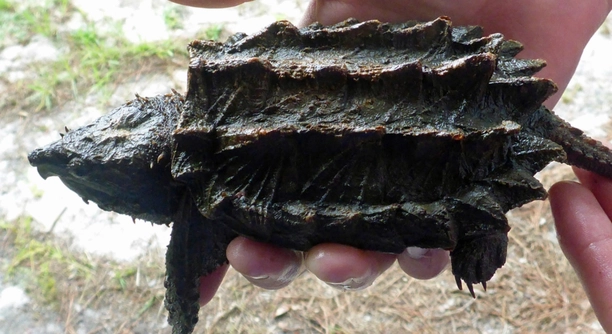
Alligator snapping turtles are fascinating creatures known for their unique hunting skills. They use clever techniques to capture prey that few other animals employ. Their method is a perfect example of adaptation in the animal kingdom.
The alligator snapping turtle’s unique hunting technique involves using its tongue, which resembles a worm. The turtle lures fish close to its mouth by wiggling the tongue, then quickly snapping its jaws to catch the prey.
This unusual hunting style sets them apart in the world of reptiles. The next section will explore some fun facts behind this fascinating method of survival.
Alligator Snapping Turtle’s Camouflaged Tongue
The alligator snapping turtle is known for having a worm-like tongue that plays a major role in its hunting. This tongue is not just a simple feature; it has a highly specialized structure. It is a fleshy, pink appendage that resembles a worm or small fish. When the turtle lays still at the bottom of the water, it subtly moves its tongue to mimic the movements of prey. Fish and other small animals mistake the tongue for a worm and swim close to investigate. Once within range, the turtle strikes with incredible speed. The combination of camouflage and patience makes it a skilled predator.
It’s a clever tactic that relies on the turtle’s ability to remain motionless for extended periods. This patience is key to the success of its hunting method. The turtle stays perfectly still, allowing its tongue to do the work of attracting potential meals.
By staying hidden in plain sight, the turtle uses its tongue as an effective lure. The prey comes to it, unaware of the predator lurking just beneath. It’s an evolutionary marvel that has helped the turtle adapt to its environment, ensuring survival in a habitat full of competition. The turtle’s hunting style is one of the most unique adaptations in the animal kingdom, highlighting the importance of patience and precision in nature.
Efficient Jaws for a Quick Meal
Once the prey approaches, the alligator snapping turtle’s powerful jaws close rapidly. The speed and strength of its bite make sure the prey doesn’t escape.
Patience Is Key
The alligator snapping turtle’s hunting technique requires a great deal of patience. It spends most of its time lying motionless at the bottom of lakes or rivers, waiting for prey to come near. This stillness can last for hours.
Its ability to remain still for long periods is an essential part of the hunt. The turtle blends in perfectly with its surroundings, making it nearly invisible. The fish and other small creatures don’t even realize they’re swimming right into the turtle’s trap. The longer it remains motionless, the better its chances of success.
This patience is not just about waiting; it’s about waiting smartly. The turtle’s environment provides plenty of food, but it requires persistence to catch a meal. Unlike many predators that chase their prey, this turtle uses stillness as a powerful weapon. It’s a perfect example of how slow and steady can truly win the race.
Powerful Bite for Quick Capture
The alligator snapping turtle’s bite is incredibly strong. Once the prey is close enough, the turtle’s jaws snap shut with lightning speed. The force of this bite is enough to capture or kill small fish and other creatures quickly. This quick action is crucial to its survival.
Its jaw strength also helps the turtle break through hard-shelled prey, such as mollusks. With its powerful bite, the turtle can easily crush shells and access the soft meat inside. This makes it a versatile hunter, able to adapt to different types of prey in various environments. The speed and power of its jaws give it an edge over other predators in the area.
The turtle’s bite is a testament to its evolutionary adaptation. Its ability to catch and consume a wide range of prey makes it a dominant predator in its habitat. This powerful bite is one of the reasons the alligator snapping turtle remains an efficient and successful hunter.
Unique Hunting Adaptations
The alligator snapping turtle’s hunting method is unique due to its ability to use its tongue as bait. This adaptation is one of the most effective ways it catches prey in the wild.
Its ability to mimic the movement of a worm is vital in attracting fish. Once close enough, the turtle can quickly strike. This technique ensures that the turtle can feed efficiently in its environment.
This highly specialized method makes the alligator snapping turtle a master at hunting without much movement. It takes advantage of natural features in its habitat to lure prey toward its deadly jaws.
Stealth in Motion
The turtle’s method of hunting also relies on its stealth. Its slow, deliberate movements keep it hidden in its environment, allowing it to blend seamlessly with the surroundings. This makes it nearly invisible to potential prey.
When the turtle does move, it is very calculated. Every action is part of the larger strategy to catch its next meal. The ability to stay hidden and wait for the right moment is a key factor in its success. The turtle can remain still for long periods, often without even disturbing the water around it.
Perfectly Adapted for Survival
The alligator snapping turtle is perfectly adapted to its environment. It uses its physical features and hunting strategy to ensure its survival. The blend of patience, stealth, and powerful jaws makes it a formidable predator. This ensures it has the best chance to capture prey in challenging conditions.
FAQ
How does the alligator snapping turtle catch its prey?
The alligator snapping turtle catches its prey using a specialized hunting technique that involves its tongue. The turtle’s tongue is shaped like a worm, which it wiggles to lure fish and other prey. Once the prey gets close enough, the turtle quickly snaps its powerful jaws shut. This method allows the turtle to remain mostly still and blend into its environment, making it a highly effective hunter in its aquatic habitat.
Why is the alligator snapping turtle’s tongue shaped like a worm?
The shape of the alligator snapping turtle’s tongue is a key adaptation for attracting prey. The tongue’s worm-like appearance fools fish into thinking it’s a tasty, wriggling worm. This mimicry is critical for the turtle’s hunting strategy, as it can wait patiently for prey to swim near and then strike with speed. Without this unique tongue, the turtle would likely struggle to catch food in the same way.
How fast can the alligator snapping turtle strike?
Despite its slow appearance, the alligator snapping turtle can strike very quickly. Its bite is incredibly fast and powerful, often happening within a split second after the prey gets too close. This rapid strike ensures that the turtle captures its meal before the prey has a chance to escape. The turtle’s ability to launch such a quick attack is a vital part of its success as a predator.
Where do alligator snapping turtles live?
Alligator snapping turtles are found in the southeastern United States. They mostly inhabit freshwater rivers, lakes, and swamps. These environments offer them plenty of hiding spots and opportunities to use their hunting skills. The turtle spends most of its time at the bottom of these water bodies, lying still until prey approaches.
What do alligator snapping turtles eat?
Alligator snapping turtles are opportunistic carnivores, meaning they will eat whatever prey comes their way. Their diet consists mainly of fish, amphibians, and crustaceans, but they can also eat small birds or mammals. The turtle’s powerful jaws allow it to eat prey that is tough to catch for many other animals, like hard-shelled mollusks. The variety in its diet helps the turtle survive in a range of aquatic environments.
Are alligator snapping turtles dangerous?
Yes, alligator snapping turtles can be dangerous, especially when they feel threatened. Their bite is extremely strong, capable of crushing through shells or snapping off a finger if provoked. However, they are not aggressive unless they need to defend themselves. In general, they tend to avoid human interaction and only bite in self-defense.
How long do alligator snapping turtles live?
Alligator snapping turtles are long-lived creatures. They can live for 50 years or more in the wild, making them one of the longest-living reptile species. Their slow metabolism and ability to live in stable environments contribute to their impressive lifespan. This longevity is an advantage, allowing them to maintain their place in the ecosystem for many decades.
Do alligator snapping turtles migrate?
No, alligator snapping turtles do not migrate in the traditional sense. They are relatively sedentary animals, staying in the same general area for most of their lives. They do, however, move around within their habitats to find food and suitable breeding grounds. Their movements are more about finding resources rather than long-distance migration.
How big do alligator snapping turtles get?
Alligator snapping turtles are among the largest freshwater turtles in North America. They can grow up to 26 inches long and weigh up to 200 pounds, though many are smaller. Their size, combined with their powerful jaws and specialized hunting skills, makes them effective predators in their environments.
What threats do alligator snapping turtles face?
Alligator snapping turtles face several threats, including habitat loss, pollution, and overfishing. As human development increases, their natural habitats are being destroyed or altered, reducing the areas where they can live and hunt. Additionally, these turtles are sometimes caught accidentally by fishermen, which can harm or kill them. Conservation efforts are important to ensure their survival in the wild.
Can alligator snapping turtles be kept as pets?
While it’s possible to keep an alligator snapping turtle as a pet, it’s not recommended for most people. These turtles require specific care, including large tanks and clean, freshwater environments. They are also wild animals with complex behaviors, so they may not make good pets for those unfamiliar with reptile care. Furthermore, keeping them as pets may contribute to the decline of wild populations.
How does the alligator snapping turtle protect itself?
The alligator snapping turtle uses a combination of camouflage and defensive behavior to protect itself. Its shell is rough and dark, helping it blend into its surroundings, making it difficult for predators to spot. When threatened, it may retreat into the water or hide in the mud. If necessary, it can use its strong bite to defend itself.
Final Thoughts
The alligator snapping turtle’s unique hunting technique is a fascinating example of nature’s adaptability. Its ability to use its tongue as bait is unlike anything else in the animal kingdom. By mimicking the movement of a worm, the turtle attracts fish and other prey, making it an efficient and patient hunter. This clever strategy allows it to survive in its aquatic environment, where other predators may struggle to catch food. The combination of its stealth, patience, and powerful bite makes it a remarkable predator.
While its hunting methods are impressive, the alligator snapping turtle also faces challenges in the wild. Habitat destruction, pollution, and overfishing are just a few of the threats that impact its population. These turtles require clean, freshwater environments to thrive, but many of these habitats are disappearing due to human activity. Conservation efforts are crucial to ensure the long-term survival of this species, as they play an important role in maintaining balance within their ecosystems. Without protection, the alligator snapping turtle could face further decline, potentially leading to its endangerment.
Despite the challenges they face, alligator snapping turtles are incredibly resilient creatures. They have adapted to their environment in ways that many other animals haven’t, allowing them to thrive in their niche for millions of years. By understanding their behavior and needs, we can help protect them and ensure their continued presence in the wild. The alligator snapping turtle is a testament to the complexity of nature and the importance of preserving the diverse species that inhabit our planet. It reminds us that even the smallest creatures have a vital role in the natural world.

Hello,
If you enjoy the content that we create, please consider saying a "Thank You!" by leaving a tip.
Every little bit helps us continue crafting quality advice that supports the health, happiness, and well-being of pets around the world, for pets of all shapes, sizes, and species.
We really appreciate the kindness and support that you show us!