
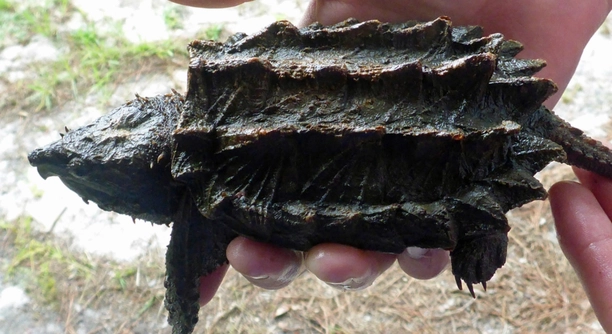
Alligator snapping turtles are fascinating creatures, and their behaviors can sometimes leave us puzzled. One behavior that often raises questions is the frequent puffing of their necks. Understanding this action can help provide insight into their health and habits.
The puffing of an alligator snapping turtle’s neck is a natural behavior, often linked to their hunting technique. They extend their necks to lure prey, mimicking the appearance of a worm. This movement is part of their feeding strategy.
Recognizing this behavior can offer peace of mind and help you better understand your turtle’s needs.
Understanding the Neck Puffing Behavior
When an alligator snapping turtle puffs out its neck, it’s not just a random movement. This action is often a strategy to attract prey. These turtles are known for their hunting technique, where they mimic the movement of a worm or other potential food source. Their long, flexible necks allow them to make this unique display, making it easier to catch fish or other small animals. If you’ve noticed this behavior, it’s a sign that your turtle is engaging in its natural feeding routine. It is perfectly normal and not a cause for concern.
While this is usually a feeding behavior, neck puffing can also be linked to other factors such as stress or environmental changes. For example, if a turtle feels threatened, it may puff out its neck in an attempt to appear larger or more intimidating. Ensuring a stable and calm environment can help prevent excessive stress and reduce unwanted behaviors.
Overall, the neck puffing serves a crucial purpose in the turtle’s ability to survive and hunt in its natural habitat. Understanding this behavior helps ensure that your turtle is healthy and thriving in its environment.
Keeping Your Turtle Stress-Free
Creating the right habitat for your turtle is essential. A stable environment allows your turtle to feel safe and behave naturally.
A calm and comfortable setting helps your turtle act in ways that are typical for its species. Alligator snapping turtles are sensitive to changes in their surroundings, and these fluctuations can affect their behavior, including neck puffing. Providing a consistent environment with the right water temperature, lighting, and space will reduce stress. This minimizes unnecessary behaviors and helps ensure your turtle’s well-being. Maintaining a proper diet is equally important in keeping your turtle healthy and active.
The Role of the Alligator Snapping Turtle’s Neck
The neck puffing behavior is directly linked to the turtle’s hunting strategy. It uses its neck to create a worm-like appearance, attracting prey close enough to capture. This is an essential survival tactic, ensuring that the turtle can hunt effectively without expending too much energy.
In the wild, this technique allows the alligator snapping turtle to catch its food with minimal effort. The extension of the neck, combined with the motion, closely resembles the movements of a worm, fooling fish and other small animals into coming closer. The turtle then strikes quickly, taking advantage of its powerful jaw.
This unique feeding behavior is not just a quirk but a critical part of the turtle’s survival. Understanding this can help you appreciate the turtle’s natural abilities and reduce any concerns about its actions in captivity. Keeping the environment in which they live stable will further promote natural behaviors and minimize unnecessary stress for your turtle.
Stress and Its Impact on the Behavior
Stress can make your turtle more prone to behaviors like excessive neck puffing. Environmental changes such as temperature fluctuations or overcrowding can lead to anxiety, causing the turtle to act out. Ensuring a stable habitat is crucial to reduce these stressors.
When an alligator snapping turtle feels stressed, its instinct may be to puff its neck to appear larger. This is a defense mechanism, often triggered by unfamiliar or uncomfortable conditions. The more stable the environment, the less likely this stress response will occur. Ensuring that your turtle has its own space, proper lighting, and a consistent water temperature can go a long way in making it feel secure. Creating a stress-free environment promotes a healthier, more natural lifestyle for your turtle.
Feeding and Diet
The right diet can influence how your alligator snapping turtle behaves. A well-balanced meal helps maintain its health and keeps its natural hunting instincts sharp. Offering a variety of foods ensures it remains active and engaged in its environment. Proper nutrition also supports the turtle’s overall well-being.
Feeding your turtle the correct foods will keep it in top form. Fish, worms, and other protein-rich foods mimic its natural diet and are essential for growth and energy. Avoid overfeeding, as it can lead to health issues. A diet that matches what they would eat in the wild promotes more natural behavior, including hunting techniques like neck puffing.
Tank Environment and Size
The size of the tank matters for your turtle’s comfort and health. A spacious environment helps it feel secure and allows the neck-puffing behavior to be more natural. If the tank is too small, the turtle may become stressed and show signs of discomfort.
Alligator snapping turtles need a spacious and well-maintained tank to thrive. An appropriate tank allows the turtle to move around, hunt, and engage in behaviors that are typical for its species. A cramped tank can lead to frustration and stress, which may interfere with natural behaviors like neck puffing. Ensuring a large enough tank with proper filtration will also help keep the turtle’s environment clean, promoting overall health and well-being.
FAQ
Why does my alligator snapping turtle puff its neck?
Neck puffing is a natural behavior of the alligator snapping turtle, used primarily for hunting. It extends its neck to mimic the movement of a worm, attracting fish and other small animals. Once the prey comes close enough, the turtle strikes quickly, capturing its food. This behavior is an essential part of its survival strategy.
Is neck puffing a sign of stress?
While neck puffing is most often linked to feeding, it can also occur if the turtle is stressed. Environmental factors such as temperature fluctuations, overcrowding, or a change in surroundings can cause this response. If your turtle is puffing its neck excessively without feeding, stress may be a contributing factor.
How can I reduce stress in my alligator snapping turtle?
Creating a stable environment is key to reducing stress in your turtle. Ensure that the water temperature remains consistent, and the tank is large enough to allow for movement. Avoid sudden changes to their environment and try not to overcrowd the tank. These steps will help your turtle feel secure and calm.
What should I feed my alligator snapping turtle?
Alligator snapping turtles are carnivores and require a diet rich in protein. In the wild, they feed on fish, worms, and other small aquatic animals. You can replicate this diet by offering a variety of live or frozen foods such as fish, earthworms, shrimp, and small invertebrates. It’s important to avoid overfeeding, as this can lead to health issues.
How often should I feed my alligator snapping turtle?
Turtles are known to eat large meals but can go without food for days in between. As a general rule, juvenile alligator snapping turtles should be fed three to four times a week, while adults can be fed less frequently, about two to three times a week. Always observe your turtle’s behavior to adjust its feeding schedule if necessary.
Does the size of the tank affect my turtle’s behavior?
Yes, the size of the tank plays a significant role in your turtle’s overall health and behavior. A tank that is too small can make your turtle feel cramped, stressed, and less active. An appropriately sized tank will allow your turtle to engage in natural behaviors, like swimming and hunting. It also gives the turtle enough space to move freely and reduces the likelihood of stress-induced behaviors.
Can my alligator snapping turtle live with other turtles?
Alligator snapping turtles are generally solitary animals and may become aggressive if housed with other turtles, especially of the same species. If you do choose to house multiple turtles together, ensure there is ample space and resources. It’s essential to monitor their interactions closely to avoid territorial behavior or injury.
What is the ideal water temperature for an alligator snapping turtle?
The ideal water temperature for an alligator snapping turtle is between 72°F and 78°F (22°C to 26°C). Maintaining this temperature range ensures that your turtle stays comfortable and healthy. If the water is too cold, it can lead to a drop in metabolism, making your turtle less active. Too warm, and it may stress the turtle.
Do alligator snapping turtles need a basking area?
Yes, alligator snapping turtles need a basking area in their tank. They enjoy basking in the sun or under UVB lighting to regulate their body temperature and maintain their health. Ensure the basking spot is warm enough, and provide a safe, dry area where your turtle can climb out of the water.
Can alligator snapping turtles live in a freshwater tank?
Yes, alligator snapping turtles are freshwater turtles. They live in rivers, ponds, and other freshwater environments in the wild. Their habitat should consist of clean, fresh water with a suitable filtration system to maintain water quality. It’s important to ensure that the water is free of chemicals or chlorine that could harm your turtle.
What kind of filtration system is best for my turtle’s tank?
Alligator snapping turtles produce a lot of waste, so a good filtration system is essential to keep the water clean. A strong filtration system designed for a tank that’s at least twice the size of your turtle’s enclosure is ideal. This will help maintain water quality and reduce the risk of bacteria buildup, ensuring a healthy environment for your turtle.
How long can an alligator snapping turtle live?
Alligator snapping turtles have a long lifespan and can live for up to 50 years in captivity, sometimes longer if provided with optimal care. In the wild, they typically live for 30 to 40 years. Providing a stable environment and a proper diet can help ensure that your turtle lives a long and healthy life.
Is it normal for my alligator snapping turtle to be inactive?
It is normal for an alligator snapping turtle to have periods of inactivity, especially if it is in a cool environment or during the winter months when they may enter a state of semi-hibernation. However, if your turtle remains inactive for extended periods or shows signs of illness, it’s important to monitor its health and consult a vet if necessary.
Final Thoughts
Understanding the behavior of your alligator snapping turtle, especially the neck puffing, is important for ensuring its health and well-being. Neck puffing is a natural behavior used during hunting to attract prey. However, it can also be a response to stress, so it’s essential to consider the turtle’s environment. Proper tank size, water temperature, and a balanced diet will help create a suitable habitat for your turtle, encouraging natural behaviors. By meeting these needs, you provide the turtle with an environment where it can thrive and exhibit typical behaviors.
Stress can lead to changes in behavior, such as excessive neck puffing. If your turtle is puffing its neck more than usual, it may be trying to communicate discomfort or frustration due to poor water quality, overcrowded living conditions, or abrupt changes in the environment. Ensuring your turtle has a spacious tank, the right water conditions, and a stable routine will help reduce stress. By paying attention to these factors, you can provide your turtle with a comfortable environment that supports its natural behaviors and health.
In conclusion, an alligator snapping turtle’s neck puffing is not necessarily a cause for concern but should be monitored closely. The key is to create an environment where the turtle can act in a way that is natural for it. Feeding it the right food, providing ample space, and ensuring the water is the correct temperature will keep your turtle healthy and happy. A balanced approach to care will prevent unnecessary stress and allow you to enjoy observing your turtle’s fascinating behaviors.

Hello,
If you enjoy the content that we create, please consider saying a "Thank You!" by leaving a tip.
Every little bit helps us continue crafting quality advice that supports the health, happiness, and well-being of pets around the world, for pets of all shapes, sizes, and species.
We really appreciate the kindness and support that you show us!