
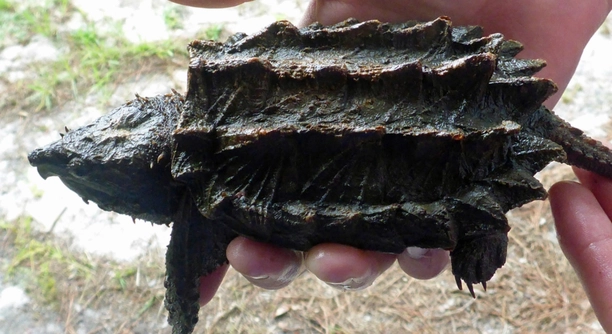
Alligator snapping turtles are fascinating creatures that exhibit some truly unique behaviors. Observing them can be an enjoyable and educational experience. Their actions reveal a lot about their natural instincts and life in the wild.
To observe the natural behaviors of alligator snapping turtles, you can focus on their feeding habits, movements in water, basking routines, and social interactions with other turtles. Watching them hunt and interact will provide insights into their behaviors and adaptations.
From feeding to basking, understanding these activities can offer a deeper appreciation of their fascinating lifestyle. Let’s explore the best ways to observe these turtles in their natural environment.
1. Watch Them Hunt for Food
Alligator snapping turtles are skilled hunters. They have a unique method for catching prey: they use a worm-like appendage on their tongues to attract fish. By remaining still, they wait for the fish to swim close enough to bite. It’s a patient and effective technique. If you’re observing them, it’s essential to give them space so they don’t get disturbed. The more relaxed they are, the more likely you are to witness this hunting behavior. It’s a fascinating and surprising sight when they strike.
Being able to watch this behavior is a rewarding experience. You’ll see just how clever these turtles are when it comes to capturing food.
Their hunting skills are essential for survival, and seeing them in action is a testament to their adaptability. Whether in a natural habitat or a controlled setting, these turtles are relentless in their pursuit of food. With the right environment and conditions, they’re likely to show this behavior.
2. Observe Their Basking Habits
Alligator snapping turtles enjoy basking in the sun. They often climb onto logs or rocks in shallow water to soak up the warmth.
Basking helps them regulate their body temperature, which is crucial for digestion and overall health. When they’re on land, they appear still, but the moment they feel threatened, they’ll retreat into the water. It’s important to observe from a distance to avoid scaring them away.
Spending time basking also helps these turtles keep their shells dry, which prevents the growth of algae and fungus. As they sit quietly in the sun, they absorb necessary heat to maintain their energy. Watching them on a calm day can help you understand their need for this routine.
3. Study Their Movements in Water
Alligator snapping turtles move gracefully in the water. Their movements are often slow but deliberate, which helps them conserve energy. They are well-adapted to their aquatic environment, and their strong limbs and webbed feet assist with swift movements when needed.
As you observe them, you may notice they move in a rhythmic, calculated way. They often stay close to the bottom, where they feel safest. They can also move toward prey with stealth, making it almost impossible to detect them. If they need to, they can make sudden, quick moves to catch food or avoid danger.
While in the water, the turtles also exhibit other behaviors, like submerging for long periods. This helps them maintain a low profile in their environment. Their ability to stay submerged is essential for staying safe from predators. Understanding how they move through the water can give you a deeper appreciation for their survival tactics.
4. Watch for Social Interactions
Alligator snapping turtles aren’t typically social, but they do interact with others. These interactions are often centered around mating, territory, and occasional group behavior.
While not usually seen in groups, these turtles might come together during specific times of the year. Observing their social interactions can give you insight into their communication and territorial nature. For example, during mating seasons, males may become more aggressive or competitive. They may even fight for dominance over a particular area.
During such interactions, it’s crucial to observe quietly and avoid intruding. These turtles don’t often tolerate other turtles invading their space. Watching this behavior will help you see how territorial they can be. It’s a reminder of the importance of respecting their personal space to ensure their natural instincts remain undisturbed.
5. Observe Their Nesting Behavior
Alligator snapping turtles often nest in the warmer months. They create nests by digging into soft, sandy soil, where they lay their eggs.
Once they have deposited the eggs, the female turtles cover the nest and leave it, leaving it to incubate naturally. During this period, the nest is vulnerable to predators, and the eggs need protection.
Watching this process can be a bit tricky since they are very secretive. You’ll need to observe from a distance, as disturbing their nesting site can cause them to abandon it. It’s an important part of their life cycle, and witnessing it is a rare opportunity.
6. Track Their Feeding Patterns
Alligator snapping turtles are opportunistic feeders. They eat a variety of foods, including fish, amphibians, and even some plants.
They use their unique feeding technique, where they attract prey with the lure-like appendage on their tongue. This makes them efficient hunters in their habitat.
Their feeding patterns can change based on their environment and availability of food. Observing how and when they feed will give you a clearer picture of their diet and hunting habits. It’s interesting to note that they are most active during the early morning or late afternoon when food is more abundant.
7. Keep an Eye on Their Shells
The shells of alligator snapping turtles are covered in algae and other small organisms. Their rough appearance helps them blend into the environment, making it difficult for predators to spot them.
The condition of their shells is often a good indicator of their overall health. Regularly observing them can help you notice any signs of damage or illness.
FAQ
What do alligator snapping turtles eat?
Alligator snapping turtles are carnivorous and have a diverse diet. They primarily feed on fish, amphibians, and crustaceans. Their feeding technique, where they use their tongue as a lure to attract prey, allows them to catch fish and other small animals with ease. They also eat aquatic plants, but animal matter makes up the majority of their diet. Observing them during feeding time shows their patience and clever hunting strategies.
How do alligator snapping turtles catch food?
These turtles use a specialized feeding method. They have a fleshy, worm-like appendage on their tongue that they wiggle to attract fish and other small prey. Once a fish swims close enough, the turtle quickly snaps its jaws shut to capture it. The technique requires a lot of patience, as they remain motionless for long periods. It’s an efficient way for them to catch their food with minimal effort.
Where do alligator snapping turtles live?
Alligator snapping turtles are found in freshwater rivers, streams, and lakes. They prefer areas with slow-moving waters and abundant aquatic vegetation. These turtles are native to the southeastern United States, particularly in parts of Texas, Louisiana, and Florida. They tend to live in areas where the water is murky, which helps them hide and remain undetected by both predators and prey.
How long do alligator snapping turtles live?
Alligator snapping turtles can live for many decades. In the wild, they can live up to 70 years or more, though the average lifespan is around 50 to 70 years. This long lifespan is due to their slow metabolism and the fact that they don’t face many natural predators once they reach adulthood. Their longevity is also aided by their ability to remain hidden and their overall adaptability to their environment.
Are alligator snapping turtles dangerous?
Yes, alligator snapping turtles can be dangerous, especially when they feel threatened. Their powerful jaws can deliver a strong bite, capable of causing serious injury. They are not aggressive toward humans unless provoked or cornered. In their natural habitat, they prefer to remain hidden and will not seek out confrontation. It’s always best to observe these turtles from a safe distance to avoid any risks.
How can you tell if an alligator snapping turtle is male or female?
Male alligator snapping turtles tend to be larger than females. Males have longer, thicker tails that extend beyond their shells, while females have shorter tails. During the mating season, males can often be seen exhibiting more aggressive behavior. Female turtles usually stay closer to their nests and spend less time in open water.
Do alligator snapping turtles make good pets?
Alligator snapping turtles are not ideal pets for most people. They require very specific care, including a large aquatic environment, the right water temperature, and a specialized diet. These turtles are also known for their strength and sharp beaks, which can be dangerous. They also need a lot of space to roam, which can be challenging to provide in a home setting. If you’re interested in keeping one, extensive research and preparation are required.
What is the lifespan of an alligator snapping turtle in captivity?
In captivity, alligator snapping turtles can live up to 40 years, though they may not reach the same lifespan as in the wild. The conditions in captivity, such as limited space and diet, can shorten their life expectancy. However, if kept in proper conditions with a well-maintained aquarium and an appropriate diet, they can live a long, healthy life.
How do alligator snapping turtles reproduce?
Alligator snapping turtles reproduce by laying eggs in the summer months. The females dig nests in sandy or soft soil, where they lay their eggs and cover them for protection. The eggs incubate for several months before hatching. The turtles do not provide care for their young, and the baby turtles must fend for themselves once they hatch. Many of them don’t survive the first few years of life due to predation and environmental factors.
Can you find alligator snapping turtles in the wild?
Yes, alligator snapping turtles are found in the wild, specifically in the southeastern United States. They prefer slow-moving rivers, swamps, and lakes with abundant aquatic vegetation. These turtles are often elusive and prefer hiding in murky waters. They are also listed as a species of concern in some regions due to habitat loss and over-harvesting, making it essential to be mindful when observing them in their natural environment.
What do alligator snapping turtles do during the winter?
During the winter months, alligator snapping turtles enter a period of dormancy called brumation. This is similar to hibernation, but unlike mammals, turtles remain active in a very limited way. They spend most of their time at the bottom of the water, where the temperatures are more stable. Brumation helps them conserve energy when food sources are scarce during colder months. They do not eat and can remain dormant for several months.
Why are alligator snapping turtles important to their ecosystem?
Alligator snapping turtles play a crucial role in their ecosystems by helping to control populations of fish, amphibians, and aquatic plants. They are apex predators in their habitats and help maintain the balance of their environment. Without them, certain species could overpopulate, potentially disrupting the ecosystem. By controlling these populations, they contribute to the health and stability of the aquatic systems they inhabit.
Are alligator snapping turtles endangered?
Alligator snapping turtles are considered a species of concern due to habitat loss and over-hunting for their meat and shells. While they are not classified as endangered at the federal level, some local populations are facing significant threats. Conservation efforts are in place to protect these turtles and their natural habitats, but their numbers continue to be impacted by human activities. It’s important to protect their environments to ensure they don’t face further decline.
Final Thoughts
Observing alligator snapping turtles can be an exciting and educational experience. These turtles are unique, with their distinct appearance and fascinating behaviors, making them a great subject for wildlife enthusiasts. Whether watching them hunt, bask, or move through water, their actions offer a glimpse into their natural instincts and survival strategies. By understanding their behaviors, we can learn more about how these turtles interact with their environment and the roles they play in maintaining the balance of their habitats.
However, it’s important to remember that alligator snapping turtles are wild creatures and should be respected from a distance. Approaching them too closely can cause stress, disrupt their routines, or even make them more vulnerable to predators. These turtles are also protected in many areas due to habitat loss and over-hunting. When observing them, it’s essential to avoid disturbing their environment. Keeping a safe distance ensures that we can enjoy these remarkable creatures without causing harm.
In the end, alligator snapping turtles offer us a chance to appreciate nature’s wonders. Watching their behaviors gives us a better understanding of how they adapt to their surroundings. Protecting their natural habitats is crucial for ensuring their survival. If we continue to observe these creatures responsibly and respect their space, we can help ensure that future generations will be able to enjoy watching them too.

Hello,
If you enjoy the content that we create, please consider saying a "Thank You!" by leaving a tip.
Every little bit helps us continue crafting quality advice that supports the health, happiness, and well-being of pets around the world, for pets of all shapes, sizes, and species.
We really appreciate the kindness and support that you show us!