
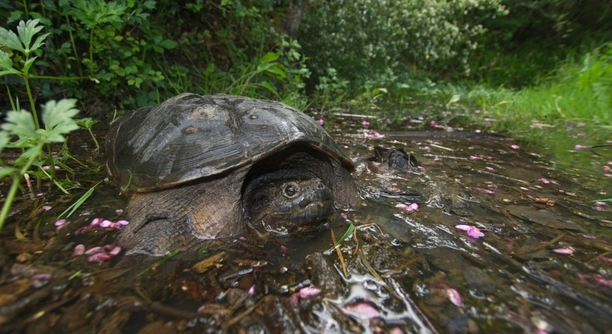
Many turtle owners wonder if their snapping turtle’s tank is the right size for its health and comfort. Ensuring your turtle has ample space is key to its well-being.
A tank that is too small for a common snapping turtle can lead to stress, poor health, and limited growth. Ideally, the tank should provide enough space for the turtle to swim and move around freely, mimicking its natural habitat.
Proper tank size is essential for your snapping turtle’s happiness. We’ll explore the signs to look for and ways to ensure its habitat is suitable for its needs.
Signs Your Snapping Turtle’s Tank Is Too Small
A small tank can cause your snapping turtle to feel cramped and stressed. If your turtle spends more time trying to escape its enclosure than swimming or basking, the tank size is likely a problem. A lack of space also means it cannot move freely, which can lead to a decline in its health over time. Your turtle might also start to display signs of aggression due to stress from confinement. It’s important to pay attention to these behaviors to determine whether your turtle needs a larger space.
Your snapping turtle will become less active in smaller tanks. It may not explore or swim as much, which can indicate that the space is too restrictive for its needs. Turtles are naturally curious, and they require room to move around to stay active.
A well-sized tank provides enough space for your turtle to swim, dive, and explore, helping keep it physically and mentally healthy. As your turtle grows, you will need to increase the tank size. A good rule of thumb is 10 gallons of water for every inch of shell length.
How a Small Tank Affects Turtle Health
A small tank can severely affect your turtle’s physical and mental health. Without enough space, your turtle may experience stress, which weakens its immune system. This can make it more susceptible to diseases and infections. Additionally, a cramped space limits the amount of oxygen in the water, which can cause respiratory issues.
Stress caused by a too-small tank can also impact your turtle’s behavior. It may become more aggressive, overly defensive, or start to engage in repetitive actions, like trying to escape. A small space prevents your turtle from behaving naturally, which could result in long-term harm. Providing a spacious tank allows your turtle to stay active, feel safe, and maintain healthy habits.
Impact on Water Quality
A small tank can make it difficult to maintain clean water. As your snapping turtle swims and eats, waste quickly builds up. In a confined space, the water quality deteriorates faster, making it harder to keep the environment healthy. Poor water quality can lead to health problems like shell rot or respiratory issues.
To keep your turtle healthy, a larger tank with a proper filtration system is necessary. A bigger space allows water to circulate better, preventing the buildup of waste. Without adequate filtration, toxins like ammonia and nitrates can accumulate, which is harmful to your turtle. Regular water changes will help, but a bigger tank will reduce the stress on your filtration system.
A large tank will give your snapping turtle enough space to swim freely, keeping the water cleaner and improving its quality. If you notice that the water turns cloudy or dirty quickly, it’s a sign that your tank may be too small. Always monitor water quality to ensure a safe environment for your turtle.
Growth and Development
As your snapping turtle grows, it needs more space. A tank that was once suitable may no longer meet its needs as it gets larger. A small tank can stunt your turtle’s growth, as it won’t have room to stretch and swim. It can also cause stress, affecting its overall development.
Providing enough space allows your snapping turtle to grow to its full size, which can be up to 20 inches. With room to move around, it can strengthen its muscles, improve its shell health, and maintain good physical condition. A cramped environment often results in turtles developing deformities in their shells and limbs due to lack of movement. If your turtle is growing, it’s important to adjust its tank size accordingly to keep it healthy.
Tank Size and Temperature Regulation
A small tank can make it more difficult to regulate the temperature. With less water, it heats up or cools down faster, which can stress your turtle. Snapping turtles thrive in stable temperatures, so fluctuations can lead to health issues.
A larger tank helps maintain a more stable environment, allowing for better temperature control. This is especially important if you live in an area with fluctuating room temperatures. A proper tank size provides room for a more consistent water temperature, ensuring your turtle stays comfortable and healthy.
Space for Proper Basking
Snapping turtles need a dry area where they can bask to regulate their body temperature. If the tank is too small, it may not provide enough space for a proper basking spot. This can lead to health problems, such as shell deformities or weakened immune systems.
A larger tank will allow for a more spacious and secure basking area, which is crucial for the turtle’s health. This area should be warm, dry, and easily accessible for your turtle.
FAQ
How big should my snapping turtle’s tank be?
The size of your snapping turtle’s tank depends on its size. A general rule is 10 gallons of water for every inch of shell length. For example, if your turtle’s shell is 6 inches long, the tank should be at least 60 gallons. As the turtle grows, you’ll need to increase the tank size accordingly to keep it comfortable. If you’re unsure, always err on the side of providing more space.
Can my snapping turtle live in a tank that’s too small for a while?
It’s okay for a short period, but long-term confinement in a too-small tank can cause stress, health issues, and slow growth. Snapping turtles are active and need room to swim and explore. Keeping them in a cramped space affects their physical and mental health. If you notice signs of stress, like aggression or lethargy, it’s time to upgrade the tank size.
What happens if my snapping turtle’s tank is too small?
A too-small tank can lead to a variety of problems, such as poor water quality, lack of space for swimming, and stress. This can result in health issues like shell rot, respiratory infections, or stunted growth. Turtles need room to move around to stay healthy. If your tank is too small, you’ll notice behavioral changes, like increased aggression or attempts to escape.
Can I use a smaller tank if I have a baby snapping turtle?
Baby snapping turtles need less space, but they still require room to grow. A smaller tank might be suitable for a young turtle temporarily, but it’s essential to upgrade as the turtle grows. Even small turtles need space to swim and explore to stay active and healthy. Keep in mind that a small tank for a baby snapping turtle can quickly become inadequate as it grows.
How can I tell if my snapping turtle is stressed due to a small tank?
Signs of stress in a snapping turtle include aggressive behavior, like biting or trying to escape, and lethargy, where it becomes less active than usual. If the water quality is poor or the turtle isn’t swimming around much, it’s a sign that the tank might be too small. Stress can lead to health problems, so it’s important to address the situation as soon as possible.
What is the minimum tank size for a snapping turtle?
While the minimum recommended size is 40 gallons, this may not be sufficient as your turtle grows. If you plan to keep a snapping turtle long-term, a 75- to 100-gallon tank is better for adult turtles. The minimum size allows for some movement but is often restrictive for healthy development.
Do I need a separate basking area in my snapping turtle’s tank?
Yes. A proper basking area is crucial for your snapping turtle to regulate its body temperature and stay healthy. The basking area should be dry, easy to access, and large enough for the turtle to fully stretch out. A cramped tank may not provide enough space for both swimming and basking, which can lead to health issues.
Is a tank with a filter enough, or do I still need to change the water regularly?
A filter helps maintain water quality by removing waste and debris, but it doesn’t eliminate the need for regular water changes. Even with a filter, you should change a portion of the water every week to maintain a healthy environment for your turtle. A larger tank may reduce the frequency of water changes but doesn’t eliminate the need entirely.
What kind of filtration system should I use for a snapping turtle?
A strong external filter is ideal for snapping turtles, as they produce a lot of waste. Choose a filter rated for a tank that is at least double the size of your current setup to ensure proper water circulation and filtration. The filter should be capable of handling large volumes of water and waste, keeping the tank clean.
Can I keep multiple snapping turtles in the same tank?
It is possible, but it depends on the size of the tank. Snapping turtles can be territorial and aggressive, especially in small spaces. If you want to keep multiple turtles, you’ll need a large tank with plenty of hiding spots. Watch for signs of aggression and be prepared to separate them if needed.
Will a larger tank improve my snapping turtle’s health?
Yes, a larger tank provides more space for swimming, basking, and exploration, which helps reduce stress and encourages natural behaviors. With more room, your snapping turtle can grow properly and maintain better physical and mental health. A larger tank also improves water quality, which is essential for preventing health issues.
Final Thoughts
Ensuring your snapping turtle has a tank that’s the right size is crucial for its health and well-being. A tank that is too small can lead to stress, poor growth, and even health issues like respiratory infections or shell rot. Snapping turtles are active creatures that need room to swim, bask, and explore, so providing them with enough space is essential. As your turtle grows, it will require more space, so it’s important to keep an eye on its size and adjust the tank accordingly. Regular monitoring of water quality and your turtle’s behavior can help you identify when it’s time for a larger tank.
While it’s tempting to keep a smaller tank for convenience, a cramped space can create long-term problems. A larger tank allows for better water circulation, more comfortable basking areas, and an overall healthier environment for your turtle. Water quality is often a bigger concern in smaller tanks because waste builds up quickly, which can lead to harmful conditions. Investing in a tank with proper filtration and enough space will not only benefit your turtle’s health but also reduce the need for constant maintenance. Healthy turtles are more active and less likely to show signs of stress or aggression.
In conclusion, a suitable tank size for your snapping turtle isn’t just about having enough room—it’s about creating a space that mimics its natural environment and supports its physical and mental needs. Providing a larger tank, proper filtration, and a separate basking area can make all the difference. Your turtle’s health depends on the environment you create for it, so don’t overlook the importance of tank size. By giving your snapping turtle the space it needs, you’ll be helping it thrive and live a longer, healthier life.

Hello,
If you enjoy the content that we create, please consider saying a "Thank You!" by leaving a tip.
Every little bit helps us continue crafting quality advice that supports the health, happiness, and well-being of pets around the world, for pets of all shapes, sizes, and species.
We really appreciate the kindness and support that you show us!