
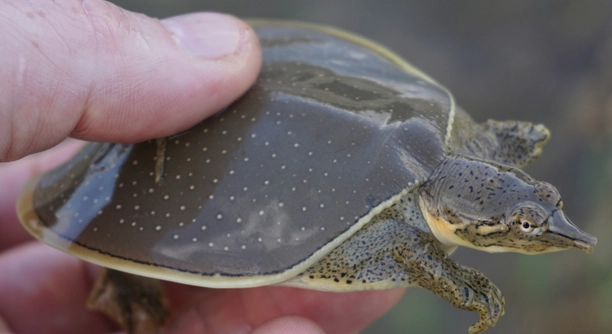
Identifying the gender of your softshell turtle can be tricky, but with a few key observations, you can determine if your turtle is male or female. This can be useful for understanding its behavior and care needs.
To determine if your softshell turtle is male or female, observe their physical traits. Males tend to have longer claws and a longer tail, while females have shorter claws and a more compact tail.
Understanding these differences will help you confidently identify your turtle’s gender and provide the right care for it.
How to Identify a Male Softshell Turtle
Male softshell turtles have some noticeable traits that help distinguish them from females. One of the most obvious differences is their longer tail. The tail is more extended beyond the edge of the shell, while the female’s tail is shorter and closer to the body. Additionally, male softshell turtles tend to have longer claws, especially on their front legs, which they use during mating displays. These claws are more developed in males compared to the females’ shorter claws. The males also tend to be smaller in size overall, with a slimmer, more streamlined body shape.
These physical differences become more apparent as your turtle matures. At a young age, it can be difficult to tell the gender. However, over time, the male’s tail will elongate, and his claws will become noticeably longer. It’s important to be patient as these characteristics may take some time to fully develop.
The clearer the physical traits become, the easier it will be for you to identify whether your softshell turtle is male or female. This information can be useful for breeding purposes, health assessments, and ensuring proper care.
Characteristics of a Female Softshell Turtle
Females softshell turtles have a different body structure. They are larger than males and have a more rounded, wider shell. This shape helps accommodate their reproductive organs. Female softshell turtles also have shorter claws and a shorter tail compared to males, making them easier to identify as they mature.
The female’s broader body allows her to carry and lay eggs, which requires extra space. The differences in body size and shape are often noticeable when comparing a male and a female softshell turtle side by side. If you have both sexes in your care, you’ll quickly notice that the females are noticeably larger and bulkier. This physical distinction is helpful when managing their diet and tank size.
How to Observe Mating Behavior
Mating behavior in softshell turtles can offer another clue to their gender. During mating season, males become more active and display specific behaviors, like chasing females around the enclosure. Males may use their elongated claws to stroke the female’s head and neck, which is a common courtship ritual. If you observe these behaviors, it’s likely that the turtle in question is male.
The male softshell turtle’s behavior during this time is distinctive. He will often approach the female with exaggerated movements and attempt to mount her. These actions are part of his attempt to initiate mating. Females, on the other hand, typically do not engage in this behavior, and if they do, it’s usually more passive. Understanding these patterns can be helpful in identifying the gender of your turtle.
While mating behavior is more noticeable in the breeding season, it still provides a clear distinction. If your turtle is engaging in these behaviors, chances are it’s male. Female softshell turtles rarely exhibit such overt actions unless interacting with a male.
Differences in Size and Shape
Size and shape differences can provide further insights into your turtle’s gender. Female softshell turtles are generally larger and bulkier than males. Their body shape is more rounded and robust, helping to support the egg-laying process. In contrast, males are usually smaller and more compact, allowing for easier movement.
The difference in size between males and females becomes evident as the turtles grow. When they reach maturity, females are noticeably larger, and their broader bodies are adapted for reproduction. Males, however, are typically lighter, faster, and more agile. These physical traits support their role in mating rather than egg production. If you have both sexes in your care, the size distinction is an easy way to identify them.
As your turtle grows, you’ll notice the size gap between the sexes becoming more apparent. Even at younger ages, the size difference can be noticeable in many cases. Female softshell turtles will continue to grow larger throughout their lives, while males remain smaller and more agile.
Tail Length
The tail is one of the easiest ways to tell if your softshell turtle is male or female. Males have significantly longer tails that extend beyond the edge of their shell. On the other hand, females have shorter tails that are closer to their body, making the difference noticeable as they mature.
As your softshell turtle grows, the tail length difference becomes more obvious. Males will continue to develop a long, curved tail that is distinctively visible. In comparison, females maintain a shorter, more compact tail. This characteristic is one of the most reliable gender indicators.
Shell Shape
The shape of the shell provides additional clues. Female softshell turtles have a broader, more dome-shaped shell that accommodates their reproductive organs. Males, however, have flatter, more streamlined shells, which allow for easier movement and mating. This difference is most noticeable when observing the turtles side by side.
Behavior During Mating Season
During mating season, males exhibit distinct behavior patterns. They become more aggressive and active, often chasing females around their habitat. They use their long claws to stroke and court the females, displaying a behavior that is rarely seen in females. This behavior is a good sign of identifying the male.
FAQ
How can I tell the age of my softshell turtle?
The age of a softshell turtle can be estimated by observing its size, as younger turtles are smaller. However, the most accurate way to determine their age is by examining the growth rings on their shell. Like tree rings, the shell has annual growth rings that become more distinct with age. Count the rings carefully to estimate the turtle’s age. Keep in mind that growth rates can vary depending on the turtle’s diet and environment.
Do male and female softshell turtles behave differently?
Yes, there are noticeable behavioral differences between male and female softshell turtles. Males tend to be more active and sometimes aggressive, especially during the mating season. They also exhibit specific courtship behaviors, such as chasing and using their long claws to stroke the female. Females are usually less active and more solitary, particularly when they are not in mating season.
How do I know if my softshell turtle is healthy?
A healthy softshell turtle has clear eyes, a smooth shell, and an active, responsive demeanor. Check for any signs of lethargy, lack of appetite, or abnormal behavior, which may indicate health problems. Additionally, monitor their water quality and diet. A balanced diet of protein, vegetables, and calcium-rich foods is crucial for their well-being.
Can softshell turtles live in the same tank together?
Yes, softshell turtles can live together, but it depends on the personalities and the tank conditions. Some turtles may be territorial, especially during mating season, so it’s essential to provide enough space and hiding spots to reduce conflict. Always monitor them for signs of aggression and ensure that the tank is large enough for them to coexist peacefully.
What should I feed my softshell turtle?
Softshell turtles are omnivores, so their diet should consist of both plant matter and protein. You can feed them commercial turtle pellets, fish, worms, and leafy greens like kale or dandelion. Adding calcium supplements to their diet helps maintain healthy shell growth. Avoid feeding them only one type of food to ensure they get a balanced diet.
How often should I clean my softshell turtle’s tank?
The tank should be cleaned regularly to maintain healthy water quality. You should spot clean the tank daily by removing uneaten food and waste. A full cleaning, including changing the water and cleaning the filter, should be done every 2-3 weeks. This will help prevent bacteria buildup and ensure a clean environment for your turtle.
Do softshell turtles need UV light?
Yes, softshell turtles require UVB light to help them synthesize vitamin D3, which is crucial for calcium absorption and overall health. Without proper UVB exposure, they may develop metabolic bone disease. Provide a UVB lamp that covers the entire tank to ensure your turtle gets the necessary light. Replace the bulb every 6-12 months as its UVB output decreases over time.
Can softshell turtles be kept outside?
Yes, softshell turtles can live outside, but only in climates where temperatures stay warm enough year-round. They need a secure, safe environment with access to both water for swimming and dry land for basking. Make sure the enclosure is predator-proof and has sufficient hiding spots for the turtle’s safety and comfort.
Why does my softshell turtle bask so much?
Basking is a natural behavior for softshell turtles, as it helps them regulate their body temperature and dry their shell. Turtles bask to absorb UVB rays and maintain proper shell health. If your turtle is basking frequently, it may indicate that the water temperature is too low, and the turtle is seeking warmth.
How can I tell if my softshell turtle is stressed?
Signs of stress in softshell turtles include hiding excessively, lack of appetite, erratic swimming patterns, and abnormal behavior. Stress can result from poor water quality, a cramped tank, or aggressive tank mates. Ensure that the environment is ideal, with proper temperature, lighting, and space. If the stress continues, consult a veterinarian.
What temperature should my softshell turtle’s tank be?
The water temperature for a softshell turtle should be maintained between 75-80°F (24-27°C). The basking area should be slightly warmer, around 85-90°F (29-32°C). It’s essential to provide a temperature gradient in the tank so that the turtle can move to different areas based on its needs. Always use a reliable thermometer to monitor the water and basking temperatures.
How long do softshell turtles live?
Softshell turtles can live for several decades if provided with proper care. On average, they live between 20 and 50 years in captivity, with some even reaching over 50 years. Their lifespan depends on their diet, environment, and overall health. Regular check-ups and a healthy habitat will help them live a long life.
Can softshell turtles be kept with other types of turtles?
Softshell turtles can sometimes be kept with other species, but care should be taken to ensure compatibility. Different species of turtles may have different dietary and habitat needs. Additionally, softshell turtles can be territorial, so aggression may arise, especially during breeding season. Always monitor their interactions closely to prevent harm.
Final Thoughts
Understanding the differences between male and female softshell turtles is essential for proper care and management. Whether you’re an experienced turtle owner or a first-time keeper, knowing how to identify your turtle’s gender helps ensure you provide the right environment for it to thrive. Males and females have distinct physical traits, such as tail length, shell shape, and behavior. These differences, although subtle at first, become more noticeable as your turtle matures, allowing for easy identification.
Proper care is crucial for maintaining your softshell turtle’s health and happiness. This includes providing the right habitat, food, and environment. Turtles are sensitive to changes in their surroundings, so ensuring consistent water quality, temperature, and lighting is key. Regularly cleaning their tank and offering a balanced diet will also help promote long-term health. Understanding these basic requirements ensures your turtle will live a comfortable life for many years.
By learning more about the gender differences in softshell turtles, you can also improve your turtle’s social and mating habits. Males tend to be more active and aggressive during mating season, which can affect their interactions with females and other turtles. Knowing when your turtle is going through its breeding season will help you manage their behavior and provide a better living arrangement. With this knowledge, you can confidently care for your softshell turtle, whether it’s for companionship, breeding, or simply as a pet.

Hello,
If you enjoy the content that we create, please consider saying a "Thank You!" by leaving a tip.
Every little bit helps us continue crafting quality advice that supports the health, happiness, and well-being of pets around the world, for pets of all shapes, sizes, and species.
We really appreciate the kindness and support that you show us!