
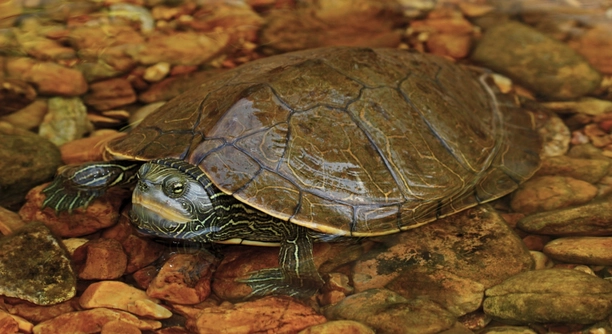
Map turtles are fascinating creatures, known for their unique markings and calm demeanor. However, keeping them engaged and active in captivity can sometimes be a challenge. It’s important to understand their natural behaviors to encourage proper physical activity.
Encouraging active play in map turtles requires providing an enriched environment that mimics their natural habitat. This includes offering water features for swimming, basking spots, and various objects for exploration. Regular exercise helps maintain their health and overall well-being.
Creating an environment with suitable elements will support their mental and physical development. It also ensures they remain active, happy, and healthy in your care.
Creating the Right Habitat
Map turtles thrive when they feel comfortable in their environment. A spacious tank with both land and water areas is crucial. These turtles spend much of their time swimming and basking, so having separate spaces for these activities is essential. Make sure the water is clean and at an appropriate temperature, as this influences their activity levels. You should also include rocks or logs for basking, as they provide resting places that encourage natural behavior. The tank should be large enough for them to move freely but not so vast that it becomes overwhelming.
To foster active play, offer hiding spots and climbing structures. These features simulate their natural environment and keep them engaged. Including plants or other obstacles also provides mental stimulation, encouraging curiosity and exploration.
Map turtles enjoy foraging, so scatter their food around the tank to make them work for it. This promotes physical activity while also giving them the opportunity to express natural hunting behaviors. Over time, you’ll notice them becoming more active and involved in their environment.
Water Conditions and Activity
Water temperature is a key factor in encouraging map turtle activity. If the water is too cold, they may become sluggish. Maintain a temperature range of 75-80°F (24-27°C) for optimal movement and health. Make sure the water is filtered regularly to avoid bacteria buildup that can cause stress.
Besides temperature, water depth plays a role in keeping them active. Map turtles are strong swimmers, and providing enough space for them to swim freely helps maintain their energy levels. A shallow area can also offer a place for them to explore and rest when needed.
Ensure that there’s a balance of water and dry areas. This will allow them to bask and stay warm, while also having access to cool, clean water. The key is creating a space where they can move, explore, and exhibit natural behaviors that promote health.
Diet and Active Play
A balanced diet supports an active lifestyle. Map turtles need a variety of foods to stay healthy and energetic. Offer high-quality pellets, leafy greens, and occasional protein like worms or small fish. A nutritious diet helps maintain their energy levels, encouraging movement and activity.
Overfeeding can lead to lethargy, so be mindful of portion sizes. If you notice your turtle becoming sluggish, check its diet and adjust the food offerings. Proper nutrition also supports their shell health, further encouraging them to remain active.
The way you feed your map turtle can influence its play behavior. Consider spreading food throughout the tank to encourage movement. Placing food in different areas gives your turtle a reason to explore and swim. This simple change can significantly improve their physical activity, helping them stay active and engaged. A varied diet, combined with foraging opportunities, helps them stay fit and content.
Light and Temperature
Lighting is crucial for map turtles, as it helps them regulate their sleep cycle and encourages activity. Provide UVB lighting to simulate natural sunlight. This is essential for their overall health and helps with the absorption of calcium. Without it, they may become inactive or even develop health issues.
Make sure the lights are on for 10-12 hours daily to mimic a natural day/night cycle. This helps your turtle maintain regular activity patterns. The temperature should be maintained within the range of 75-80°F for their water and 85-90°F for basking areas.
Keep in mind that without proper lighting and temperature regulation, map turtles can become sluggish and spend more time hiding. Adjust the setup as needed to create the perfect environment. A combination of light and heat ensures they stay active and healthy while avoiding stress.
Social Interaction and Play
Map turtles are generally solitary creatures, but they still benefit from occasional social interaction. If you have multiple turtles, ensure that their interactions remain peaceful. Stress from overcrowding or aggressive behavior can hinder their activity levels.
Observe their interactions carefully to make sure they’re comfortable. Offering space and hiding spots for each turtle allows them to engage more freely without feeling threatened. When they feel safe, they’re more likely to explore their environment and stay active. Ensuring a peaceful environment can encourage them to move around more and enjoy their space.
Enrichment Activities
To further promote activity, you can add enrichment activities like puzzle feeders or different textures for climbing. These activities encourage map turtles to engage physically and mentally with their environment. This kind of stimulation is key to promoting a happy and active life.
Rotating objects in their habitat or adding new items every so often will prevent them from becoming bored. A bored turtle may retreat to one corner of the tank and stay inactive. Keep things fresh to maintain their curiosity. Adding new experiences stimulates their natural instincts to explore and stay active.
Observation
Regular observation is essential for understanding your turtle’s behavior and health. Watch for signs of inactivity or distress. If they’re not moving around as much, there might be an issue with the environment or diet. Noticing these changes early helps in addressing the problem before it affects their well-being.
Turtles are not always as expressive as other pets, so small changes in behavior can sometimes go unnoticed. Being attentive to their movements and activity levels allows you to make timely adjustments to their habitat or routine, keeping them healthy and engaged.
FAQ
How can I tell if my map turtle is getting enough exercise?
A healthy map turtle should be active and regularly swimming or basking. If you notice that your turtle is spending too much time in one spot or isn’t moving much, it may not be getting enough exercise. Providing a larger tank with more space for movement and adding objects to climb on or hide in can encourage physical activity. Look for signs like improved swimming, climbing, and foraging behavior as indicators of sufficient exercise.
What kind of toys or objects can I place in the tank to encourage play?
Map turtles are naturally curious and benefit from items like rocks, logs, floating platforms, and aquatic plants. These objects give them places to explore, hide, and bask. Adding variety, such as small caves or different textures, will keep them interested. Changing these objects occasionally also helps prevent boredom, encouraging more active behavior.
Can I keep more than one map turtle in the same tank?
Yes, you can house multiple map turtles together, but they should be in a spacious tank. Overcrowding can lead to stress and limited opportunities for movement. It’s important to monitor their behavior closely. If you notice signs of aggression or territorial disputes, it may be necessary to separate them to reduce stress and promote healthy play.
How often should I clean the tank to ensure my turtle stays active?
Map turtles thrive in clean environments. It’s essential to maintain the tank by regularly cleaning both the water and any basking areas. A good rule of thumb is to clean the tank at least once a week, but if you have a filter, it might be less frequent. Ensure that the water temperature is stable and that the water isn’t contaminated with debris, which can stress your turtle and make it more sluggish.
What are the signs that my map turtle might be stressed?
Signs of stress in map turtles can include lethargy, a loss of appetite, hiding for extended periods, and swimming aimlessly. Stress can be caused by factors like improper water temperature, lack of hiding spots, overcrowding, or even changes in their environment. If you notice these signs, evaluate the conditions in the tank and make adjustments to reduce stress.
Can I encourage my map turtle to socialize more with me?
Map turtles are naturally solitary animals, but they can become accustomed to human presence over time. Start by spending time near their tank, letting them get used to you. You can also offer food or hand-feed them, which can strengthen the bond. However, remember that too much interaction can stress them, so it’s essential to find a balance.
How can I make my map turtle’s diet more exciting and engaging?
Map turtles enjoy a varied diet. You can make mealtime more engaging by offering a mix of pellets, leafy greens, and live foods like worms or small fish. Try using floating feeding platforms or scatter the food around the tank to encourage them to explore. Using a variety of food textures will also keep their mealtime interesting and stimulate them to stay active.
What temperature should the water be to keep my map turtle active?
Map turtles prefer water temperatures between 75°F and 80°F (24°C to 27°C). If the water is too cold, they may become lethargic and inactive. A heater can help regulate the water temperature, ensuring it stays within the optimal range. Regularly check the water temperature to ensure it’s consistent and conducive to activity.
Is it okay to let my map turtle bask for long periods?
Yes, basking is an important activity for map turtles. It helps them regulate their body temperature and allows them to dry off. A basking area should be provided in the tank with a temperature of around 85°F to 90°F (29°C to 32°C). While it’s important they have time to bask, also make sure they have enough space to swim and explore to keep them active overall.
How do I know if my map turtle is healthy and active?
A healthy and active map turtle will swim regularly, bask, and explore its environment. Its shell should be hard and free of cracks or lesions. It should also be eating regularly and showing interest in food. Keep an eye on their behavior and if you notice any drastic changes, consult a veterinarian. Regular check-ups are important to ensure your turtle remains in good health.
Final Thoughts
Encouraging active play in map turtles is essential for their physical and mental well-being. By creating an enriched environment with plenty of space, suitable water conditions, and objects to climb on or hide in, you can help your turtle stay active and healthy. Map turtles are naturally curious, and providing the right setup encourages them to explore their surroundings, swim, and bask. A tank that mimics their natural habitat as closely as possible will keep them engaged and promote overall happiness.
It’s also important to consider their diet and how it influences their energy levels. Feeding your turtle a balanced diet, with a mix of pellets, greens, and occasional protein, supports their activity. You can encourage more movement by scattering food around the tank or using puzzle feeders, making mealtime a more engaging experience. By focusing on providing a variety of foods and promoting natural behaviors, you’re helping your map turtle stay fit and active.
Remember that regular observation is key to ensuring your turtle is thriving. Watch for signs of stress or inactivity, and address any issues promptly. With the right care, attention, and environment, your map turtle will remain healthy and active for years to come.

Hello,
If you enjoy the content that we create, please consider saying a "Thank You!" by leaving a tip.
Every little bit helps us continue crafting quality advice that supports the health, happiness, and well-being of pets around the world, for pets of all shapes, sizes, and species.
We really appreciate the kindness and support that you show us!