
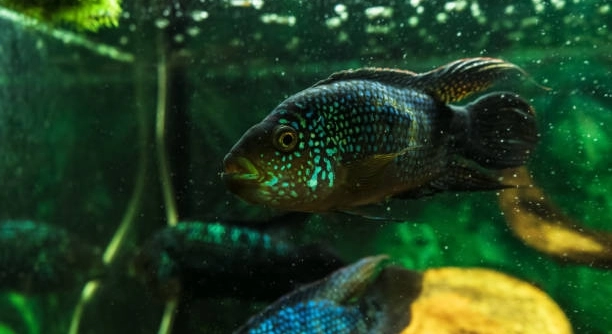
Jack Dempsey fish are popular among aquarium enthusiasts for their striking colors and lively personalities. Their bold appearance often makes them a standout choice for freshwater tanks, bringing energy and interest to any aquatic setup.
Jack Dempsey fish do have teeth, which are small but sharp. These teeth help them grasp and hold onto prey, playing an essential role in their natural feeding behavior and overall survival in the wild.
Knowing about their teeth is important for safe handling and feeding. This information will help ensure a healthy and safe environment for your fish.
Physical Characteristics of Jack Dempsey Fish
Jack Dempsey fish are medium to large cichlids, usually growing up to 10-12 inches in captivity. Their bodies are deep and compressed, with noticeable shoulders and strong fins. Their scales shimmer with shades of green, blue, and gold, often reflecting light in striking patterns. Males tend to be larger with more intense coloration than females, and their fins are more elongated. Their eyes are typically bright red, adding to their distinctive look.
These fish are muscular and robust, built for quick bursts of movement. Their mouths are slightly protruding, which helps them catch food efficiently.
The teeth of Jack Dempsey fish, though small, are sharp and pointed. They are primarily used for grasping and tearing prey, including smaller fish, insects, and crustaceans. Their strong jaws allow them to hold onto slippery food items, making them effective hunters in their tanks. Proper care and diet ensure these fish remain healthy and active, highlighting their natural strength and agility.
Behavior and Temperament
Jack Dempsey fish are naturally territorial and can be aggressive toward other fish, especially during breeding.
They are highly interactive and display intelligence uncommon in many freshwater fish. They recognize feeding times, respond to movement outside the tank, and establish clear territories within their environment. Males often guard specific areas and show heightened aggression to defend space from intruders. This territorial behavior is most pronounced in smaller tanks where space is limited, so providing sufficient room helps reduce conflicts.
During interactions, Jack Dempsey fish communicate through body language, fin displays, and subtle movements. They may flare their gills or expand their fins to signal dominance. Understanding these behaviors helps in managing tank dynamics, preventing stress, and maintaining harmony among fish. Providing hiding spots and structured environments allows them to feel secure while encouraging natural instincts. With proper care and observation, their aggressive tendencies can be balanced, making them captivating additions to your aquarium while maintaining a safe environment for other tank inhabitants.
Feeding Habits of Jack Dempsey Fish
Jack Dempsey fish are omnivores, eating both plant and animal matter. They prefer protein-rich foods like insects, small fish, and shrimp, but also benefit from vegetables and pellets designed for cichlids.
In captivity, feeding them high-quality pellets ensures they get balanced nutrition. Live or frozen foods like bloodworms or brine shrimp provide variety and stimulate natural hunting behaviors. Overfeeding should be avoided, as these fish can gain weight quickly, which may lead to health issues. Providing meals once or twice daily in small portions works best, allowing them to consume all food within a few minutes. Observing their eating habits helps maintain proper portion sizes.
Jack Dempsey fish are known to forage along the bottom of the tank. They sift through substrate, searching for leftover food, which also keeps them mentally stimulated. Offering occasional treats, such as frozen or live prey, encourages natural hunting instincts. Vegetables like spinach or peas can be included to aid digestion. Consistency in feeding schedules helps them remain healthy and active. Balancing their diet with protein, vegetables, and commercial pellets supports growth, color vibrancy, and overall well-being.
Tank Requirements for Jack Dempsey Fish
They need a tank of at least 55 gallons to provide enough swimming space and reduce territorial disputes.
Tank setup should include hiding spots, rocks, and driftwood to create territories. Water temperature should be maintained between 74-80°F, with pH around 6.5-7.5. A strong filtration system is essential, as these fish produce significant waste. Regular water changes maintain a clean environment and prevent stress. Substrate can be sand or fine gravel, allowing natural foraging behavior. Plants can be added but should be sturdy or protected, as Jack Dempseys may uproot them. Proper lighting highlights their colors and supports plant health.
They are sensitive to water quality and sudden changes. Keeping parameters stable ensures their immune system remains strong, reducing the risk of disease. The tank should have sufficient space for each fish to establish its territory. Avoid overcrowding to minimize aggression, especially with other cichlids. Observing their behavior helps identify stress or health issues early. Proper tank size, decorations, and maintenance are crucial for longevity, providing a safe, comfortable, and visually appealing environment that promotes natural behavior and reduces conflicts.
Handling and Safety
Jack Dempsey fish have sharp teeth, so handling should be minimal. Use a net or container to move them, avoiding direct contact with hands whenever possible.
Wearing gloves can help prevent accidental bites. Always move slowly and calmly to reduce stress for both you and the fish.
Breeding Jack Dempsey Fish
They are egg-layers and exhibit strong parental care. Males and females clean a flat surface together before spawning. Eggs are fertilized and guarded by both parents. Fry hatch within 3-5 days and remain under parental protection for several weeks, receiving care and guidance during early development.
Common Health Issues
Jack Dempsey fish can be prone to parasites, fin rot, and swim bladder problems. Maintaining water quality, proper diet, and avoiding overcrowding helps prevent these issues.
FAQ
Do Jack Dempsey fish bite?
Yes, Jack Dempsey fish can bite because of their small, sharp teeth. While bites are usually not dangerous to humans, they can be painful. Handling should be done carefully, using nets or gloves, and direct contact with hands should be minimized.
Are Jack Dempsey fish aggressive?
Jack Dempsey fish are naturally territorial and can be aggressive, especially during breeding or in small tanks. They often display dominance through fin flaring and chasing other fish. Providing enough space, hiding spots, and observing interactions helps reduce aggression.
What do Jack Dempsey fish eat?
They are omnivores and eat a variety of foods. Their diet can include high-quality pellets, live or frozen foods like shrimp and bloodworms, and vegetables such as peas or spinach. A balanced diet supports growth, coloration, and overall health.
How often should Jack Dempsey fish be fed?
Feeding once or twice daily in small portions works best. Overfeeding can lead to obesity and poor water quality. Observe the fish during feeding to ensure all food is consumed within a few minutes.
Do Jack Dempsey fish get along with other fish?
They can coexist with other species, but careful selection is needed. Avoid smaller, slow-moving, or long-finned fish that may become targets. Other large, semi-aggressive cichlids often make compatible tankmates if space is sufficient.
How large should a tank be for Jack Dempsey fish?
A minimum of 55 gallons is recommended for one or two fish. Larger tanks reduce territorial disputes and provide room for natural behaviors. Adequate decorations, hiding spots, and substrate are important for their comfort.
Do Jack Dempsey fish need special water conditions?
Yes, they thrive in water temperatures between 74-80°F and a pH of 6.5-7.5. Stable water parameters and regular water changes are essential to prevent stress and disease. A strong filtration system helps maintain clean water.
How long do Jack Dempsey fish live?
With proper care, they can live 8-10 years in captivity. Diet, water quality, tank size, and minimizing stress are key factors influencing longevity. Healthy fish are more active, colorful, and display natural behaviors consistently.
Can Jack Dempsey fish recognize their owners?
They are intelligent and can learn feeding schedules. They often respond to movement outside the tank and may follow your presence. Consistent interaction helps them feel secure and encourages natural, healthy behavior.
What is the best way to breed Jack Dempsey fish?
Select a compatible male and female and provide a flat, clean surface for spawning. Both parents guard the eggs and fry. Maintaining good water quality and feeding a protein-rich diet supports successful reproduction.
Are Jack Dempsey fish suitable for beginners?
They are manageable for aquarists who understand territorial and aggressive behaviors. Proper tank setup, feeding, and monitoring of water conditions are necessary. Beginners with patience and commitment can successfully care for these fish.
Do Jack Dempsey fish damage plants in the tank?
They may uproot or disturb plants while foraging. Using sturdy plants or protecting them with decorations helps preserve greenery. Sand or fine gravel substrates allow natural digging without harming plants.
How do I prevent health problems in Jack Dempsey fish?
Maintaining clean water, stable conditions, proper diet, and avoiding overcrowding reduces the risk of parasites, fin rot, and swim bladder issues. Observing behavior and early signs of illness allows for prompt intervention.
Can Jack Dempsey fish live with other cichlids?
They can, but compatibility depends on species, tank size, and individual temperament. Providing territories, hiding spots, and sufficient space minimizes aggression while promoting coexistence. Proper observation is essential to avoid conflicts.
Do Jack Dempsey fish need hiding spots?
Yes, they require hiding places to feel secure. Rocks, driftwood, and sturdy plants allow them to establish territories, reduce stress, and display natural behaviors comfortably.
What signs indicate a stressed Jack Dempsey fish?
Signs include faded colors, hiding excessively, rapid gill movement, and reduced appetite. Stress often results from poor water quality, overcrowding, or aggressive tankmates. Addressing these factors improves overall health and behavior.
How can I improve Jack Dempsey fish coloration?
A balanced diet with high-quality pellets, live or frozen protein, and fresh vegetables enhances natural colors. Proper lighting and clean water also contribute to vibrant scales. Avoid stress, as it can dull their appearance.
Are Jack Dempsey fish sensitive to water changes?
Yes, they respond poorly to sudden changes. Gradual water adjustments and regular maintenance maintain stability and prevent stress-related health issues. A consistent schedule helps them adapt to the tank environment comfortably.
Do Jack Dempsey fish eat plants?
They may nibble on soft plants while foraging but primarily focus on protein-rich foods. Providing sturdy plants or protecting them with decorations limits plant damage while supporting natural digging behavior.
Can Jack Dempsey fish jump out of the tank?
Occasionally, they may leap when startled or exploring. A secure lid or cover prevents escapes, keeping the fish safe while maintaining a healthy environment.
Jack Dempsey fish are striking freshwater cichlids that stand out in any aquarium due to their bold colors and active personalities. They are known for their sharp teeth, strong jaws, and territorial nature, which makes understanding their behavior essential for proper care. While their teeth can deliver a bite, handling can be safely managed with nets or gloves, and awareness of their natural instincts helps prevent accidents. Providing a proper tank setup with enough space, hiding spots, and secure boundaries reduces stress and aggression, allowing these fish to thrive. Their distinctive appearance is complemented by active foraging and hunting behaviors, which make them engaging to observe and maintain in a home aquarium.
Caring for Jack Dempsey fish requires attention to feeding habits and water conditions. They are omnivores, requiring a balanced diet of pellets, live or frozen protein, and occasional vegetables. Overfeeding should be avoided to prevent health issues and maintain water quality. Their teeth allow them to grasp and tear food effectively, and incorporating live or frozen foods can stimulate natural hunting behaviors. Maintaining stable water parameters, including temperature between 74-80°F and pH levels of 6.5-7.5, supports their overall health and longevity. Regular cleaning, proper filtration, and adequate tank size contribute to reducing stress, preventing disease, and ensuring a safe environment for the fish and other compatible tankmates. Observing their behavior helps identify potential health or aggression issues early, allowing for timely interventions.
Jack Dempsey fish offer a rewarding experience for those prepared to meet their needs. They are intelligent, interactive, and capable of recognizing feeding schedules, making them more engaging than many other fish species. Breeding can be managed successfully with careful observation and proper preparation, including providing flat surfaces for spawning and parental care of the fry. While they may challenge beginners with their aggressive tendencies, consistent care, patience, and attention to tank setup can lead to a healthy, vibrant, and active aquarium. Their behavior, diet, and territorial instincts provide insight into cichlid life and natural patterns, allowing owners to create a thriving environment. Proper care ensures these fish remain visually striking, active, and healthy for many years.

Hello,
If you enjoy the content that we create, please consider saying a "Thank You!" by leaving a tip.
Every little bit helps us continue crafting quality advice that supports the health, happiness, and well-being of pets around the world, for pets of all shapes, sizes, and species.
We really appreciate the kindness and support that you show us!