
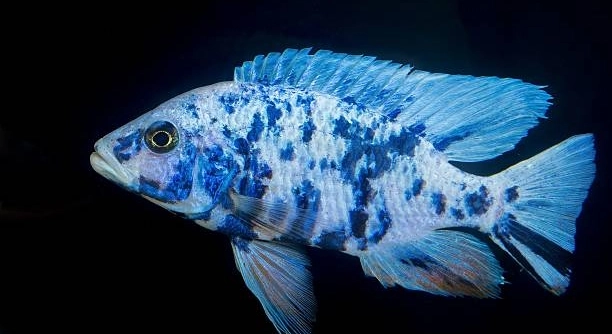
Convict cichlids are bold freshwater fish often observed reacting to mirrors in aquariums, drawing interest from hobbyists and researchers who study animal behavior, perception, and learning within controlled environments and simple home tank settings worldwide.
Current evidence indicates convict cichlids do not demonstrate true self-recognition in mirrors, but instead display social or territorial responses, suggesting awareness of visual stimuli without higher-level reflective cognition typically associated with mirror self-awareness in nonhuman aquatic species studied experimentally today.
These behavioral patterns provide insight into fish cognition, experimental design, and how scientists interpret responses observed during controlled mirror exposure.
Mirror Responses in Convict Cichlids
Convict cichlids are known for strong territorial instincts, which heavily influence how they react when placed near reflective surfaces. When a mirror is introduced into the tank, the fish often displays flaring fins, rapid swimming, and repeated frontal approaches. These actions resemble interactions seen during encounters with unfamiliar tank mates. The fish appears to treat the reflection as another individual occupying the same space. This response is consistent across many observations, regardless of tank size or age. Such behavior suggests the mirror triggers instinctive social signaling rather than reflective thought. From my own time keeping cichlids, these reactions tend to fade only when the mirror is removed. The fish rarely show signs of confusion or withdrawal. Instead, they remain focused, alert, and behaviorally engaged, reinforcing the idea that the reflection is processed as a rival presence. This pattern aligns with documented laboratory observations in controlled freshwater behavioral studies settings today.
Mirror tests are often used to explore self-recognition, yet fish reactions usually remain rooted in survival behavior. Convict cichlids respond based on dominance and defense cues. The reflection lacks scent and movement variation, but visual similarity alone is enough to provoke repeated displays over extended observation periods in aquariums globally.
Researchers note that true self-awareness requires an animal to understand the reflection represents itself. Convict cichlids do not alter behavior after repeated exposure, which is a key indicator. Aggressive and defensive actions remain stable over time. There is no evidence of self-directed movements or testing behaviors. Instead, the fish continues to respond outwardly. In home tanks, this can increase stress if mirrors are left too long. Removing reflective surfaces often results in calmer swimming patterns. These findings support the idea that convict cichlids process mirrors as social stimuli rather than tools for self-identification within captive aquatic environments commonly studied today.
Interpreting Awareness and Care Practices
Understanding these behaviors helps prevent misinterpretation of fish intelligence. Awareness does not always equal self-recognition. Convict cichlids rely on visual cues tied to territory and hierarchy. Recognizing this allows keepers to design tanks that reduce unnecessary stimulation and support stable daily behavior patterns in both private and research aquariums settings.
From a practical standpoint, mirrors should be used cautiously with convict cichlids. Short exposure can be useful for observing natural displays, but prolonged use may elevate stress levels. Consistent agitation can affect feeding routines and breeding stability. I have noticed that removing reflective backgrounds often leads to more relaxed interactions within the tank. Providing clear boundaries, proper tank size, and visual breaks helps reduce constant defensive behavior. Plants, rocks, and caves allow the fish to redirect energy into exploration and nesting. These adjustments support both physical health and behavioral balance. While convict cichlids are resilient, their environment shapes daily responses. Interpreting mirror behavior through a biological lens avoids assigning human traits. This approach leads to better care decisions and more accurate understanding of fish cognition. Simple observation, combined with informed setup choices, benefits the fish and the keeper alike over time. Maintaining consistent lighting schedules and minimizing sudden reflections from room windows also contributes to stability. Small changes in placement of tanks near glass surfaces can influence behavior. Thoughtful setup reduces repeated aggressive displays and supports long term welfare in captive settings. These considerations are simple to apply and remain effective across varied aquarium layouts for long lasting behavioral consistency.
Limits of the Mirror Test in Fish
The mirror test was designed for mammals and birds, not species driven mainly by instinctual visual cues. Applying it to convict cichlids ignores differences in brain structure, sensory priority, and ecological needs shaped by constant territorial pressure in captive and natural freshwater environments where survival behaviors dominate daily activity patterns.
Convict cichlids rely heavily on immediate visual assessment to determine threat or safety. A reflection presents a perfectly matched rival that never retreats. Over time, the fish does not test the image or adjust strategy. It repeats the same displays because the stimulus never changes. This consistency suggests recognition of form, not self. In my experience, repeated exposure does not lead to learning or reduced response. Instead, energy is spent on display behavior. This supports the idea that the mirror test measures reaction, not awareness, when applied to territorial fish species kept in aquariums under controlled observation conditions over time.
Self-awareness requires flexible behavior, such as using a reflection to inspect the body. Convict cichlids do not show this shift. Their responses remain outward and defensive. The brain regions associated with complex self-processing are limited in most fish. That does not reduce their adaptability. It simply reflects evolutionary priorities. I find it helpful to separate intelligence from self-recognition. These fish learn routines, recognize owners, and respond to changes. Expecting mirror awareness places a human framework onto animal behavior that functions well without reflective identity in both captive tanks and wild habitats where survival and reproduction guide behavior above all else.
What This Means for Fish Keepers
Understanding mirror behavior helps keepers avoid unnecessary stress in convict cichlids. Reflections from glass, decor, or room lighting can trigger constant displays. Reducing these elements supports calmer tanks. I have noticed improved feeding and resting patterns after adjusting backgrounds. Awareness of visual triggers leads to better tank placement and layout. These small changes improve daily stability without altering natural behaviors or reducing environmental enrichment over extended observation periods in home aquariums for long-term success overall.
Recognizing that convict cichlids are not self-aware in mirrors allows care decisions to stay practical. Mirrors should not be used as enrichment tools. Visual barriers, plants, and rock structures are more effective. These features break sightlines and lower defensive responses. From personal observation, balanced environments lead to stronger pair bonding and steadier breeding behavior. Fish become more focused on nesting and exploration rather than constant display. This does not limit stimulation. It redirects it into natural patterns. Clear expectations help prevent frustration for keepers. When behavior is viewed through biology instead of projection, long-term care becomes simpler, more ethical, and more rewarding. This approach supports fish welfare while maintaining realistic interpretations of observable aquarium behavior over months of consistent care routines in home setups alone.
Awareness Without Self-Recognition
Convict cichlids show awareness through learned routines rather than reflection. They recognize feeding times, respond to movement outside the tank, and adjust behavior based on past interactions. This type of awareness is practical, grounded in survival, and shaped by repeated environmental cues instead of abstract self-perception in daily captive settings.
From keeping these fish, consistent patterns stand out quickly. They learn tank boundaries, preferred shelters, and social spacing. These behaviors demonstrate memory and recognition without implying identity awareness. The fish responds to what matters for stability, not to its own image or form within controlled aquarium environments over time consistently.
Behavioral Consistency in Controlled Studies
Behavioral studies often rely on repetition and measurable response. In convict cichlids, mirror exposure produces consistent aggression rather than adaptation. Over multiple trials, the response does not soften or change direction. This suggests limited cognitive reassessment of the stimulus. I have observed similar persistence at home when reflective surfaces remain unchanged. Learning occurs when outcomes vary. With mirrors, there is no variation. The reflection never retreats or signals submission. Without feedback, the fish has no reason to adjust strategy. This makes mirror testing a poor indicator of deeper awareness in territorial fish species under controlled experimental aquarium conditions over time.
Practical Interpretation of Fish Behavior
Separating awareness from self-recognition allows clearer interpretation of convict cichlid behavior. These fish are attentive, responsive, and capable of learning. They simply do not use reflections as tools for self-assessment. Accepting this distinction helps keep expectations realistic and care practices grounded in biology rather than human-centered assumptions or projections alone.
FAQ
Do convict cichlids recognize themselves in a mirror?
No, convict cichlids do not appear to recognize themselves. Their responses are largely territorial and social. When they see a reflection, they act as if it is another fish in the tank. Aggressive displays, flaring fins, and repeated charges are common. From my experience, even after repeated exposure, the behavior remains the same, showing they are responding to visual cues rather than understanding the reflection represents themselves. Their brains process immediate threats and rivals, not abstract self-concepts, which explains why mirror tests do not indicate self-recognition in these fish.
Why do convict cichlids attack their reflection?
Convict cichlids attack their reflection because it simulates a rival intruder. The fish perceives another territorial individual in its environment. In home tanks, I have noticed that adding mirrors or reflective surfaces can trigger constant flaring and chasing. These behaviors are rooted in survival instincts, defending territory, and asserting dominance. Since the reflection never changes or retreats, the fish continues to display aggression repeatedly. This is normal for the species and not a sign of stress in short exposure periods. Long-term exposure, however, may increase tension and fatigue.
Can mirror exposure harm convict cichlids?
Extended mirror exposure can increase stress if the fish constantly reacts to the reflection. In my own observation, cichlids become more agitated when mirrors are left in the tank for days. While short periods of observation can be harmless, prolonged stimulation may affect feeding, rest, and breeding routines. Providing hiding spots, visual barriers, or removing reflective surfaces can reduce unnecessary displays. The goal is not to limit natural behavior but to prevent constant aggression that offers no real benefit in captive conditions.
How do convict cichlids show awareness if they do not recognize themselves?
Convict cichlids demonstrate awareness through learning and memory rather than self-recognition. They can remember feeding times, navigate their environment, recognize tank mates, and respond to changes in lighting or movement. In my experience, these responses are clear indicators of practical awareness. The fish adapts to patterns in its environment without needing abstract self-consciousness. Recognition of routine, space, and social hierarchy guides behavior effectively. Awareness in this sense is grounded in real-world survival and environmental interactions, which is very different from mirror-based self-recognition.
Should mirrors be used as enrichment for convict cichlids?
Mirrors are generally not recommended as enrichment for convict cichlids. They do not interpret reflections as toys or social tools. In my home tanks, mirrors only triggered repeated aggression. Proper enrichment involves plants, rocks, caves, and varying terrain. These features provide physical stimulation and hiding spaces. Redirecting attention to natural behaviors, like exploring or nesting, is more effective. Mirrors may be useful temporarily to observe natural displays, but long-term exposure can lead to unnecessary stress without offering benefits for well-being.
Do all convict cichlids react the same way to mirrors?
Most convict cichlids react similarly, with displays of territorial aggression. However, individual temperament, age, and previous social experiences can cause minor differences. I have noticed some fish may approach calmly at first, then escalate after repeated exposure. Tank layout, size, and visual barriers also influence reactions. While the general pattern is consistent, observation helps understand how each fish responds. Adjusting environmental cues ensures behavior remains natural and reduces prolonged stress caused by constant reflection.
Can mirror behavior tell us anything about fish intelligence?
Mirror behavior in convict cichlids does not indicate self-awareness but does reveal practical intelligence. They respond to cues, remember routines, and adapt to environmental changes. In my experience, watching these interactions shows learning, problem-solving, and memory skills. The fish’s ability to navigate territory, interact with mates, and respond to visual signals demonstrates cognitive function appropriate for survival. Mirror tests should not be used as a measure of intelligence; awareness and adaptability are better indicators in both home and research aquariums.
How can I safely observe my cichlid’s natural behavior?
Safe observation involves limiting stress triggers. I recommend using clear tank walls, consistent lighting, and stable water conditions. Adding rocks, plants, or caves allows natural exploration while preventing constant confrontations with reflections. Avoid mirrors or highly reflective surfaces. Short observation periods help monitor social interactions, feeding, and territory establishment. By focusing on natural behavior rather than testing self-recognition, keepers can learn about the fish’s habits without compromising health, stress levels, or overall welfare in their environment.
Can convict cichlids learn from reflections at all?
Reflections do not seem to provide meaningful learning opportunities. From my experience, repeated mirror exposure does not change their behavior. They continue displays without recognizing patterns or outcomes. Learning in convict cichlids occurs through real interactions, environmental cues, and consequences. Mirrors create a static stimulus, which does not allow for adaptive behavior changes. Observing reflection responses is interesting but does not translate to cognitive growth or self-awareness. Enrichment should focus on interactive or variable stimuli that offer meaningful learning.
Are there alternative ways to understand cichlid cognition?
Yes, observing social interactions, feeding strategies, and navigation in the tank reveals cognitive ability. I watch how fish defend territory, negotiate with mates, and explore new objects. Memory, pattern recognition, and problem-solving are more reliable indicators than mirror tests. Controlled experiments with variable environments or puzzle feeders provide insights into learning capacity. These approaches show awareness, adaptability, and intelligence without requiring self-recognition, giving a clearer understanding of convict cichlid cognition in both home and research settings.
Final Thoughts
Convict cichlids are fascinating freshwater fish that show clear awareness of their surroundings without possessing self-recognition. Their responses to mirrors or reflections are often mistaken as signs of intelligence or self-awareness, but the behavior is rooted in instinct. Territorial aggression, fin flaring, and repeated charges toward reflections are examples of their natural defense mechanisms. Over time, these behaviors remain consistent because the fish perceives the reflection as a rival rather than itself. In home tanks, I have noticed that even after weeks of exposure, the fish does not test or adjust its actions toward a mirror. This reinforces the idea that their cognitive focus is on immediate survival, social hierarchy, and environmental cues rather than abstract self-concepts. Observing these patterns helps differentiate between instinctual behavior and genuine self-recognition, which is important for anyone keeping or studying convict cichlids. Understanding this distinction allows keepers to interpret actions accurately and make decisions that improve both welfare and daily tank management.
Awareness in convict cichlids is best understood as learning from experience and responding to consistent environmental patterns. These fish remember feeding times, recognize tank mates, navigate space effectively, and adapt to changes in their surroundings. They show practical intelligence, which is very different from the type of self-reflective thinking that mirrors are meant to test. In my personal experience, creating a stable and structured environment helps the fish thrive and display natural behaviors without unnecessary stress. Rocks, plants, and caves give them shelter and opportunities to explore while minimizing confrontations with reflections or shadows. Consistent feeding schedules and predictable tank maintenance routines reinforce this awareness. Rather than focusing on whether a fish “knows itself,” it is more useful to observe how it interacts with the environment and other tank mates. These interactions provide meaningful insight into the fish’s ability to learn, adapt, and respond to changing circumstances. This understanding allows keepers to provide an environment that supports mental and physical well-being without expecting abstract forms of cognition.
Practical care decisions should always be guided by observed behavior rather than assumptions about self-awareness. Removing mirrors or reflective surfaces, providing enrichment through natural structures, and designing tanks that allow personal space and territorial boundaries all contribute to a healthier and calmer environment. From my observations, convict cichlids display less stress, maintain regular feeding and breeding patterns, and engage more with their surroundings when reflections are minimized. Recognizing that these fish are aware but not self-conscious helps keep expectations realistic. It also prevents frustration from projecting human-like reasoning onto animal behavior. By paying attention to their needs and natural instincts, it is possible to create a balanced environment that allows convict cichlids to thrive. Awareness without self-recognition is still a valuable form of intelligence, and understanding this distinction helps both hobbyists and researchers care for these fish responsibly while appreciating the complexity of their behavior.

Hello,
If you enjoy the content that we create, please consider saying a "Thank You!" by leaving a tip.
Every little bit helps us continue crafting quality advice that supports the health, happiness, and well-being of pets around the world, for pets of all shapes, sizes, and species.
We really appreciate the kindness and support that you show us!