
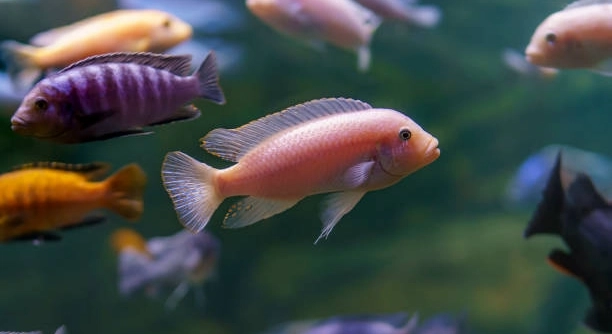
Do you ever notice how convict cichlids interact in your aquarium and wonder how they pick up new behaviors from one another? These fish are lively and social, often showing surprising levels of awareness in their environment.
Convict cichlids are capable of learning from each other through observation and social interaction. Research shows that they can adopt feeding techniques, territorial behaviors, and problem-solving strategies by watching the actions of other fish in their group.
Observing their interactions reveals patterns that are both practical and fascinating for aquarists. These insights can help in understanding how fish adapt and thrive together.
How Convict Cichlids Observe Each Other
Convict cichlids are very attentive to the actions of other fish around them. They watch closely when another fish finds food or interacts with the environment. Over time, this observation allows them to mimic behaviors that improve their own survival. For example, a cichlid may see a peer avoiding a certain area of the tank and learn to stay away as well. They also notice social interactions, such as displays of dominance or submission, which can help them navigate the group hierarchy. This learning is not instant but happens gradually. By repeating observed actions, they can improve their feeding efficiency and social skills. Watching one another helps reduce mistakes, as younger or less experienced cichlids often learn faster by copying more confident fish. It also strengthens their ability to respond to changes in the tank, like new objects, rearranged decorations, or other fish being added.
Observation plays a key role in their ability to adapt.
Learning through watching others can enhance both survival and social behavior in cichlids, making group living more effective. By imitating actions, they develop skills they might not achieve alone.
Benefits of Social Learning in the Aquarium
Social learning helps convict cichlids become more confident in their environment.
When cichlids observe their peers, they gain practical knowledge that reduces trial-and-error mistakes. For example, fish that watch others discover food faster or find hiding spots without stress. This shared learning decreases conflicts and improves group stability, since younger fish can understand the social hierarchy without direct confrontations. Social learning also increases adaptability. Fish that have observed a new behavior or strategy are better prepared when the environment changes, such as when decorations are moved or new tank mates are introduced. This ability to quickly adopt behaviors seen in others is crucial for survival, feeding efficiency, and reproductive success. Additionally, it provides mental stimulation, which keeps fish active and engaged, reducing boredom and unhealthy stress. Aquarists may notice that tanks with multiple cichlids tend to have smoother interactions because social learning allows fish to understand each other more effectively, creating a more balanced and harmonious tank environment overall.
Signs That Convict Cichlids Are Learning From Each Other
You can notice learning when a cichlid changes behavior after watching another. They may mimic feeding techniques, avoid certain areas, or adopt social postures quickly. These changes show that observation influences their daily actions and interactions.
Fish that watch others feeding often adjust their own approach to get food more efficiently. For example, a shy cichlid may follow a bolder one to a new feeding spot. Similarly, fish can learn which hiding places are safest by observing where others go during stress or disturbances. Social behaviors like chasing, nipping, or displaying dominance can also be copied. Over time, repeated observation helps younger or less experienced cichlids avoid mistakes, save energy, and better understand group dynamics. Learning is gradual and varies by individual, but attentive fish usually pick up behaviors faster, demonstrating clear evidence of social learning in action within the tank environment.
In addition to feeding, convict cichlids often learn aggression patterns by observing peers. They may see which fish are dominant or submissive and adjust their approach to avoid conflict. Observation also helps them navigate territory boundaries. By learning through watching, cichlids reduce unnecessary risks and adapt more efficiently to the group’s social structure.
Factors That Influence Social Learning
Tank size, decorations, and number of fish can impact learning. Overcrowded or empty tanks may limit opportunities for observation.
Environmental conditions strongly affect how convict cichlids learn from one another. A larger tank gives fish space to explore and watch peers without stress, while a cramped tank can increase competition and aggression, making learning harder. The presence of hiding spots encourages observational learning, as shy fish can watch others safely. The number of fish also matters; small groups limit examples to follow, while larger groups provide more behaviors to observe. Even feeding schedules influence learning, because consistent routines allow fish to anticipate and imitate others’ actions. Social learning is most effective when the environment balances safety, stimulation, and visibility, enabling fish to watch, mimic, and gradually adopt beneficial behaviors that improve survival and social interactions within the tank.
How Age and Experience Affect Learning
Younger convict cichlids often learn faster by observing older, more experienced fish. They mimic behaviors like feeding, hiding, and social displays, gaining skills without direct trial and error.
Older fish can still learn but tend to rely on habits. Observation helps them adjust to new situations, though changes happen more slowly than in juveniles.
Role of Feeding in Social Learning
Feeding time provides clear opportunities for convict cichlids to learn from each other. Watching which spots peers choose and how they handle food teaches efficient strategies. Fish that observe feeding routines can reduce mistakes and compete successfully without stress. This behavior highlights the practical importance of social learning in day-to-day survival.
Common Mistakes to Avoid
Overcrowding or sudden changes can interfere with learning. Limiting stress ensures fish have time to observe and adapt naturally.
How quickly can convict cichlids learn from each other?
Convict cichlids can start learning behaviors within a few days of observing their peers. Younger fish tend to pick up new behaviors faster because they are more flexible and curious. Older fish may take longer since they rely more on established routines, but they can still adapt through careful observation. Feeding strategies, hiding techniques, and social interactions are the behaviors most commonly learned first. Learning speed also depends on the environment—fish in spacious, well-structured tanks with clear sightlines can observe and mimic others more effectively than fish in crowded or cluttered tanks. Repetition strengthens the learning process, making behaviors more consistent over time.
Do all convict cichlids learn at the same rate?
Not every fish learns at the same pace. Individual personality plays a big role. Bold or confident fish often try new behaviors immediately after seeing them, while shy or cautious fish may wait and observe longer before copying. Age is another factor: younger fish generally learn faster than older ones. Environmental factors also affect the learning rate. Clear sightlines, minimal stress, and a balanced number of tank mates create the best conditions for learning. Stressful situations, overcrowding, or aggressive peers can slow down the process. Even within the same tank, two fish observing the same behavior might adopt it differently.
Can convict cichlids learn aggressive behaviors from each other?
Yes, aggression is one of the behaviors that cichlids commonly learn through observation. Fish can watch which individuals dominate territory or food and adjust their own actions accordingly. Younger fish may copy aggressive displays to avoid being targeted, while older fish may learn to assert dominance in safer ways. Learning aggression helps reduce unnecessary conflicts because fish understand the social hierarchy without constantly fighting. Over time, observed aggressive patterns become part of their routine, helping maintain order within the group. However, too much aggression in a tank can stress all fish, so careful monitoring is important to ensure learning doesn’t lead to harm.
Does social learning improve survival in a home aquarium?
Social learning directly impacts survival and well-being. Fish that learn from peers discover food sources more efficiently and avoid risky areas in the tank. They also develop better social skills, which reduces stress and prevents injuries from fights. Observational learning allows fish to adapt to changes, like new tank mates or decorations, without repeated trial-and-error mistakes. It can also help younger or less experienced fish survive by copying strategies used by older, more successful individuals. A tank that encourages observation and interaction promotes healthier and more confident fish overall, supporting both feeding and territorial behaviors.
How can I encourage my convict cichlids to learn from each other?
Creating the right environment is key. Provide enough space, hiding spots, and clear sightlines so fish can safely watch one another. Avoid overcrowding or overly aggressive tank mates, which can interfere with learning. Consistent feeding schedules and placing food in predictable areas allow fish to observe and mimic feeding strategies. Observing from a distance is important for shy fish, so decorations that provide cover can help. Gradual changes in the tank, like rearranging plants or adding new objects slowly, also encourage learning because fish can watch how others react first. Positive reinforcement, like consistent food placement, strengthens the adoption of new behaviors.
Are there behaviors that cannot be learned socially?
Some behaviors are instinctive and cannot be learned just by observation. For example, basic swimming, reflexive responses to threats, or species-specific breeding behaviors are largely innate. While social learning can refine or influence how these instincts are expressed, it usually cannot replace them entirely. Certain complex problem-solving tasks may also require trial and error, though observing peers can reduce mistakes. Social learning is most effective for behaviors that benefit from imitation, like feeding techniques, hiding strategies, or navigating social hierarchies. Understanding this distinction helps aquarists know which behaviors to encourage and which will naturally develop.
Does tank size affect social learning in convict cichlids?
Tank size has a big impact. Larger tanks provide more space to explore and observe without stress, allowing shy fish to watch and learn safely. Crowded tanks increase competition and aggression, which can interfere with learning. Decorations, plants, and caves also play a role by offering visual access and secure observation points. Fish in spacious, well-structured tanks tend to adopt new behaviors more quickly because they can watch others without being pressured or interrupted. Small or overcrowded tanks limit these opportunities, slowing the learning process and sometimes increasing stress-related behaviors instead of beneficial social learning.
Can feeding schedules influence learning?
Yes, feeding schedules strongly influence social learning. Predictable times allow fish to observe how others approach food, where it is placed, and the techniques used to eat efficiently. Inconsistent feeding can create competition and stress, which reduces the ability to learn from observation. Regular routines give shy or inexperienced fish a chance to watch confident individuals first and then try the behavior themselves. Over time, this repetition improves feeding efficiency and reinforces learned behaviors. Observing peers at feeding times also helps fish recognize social hierarchies and safer approaches, combining practical skills with social learning in everyday tank life.
How do I know if my cichlids are actually learning from each other?
Signs of learning include changes in feeding patterns, adopting hiding strategies, and adjusting social interactions. Fish may begin using a hiding spot previously ignored or follow a peer to a food source. Aggressive displays can become less frequent if fish understand dominance hierarchies. Younger fish copying older ones, or shy fish gradually becoming more confident after observing others, are also clear signs. Repeated behaviors that match what peers are doing indicate successful social learning. Tracking these changes over days or weeks helps confirm that observation is translating into real, practical learning.
What should I avoid to prevent learning setbacks?
Avoid overcrowding, sudden environmental changes, and aggressive tank mates that stress fish. High stress disrupts observation and reduces learning effectiveness. Sudden rearrangements or inconsistent feeding can confuse fish, making it harder to copy behaviors. Maintaining a stable, visible, and safe environment ensures fish can observe, imitate, and gradually adopt new behaviors without unnecessary risk or frustration.
Convict cichlids show that fish are capable of much more than simple instinct. Watching how they interact with each other in a tank reveals a lot about their ability to learn from observation. They can adopt new behaviors, adjust social interactions, and improve feeding strategies just by seeing what other fish do. This ability to learn socially is an important part of how they survive and thrive in a home aquarium. Even small changes in behavior, like using a new hiding spot or following another fish to food, show that they are paying attention and learning from their environment. It is not instant, and it often takes repetition and time, but the results are clear. Young fish are usually the fastest learners, while older fish can still adapt, though more slowly. Watching these changes can be fascinating for anyone who keeps cichlids and helps understand how social behavior develops over time.
The environment of the tank plays a major role in how effectively convict cichlids can learn from one another. Larger tanks with enough space and clear sightlines make it easier for fish to observe others without stress. Hiding spots and decorations are also helpful because they give shy fish a chance to watch more confident peers safely. Feeding schedules are another factor. Regular, predictable feeding times allow fish to see how others handle food and mimic those techniques. Overcrowding, sudden changes, or highly aggressive tank mates can make learning harder because stressed fish are less likely to observe and imitate behaviors. Even minor changes, like rearranging plants too quickly or introducing new fish without giving them time to adjust, can slow down the process. By paying attention to tank setup and routine, it is possible to encourage learning and social interaction among cichlids, which leads to healthier and more confident fish.
Social learning in convict cichlids is not limited to feeding or hiding. It also includes understanding social hierarchies, recognizing which fish are dominant, and adjusting behavior to reduce conflict. Aggression patterns, dominance displays, and even minor interactions can be copied and refined by observation. Over time, this allows the fish to navigate their environment more successfully and interact with each other more smoothly. While some behaviors are instinctive and cannot be learned, the majority of practical actions in a tank, from finding food to avoiding risky areas, benefit from observation. This makes social learning a key part of keeping convict cichlids. Paying attention to how fish watch and imitate each other gives insight into their natural intelligence and adaptability, and it can also guide how an aquarium is set up and maintained for the best results. Social learning shows that these fish are more than just colorful decorations—they are active, aware, and capable of adapting to the environment and each other in meaningful ways.

Hello,
If you enjoy the content that we create, please consider saying a "Thank You!" by leaving a tip.
Every little bit helps us continue crafting quality advice that supports the health, happiness, and well-being of pets around the world, for pets of all shapes, sizes, and species.
We really appreciate the kindness and support that you show us!