
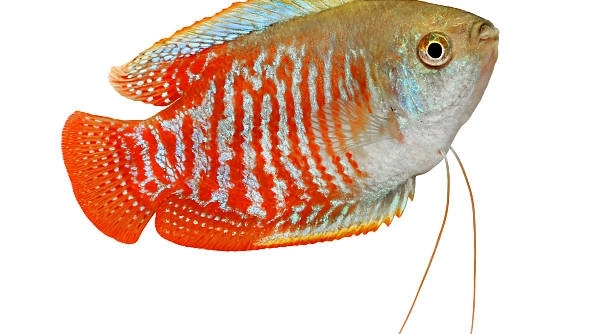
Gouramis are colorful and peaceful freshwater fish often admired for their graceful swimming and calm demeanor. Many hobbyists enjoy watching their interactions and behaviors in home aquariums, making them popular among fish enthusiasts everywhere.
Gouramis can recognize their reflections to a limited extent, displaying behaviors such as interacting, flaring, or showing curiosity toward a mirror image. While not fully self-aware, their responses indicate a basic recognition of another presence in their environment.
Observing these behaviors provides insight into their natural instincts and social tendencies, offering a deeper understanding of their interaction patterns in captivity.
How Gouramis React to Their Reflections
When a gourami sees its reflection, it often reacts with curiosity or mild aggression. Some may approach the mirror, flare their fins, or swim back and forth, seemingly trying to understand the presence before them. Others might show playful behaviors, like gentle nudging or repeated circling. These actions are not signs of full self-recognition but rather a response to a perceived companion or rival. Over time, the fish may lose interest or continue investigating, depending on its personality. Observing these behaviors closely can reveal differences in temperament, social tendencies, and confidence levels. Gouramis may also use visual cues from their reflections to adjust movements or assert dominance in an unfamiliar environment. This makes mirrors an interesting tool for studying fish behavior while ensuring their tank environment remains safe. Consistent observation helps identify how reflection interactions affect daily activity, feeding, and social dynamics, offering insight into their cognitive abilities.
These responses show that gouramis are aware of movement and presence, even if they do not fully recognize themselves.
Interactions with reflections are influenced by environment, personality, and previous experiences, helping to understand how gouramis perceive other fish or objects around them.
Factors Influencing Reflection Recognition
Tank setup and size can affect how gouramis respond to their reflections. A spacious tank allows natural movement, while a small space may intensify reactions.
Environmental conditions, like lighting, water clarity, and placement of decorations, can also shape behaviors. Clear water and good lighting make reflections more noticeable, while excessive clutter may reduce interest. Social context matters too; gouramis kept alone might respond more to reflections than those in groups, interpreting the image as a potential companion or competitor. Age and maturity play a role—juveniles are often more reactive, while adults show controlled curiosity. Consistent exposure may reduce aggressive behavior as the fish becomes accustomed to seeing the mirror image. Understanding these factors helps hobbyists provide a more balanced environment and interpret behaviors accurately. By adjusting tank conditions and observing patterns, one can gain valuable insight into how gouramis perceive their surroundings and interact with visual stimuli.
Recognizing Patterns in Behavior
Gouramis often respond to reflections with repeated movements, fin displays, or gentle nudges. These patterns indicate curiosity or mild territorial behavior rather than full self-awareness, showing how they process visual stimuli in their environment.
Repeated exposure to mirrors can help identify individual temperaments. Some gouramis remain cautious and avoid interaction, while others become increasingly bold, testing boundaries with flaring and approach behaviors. Over time, these interactions may reveal social tendencies, confidence levels, and adaptability. Observing patterns consistently allows for better understanding of their behavior and ensures they remain comfortable in their habitat.
These behavioral patterns are influenced by environmental cues, prior experiences, and social interactions with other fish. Watching closely provides insight into how gouramis perceive reflections and distinguish between potential companions or rivals, helping improve their care and tank setup.
Impact of Mirrors on Stress and Well-Being
Excessive mirror exposure can sometimes elevate stress levels, leading to constant agitation or repeated aggressive displays, which may affect health.
Balancing exposure is key. Introducing mirrors for short periods allows gouramis to explore without overwhelming them. Observing reactions helps gauge stress levels and adjust the environment. Mirrors can be a form of enrichment if used carefully, encouraging movement and engagement. Monitoring interactions ensures the fish do not become fixated or anxious, maintaining a stable and healthy tank environment. Proper management of visual stimuli contributes to overall well-being and allows for natural behavior expression.
Understanding Limited Self-Recognition
Gouramis do not fully recognize themselves in mirrors. Their reactions are based on movement and presence, not self-awareness.
They may interact as if another fish is present, showing curiosity or territorial behavior, which indicates perception of surroundings rather than reflective understanding.
Differences Between Species
Some gourami species are more responsive to reflections than others. Dwarf gouramis often show intense curiosity, flaring and approaching mirrors repeatedly, while larger species may remain cautious and observe from a distance. These differences stem from natural temperament, social behavior, and environmental adaptability. Recognizing species-specific tendencies helps in providing suitable tank conditions and enrichment. Careful observation allows owners to understand individual needs and behavioral triggers, improving overall well-being and ensuring reflections are not a source of stress or over-stimulation. Adapting tank setups to species behavior supports healthier and more engaged fish.
Safe Mirror Use
Mirrors should be introduced gradually and monitored closely to prevent prolonged stress or anxiety in gouramis.
FAQ
Can gouramis truly recognize themselves in a mirror?
Gouramis do not possess full self-recognition like some mammals or birds. When they see their reflection, their behavior is driven by movement and visual stimuli rather than awareness of their own identity. They often react as if another fish is present, which can appear like curiosity or territorial behavior. These responses give insight into their natural instincts but do not indicate true self-awareness.
Why do some gouramis become aggressive toward their reflection?
Aggression typically stems from territorial instincts. Seeing their reflection can trigger a perceived rival, especially in species that naturally defend space or dominance in the wild. Flared fins, chasing, and repeated nudging are common reactions. The intensity of aggression varies depending on species, age, and personality. Some fish quickly lose interest, while others remain more reactive for extended periods. Monitoring these behaviors ensures they do not cause unnecessary stress.
How long should I allow a gourami to interact with a mirror?
Short, controlled exposure is best. Ten to fifteen minutes at a time is usually enough for observation and stimulation. Prolonged exposure can lead to stress, agitation, or repeated aggressive behaviors. Frequent but brief sessions help the fish explore and engage without becoming fixated on their reflection. Observing reactions carefully ensures their comfort and allows owners to adjust timing if signs of distress appear.
Can mirror interactions help with enrichment?
Yes, mirrors can serve as a form of enrichment if used properly. They encourage movement, exploration, and engagement, simulating social interaction in a safe way. For solitary gouramis, brief mirror exposure can provide mental stimulation and prevent boredom. It’s important to watch their responses and ensure that the mirror does not cause prolonged stress or obsessive behavior. Balancing exposure with other enrichment methods, such as plants, hiding spaces, and tank rearrangement, supports overall well-being.
Do all gourami species react the same way to reflections?
No, reactions differ between species. Dwarf gouramis often show heightened curiosity, frequent approaches, and repeated flaring. Larger species may remain cautious, observing from a distance or interacting only occasionally. Temperament, social behavior, and past experiences shape these responses. Understanding species-specific tendencies helps in designing tanks that reduce stress and promote healthy behavior while accommodating natural instincts.
Is it safe to use mirrors for long-term observation?
Long-term use without breaks is not recommended. Continuous exposure can increase stress, disrupt feeding, and trigger aggressive tendencies. Short, monitored sessions are sufficient for studying behavior or providing enrichment. Observing reactions allows owners to gauge comfort levels and ensure the mirror supports engagement rather than anxiety. Rotation with other enrichment items keeps the environment balanced and stimulating.
What signs indicate a gourami is stressed by its reflection?
Signs include frantic swimming, repeated aggressive displays, loss of appetite, or hiding for extended periods. Persistent attention to the mirror or failure to calm down after exposure also suggests stress. If these behaviors appear, removing the mirror or reducing exposure time is necessary. Maintaining a calm and supportive environment ensures the fish can engage with visual stimuli safely.
Can gouramis learn from their reflection?
Gouramis can respond to movement and practice behaviors when seeing their reflection, but this is not true learning of self-recognition. They may repeat motions or test reactions, which can improve confidence or coordination in their environment. Observing these interactions can provide insights into cognitive abilities and behavioral tendencies, helping owners understand how their fish perceive visual cues.
Are there alternatives to mirrors for stimulation?
Yes, alternatives include floating objects, live plants, rearranged decorations, or interaction with other compatible fish. These methods provide physical and mental stimulation without causing stress linked to perceived rivals in reflections. Varying enrichment strategies keeps gouramis engaged and encourages natural behaviors while reducing fixation on mirrors.
How often should I monitor mirror interactions?
Daily monitoring is ideal, especially during initial exposure. Watching behavior closely allows for adjustments in exposure time, placement, and environment. Keeping track of responses ensures that interactions remain safe, enriching, and enjoyable for the fish, supporting their long-term health and well-being.
Gouramis are fascinating fish that offer insight into the way animals perceive their surroundings. While they do not fully recognize themselves in mirrors, their responses to reflections can be quite engaging. Observing their reactions—whether curious approaches, gentle nudges, or occasional flaring—reveals aspects of their natural instincts and social tendencies. These behaviors show that gouramis are aware of movement and presence in their environment, even if they lack true self-awareness. By understanding these interactions, fish owners can gain a better appreciation for their pets’ cognitive abilities and personality traits. Watching a gourami engage with its reflection can be both informative and entertaining, as each fish may respond differently depending on its temperament and past experiences.
Using mirrors for enrichment can be beneficial if done carefully. Short, controlled exposure allows gouramis to explore their reflections without causing unnecessary stress or agitation. It can encourage movement, play, and mental engagement, providing a safe way to simulate social interaction for solitary fish. However, it is important to monitor these interactions closely and recognize signs of stress, such as frantic swimming, excessive flaring, or hiding. Adjusting exposure time and observing reactions ensures the mirror remains a tool for stimulation rather than a source of anxiety. Combining mirror use with other enrichment methods, like rearranging tank decorations or adding plants, supports a balanced and engaging environment. Proper management of visual stimuli allows gouramis to express natural behaviors safely, contributing to overall health and well-being.
Understanding the factors that influence how gouramis react to reflections is key for responsible care. Species differences, tank size, lighting, water clarity, and individual temperament all affect how a fish responds. Some species, like dwarf gouramis, may show more curiosity, while larger species could be more cautious or reserved. Recognizing these tendencies helps tailor the tank environment to the needs of each fish, reducing stress and encouraging natural behavior. Observing reflection interactions provides valuable insight into social instincts, confidence levels, and cognitive responses. By considering these factors, fish owners can create a comfortable, stimulating environment that supports both mental and physical health. Paying attention to these details ensures gouramis are not only well-cared for but also able to thrive and display their unique personalities in a safe and engaging habitat.

Hello,
If you enjoy the content that we create, please consider saying a "Thank You!" by leaving a tip.
Every little bit helps us continue crafting quality advice that supports the health, happiness, and well-being of pets around the world, for pets of all shapes, sizes, and species.
We really appreciate the kindness and support that you show us!