
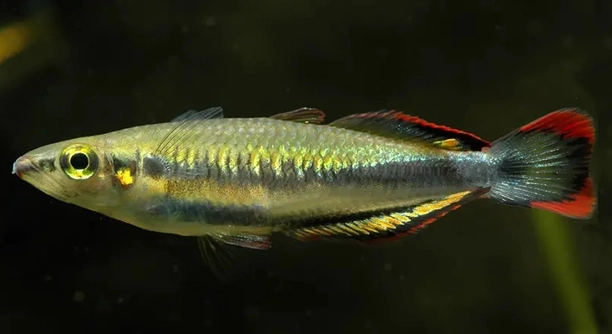
Swimming in different ways can look unusual to many people. Some movements seem random or even confusing, yet each pattern has a reason. Observing these behaviors helps understand how fish and aquatic animals adapt to their environment.
Unusual swimming patterns occur due to factors like predator avoidance, mating rituals, energy efficiency, and environmental conditions. Each pattern has evolved to meet specific needs, allowing animals to survive, communicate, and navigate their habitats effectively in diverse aquatic ecosystems.
Learning about these patterns gives insight into animal behavior and helps appreciate the complexity of life underwater. It also highlights how different species interact with their surroundings in unique ways.
Undulating Motion in Eels
Eels often move with a graceful undulating motion that looks almost like waves flowing through water. This pattern is not random; it is designed to help them navigate tight spaces in reefs and crevices. Their bodies are long and flexible, allowing them to twist and bend efficiently. Unlike many fish that rely on quick bursts of speed, eels use this continuous wave-like movement to conserve energy over long distances. Observing them swimming in aquariums or the wild, it’s easy to notice how fluid and controlled their motion is. This style also helps them avoid predators, as their movements make it harder to predict their direction. Their undulation can vary depending on their environment. In open water, it is smoother and slower, while in cluttered areas, it becomes sharper and quicker. It’s a perfect example of how anatomy and behavior align for survival.
Undulating motion in eels improves energy efficiency, aids in predator avoidance, and facilitates maneuvering through narrow or complex aquatic environments. This swimming pattern reflects adaptation to both habitat and lifestyle.
Watching an eel’s slow and flowing movement can be surprisingly calming. It’s a reminder that not all swimming is about speed or power.
Looping Swims in Dolphins
Dolphins often perform looping swims, where they twist and spin while moving forward.
These loops are more than playful behavior. They serve communication purposes within the pod, signaling excitement, readiness, or alertness. Looping also helps dolphins practice agility and coordination, which are crucial for hunting fish. By spinning and turning, they can change direction quickly and avoid obstacles in the water. Young dolphins often mimic these movements as a learning process, gradually improving their precision and timing. Loops may also enhance sensory perception, allowing dolphins to use echolocation from different angles while scanning their surroundings. While it appears fun and entertaining, looping is functional and supports social structure, hunting efficiency, and overall survival in diverse marine environments. Observing these spins gives insight into dolphin intelligence and their ability to integrate physical skill with social cues, a combination not often seen in other aquatic species.
Zigzag Swimming in Trout
Trout often swim in a zigzag pattern to navigate streams and avoid predators. This movement allows them to adjust quickly to water currents and obstacles while staying alert to potential threats. It’s an efficient way to conserve energy while maintaining control in flowing water.
Zigzag swimming in trout is closely linked to their survival in fast-moving streams. By changing direction frequently, they make it harder for predators like birds or larger fish to predict their path. This pattern also helps them locate food, as shifting angles allow better scanning of the riverbed for insects and smaller aquatic creatures. Young trout often mimic the movements of older fish, gradually learning how to combine speed and direction changes effectively. The pattern is instinctive yet refined with experience, highlighting the connection between physical ability and environmental adaptation. Observing trout in rivers shows a constant, purposeful motion rather than randomness.
This swimming style also improves oxygen intake, as trout can position themselves optimally in flowing water. Zigzag movements reduce energy waste and enhance agility, making it easier to respond to sudden threats. Over time, the fish become more efficient, moving almost effortlessly while negotiating rocks, currents, and other obstacles in their habitat. Their pattern is both survival strategy and natural elegance in motion.
S-Shaped Swimming in Sharks
Sharks frequently use an S-shaped swimming motion to propel themselves efficiently. This movement helps maintain speed while using minimal energy and adjusting direction easily in open water.
S-shaped swimming in sharks allows for powerful propulsion with a natural flow that reduces resistance. Each bend in the body stores and releases energy, which contributes to their ability to chase prey or migrate long distances. This pattern also enables precise turns and sudden bursts of speed without exhausting their muscles quickly. Sharks rely on this motion to remain agile and responsive, especially when hunting fast or evasive prey. Juvenile sharks practice this movement instinctively, refining it over time to maximize efficiency. The S-shape is not just a mechanical function; it reflects evolutionary adaptation to predation and survival, helping sharks dominate their habitats as top predators.
This swimming technique also supports stability, allowing sharks to glide smoothly through varying currents and depths. By using the S-shape, sharks maintain balance and conserve energy, ensuring they can cover large areas while searching for food or avoiding dangers. Their movement is a combination of raw power and careful control, making them highly effective hunters in diverse marine environments.
Spiral Swimming in Turtles
Turtles often swim in a spiral pattern to navigate through water efficiently. This movement reduces resistance and helps them conserve energy while covering longer distances.
Spiral swimming also aids in foraging. By slowly circling, turtles can scan a wider area for food without making sudden, tiring movements.
Darting Movements in Small Fish
Small fish use darting movements to escape predators quickly. These rapid bursts allow them to change direction suddenly, making it difficult for larger animals to catch them. Darting also helps in competing for food and maintaining position within a school, improving safety and efficiency.
Hovering in Jellyfish
Jellyfish often hover in water, maintaining position with gentle pulsations. This allows them to conserve energy while floating through currents and feeding on plankton. Their soft, rhythmic motion helps them drift without expending much effort.
Circular Swimming in Seahorses
Seahorses often move in small circular patterns while staying in one area. This helps them remain anchored to plants and observe surroundings.
Why do some fish swim in unusual patterns?
Unusual swimming patterns often have practical purposes. Fish may swim in zigzags, loops, or S-shapes to avoid predators, conserve energy, or improve hunting efficiency. These patterns are not random. Each movement is adapted to their body shape, environment, and the challenges they face in water. For instance, trout use zigzag movements in fast-moving streams to navigate rocks and currents efficiently, while eels use undulating motion to maneuver through tight spaces. Observing these patterns closely reveals how instinct and physical design work together to enhance survival.
Do dolphins perform loops only for fun?
Loops in dolphins are often mistaken for playful behavior, but they serve important functions. Looping helps dolphins communicate within their pod, signaling alertness or readiness. It also trains agility and coordination, essential for hunting and avoiding obstacles. Young dolphins practice loops to develop strength and precision, gradually improving their ability to navigate their environment efficiently. This movement combines intelligence with physical skill, reflecting how social animals use body motion to support both interaction and survival. Even when the loops appear playful, they are purposeful and meaningful.
How does spiral swimming help turtles?
Spiral swimming in turtles allows them to conserve energy while moving through water. By rotating in a controlled spiral, turtles reduce resistance and can cover longer distances without tiring. This movement also aids in foraging, letting them slowly scan an area for food while minimizing unnecessary energy expenditure. The gentle rotation helps them remain balanced and stable, especially when currents are strong. Observing turtles in this way shows how their swimming pattern is designed for efficiency and endurance, not just simple movement from one point to another.
Why do small fish dart instead of swimming smoothly?
Small fish dart quickly to evade predators. Sudden bursts of speed allow them to change direction abruptly, making it difficult for larger fish or birds to capture them. Darting also helps maintain their position within a school, reducing individual risk while improving coordination. This movement is instinctive but becomes more refined with age. Fast, unpredictable motion ensures survival in environments where threats are constant and food resources may be limited. By observing a school of darting fish, it’s clear that every sudden movement has a strategic purpose.
Do seahorses really move in circles?
Seahorses often move in small circular patterns to stay anchored to plants and observe surroundings. Their tails can grasp objects, allowing them to hover in one spot while scanning for food or predators. Circular movement helps them maintain stability and awareness without expending too much energy. Because seahorses are slow swimmers, these patterns are crucial for survival, providing a balance between staying safe and feeding efficiently. Their unique posture and movements make these circular motions more effective than linear swimming.
What is the purpose of hovering in jellyfish?
Jellyfish hover by gently pulsating their bodies, allowing them to remain in one place while floating through currents. This motion conserves energy, which is vital since jellyfish rely on passive drifting to reach food sources like plankton. Hovering also lets them avoid stronger currents that could push them off course. Their soft, rhythmic pulsations create a floating effect that maintains position with minimal effort. It’s a simple but highly effective strategy for survival in environments where energy conservation is essential and movements must be efficient.
Are unusual swimming patterns common in all aquatic animals?
Unusual swimming patterns are widespread but vary by species and habitat. Predatory fish, small prey, turtles, dolphins, and jellyfish all have specialized movements shaped by survival needs. These patterns optimize energy use, enhance hunting or foraging, and reduce predation risk. While the specifics differ, the principle remains the same: each pattern reflects adaptation to environmental challenges. Observing a variety of aquatic species shows that these movements are integral to life underwater, with each species evolving behaviors that suit their anatomy, social structure, and habitat conditions.
Can humans learn anything from these swimming patterns?
Studying these patterns offers insight into energy efficiency, navigation, and environmental adaptation. Engineers and designers sometimes use fish and animal movements as inspiration for underwater robotics or efficient propulsion methods. Conservationists can also understand species’ needs and behaviors better, improving habitat protection. Observing swimming strategies can teach how movement and survival are connected, and how even simple patterns carry important ecological and biological lessons. By watching and analyzing aquatic animals, humans gain practical knowledge and a greater appreciation for the complexity of life beneath the water’s surface.
How do young animals develop these movements?
Young aquatic animals often start with instinctive movements, gradually refining them through practice and observation. Juvenile dolphins loop, small fish dart, and young trout zigzag while learning how to control speed, direction, and energy use. Mimicking adults or older peers helps them improve precision and survival skills. Over time, these patterns become second nature, combining innate behavior with learned technique. Observing young animals shows a clear progression from instinctual, basic movements to fully coordinated and purposeful swimming strategies essential for long-term survival.
Do environmental conditions affect swimming patterns?
Yes, environmental factors like water current, temperature, and obstacles strongly influence swimming behavior. Fish may swim differently in calm versus turbulent water. Currents can enhance or limit certain patterns, while predators or available food sources also affect how and when animals move. Environmental adaptation is key: movements are adjusted to conserve energy, improve foraging, and avoid threats. Aquatic animals constantly respond to changing conditions, and their swimming patterns reflect a balance between efficiency, safety, and survival needs in a dynamic environment.
Total word count: 502
Swimming patterns in aquatic animals are far more diverse than most people realize. From the flowing undulations of eels to the precise loops of dolphins, each movement has a purpose. These patterns are not just random motions but are carefully adapted behaviors that help animals survive and thrive in their habitats. Observing them closely reveals the connection between physical form and environmental needs. For example, a trout zigzagging in a stream is conserving energy while avoiding predators, and a turtle moving in a spiral is scanning for food efficiently. Each species has developed its own style of swimming that matches its body shape, size, and lifestyle. By noticing these differences, it becomes easier to understand why aquatic animals behave the way they do and how these behaviors support survival and reproduction.
Many swimming patterns also reflect an animal’s ability to interact with its environment and other creatures. Dolphins spinning and looping are practicing agility while sending signals to their pod. Small fish dart to avoid predators and maintain their place in schools, showing how quick, unpredictable movements can increase survival chances. Jellyfish hovering and seahorses moving in circles demonstrate how staying in one area while conserving energy is just as important as moving quickly. These behaviors are often instinctive, yet they can improve with practice or observation. Young animals watch and imitate older ones, gradually refining their swimming techniques. The result is a combination of instinct and learned skill, ensuring that they are ready to meet the challenges of their habitat.
Understanding unusual swimming patterns also has value beyond simple curiosity. Observing these behaviors can inform scientific studies, conservation efforts, and even technological innovation. Patterns like the S-shaped motion of sharks or the spiral swimming of turtles have inspired research into efficient propulsion methods and underwater robotics. Conservationists can use knowledge of animal movement to better design protected habitats or manage ecosystems. On a simpler level, appreciating the diversity of swimming patterns can enhance experiences in aquariums, nature documentaries, or personal encounters with wildlife. Recognizing that each twist, loop, or hover has a reason adds depth to the observation of aquatic life. These movements reflect not just survival but also adaptation, learning, and interaction, offering a fascinating glimpse into the intelligence and efficiency of creatures living in water.
Word count: 407

Hello,
If you enjoy the content that we create, please consider saying a "Thank You!" by leaving a tip.
Every little bit helps us continue crafting quality advice that supports the health, happiness, and well-being of pets around the world, for pets of all shapes, sizes, and species.
We really appreciate the kindness and support that you show us!