
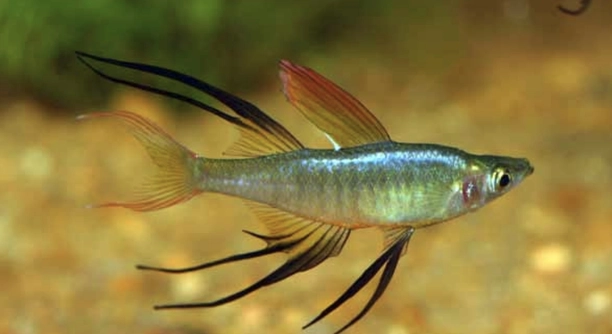
Do you ever find yourself watching fish swim gracefully and wonder how they sense the world around them? Threadfins move with quiet elegance, but their abilities to perceive sounds are not always obvious. Their lives are shaped by subtle cues in water.
Threadfins can detect vibrations and pressure changes in water, which allow them to perceive certain environmental sounds. While their hearing is not like human auditory perception, their sensory adaptations help them respond to nearby movement and disturbances efficiently.
Learning how threadfins interact with their surroundings can reveal surprising aspects of their behavior and survival strategies in aquatic environments. Understanding these mechanisms can enrich our appreciation of these unique fish.
How Threadfins Sense Their Surroundings
Threadfins rely on a specialized system called the lateral line, which runs along the sides of their bodies. This line detects vibrations and pressure changes in water, helping them understand movement around them. Unlike humans, threadfins do not have external ears, so this sensory adaptation is crucial for avoiding predators and finding food. By sensing subtle ripples, they can detect other fish, obstacles, or even small shifts in currents. This ability allows them to coordinate with other fish in schools and respond quickly to potential threats. Observing them, it feels like they are quietly aware of everything happening nearby. Their sensitivity also helps during feeding, as they can detect small prey hiding in sand or among vegetation. It is fascinating how much of their awareness comes from such a simple, yet effective, system that runs the length of their bodies, giving them an almost invisible but highly efficient way to monitor their environment.
The lateral line allows threadfins to sense changes quickly and accurately, even in murky water where sight is limited.
Threadfins’ use of their lateral line shows how evolution adapts species to their habitats. By combining motion detection with vision, they can respond faster than many other fish. This sensory system is also crucial during mating and migration, guiding them in schools and helping them navigate safely through complex environments. It is impressive how this mechanism compensates for their limited hearing range. Their ability to perceive vibrations and currents ensures they survive in competitive and sometimes dangerous habitats. Scientists study these adaptations to understand more about aquatic life and how different species interact with their environment. Observing threadfins gives a small glimpse into the intricacy of aquatic sensory systems, showing how even subtle changes in water can influence behavior and survival.
Comparing Hearing to Other Fish
Threadfins do not hear like typical fish with inner ears. Their perception is mostly based on vibration detection, not sound processing like humans or other species.
Compared with species like catfish or goldfish, which have well-developed inner ears and can detect a range of frequencies, threadfins are more specialized in sensing nearby movement rather than distant sounds. Their lateral line system is highly refined for detecting pressure waves and subtle shifts in water, which allows them to respond effectively to threats or opportunities around them. This specialization means they may not react to noise that travels farther through water but will notice immediate disturbances in their surroundings. Such adaptations are advantageous in shallow coastal waters and estuaries, where sudden changes in current or movement can indicate predators or prey. By relying on this method, threadfins conserve energy and focus on the most relevant cues, enhancing their ability to survive and thrive in dynamic environments. Their awareness is subtle but finely tuned, showing that hearing is not always necessary for effective environmental perception.
Threadfins and Vibrations
Threadfins respond quickly to water vibrations, which guide their movements and alert them to nearby activity. This ability helps them avoid predators and locate prey efficiently without relying on conventional hearing.
Their bodies are finely tuned to sense even small changes in water pressure. When a fish swims nearby or a current shifts, the lateral line picks up these disturbances. Threadfins use this information to adjust speed, direction, and positioning in their environment. The sensitivity allows them to school tightly and react to sudden changes, which is essential for survival in crowded habitats.
The vibration detection also aids feeding. Threadfins can detect small prey hidden in sand or near rocks by sensing the tiny movements they create. This ability allows them to feed more efficiently and safely. Their reliance on vibrations shows how specialized their senses are, letting them navigate complex aquatic environments with subtle, almost invisible cues.
Environmental Awareness
Threadfins’ sensitivity to changes in their surroundings keeps them alert and helps maintain balance within schools. Their awareness is mostly unconscious but highly effective.
Environmental factors like water temperature, salinity, and current patterns influence their behavior. Threadfins adjust their movements based on these subtle cues, often before a threat is visible. They use the lateral line to monitor not only other fish but also obstacles and potential shelter, reacting almost instantly to changes. This constant sensory input allows them to make split-second decisions, avoiding collisions and predators. Their behavior demonstrates a combination of instinct and finely tuned sensory perception that has evolved over time.
This awareness also plays a role during feeding and migration. Threadfins can sense where prey is concentrated or detect favorable currents for travel. By interpreting subtle environmental cues, they maximize survival and efficiency. Their adaptability shows how an aquatic species can thrive without conventional hearing, relying instead on specialized sensory systems that give them an almost intuitive understanding of their habitat.
Interaction with Other Fish
Threadfins use their lateral line to coordinate movements with nearby fish. This helps them swim in schools smoothly and respond quickly to any disturbances in the water around them.
Schooling provides safety. By detecting small vibrations from others, threadfins can adjust their position to stay protected and maintain group cohesion, which is crucial in predator-rich environments.
Role of Water Currents
Water currents carry information that threadfins can sense through their bodies. Shifts in flow indicate movement of other fish or changes in the environment, helping them react promptly.
Feeding Behavior
Threadfins rely on subtle vibrations to locate prey hidden in sand or vegetation. They often detect movement before seeing the prey, giving them an advantage in capturing food efficiently.
Adaptation Over Time
Their reliance on vibration detection rather than conventional hearing shows how threadfins have adapted over generations. This specialization ensures they survive in habitats with varying visibility and constant environmental changes.
FAQ
How do threadfins detect sounds if they don’t have typical ears?
Threadfins rely on their lateral line system, which senses vibrations and pressure changes in the water. This system lets them detect movement of nearby fish, predators, or prey. While they don’t process sound like humans, these vibrations provide enough information for survival and feeding.
Can threadfins hear human noises or sounds above water?
Not in the way humans or some other fish do. Threadfins are tuned to vibrations in water, so airborne sounds or distant noises have little to no effect. They mainly respond to changes in their immediate aquatic environment.
Do all threadfins have the same sensitivity?
Sensitivity can vary by species, age, and environment. Younger fish or those in calmer waters may have slightly different lateral line development. Fish living in areas with strong currents or more predators often rely more heavily on vibration detection.
How does the lateral line help threadfins avoid predators?
The lateral line allows threadfins to detect small movements in the water caused by predators. They can sense the approach of a threat before seeing it. This early warning system triggers fast, coordinated movements, helping them escape or school tightly for protection.
Do threadfins use vibration sensing for social interactions?
Yes. Threadfins coordinate with others in schools by detecting subtle changes in water pressure from nearby fish. This keeps the group together, helps with synchronized movements, and reduces the chance of collisions or separations during feeding and swimming.
Does the environment affect their sensing abilities?
Absolutely. Murky water, strong currents, or sediment can alter vibration patterns. Threadfins adapt by becoming more sensitive to immediate movements and may rely more on other senses like vision or touch in challenging conditions.
How do threadfins find food using vibrations?
Threadfins detect small movements made by prey hidden in sand, rocks, or vegetation. They respond to even minor vibrations, allowing them to capture food efficiently. This method works well in low-visibility conditions where eyesight alone is not reliable.
Are there risks if threadfins lose lateral line function?
Yes. Damage to the lateral line would reduce their ability to sense predators, locate prey, and coordinate with other fish. Survival becomes much harder because they depend on this system for navigation, feeding, and safety.
Do threadfins communicate using vibrations?
They don’t communicate like humans, but subtle movements and vibrations can signal nearby fish. This can indicate feeding activity, changes in direction, or potential threats. The signals are instinctive rather than conscious, but they are effective for coordination.
Can humans observe these abilities directly?
It’s challenging to see. Observing threadfins responding to vibrations often requires controlled conditions or slow-motion recordings. Watching them in schools or during feeding can provide indirect evidence of their highly tuned sensory system.
How do threadfins’ abilities compare to other fish?
Threadfins are more specialized for detecting nearby vibrations rather than processing a wide range of sounds. Fish like catfish or carp have inner ears for detecting frequencies, but threadfins excel at detecting immediate environmental changes, making them quick and responsive in shallow or busy waters.
Do threadfins rely on vision at all?
Yes, but vision is secondary. Their eyesight helps with general navigation and spotting visible prey, but in murky or crowded waters, the lateral line is more reliable. Combining both senses gives them a well-rounded awareness of their environment.
Can threadfins sense water changes caused by humans?
Threadfins can notice disturbances in water caused by swimming humans, boats, or dropped objects. Sudden vibrations trigger avoidance behaviors. They might move quickly or adjust school formations to maintain safety.
Does schooling enhance their vibration detection?
Definitely. When swimming in schools, each fish contributes to a collective awareness. Vibrations caused by one fish help others sense nearby movement, improving reaction times and reducing risk of predator attacks.
Are there experiments showing threadfins’ sensing abilities?
Researchers use controlled tanks and water vibrations to study responses. Threadfins often react to stimuli without visual cues, confirming that the lateral line is highly sensitive and essential for their behavior and survival.
How does this knowledge help in aquaculture or fishing?
Understanding vibration sensitivity helps design safer habitats, minimize stress in farming conditions, and improve sustainable fishing practices. Reducing sudden disturbances in water can prevent unnecessary panic and injury among threadfins in captivity or crowded environments.
Do threadfins’ abilities change with age?
Younger fish may have less developed lateral lines, making them slightly less sensitive to vibrations. As they grow, the system matures, improving survival skills, feeding efficiency, and coordination within schools.
Are threadfins more active at certain times because of vibrations?
Activity levels can be influenced by environmental cues like currents, water movement, or the presence of prey. They often respond more actively during feeding times or when disturbances indicate potential threats nearby.
Do threadfins sense vibrations from other species?
Yes. Any movement in water, including other fish, crustaceans, or aquatic animals, creates vibrations. Threadfins can detect these signals and respond accordingly, whether for feeding, avoiding danger, or maintaining social behavior.
Can humans train threadfins to respond to vibrations?
While not “training” in the usual sense, consistent stimuli in aquaculture settings can condition threadfins to react predictably. For example, vibrations can signal feeding time or alert them to safe zones, relying on their natural sensitivity.
Do environmental changes affect their evolution?
Over generations, threadfins have adapted their lateral line systems to specific habitats. Shallow, predator-rich, or murky waters favor highly sensitive vibration detection, showing how evolution fine-tunes species for survival in their particular environments.
Can threadfins detect predators hidden in the substrate?
Yes. Vibrations from approaching predators, even if hidden under sand or rocks, can be sensed. Threadfins respond quickly, moving away or adjusting school positions to avoid danger.
Are threadfins more sensitive than some other fish?
In terms of detecting nearby water disturbances, yes. While other species may detect distant sounds or broader frequencies, threadfins excel at picking up subtle, close-range vibrations critical for immediate survival.
Do water temperature or salinity influence vibration detection?
Changes in water conditions can affect vibration propagation and lateral line sensitivity. Threadfins may adjust behavior slightly to compensate, ensuring their responses remain effective despite environmental variations.
Can threadfins detect human fishing activities?
They can sense vibrations from boats, nets, or wading. This often triggers evasive swimming patterns, helping them avoid capture. Their natural sensitivity makes them cautious and alert in human-impacted waters.
Are there signs of stress if vibration detection is impaired?
Impaired sensing can lead to erratic swimming, poor feeding, or reduced schooling cohesion. Threadfins depend on this system to stay safe and maintain normal behavior, so any damage may be evident in their daily patterns.
Do threadfins sleep or rest while sensing vibrations?
Even during rest, threadfins maintain some awareness of surrounding vibrations. This low-level sensitivity ensures they can respond to sudden threats without fully relying on visual cues, blending rest with environmental alertness.
Can vibration detection be enhanced in aquaculture?
Yes. Adjusting tank conditions, water flow, and minimizing background disturbances can help threadfins maintain optimal lateral line function, ensuring healthier, more natural behavior in captivity.
How do vibrations help in mating behavior?
During mating, small movements or water pressure changes from other fish may signal readiness or location. Threadfins use these cues to coordinate spawning and select appropriate partners, relying on subtle environmental information.
Does pollution affect vibration sensing?
Pollutants like heavy sediment or chemicals can dampen water vibrations or interfere with lateral line function. Threadfins may struggle to detect prey or predators in contaminated waters, reducing survival efficiency.
Are threadfins’ senses similar to sharks or rays?
Sharks and rays detect vibrations too, often using lateral lines or specialized organs. Threadfins share this adaptation but are smaller and more specialized for shallow, coastal, or estuarine environments rather than open-ocean hunting.
Can threadfins adapt if their habitat changes?
They show some adaptability, adjusting sensitivity and behavior to new currents, prey availability, or predators. However, extreme changes may challenge their lateral line reliance and overall survival if adjustments are insufficient.
Is vibration detection more important than eyesight for threadfins?
In many cases, yes. Especially in murky or busy waters, vibrations provide immediate and reliable information. Vision complements this, but the lateral line is central to their everyday behavior, feeding, and safety.
Do threadfins detect vibrations from the seabed differently than from other fish?
Yes. Vibrations from the seabed are slower and may indicate hidden prey or obstacles, while fish-generated vibrations are faster and more dynamic, signaling immediate movement or potential threats. Threadfins interpret both types efficiently to navigate their environment.
Can threadfins coexist with noisier species?
They can, as long as vibrations from larger or more active species don’t overwhelm their sensory input. Threadfins are tuned to prioritize relevant disturbances, filtering out background noise when necessary to focus on critical movements.
Do threadfins rely on smell along with vibrations?
Smell is secondary but helpful. While vibrations alert them to nearby activity, chemical cues in the water provide additional information about food, predators, or reproductive status, enhancing their overall perception.
Are there any predators that exploit their vibration sensing?
Some predators may approach slowly to minimize water disturbances. Threadfins can detect minor vibrations, but very stealthy predators may evade early detection, demonstrating limits to their otherwise sensitive system.
Do threadfins respond differently to natural versus human-made vibrations?
They respond instinctively to any movement. Natural vibrations from fish, prey, or currents trigger normal reactions, while sudden human-induced disturbances often cause abrupt avoidance, showing that their system is sensitive but not selective in source.
Can environmental enrichment in tanks help maintain vibration sensitivity?
Yes. Introducing mild water movement, varied structures, and controlled interactions helps maintain lateral line function, ensuring threadfins retain natural behaviors and responsiveness to subtle vibrations.
Is vibration detection critical for migration?
During migration, sensing currents, other fish, and subtle environmental changes guides threadfins. Their lateral line helps maintain direction, avoid obstacles, and coordinate movement with schools, making it essential for successful seasonal or reproductive travel.
Do threadfins detect changes in water pressure from waves or tides?
Yes. Tidal shifts and wave action create pressure changes that they can sense, allowing adjustments in swimming and positioning. This awareness helps them conserve energy and avoid being swept into unsafe areas.
Are there variations among species in vibration detection abilities?
Different threadfin species have varying lateral line sensitivity based on habitat complexity, predator presence, and prey types. Species in calmer or shallower waters often show more refined detection for fine movements, while those in turbulent environments rely on stronger cues.
Can vibration sensing influence feeding hierarchy?
In schools, individuals more sensitive to subtle movements may locate food first, gaining advantage over others. This natural variation in lateral line sensitivity can influence access to prey and overall feeding success.
Do threadfins respond to vibrations from inanimate objects?
Yes. Any sudden object in water, like debris or dropped items, generates vibrations that threadfins detect. They may change direction, speed, or school formation in response, showing the broad sensitivity of their system.
How long has this adaptation existed in threadfins?
Vibration sensing through the lateral line is an ancient adaptation in many fish species. For threadfins, it has been refined over millions of years to suit shallow, predator-rich habitats, highlighting the evolutionary importance of this sensory system.
Can threadfins’ vibration detection be measured scientifically?
Yes. Researchers use controlled experiments with water vibration generators, motion sensors, and observation of behavioral responses. These studies confirm the sensitivity, range, and functional importance of the lateral line system.
Does schooling behavior enhance learning of vibrations?
Being in groups allows younger or less sensitive threadfins to follow movements of others, effectively “learning” how to respond to environmental vibrations. This group dynamic supports survival and coordination.
Are threadfins’ vibration abilities consistent across life stages?
While the lateral line develops as the fish grows, adults generally have peak sensitivity. Juveniles may rely more on schooling to compensate for less-developed sensing abilities, gradually improving with age and experience.
Do threadfins respond to vibrations while resting near the bottom?
Yes. Even when stationary, they maintain partial sensitivity to disturbances, allowing quick reactions to predators or other fish moving nearby. This ensures safety without constant active swimming.
Can vibration detection be improved in captivity?
Providing varied water movement, stimulating prey items, and avoiding constant disturbances can help maintain lateral line responsiveness, ensuring threadfins retain natural behaviors and survival instincts in controlled environments.
Do threadfins’ vibration abilities influence reproduction success?
Sensitivity helps locate mates, detect rivals, and coordinate spawning. By responding to subtle cues, they can maximize reproductive opportunities and ensure timing aligns with environmental conditions for better offspring survival.
Are there limits to what threadfins can sense?
Yes. Extremely distant vibrations, very slow-moving objects, or airborne sounds are largely undetectable. Their system is specialized for immediate, local changes rather than wide-range auditory detection.
Do threadfins adapt to repeated vibrations over time?
They can habituate to non-threatening, repeated disturbances, reducing unnecessary reactions. This allows them to focus on meaningful signals while conserving energy and maintaining calm in predictable environments.
How do researchers study lateral line function in threadfins?
Through behavioral observation, controlled vibration experiments, and anatomical studies, scientists map sensitivity, response patterns, and adaptation. This research helps understand survival strategies and informs aquaculture and conservation practices.
Can threadfins sense prey buried under thick sediment?
Yes, depending on sediment density. Small movements from prey generate detectable vibrations, though very dense or compact layers may reduce sensitivity, requiring closer proximity for detection.
Do environmental noises like waterfalls or surf affect threadfins?
Loud, constant background vibrations may mask subtle signals. Threadfins often focus on immediate, localized disturbances, but extreme or continuous vibrations can reduce responsiveness temporarily.
Is vibration detection energy-intensive?
Maintaining lateral line sensitivity is not highly energy-consuming. It allows continuous monitoring of surroundings without active movement, making it efficient for survival in dynamic habitats.
Do threadfins rely on this system in deep water?
Mostly in shallow to mid-depth habitats. In deeper waters, vibrations may travel differently, and threadfins’ adaptations are best suited to coastal, estuarine, and river environments where lateral line input is most effective.
Can threadfins detect predators approaching from below?
Yes. Vibrations from movements underneath them, like swimming predators or shifting sediment, alert threadfins to potential danger. This helps maintain safety and enables timely evasive action.
Does schooling improve predator detection?
Yes. Each fish’s sensitivity contributes to the group, creating a collective awareness. Predators approaching any individual can trigger coordinated reactions, reducing risk for all members of the school.
Can threadfins detect human swimming patterns?
Yes. Sudden or strong movements in water create vibrations they sense immediately, prompting avoidance behaviors or changes in school formation.
Do they respond to vibrations from fishing nets?
Threadfins often detect nets before contact. Vibrations from dragging or setting nets trigger escape behaviors, which is why they can be challenging to catch in open waters.
Are juvenile threadfins less sensitive to vibrations?
Generally yes. Their lateral line is still developing, so they rely more on schooling behavior and visual cues until full sensitivity is reached as adults.
Do threadfins respond differently to fast versus slow vibrations?
Fast vibrations often indicate immediate movement or predators, prompting quick reactions. Slow vibrations may signal currents, prey hiding, or environmental changes, triggering more measured responses.
Can humans use vibration patterns to study threadfin behavior?
Yes. Controlled vibrations allow researchers to observe feeding, schooling, or escape responses, providing insight into natural behaviors without harming the fish.
Do threadfins detect vibrations from other species like crabs or shrimp?
Yes. Any movement generating water disturbance can be sensed, which helps in detecting prey, avoiding predators, or coordinating movement with other aquatic animals.
How precise is their directional sensing?
Threadfins can often tell which direction a vibration comes from, enabling targeted responses. The lateral line provides spatial awareness, which is crucial for schooling, feeding, and predator avoidance.
Can water pollution interfere with vibration detection?
Yes. Suspended particles, chemical changes, or noise pollution can mask subtle vibrations, reducing efficiency of lateral line perception and impacting survival behaviors.
Does temperature influence lateral line sensitivity?
Extreme temperatures can slightly affect water density and vibration transmission. Threadfins may adjust behavior or sensitivity to maintain effective detection in varying thermal conditions.
Are threadfins’ abilities unique among coastal fish?
They share vibration detection with many fish, but threadfins are particularly refined for shallow, predator-rich environments. Their specialization allows precise and immediate responses that are critical for survival.
Do vibrations influence migration timing?
Indirectly. Currents, movement of other fish, and subtle water changes signal favorable conditions, helping threadfins coordinate seasonal or reproductive migrations efficiently.
Can threadfins sense subtle changes in water chemistry through vibrations?
Not directly. They respond to physical disturbances, but chemical changes are detected through smell rather than vibration. Both senses together guide feeding and safety behaviors.
Do threadfins have backup senses if lateral line is damaged?
Yes, vision, touch, and chemical detection provide some compensation, but overall awareness and survival are reduced if vibration sensing is impaired.
How quickly do threadfins respond to detected vibrations?
Responses are nearly instantaneous. The lateral line system allows split-second adjustments in swimming speed, direction, or schooling formation to avoid threats or capture prey.
Do threadfins’ responses vary by time of day?
Activity and sensitivity may shift with light levels, feeding patterns, or predator activity. They often rely more on vibrations during low-visibility periods when vision is limited.
Are there conservation implications tied to their sensing abilities?
Yes. Maintaining clean, undisturbed habitats ensures lateral line function remains effective. Pollution, overfishing, or habitat disruption can impair survival if vibration detection is compromised.
Do threadfins detect vibrations from distant boats or engines?
They may sense nearby water displacement caused by boats, but distant vibrations are less effective due to their system being specialized for close-range detection.
Can lateral line function be restored if damaged?
Partial recovery is possible in some cases, but severe damage may permanently reduce sensitivity. Providing low-stress, clean environments can support regeneration and natural behavior restoration.
Do threadfins detect subtle currents in estuaries better than in open ocean?
Yes. Their adaptations are ideal for shallow, flowing waters where fine-tuned
Threadfins are fascinating fish because of how they experience their environment. Unlike humans, they do not rely on conventional hearing to understand what is happening around them. Instead, they have a lateral line system that runs along the sides of their bodies. This system senses vibrations and changes in water pressure, which helps threadfins detect movement, locate prey, and avoid predators. It is a simple yet highly effective adaptation that allows them to live safely and efficiently in shallow coastal waters, estuaries, and rivers. Watching threadfins move can feel almost magical because they respond to things we cannot see or hear. Every ripple and vibration in the water carries important information for their survival, showing how specialized and unique their senses are compared to many other fish species.
The lateral line system also plays an essential role in their social behavior and coordination. Threadfins often swim in schools, and the vibrations they create in the water help them stay synchronized with one another. Each fish can sense tiny changes made by others, allowing the group to move smoothly, avoid collisions, and respond to threats as a unit. This collective awareness improves their chances of survival and also makes feeding more efficient. When one fish detects prey or senses danger, the information spreads quickly through the school. This coordination highlights how vibration detection is not just a survival tool but also a key component of their behavior and interactions. It is interesting to see that even without traditional hearing, threadfins are highly aware of what is going on in their surroundings and can adapt to changes in their environment almost instinctively.
Understanding threadfins’ abilities helps us appreciate the variety of sensory adaptations in aquatic life. They show that hearing, as humans know it, is not the only way to be aware of one’s environment. Threadfins have evolved a system that is perfectly suited to their habitats, allowing them to respond to predators, find food, and communicate with other fish. Their sensitivity to vibrations also demonstrates how evolution can create highly specialized solutions for survival. Observing them reminds us that there is more to aquatic life than meets the eye. By learning about their lateral line system and behaviors, we gain a better understanding of how fish interact with their surroundings, how they survive, and how they thrive. Threadfins are a clear example of nature’s ingenuity, showing that even without human-like hearing, animals can be remarkably aware and capable in their environments.

Hello,
If you enjoy the content that we create, please consider saying a "Thank You!" by leaving a tip.
Every little bit helps us continue crafting quality advice that supports the health, happiness, and well-being of pets around the world, for pets of all shapes, sizes, and species.
We really appreciate the kindness and support that you show us!