
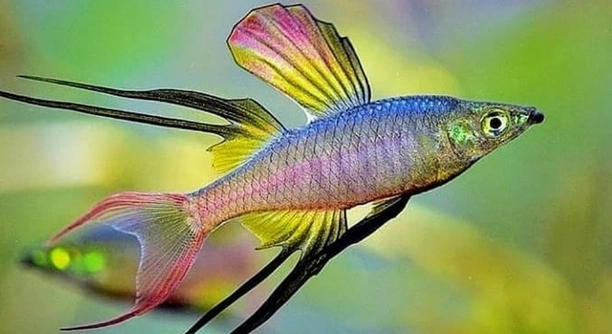
Threadfin Rainbowfish are small, shimmering fish often seen moving together in freshwater streams. Their graceful patterns and vibrant colors make them a favorite among hobbyists and researchers who study their unique swimming behaviors.
Threadfin Rainbowfish follow the same path primarily due to instinctual schooling behavior. This coordinated movement reduces predation risk, enhances foraging efficiency, and maintains social cohesion, ensuring individual fish benefit from group dynamics while navigating their aquatic environment.
Observing these patterns can reveal much about their behavior, environment, and the subtle ways they interact with one another.
Why They Move Together
Threadfin Rainbowfish often swim in groups that seem perfectly synchronized. Watching them glide together is calming, but there’s a clear reason behind it. Each fish follows subtle cues from its neighbors, adjusting speed and direction constantly. This coordination helps them avoid predators by confusing attackers, making it harder for any one fish to be singled out. Swimming in a group also helps them locate food more efficiently. If one fish spots insects or plant matter, the others quickly follow. Their schooling behavior is instinctive but can be influenced by the environment. Water currents, light, and nearby plants all affect how tightly they group. Even in tanks, they maintain this behavior, showing that it’s deeply ingrained. Over time, their movements can seem like a dance, but it’s purely practical. Their small, thin bodies and long fins make it easier to turn and follow, keeping the school cohesive and safe from threats, whether natural or human-made.
Their synchronized swimming isn’t just graceful; it’s an essential survival strategy.
Understanding these patterns helps you create better tank conditions. A well-structured aquarium with plants and open swimming areas encourages natural movement. Observing their interactions can reveal dominant or shy individuals, helping with feeding and care. Even minor changes in lighting or tank layout can affect group dynamics, highlighting how sensitive they are to surroundings. Proper care ensures they stay healthy, active, and comfortable in a confined space while maintaining instinctual behaviors that keep them moving together.
Influences on Their Path
Water flow affects how fish position themselves and move in unison.
Current, temperature, and obstacles shape their routes. Strong currents push them together, while gentle flows let them spread out. Objects like rocks and plants create natural pathways, guiding their swimming. Tank layout, including decoration and hiding spots, can change how they interact, forcing adjustments in direction and pace. Social factors also play a role; new additions or missing fish disrupt the pattern temporarily. Even subtle differences in fin size or body length can affect how easily a fish keeps up with the group. Over time, they adapt, finding a balance between following the school and maintaining individual space. This constant adjustment highlights their sensitivity to environmental cues. Observing these details can improve tank setups, allowing both safety and freedom of movement. Their ability to react quickly to shifts in surroundings shows how survival instincts remain active even in captivity. Understanding these influences ensures healthier, more natural behaviors for Threadfin Rainbowfish, keeping their movements harmonious and predictable while supporting overall well-being.
How Group Size Affects Movement
Smaller schools tend to be more agile but less coordinated. Larger groups move slower but maintain a tighter formation. Each fish adjusts its pace to match others, keeping the group together and reducing the risk of isolation or attack.
Group size influences both safety and efficiency in Threadfin Rainbowfish. In larger groups, individual fish can afford to take minor risks because the majority of the school provides protection. Communication between fish is constant; they respond to tiny changes in speed or direction. Smaller groups, while faster and more flexible, are more vulnerable to predators and sudden disturbances. The balance between size and coordination is crucial for maintaining stable movement patterns and overall survival in their natural habitat.
Adjusting to group size requires energy and attention. Each fish constantly monitors its neighbors while navigating obstacles and currents. Changes in numbers can temporarily disrupt movement, but they quickly regain rhythm. Fish that struggle to keep up may fall behind, while dominant individuals influence direction. Over time, the school adapts, finding a balance between cohesion and flexibility. This dynamic adjustment ensures the school remains functional, safe, and responsive to environmental changes.
Environmental Triggers
Temperature and light levels influence swimming behavior and schooling patterns.
Even slight changes in water conditions can alter their speed, spacing, and direction. Threadfin Rainbowfish are sensitive to environmental shifts, reacting almost immediately to disturbances. Light intensity affects visibility, which in turn changes how closely they follow each other. Water temperature affects metabolism and swimming energy, causing slower or faster movement depending on conditions.
Environmental triggers shape their daily routines and long-term behavior. Natural streams with fluctuating temperatures and currents force constant adaptation, while stable aquarium conditions may reduce variation but still trigger instinctual responses. Fish respond to changes in water chemistry, plant density, and even noise, adjusting formation and pace to maintain safety. Sudden disturbances, like strong currents or nearby movements, cause rapid schooling adjustments. Over time, repeated exposure to specific conditions can make patterns more predictable. Recognizing and controlling environmental factors in captivity helps maintain healthy, natural schooling behavior, ensuring the fish are comfortable and active while preserving instinctive movement patterns.
Social Hierarchy Effects
Dominant fish often lead the school, while smaller or younger ones follow closely. Leadership is subtle but clear, guiding the group’s speed and direction without overt conflict.
Social hierarchy reduces confusion and keeps the school organized. Fish that challenge the leader are quickly adjusted back into formation, maintaining cohesion and safety for everyone.
Reaction to Predators
Threadfin Rainbowfish respond instantly to threats. A single fish’s sudden movement triggers a ripple effect, causing the entire group to shift direction together. Their schooling behavior provides safety through numbers, reducing the chance that any one fish is targeted. Rapid coordination allows the school to escape efficiently and return to normal movement patterns once the danger passes. Their natural instincts ensure survival while minimizing energy loss, showing how critical group behavior is to everyday life in streams or tanks.
Feeding Behavior
They often follow the same path to reach food sources efficiently. By moving together, each fish can spot edible items quickly.
FAQ
Why do Threadfin Rainbowfish always seem to follow the same path?
They follow the same path mainly due to instinctive schooling behavior. Each fish reacts to the movements of its neighbors, maintaining a consistent formation. This reduces predation risk and ensures that all members of the school can find food efficiently. Environmental cues like water flow, plants, and light also guide their routes. In captivity, they mimic this natural behavior, often swimming along familiar paths even in small aquariums.
Can the path change if the environment changes?
Yes, environmental changes can alter their path. Adjustments in water flow, light, and obstacles force the fish to adapt their swimming patterns. Even small changes in tank decorations or plant placement can redirect the group’s route. The school quickly recalibrates, showing that their path is flexible but still guided by instinct and social cues.
Does the size of the group affect how strictly they follow a path?
Group size plays a significant role. Larger schools tend to move in tighter, more uniform formations, while smaller groups may be faster and less coordinated. Each fish adjusts its pace and position to maintain cohesion. In larger groups, the lead fish has more influence over direction, and the collective movement appears more consistent and stable.
Do dominant fish control the direction of the school?
Yes, dominant fish often influence the path. Leadership is subtle and non-aggressive; dominant fish tend to occupy the front or center, guiding movement. Other fish follow naturally, responding to the leader’s speed and minor directional changes. This hierarchy helps maintain safety, coordination, and efficiency, especially when navigating obstacles or reacting to predators.
How do Threadfin Rainbowfish react to threats?
They respond instantly to potential danger. A single fish noticing a predator triggers a wave of movement throughout the group. The school shifts direction, tightens its formation, and moves away from the threat. This synchronized reaction minimizes risk, keeping individual fish safer than if they were alone. Once the threat passes, they gradually return to their usual path.
Do they follow the same path during feeding?
Yes, feeding patterns influence their paths. Fish that spot food first signal others by moving toward it, creating a chain reaction. Following the same route ensures that the group maximizes feeding efficiency. In captivity, this behavior can be observed during routine feeding, where they swim predictable paths to reach food in a coordinated way.
Can environmental stress disrupt their schooling behavior?
Environmental stress can temporarily disrupt the pattern. Sudden changes in water temperature, pH, or light can cause confusion or scattering. Noise, vibration, or overcrowding also affects cohesion. Healthy, stable environments help maintain natural schooling behavior, while stress requires the school to constantly readjust, which can be tiring for the fish.
Is it possible to train or influence their swimming path?
To some extent, yes. By placing food along specific routes or adjusting decorations, you can guide the school’s movement. However, instincts and social cues dominate, so the path will always reflect natural schooling behavior rather than strict conditioning. Consistency in feeding and tank layout encourages predictable movement.
Do younger fish follow the same path as adults?
Juvenile fish tend to follow older, dominant members of the school. They learn the safest and most efficient paths by observing others. Over time, they adopt similar routes and movements, maintaining cohesion within mixed-age groups. The schooling behavior is both instinctual and reinforced through observation.
How long do they maintain the same path daily?
They often maintain consistent paths throughout the day, adjusting only for feeding, changes in light, or environmental shifts. The path provides security and efficiency, reducing stress. Minor variations occur naturally, but overall, the route remains familiar and reliable, reflecting a balance of instinct, environment, and social behavior.
Do they always swim in the exact same formation?
Formation can vary slightly depending on group size, water conditions, and individual fish behavior. While the path remains consistent, spacing and positioning are dynamic. Fish constantly adjust to maintain cohesion, avoid collisions, and respond to threats. The overall pattern appears stable but is flexible enough to adapt to changes in the environment.
Can observing their paths help improve tank care?
Absolutely. Watching their movement patterns reveals how comfortable they are in the tank. Consistent paths indicate stability, while erratic swimming or frequent scattering may signal stress, illness, or poor environmental conditions. Adjusting water quality, lighting, or tank layout based on these observations can enhance well-being and maintain natural behavior.
Do Threadfin Rainbowfish ever leave the group?
Occasionally, fish may stray briefly, but most return quickly. Separation can occur due to distraction, feeding, or minor stress. Long-term isolation is rare and usually indicates health issues or environmental problems. The instinct to remain with the group is strong, as safety and efficiency depend on cohesion.
How does water current affect their path?
Water flow guides swimming routes. Fish tend to move with or against currents to optimize energy use. Strong currents push the school closer together, while gentle flows allow wider spacing. Currents also influence which routes are safest or most efficient, integrating with social behavior to determine the path followed.
Does light play a role in their movement patterns?
Light affects visibility and comfort. Brighter areas may encourage exploration, while dim areas can feel safer. Changes in light intensity or direction can shift the path slightly, especially in shallow tanks or streams. Fish use light cues in combination with social signals to maintain consistent movement while avoiding stress or obstacles.
Are there any health indicators visible in their path-following behavior?
Yes, irregular or hesitant swimming can indicate illness or stress. Fish that lag, collide frequently, or stray from the school may need attention. Monitoring these patterns helps detect early signs of problems, allowing intervention before serious health issues arise. Healthy fish maintain steady, coordinated paths with smooth adjustments.
Can their schooling behavior change over time?
It can, depending on age, health, or environmental stability. Older or more experienced fish may take more prominent roles in guiding the group. Environmental changes or the addition of new fish can temporarily alter formation. Over time, schooling behavior adapts while retaining instinctive patterns for safety and efficiency.
Do they follow the same path in both captivity and the wild?
Yes, the basic instinct remains the same. While exact routes differ due to tank size or stream layout, the principles of following neighbors, avoiding predators, and optimizing food search persist. Captive conditions can replicate natural behavior by providing appropriate space, flow, and environmental complexity.
How important is social interaction to maintaining the path?
Social interaction is critical. Fish constantly monitor neighbors to maintain cohesion and direction. Isolation or loss of key members disrupts the path temporarily. The school relies on collective behavior, and each individual contributes to the smooth, coordinated movement that defines their natural swimming patterns.
What happens if a new fish joins the school?
New members initially struggle to match the existing path. They observe and adjust, gradually integrating into the formation. The school may temporarily shift routes or spacing to accommodate the newcomer, but the dominant fish and environmental cues help restore consistent movement. Integration is usually smooth, reflecting instinctive group dynamics.
Do all fish in the school follow the path equally?
Not exactly. Fish closer to the center or front influence the path more, while peripheral members adjust constantly. Individual speed, size, and confidence affect positioning. Despite these minor differences, the school remains cohesive, with everyone following a generally consistent route that maximizes safety and efficiency.
Can changes in diet affect their movement patterns?
Diet can influence energy levels and swimming activity. Well-fed fish maintain steady, coordinated paths, while underfed or unbalanced nutrition may cause slower or erratic movement. Regular feeding schedules and appropriate nutrition help sustain natural schooling behavior and predictable path-following within the group.
Is following the same path purely instinct, or is learning involved?
It’s a combination. Instinct drives the need for cohesion and safety, while learning helps fish adapt to specific environments. Younger fish learn by observing older members, adjusting to currents, obstacles, and feeding locations. Over time, experience fine-tunes the path while instincts ensure survival.
Do fish ever deliberately break formation?
Occasionally, for exploration or feeding, but these actions are brief. Most fish quickly return to the school. Breaking formation for extended periods increases risk, so instinct and social pressure ensure cohesion remains the default behavior.
Are some individuals more influential in path-following than others?
Yes, dominant or experienced fish guide the majority. Their choices in direction and speed subtly shape the entire group. Followers react to these cues, maintaining safety and efficiency. Influence is not aggressive but relies on social dynamics and coordinated responses.
Can observing their path help predict behavior in new environments?
Observing movement patterns provides insight into how the school adapts to changes. Recognizing their instincts, social hierarchy, and reactions to environmental cues helps anticipate responses to new layouts, decorations, or water conditions. This understanding allows for better tank management and overall well-being of the fish.
Do environmental disturbances reset their path temporarily?
Yes, disturbances like sudden water movement, noise, or shadow can cause the school to adjust. Fish respond quickly, often scattering briefly before reforming along a recognizable route. Recovery is usually fast, showing how adaptable yet consistent their schooling behavior is.
How long does it take for a new tank setup to stabilize their paths?
Stabilization can take several days to a week. Fish explore the new environment, adjust to flow, lighting, and obstacles, and reestablish hierarchy. During this period, paths may appear erratic. Once adaptation occurs, schooling behavior returns to predictable, consistent movement along familiar routes.
Do they show preference for certain paths over others?
Yes, they favor routes that offer safety, easy navigation, and access to food. Repeated exposure reinforces these preferences, making certain paths more predictable. Fish learn which routes minimize risk and effort, balancing instinct and environmental adaptation for efficient movement.
Can stress cause permanent changes in schooling behavior?
Chronic stress can alter formation, path-following, and social interactions. Fish may become hesitant, lag behind, or avoid the main school. Long-term stress affects health and energy, potentially reducing natural cohesion. Providing stable, comfortable conditions helps preserve instinctual schooling behavior and consistent path patterns.
Do seasonal changes affect their path in natural habitats?
Yes, temperature, water level, and food availability influence movement. Fish adjust routes to remain safe, maintain energy efficiency, and locate resources. Seasonal variation ensures flexibility while preserving core schooling behavior, highlighting the adaptability of their path-following instincts.
Are there visible signs that a fish is struggling to follow the path?
Lagging, frequent collisions, or staying at the edges of the school are common signs. These behaviors may indicate stress, illness, or difficulty adapting to currents or group speed. Monitoring these indicators helps identify issues early, ensuring proper care and safety for the fish.
Does following the same path improve survival rates?
Yes, consistent path-following reduces predation risk, improves feeding efficiency, and enhances energy conservation. Cohesion provides safety, while predictable movement allows fish to respond quickly to threats. This behavior is a key factor in their survival in both natural and captive environments.
How does schooling behavior impact reproduction?
Cohesive schools increase mating opportunities and protect juveniles. Fish often spawn in safe areas along familiar paths, and synchronized movement reduces risk to eggs and fry. Social structure and coordination support reproductive success while maintaining safety and efficiency in the group.
Do fish remember paths from previous environments?
Yes, fish can recall familiar routes and adjust quickly to similar layouts. Memory helps them navigate efficiently, find food, and avoid danger. When introduced to a new but comparable environment, they adapt faster, integrating instinct and learned experience to maintain cohesive schooling behavior.
Is following the same path more about safety or efficiency?
It’s both. Safety is the primary driver, reducing predation risk through cohesion. Efficiency comes from coordinated foraging and energy conservation. The balance of these factors ensures survival while allowing the school to operate smoothly in varied conditions.
Can observing their path improve tank design?
Yes, watching movement patterns helps optimize layout. Clear swimming routes, hiding spots, and strategically placed food sources encourage natural behavior. Tank design that accommodates instinctive paths reduces stress, maintains schooling cohesion, and enhances the overall well-being of Threadfin Rainbowfish.
Do fish ever switch roles within the school?
Yes, leadership and positioning are flexible. Dominant fish may shift, and experienced individuals may guide during feeding or in response to obstacles. This fluidity ensures that the school can adapt while maintaining coordinated movement and safety, reflecting a balance of hierarchy and cooperation.
How often do they adjust their path naturally?
Adjustments happen continuously. Minor corrections occur with every change in speed, obstacle, or neighbor movement. This constant adaptation keeps the school cohesive, allowing smooth turns, reaction to threats, and optimized routes without compromising safety or efficiency.
Can multiple schools interact without disrupting paths?
Occasionally, schools merge or pass by each other. Temporary adjustments occur, but instinct and social cues help maintain order. Once separation happens, each school resumes its preferred path. Interaction highlights adaptability while preserving the natural behavior of cohesive movement.
Do fish ever avoid certain paths intentionally?
Yes, paths with perceived threats, poor lighting, or strong currents are avoided. Repeated negative experiences reinforce avoidance, while safer, more efficient routes become preferred. This selective behavior shows how instinct and environmental feedback shape path-following.
Is there variation in path-following among individual fish?
Minor variations exist based on size, age, or experience. Some fish may take slightly different positions or speeds, but overall schooling behavior ensures consistency. Individual differences are balanced by social and environmental cues, maintaining cohesion.
Do Threadfin Rainbowfish always return to familiar paths after disruption?
Yes, after temporary disruptions, they quickly reform along recognizable routes. Memory, instinct, and social guidance ensure the school reestablishes consistent paths, preserving safety, efficiency, and cohesion. This resilience demonstrates the importance of path-following in their daily behavior.
Does following the same path indicate intelligence or instinct?
It’s primarily instinctive, but learning plays a role. Fish observe leaders, adjust to environmental cues, and remember safe routes. The combination of instinct and adaptive learning results in reliable, coordinated paths that maximize survival and efficiency without requiring conscious planning.
How does water clarity affect their paths?
Clear water allows fish to see neighbors and obstacles easily, promoting smooth schooling. Murky water reduces visibility, causing tighter formations or slower movement. Clarity influences spacing, speed, and coordination, highlighting the interplay between environment and instinct in maintaining paths.
Do they ever create new paths naturally?
Yes, exploration, changes in environment, or shifting food sources can lead to new routes. Over time, these paths may become preferred if they offer safety and efficiency. Flexibility ensures adaptability while preserving core schooling behavior.
Are there signs of stress when the path is disrupted?
Erratic movement, collisions, or lagging indicate stress. Fish may swim rapidly or freeze temporarily. Observing these signs helps identify environmental or social issues, allowing adjustments to restore normal schooling and path-following behavior.
Do environmental enrichments impact path-following?
Yes, plants, rocks, and hiding spots guide movement. Enrichments create natural routes, improve exploration, and reduce stress. Fish use cues from these features to maintain consistent paths while engaging with their surroundings safely.
How long do they typically maintain the same path in captivity?
They can maintain consistent paths for weeks or months. Minor adjustments happen daily, but overall routes remain familiar. Consistency depends on stable water conditions, feeding, and social dynamics, allowing the school to function efficiently.
Can their path-following behavior be used in research?
Yes, scientists study movement patterns to understand social behavior, predator avoidance, and environmental adaptation. Observing paths provides insights into learning, memory, and instinct, making Threadfin Rainbowfish a valuable subject for behavioral research.
Do fish communicate while following paths?
Communication is mostly non-verbal, through subtle movements and positioning. Adjustments in speed or direction signal intentions, keeping the school coordinated. This silent interaction ensures cohesion without conflict, allowing efficient and safe movement along familiar routes.
Does age affect path-following ability?
Older or more experienced fish often lead and guide routes. Younger fish learn by observation and gradually improve coordination. Age influences confidence, speed, and positioning, but schooling behavior ensures integration regardless of individual differences.
Are there differences in path-following between male and female fish?
Slight differences exist, often related to size or dominance. Males may take more central positions during breeding periods, while females follow closely. Overall, both sexes maintain cohesion, with individual roles influenced by social dynamics rather than gender alone.
How do they respond if a fish is sick or weak?
Ill fish may lag or fall behind, and the school may adjust to maintain cohesion. Persistent weakness can isolate the fish, signaling the need for care. Healthy schools adapt quickly while prioritizing safety and efficiency.
Do they memorize paths from day to day?
Yes, memory reinforces preferred routes. Familiar paths reduce stress and energy expenditure. Fish navigate efficiently by combining instinct with learned knowledge of safe routes, obstacles, and feeding locations.
Can path-following be disrupted by tank mates of other species?
Yes, aggressive or fast-moving species can disturb the formation. Fish adjust their path temporarily to avoid conflict, maintaining cohesion while minimizing stress. The school resumes normal routes once the environment stabilizes.
Does path-following help with temperature regulation?
Indirectly, yes. Swimming along familiar routes allows fish to seek optimal temperatures, move between shaded and sunlit areas, or adjust to warmer or cooler currents. Efficient movement supports overall comfort and health.
Are Threadfin Rainbowfish more active during certain times of day?
Yes, activity peaks during daylight when feeding and visibility are optimal. They follow paths consistently during these periods, adjusting for light, current, and group behavior. Nighttime reduces movement, but schooling instincts remain intact.
Do they follow the same path in groups of different species?
They can adapt to mixed-species groups, but schooling efficiency may decrease. They adjust position and speed to maintain cohesion, often following the most familiar or dominant fish. Paths remain generally predictable but less precise than in single-species groups.
Is there a limit to how far they will follow a path?
Distance depends on energy, food availability, and environmental conditions. In the wild, they may travel longer distances along safe, resource-rich routes. In captivity, tank size naturally limits path length, but instinct ensures efficient use of available space.
How quickly do they establish a path in a new environment?
Initial exploration is rapid. Fish test multiple routes, respond to obstacles, and establish hierarchy. Within hours to days, the school forms a consistent path, reflecting a combination of instinct, learning, and social cues.
Do environmental changes ever permanently alter their paths?
Significant or long-term changes, like altered currents, tank layout, or persistent stress, can lead to new preferred routes. Fish adapt, but core schooling behavior ensures safety and coordination remain intact despite modifications.
Can observing path-following predict feeding patterns?
Yes, consistent paths often lead to food sources.
Final Thoughts
Threadfin Rainbowfish are remarkable for their instinctive schooling behavior and consistent movement patterns. Watching them follow the same path reveals much about how they interact with one another and respond to their environment. Their synchronized swimming is not random; it is a survival mechanism that helps protect them from predators, improves their ability to find food, and allows them to conserve energy. Each fish responds to subtle cues from its neighbors, adjusting speed and direction to maintain cohesion. This creates a sense of unity in the group, where every member plays a role in keeping the school safe and efficient. Even in captivity, their natural instincts remain strong, showing how deeply ingrained these behaviors are. Observing their paths can provide insights into their social hierarchy, comfort level, and overall health, making it clear that movement patterns are a key aspect of their life.
The environment plays a significant role in shaping the paths that Threadfin Rainbowfish follow. Water flow, temperature, light, and the presence of plants or obstacles all influence how they move. In the wild, these factors vary daily, requiring fish to constantly adapt while still maintaining formation. In aquariums, careful attention to these elements can encourage natural schooling behavior. For example, providing plants or rocks as guides can help the fish feel secure and allow them to maintain consistent routes. Even minor changes, such as adjusting water flow or repositioning decorations, can lead to noticeable shifts in their movement patterns. This sensitivity demonstrates the importance of a stable and thoughtfully arranged environment for their well-being. By observing their behavior, you can make adjustments that support healthy and predictable swimming, reducing stress and promoting natural instincts.
Social dynamics within the school are also crucial to the consistency of their paths. Dominant or experienced fish often take the lead, guiding the rest of the group while maintaining harmony. Younger or weaker fish follow, learning the safest and most efficient routes through observation. Group size, hierarchy, and individual personalities all contribute to how tightly the school moves and how consistently they follow a path. Even during disruptions, such as sudden disturbances or the introduction of new fish, the school quickly reorganizes and returns to its familiar routes. This adaptability, combined with instinctive behavior, ensures survival and efficiency both in the wild and in captivity. Understanding these factors provides a clearer picture of why Threadfin Rainbowfish move the way they do and highlights the importance of observing their movement for effective care, whether for hobbyists maintaining aquariums or researchers studying natural behavior. Their seemingly simple paths are the result of complex interactions, instincts, and environmental responses, showing that there is much to learn by simply watching them swim.

Hello,
If you enjoy the content that we create, please consider saying a "Thank You!" by leaving a tip.
Every little bit helps us continue crafting quality advice that supports the health, happiness, and well-being of pets around the world, for pets of all shapes, sizes, and species.
We really appreciate the kindness and support that you show us!