
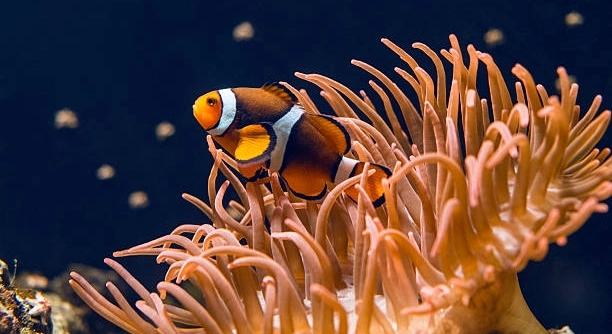
Clownfish are well known for their vibrant colors and interesting behaviors in coral reefs. Many people find themselves curious about how these fish interact with their environment. Understanding their memory and navigation helps us learn more about their daily lives.
Clownfish have the ability to remember specific areas within their habitat. Research shows that they can recognize and return to particular locations, such as their anemone homes, which is crucial for their survival and territorial behavior.
This article will explain how clownfish use memory to navigate their surroundings and maintain their place in the reef community.
How Clownfish Use Their Memory in Their Habitat
Clownfish rely heavily on their memory to stay safe and find food in their coral reef environment. They remember the locations of their sea anemones, which provide them shelter and protection from predators. These fish often live in close proximity to a single anemone and learn the boundaries around it. This spatial memory helps them avoid getting lost or entering dangerous areas. When they venture out to find food, clownfish use familiar landmarks to navigate back quickly. Their memory also plays a role in social behavior, as they recognize their group members and maintain territory boundaries. This ability is essential for their survival, ensuring they can return to safe spots and avoid conflict with other fish.
Their strong memory allows clownfish to live in complex reef systems with confidence and efficiency.
Remembering safe areas helps clownfish avoid predators and ensures they can return to their homes quickly.
The Role of Anemones in Clownfish Memory
Anemones act as both a home and a protective shield for clownfish. Clownfish develop a strong attachment to their host anemone and remember its exact location in the reef. This attachment is so important that clownfish rarely stray far from their anemone. The relationship is mutual, with the anemone offering protection while the clownfish helps keep it clean and free of parasites. Clownfish memory helps them stay within the safe zone of their anemone’s tentacles, which keeps predators at bay. This safety zone creates a small territory that clownfish defend aggressively. If displaced, clownfish use their memory of nearby landmarks to return quickly. This connection to the anemone emphasizes how vital spatial memory is for their survival and well-being in a busy reef ecosystem.
How Clownfish Navigate Their Surroundings
Clownfish use visual cues from their environment to navigate. They rely on familiar shapes, colors, and landmarks in the reef to find their way. These natural markers help them stay oriented and avoid dangerous areas.
Their memory of the reef’s layout allows clownfish to move confidently within their territory. By remembering specific rocks, coral formations, and even the position of the sun, they can quickly return to their home anemone after exploring nearby areas for food. This spatial awareness is essential because reefs are complex and full of hidden dangers. Without a good memory, clownfish would risk getting lost or caught by predators. Their ability to remember their surroundings reduces stress and increases survival chances.
In addition to visual cues, clownfish also use their sense of smell to confirm locations. This combination of memory tools creates a reliable navigation system in the busy reef environment, making clownfish efficient at moving through their habitat safely.
Memory and Social Behavior in Clownfish
Clownfish memory helps maintain social order within their groups. They recognize individual members and remember their roles, which prevents unnecessary fights. This recognition supports the group’s stability and harmony.
Social memory allows clownfish to identify dominant and subordinate fish in their community. They remember which fish hold higher rank and respect those boundaries during interactions. This recognition prevents conflicts over territory and mating rights, allowing the group to function smoothly. Clownfish live in small groups with a clear hierarchy, and their memory plays a vital role in maintaining this structure. When a dominant fish is removed, others quickly adjust roles, showing their memory helps in social flexibility and adaptation. This ability to remember and respond to social cues keeps clownfish communities balanced and reduces stress from constant competition.
Clownfish Learning Abilities
Clownfish can learn from their environment and experiences. This ability helps them adapt to changes and avoid dangers more effectively.
Through repetition and exploration, clownfish improve their memory of specific areas. This learning process strengthens their navigation and survival skills in the reef.
Impact of Environmental Changes on Memory
Environmental changes can affect how well clownfish remember locations. Factors like pollution or reef damage may disrupt their usual landmarks, making navigation harder.
Loss of clear landmarks can increase stress for clownfish. They may struggle to find their anemones or safe zones, impacting their behavior and overall survival.
Memory Tests in Research
Researchers study clownfish memory using maze-like setups. These experiments measure how well clownfish can recall specific routes or objects.
Understanding their memory helps improve conservation efforts and care in captivity by creating environments that support natural behaviors.
FAQ
Can clownfish really remember specific areas for long periods?
Yes, clownfish have been shown to remember locations such as their home anemone for extended periods. Their memory helps them return safely after searching for food or exploring nearby areas. This ability is vital because it keeps them within familiar, safe zones where they can avoid predators.
How do scientists test clownfish memory?
Researchers use controlled environments like maze tanks or reef simulations to observe clownfish behavior. They track whether clownfish can find their way back to certain spots or recognize landmarks. These tests reveal that clownfish learn and remember spatial details, proving their memory is reliable in both short- and long-term contexts.
Do clownfish use other senses to support their memory?
Besides vision, clownfish use smell and touch to help them recognize their territory. Their sense of smell can identify chemical cues from their anemone or other fish, reinforcing their spatial memory. These combined senses create a multi-layered system that guides their movements and social interactions.
Are all clownfish equally good at remembering areas?
Memory abilities can vary based on age, health, and environmental factors. Younger clownfish might still be learning the reef layout, while older ones tend to have stronger memory skills. Stressful conditions like pollution or reef damage may also affect their ability to remember and navigate effectively.
Does memory affect clownfish social behavior?
Absolutely. Clownfish recognize individual group members and remember social ranks. This memory prevents unnecessary aggression and maintains group harmony. When a dominant fish leaves, others use their memory of past roles to adjust the social structure quickly.
Can clownfish adapt if their environment changes?
Clownfish can learn new landmarks and adjust their memory when reefs change. However, rapid or severe environmental damage can overwhelm their ability to adapt, making it difficult to navigate or find safe zones. This highlights the importance of stable habitats for their survival.
Is clownfish memory unique among fish?
While many fish have memory, clownfish show impressive spatial and social memory due to their complex reef environments and close relationships with anemones. Their memory skills are more advanced than some simpler fish species but comparable to other reef inhabitants that rely on strong navigation abilities.
How does memory help clownfish survive predators?
By remembering safe areas and the boundaries of their territory, clownfish can quickly escape threats. Their knowledge of hiding spots within anemone tentacles provides shelter that predators avoid. This memory-based strategy is crucial to staying alive in a reef full of dangers.
Can clownfish remember individual humans or caretakers?
In captivity, clownfish can recognize familiar people, especially those who feed them regularly. This recognition shows their ability to remember non-natural cues, demonstrating flexibility in their memory and behavior outside the wild.
What happens if a clownfish loses its home anemone?
If displaced, clownfish rely heavily on their memory of surrounding landmarks to find a new anemone or return to their original one. However, losing their home causes stress and vulnerability. Their survival chances depend on how well they remember nearby safe spots and their ability to find a new shelter quickly.
Clownfish have shown an impressive ability to remember specific areas in their environment. This memory plays an important role in their survival, allowing them to return safely to their home anemones and avoid predators. They use a combination of visual landmarks, smells, and social cues to navigate the complex reef systems where they live. This helps them stay within safe zones and maintain social order within their groups. Their memory is not only practical but also essential for their daily activities, such as finding food and protecting their territory.
Research has revealed that clownfish are capable of both short-term and long-term memory. They can recognize familiar objects and locations over time, which supports their strong attachment to their home anemones. This memory helps them react quickly to changes and threats in their environment. At the same time, clownfish can learn new information and adapt if their surroundings shift. However, environmental damage, like pollution or coral reef loss, can make navigation more difficult for clownfish. If their usual landmarks disappear or become unclear, clownfish may become disoriented, increasing stress and risk of harm. This highlights the importance of healthy reef habitats for clownfish to thrive.
Understanding how clownfish remember specific areas helps us appreciate their behavior and needs better. It also guides efforts in conservation and aquarium care by emphasizing stable environments and familiar settings. Clownfish memory supports their survival by helping them find shelter, maintain social groups, and avoid danger. This ability to remember and navigate their surroundings is a key part of what makes clownfish unique and successful in their natural habitat.

Hello,
If you enjoy the content that we create, please consider saying a "Thank You!" by leaving a tip.
Every little bit helps us continue crafting quality advice that supports the health, happiness, and well-being of pets around the world, for pets of all shapes, sizes, and species.
We really appreciate the kindness and support that you show us!