
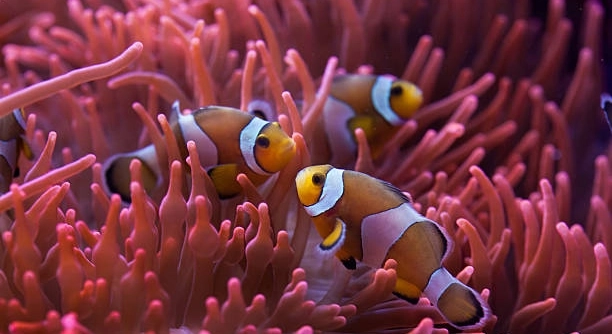
Have you ever spent time watching clownfish dart around coral reefs and wondered if there’s more going on behind those bright colors?
Clownfish show advanced problem-solving skills, social cooperation, and memory retention when compared to many other saltwater fish species. These cognitive traits suggest that clownfish may possess relatively higher intelligence within their aquatic environment.
From communication habits to complex behaviors, exploring clownfish intelligence reveals surprising traits that set them apart in the saltwater world.
What Makes Clownfish Stand Out
Clownfish are known for their strong memory and ability to adapt quickly to their environment. Unlike some saltwater species that follow basic routines, clownfish often show signs of learning from past experiences. They are able to find their way back to their sea anemone after exploring and are good at remembering food locations. Their social structure also stands out. Clownfish live in groups led by a dominant female, and their hierarchy helps reduce conflict and stress. This kind of organized behavior is not as common in other reef fish. Their communication also plays a role. Clownfish use popping and clicking sounds to signal their presence or warn others. These behaviors require a level of awareness that many fish do not show. Together, these traits suggest that clownfish have stronger cognitive abilities compared to many other species swimming around coral reefs. They seem to be more than just colorful reef fish.
Clownfish intelligence shows in how they interact, remember, and adapt. These are not random acts, but patterns with purpose.
While many saltwater fish rely on instinct alone, clownfish display behavior that suggests they can think ahead, assess risks, and act with intention.
How Intelligence is Measured in Fish
Intelligence in fish is often measured by how well they solve problems, use memory, or respond to social situations.
Researchers have studied clownfish using mazes, food challenges, and observation of social interactions. In these tests, clownfish regularly complete tasks faster and more accurately than many other fish species. Their ability to learn patterns and change their behavior based on outcomes points to strong cognitive skills. One example is their response to territorial boundaries. Clownfish tend to respect their roles within a group and rarely break established social rules. In contrast, other saltwater fish often act without such structure. Clownfish also demonstrate delayed gratification, a trait linked to higher brain function. When offered a small immediate reward or a larger one after a short wait, clownfish often choose the latter. This shows self-control, which is rare in fish. These repeated results across different tests indicate a consistent level of advanced mental function that sets clownfish apart from many of their saltwater neighbors.
Clownfish Social Behavior
Clownfish live in small groups with a clear social hierarchy. The dominant female leads, while males and juveniles have specific roles. This structure helps maintain order and reduces conflict.
Their social interactions involve cooperation and communication to protect their shared home—the sea anemone. Clownfish display complex behaviors like role switching, where if the dominant female dies, the next in line changes sex to take her place. This ability to adapt socially is rare among saltwater fish and shows advanced awareness of group dynamics. Their behavior ensures survival and stability within the group.
Social bonds also influence feeding and defense. Clownfish work together to guard the anemone from intruders. This teamwork highlights their ability to act for the group’s benefit, rather than individual gain, marking a higher level of social intelligence compared to many other fish species.
Memory and Navigation Skills
Clownfish have strong spatial memory, allowing them to navigate their environment efficiently. They return to their home anemone even after being displaced or exploring far areas.
Studies show clownfish remember landmarks and routes, which helps them avoid predators and find food. This memory is crucial for survival on busy coral reefs where dangers are constant. Unlike many fish that wander without clear direction, clownfish use memory to stay close to safe zones. Their navigation skills also support their social structure, as they recognize neighbors and respect territory boundaries. This combination of memory and environmental awareness is a sign of advanced cognitive function.
Good memory helps clownfish manage risks and opportunities in their habitat. It allows them to plan movements, avoid danger, and maintain social connections, which many other fish lack. This skill supports their ability to thrive in competitive reef ecosystems.
Problem-Solving Abilities
Clownfish demonstrate problem-solving skills when faced with challenges like finding food or avoiding predators. They learn from experience rather than relying solely on instinct.
This ability allows them to adapt quickly to changes in their environment, giving them an advantage over less flexible fish species.
Communication Methods
Clownfish communicate through sounds like pops and clicks, as well as body movements. These signals help them warn others, maintain social bonds, and coordinate group activities.
Communication plays a key role in their survival, especially within the complex reef environment.
Clownfish Learning Capacity
Clownfish show an impressive capacity to learn through observation and trial. They adjust behaviors based on outcomes, which indicates cognitive flexibility. This learning ability supports their problem-solving and social behaviors, making them more adaptable than many other saltwater fish.
Comparing Other Saltwater Fish
FAQ
Are clownfish really smarter than other saltwater fish?
Clownfish show behaviors that suggest they have better memory, social structure, and problem-solving skills compared to many other saltwater fish. Their ability to learn, adapt, and communicate within groups points to higher intelligence levels. However, intelligence varies widely across fish species, and some others may excel in different ways.
How do scientists measure fish intelligence?
Researchers use tests like mazes, memory challenges, and observation of social interactions. They look for problem-solving skills, memory retention, learning ability, and social behaviors. Clownfish often perform well in these tests, showing behaviors linked to advanced cognition.
Do clownfish have good memory?
Yes, clownfish can remember their home territory, food locations, and social group members. Their memory helps them navigate coral reefs, avoid predators, and maintain social order. This strong memory is not common in all saltwater fish.
Can clownfish learn from experience?
Clownfish adapt their behavior based on past outcomes. They solve problems better over time and can change strategies if needed. This learning ability is important for their survival in changing environments.
How do clownfish communicate?
They use sounds like clicks and pops along with body movements to send signals. Communication helps maintain social hierarchy, warn others of danger, and coordinate group actions. This is more complex than simple instinctual behavior.
Do clownfish cooperate socially?
Yes, clownfish live in groups with a strict social hierarchy. They work together to protect their shared home, the sea anemone. Cooperation includes defending territory and maintaining group stability through role changes.
Are clownfish’s social behaviors unique?
While some fish show social behaviors, clownfish display a rare ability to switch roles within their group, especially changing sex to maintain leadership. This flexibility is uncommon among other saltwater fish species.
How do clownfish compare to other reef fish in intelligence?
Clownfish generally show higher cognitive abilities in memory, problem-solving, and social interaction. Many reef fish rely mostly on instinct, whereas clownfish actively learn and adapt behaviors.
Do all clownfish species show similar intelligence?
Most clownfish species display comparable intelligence traits, but there can be small differences depending on their environment and social group size. Their shared behaviors suggest a common cognitive ability across the group.
Why does clownfish intelligence matter?
Understanding their intelligence helps improve care in aquariums and conservation efforts. It also provides insights into how fish brains develop and function in complex environments like coral reefs.
Can clownfish remember humans or aquarium caretakers?
Clownfish can recognize patterns and may become familiar with regular caretakers through repeated interaction. This recognition suggests a memory capacity that helps reduce stress in captivity.
How long can clownfish remember things?
Research indicates clownfish memory lasts long enough to navigate their environment effectively, remember social roles, and recognize threats or food sources. The exact duration varies but is significant compared to many fish.
Are clownfish’s problem-solving skills useful in the wild?
Yes, these skills help clownfish find food, avoid predators, and protect their territory. Being able to adapt to new situations is crucial for survival in the constantly changing reef environment.
Do clownfish use tools or objects to solve problems?
There is no evidence that clownfish use tools, but they do use their environment strategically, like hiding in anemones for protection. Their problem-solving mainly involves navigating and social strategies.
Can clownfish learn from other fish?
Clownfish mostly learn from interactions within their own group. There is limited evidence of learning from other species, but their social structure encourages learning through observation of group members.
What role does the sea anemone play in clownfish intelligence?
The anemone provides safety and a home base, allowing clownfish to develop complex social behaviors and territorial memory. The relationship encourages cooperation and protective strategies that require cognitive skills.
Is clownfish intelligence affected by captivity?
Captive clownfish may show different behavior due to less environmental challenge but can still demonstrate learning and memory. Enrichment in aquariums can help maintain their cognitive abilities.
How does clownfish intelligence impact their breeding?
Their social hierarchy and ability to change roles ensure successful breeding. The dominant female and male cooperate to care for eggs, and social intelligence supports this cooperation.
Are there risks to clownfish if their intelligence is underestimated?
Underestimating their intelligence can lead to poor aquarium care and stress. Recognizing their cognitive needs helps provide better environments that support natural behaviors.
What future research is needed on clownfish intelligence?
More studies on brain structure, learning capacity, and social dynamics in natural settings would improve understanding. Comparing clownfish intelligence with other fish can reveal how different species evolved.
Clownfish stand out among saltwater fish due to their unique combination of memory, social behavior, and problem-solving skills. These traits suggest a higher level of intelligence compared to many other fish in coral reefs. Their ability to remember locations, recognize social roles, and communicate within their groups shows that they are more than simple creatures following instinct. Instead, clownfish demonstrate behaviors that require awareness and learning, which are important for their survival in a complex environment. Understanding these traits helps us appreciate clownfish beyond their bright colors and popular presence in aquariums.
Their social structure is one of the most interesting aspects of clownfish intelligence. Living in groups with clear roles, they cooperate and adjust to changes, such as when a dominant female is replaced. This level of social organization requires not only memory but also flexibility and decision-making. Clownfish communicate through sounds and body language, which supports their teamwork and helps avoid conflicts. These behaviors are rare among many fish species, making clownfish an important subject for studying intelligence in aquatic animals. Their social intelligence also plays a key role in their ability to protect their territory and maintain group stability.
Recognizing clownfish intelligence has practical benefits. For aquarium owners and conservationists, understanding their cognitive needs means providing environments that support natural behaviors. Enriched habitats and social groupings can reduce stress and improve overall health. On a broader level, studying clownfish helps scientists learn how fish brains function in complex habitats like coral reefs. This knowledge can lead to better protection strategies for reef ecosystems, where many species face threats. Clownfish remind us that intelligence in animals takes many forms, and their behavior offers valuable insight into the diversity of life beneath the ocean’s surface.

Hello,
If you enjoy the content that we create, please consider saying a "Thank You!" by leaving a tip.
Every little bit helps us continue crafting quality advice that supports the health, happiness, and well-being of pets around the world, for pets of all shapes, sizes, and species.
We really appreciate the kindness and support that you show us!