
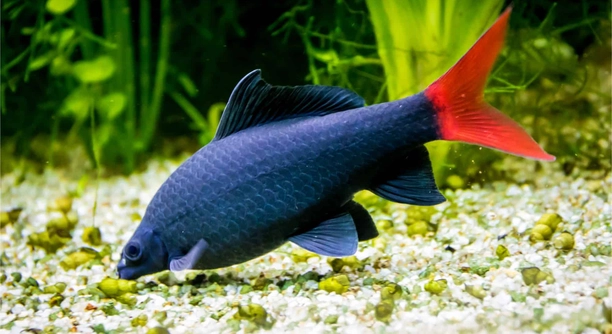
Is your rainbow shark spending most of its time hiding behind decorations or chasing other fish around the tank nonstop?
A happy rainbow shark shows regular swimming behavior, eats consistently, displays vibrant colors, and doesn’t act aggressively toward tank mates. It may also explore the tank calmly and rest without signs of stress or illness.
By learning the key behaviors and signs, you’ll be better equipped to create a peaceful and comfortable environment for your rainbow shark.
1. It Swims Calmly Around the Tank
A relaxed and healthy rainbow shark will swim steadily through its tank. You might see it glide across the glass, explore caves, or swim near the bottom. It won’t dart around quickly unless startled. Smooth, even swimming is a good sign that the fish is content and not feeling threatened or sick. A happy shark may have a favorite spot in the tank it returns to often, but it won’t stay hidden for long periods. It will be active during the day and settle when the lights are off. Watch for calm movements rather than frantic swimming or staying too still. These behaviors help you spot changes early and keep the tank balanced. If the rainbow shark swims with ease and doesn’t bump into decorations or glass, it’s a good sign your setup is working well. This means the water conditions, lighting, and environment are likely meeting its needs.
Calm and steady movement is often the clearest way to tell your rainbow shark is comfortable in its space.
Changes in swimming patterns can be an early sign of stress or illness. If your fish starts darting, rubbing against objects, or hiding more often, it’s worth checking the water parameters, tank mates, or layout.
2. It Eats Regularly and With Interest
A healthy appetite is a good sign your rainbow shark feels safe.
Rainbow sharks are bottom feeders and typically eat quickly when food is available. If your fish comes out during feeding time and eats without hesitation, this shows it’s not stressed or unwell. Look for active feeding behavior such as searching for pellets or nibbling algae. When your shark skips meals, hides during feeding, or becomes overly aggressive, it might not feel secure. This can be caused by poor water quality, incompatible tank mates, or a lack of hiding spots. Offering a mix of sinking pellets, veggies, and occasional protein can help support its health and maintain interest in food. Feeding at consistent times also helps your fish feel settled. If the shark finishes its meals and doesn’t appear bloated or sluggish afterward, that’s another sign of balanced conditions. Watch how it behaves around food to spot any early signs of discomfort. A shark that eats regularly is usually a happy one.
3. Its Colors Look Bright and Clear
Bright, rich colors are often a sign that your rainbow shark is doing well. When the fish feels secure and healthy, its red fins and dark body will appear bold and vibrant without dullness or fading.
Color can change depending on the environment, water quality, and stress levels. If your rainbow shark looks faded or pale, it may be feeling stressed or unwell. Poor lighting or a lack of hiding places can also cause this. Try checking your tank setup and water parameters if you notice color loss. On the other hand, a shark that feels confident will show off its colors more often. Watch closely during feeding and swimming — this is when color tends to show best. A bright and consistent appearance is one of the clearest signs your fish feels secure and comfortable in its tank setup.
It’s also important to look for sudden changes in color. If your rainbow shark’s body becomes unusually dark or loses contrast quickly, it could point to an issue like overcrowding or poor nutrition. Make sure it has a balanced diet and a peaceful tank environment. Providing good lighting and some shaded areas also helps maintain its natural coloring without causing stress or overexposure.
4. It Isn’t Too Aggressive Toward Tank Mates
Mild chasing from time to time is normal for rainbow sharks, especially during feeding. But if it constantly bullies or harms other fish, something isn’t right. A happy shark usually shows limited aggression when the tank meets its needs.
Rainbow sharks are territorial, especially as they get older. But in a well-sized tank with enough space and hiding spots, they often settle into their area and leave others alone. If your shark is chasing fish all day or blocking access to food, it may feel threatened or too confined. A 55-gallon tank or larger helps reduce this. Avoid keeping it with other bottom dwellers or similar-looking fish, which may trigger territorial behavior. A peaceful shark that only shows occasional dominance is usually a sign it’s feeling secure. Watching how it interacts with others gives you a good sense of whether it’s stressed or content in its space.
5. It Uses Hiding Spots Without Staying Hidden All Day
Rainbow sharks enjoy having caves or decorations to hide in, especially when they need rest. A balanced pattern of hiding and swimming is a good sign that the fish feels safe and relaxed in the tank.
If it hides all day and avoids interaction, that may signal discomfort. Too much hiding could mean the tank is too crowded, the lighting is too bright, or the fish feels threatened. Making sure there are plenty of hiding places and not too many tank mates helps reduce stress.
6. It Responds to Movement Outside the Tank
When a rainbow shark is happy and alert, it may react to your presence or motion outside the tank. It might swim to the front or follow your finger briefly. This kind of awareness shows it feels safe in its space and isn’t overly stressed by external movement.
7. Its Fins Stay Open and Smooth
Closed fins or fraying can be a sign of poor health or stress. A healthy rainbow shark usually keeps its fins open and smooth while swimming or resting. This shows that it feels calm and is not dealing with infection, fear, or poor water conditions.
How often should I feed my rainbow shark?
Rainbow sharks do well with one or two feedings per day. Offering small amounts of food each time prevents overfeeding and keeps the water clean. They prefer sinking pellets or wafers designed for bottom feeders, but occasional veggies or live foods help keep their diet balanced.
Can rainbow sharks live with other fish?
Yes, but tank size and tank mates matter a lot. Rainbow sharks are territorial and prefer a tank of at least 55 gallons. Avoid other bottom dwellers or similar-looking fish to reduce aggression. Peaceful, fast-swimming fish that occupy different tank areas work best as companions.
What water conditions do rainbow sharks prefer?
They thrive in slightly acidic to neutral water with a pH between 6.5 and 7.5. Temperature should be kept between 72 and 79°F (22-26°C). Regular water changes and good filtration are important to keep ammonia and nitrite levels at zero.
Why does my rainbow shark sometimes hide a lot?
Hiding is normal but constant hiding can mean stress. Causes include overcrowding, poor water quality, bright lighting, or aggressive tank mates. Make sure the tank has enough hiding spots, the water parameters are stable, and tank mates aren’t bullying your shark.
How can I tell if my rainbow shark is stressed?
Signs of stress include faded colors, frantic swimming, clamped fins, loss of appetite, and hiding excessively. Changes in behavior or appearance often happen before illness sets in, so regular observation helps catch problems early.
What do rainbow sharks eat in the wild?
In the wild, rainbow sharks feed mainly on algae, insect larvae, small crustaceans, and plant matter. Offering a diet with both plant-based and protein foods in captivity helps mimic their natural nutrition and keeps them healthy.
Is it normal for rainbow sharks to be aggressive?
Some level of territorial behavior is normal, especially in smaller tanks or with similar fish nearby. However, constant aggression is usually a sign the tank is too small or overcrowded. Providing space and hiding places reduces fighting.
How big do rainbow sharks get?
They typically grow to about 6 inches (15 cm) in length. Because of their size and activity level, they need a spacious tank with enough room to swim and establish territories.
Can rainbow sharks change color?
Yes, their colors may darken or fade depending on stress, water conditions, or health. Healthy sharks show bright reds and blacks, while stressed or ill fish may look dull or washed out.
What is the best tank setup for a rainbow shark?
A tank of at least 55 gallons with a sandy or smooth substrate is ideal. Include plenty of hiding places like caves and plants, but keep open swimming areas. Good filtration and regular water changes help maintain water quality. Moderate lighting that mimics natural conditions works best.
How often should I clean the tank?
Regular partial water changes of about 20-25% weekly help keep water clean. Avoid cleaning everything at once to preserve beneficial bacteria. Test water parameters often to catch any issues early.
Can rainbow sharks live alone?
Yes, they can live alone and may show less aggression when alone. However, they usually do well with peaceful community fish if the tank is large enough and set up properly.
What diseases commonly affect rainbow sharks?
Common problems include fin rot, ich, and stress-related infections. These usually occur due to poor water quality or stress. Maintaining clean water and proper care reduces risk.
How long do rainbow sharks live?
With good care, they can live 5 to 8 years in captivity. Healthy diet, stable water, and a good environment contribute to a longer life.
Taking care of a rainbow shark means paying close attention to how it behaves and looks in its tank. Watching for signs like calm swimming, bright colors, and regular eating habits helps you understand if your fish is happy. When the shark interacts well with other fish and uses hiding spots without staying hidden all day, these are good signals that it feels comfortable. Keeping water clean and providing enough space with places to hide makes a big difference in how well your rainbow shark adapts to its environment.
It’s important to remember that every rainbow shark is a little different. Some may be more shy, while others are more active or curious. By observing your fish over time, you learn what is normal for it and can spot any changes quickly. Changes in behavior or appearance often show up before health problems begin. This makes regular monitoring an important part of fish care. Making small adjustments to the tank setup, like adding plants or adjusting the lighting, can improve your shark’s comfort and well-being.
Overall, keeping your rainbow shark happy is about meeting its basic needs in a peaceful environment. Proper feeding, tank size, and clean water create a good foundation. Watching for signs like open fins, steady swimming, and bright colors lets you know your fish is doing well. If you notice problems, acting quickly by checking water quality or tank mates can help prevent bigger issues. With steady care and attention, your rainbow shark can live a healthy and content life in your aquarium.

Hello,
If you enjoy the content that we create, please consider saying a "Thank You!" by leaving a tip.
Every little bit helps us continue crafting quality advice that supports the health, happiness, and well-being of pets around the world, for pets of all shapes, sizes, and species.
We really appreciate the kindness and support that you show us!