
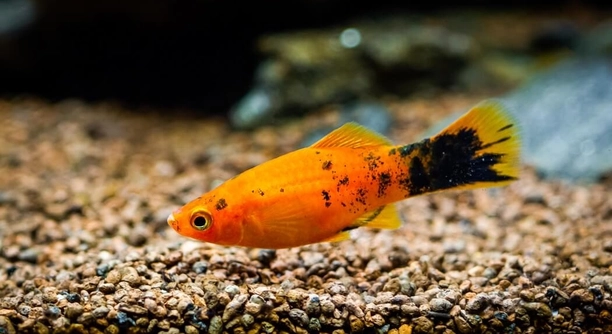
Have you ever watched your platy closely and wondered if it might be preparing to give birth without you realizing it?
The key signs that a platy is ready to give birth include a darkened gravid spot, a squared-off belly, hiding more than usual, reduced appetite, and increased aggression. These indicators show labor is approaching soon.
Learning these signs can help you create a calm and safe environment for your pregnant platy during this delicate stage.
Gravid Spot Becomes Dark and Noticeable
As your platy gets closer to giving birth, the gravid spot near her back fin becomes darker and easier to see. This dark patch is where the developing fry are located. In light-colored platies, it may turn almost black. In darker platies, it becomes more intense in color, often looking like a deep maroon. This change happens because the fry are growing and their eyes start showing through the mother’s skin. Keep an eye on this area daily—it can shift quickly. This sign is one of the earliest and most reliable indicators that your platy is nearing labor.
This spot may also grow larger in size, signaling the fry’s movement and positioning.
If the gravid spot darkens and remains that way for a few days, it’s likely the fry are almost ready. This visual change often appears alongside other physical and behavioral signs. Watch her behavior as the spot becomes darker.
Belly Changes Shape
A pregnant platy’s belly will go from round to more square-shaped as birth approaches. This happens because the fry are aligning for delivery.
When a platy’s belly becomes boxy-looking, it usually means she’s within a few days of giving birth. This shape results from the fry shifting inside her body. Their heads position near the birth canal, giving her belly flat edges. It’s easier to see this change when looking at her from above. If the change in shape is sudden, she may be just hours away from labor. You may also notice she becomes less active or more cautious in her movements during this time. This shift in posture is natural and helps her stay stable. Make sure the tank remains quiet and clean to lower stress. If she looks extremely bloated or sluggish, but the belly still hasn’t changed shape, monitor her carefully. Not all females display this square belly, but it’s common in well-fed, healthy platies.
Behavior Becomes More Reclusive
When labor is near, a pregnant platy often isolates herself. She may hide in plants, behind decorations, or stay in one corner. This behavior helps her avoid stress and feel secure before giving birth.
This shift can happen suddenly, even in normally social fish. If your platy starts hiding and staying still for long periods, she may be preparing for labor. She might also become more sensitive to movement and light. Provide dense plants or a breeding box to give her privacy. Avoid unnecessary tank changes or disturbances, as this can cause stress or delay labor. It’s also common for her to hover near the heater or filter area where it’s warmer. If you notice her staying in one spot without swimming away when approached, she’s likely seeking a calm space to deliver safely. Keep feeding light and quiet, and limit interactions during this time.
Allow her space during this stage. Constant hovering or tank disruptions can make her anxious. If possible, dim the lighting to reduce stress. A calm tank encourages a smoother birth. Watch from a distance.
Appetite Decreases or Stops
A pregnant platy may lose interest in food right before giving birth. If she’s usually eager to eat and suddenly stops, labor could be hours away.
This appetite drop is temporary and often occurs the same day as delivery. Her energy shifts to labor, and digestion slows. Avoid overfeeding during this time. If food goes uneaten, remove it to keep water clean. Some females may nibble lightly, but most avoid food completely. You might also see her spit out flakes after taking them in. This is normal. As long as she’s active and breathing steadily, there’s no need to worry. Once the fry are born, she may regain her appetite within a day or two. It’s best to wait until she starts swimming more actively again before feeding her. Keep tank mates calm to avoid aggression while she’s more vulnerable.
Breathing Becomes Heavy and Rapid
Shortly before giving birth, a platy may start breathing faster than usual. Her gills move rapidly even when she’s resting. This is her body working harder as labor nears. Heavy breathing is common and usually doesn’t last very long.
If your water parameters are stable and she’s still eating or moving around slightly, the breathing change is likely related to the birth process. There’s no need for concern unless she shows other signs of illness. Just keep the tank calm and well-oxygenated.
Sudden Burst of Aggression
Some female platies show aggression when they’re ready to give birth. They may chase tank mates or lash out when approached. This behavior helps create space and signals she wants to be left alone.
Fry Start to Appear
Once fry begin to emerge, labor is underway. You may see tiny fish hiding in plants or swimming near the tank bottom. Labor can last a few hours, and fry are often released one by one. Keep a close eye on the female and remove the fry if needed to protect them.
Slight Shivering or Twitching
Mild twitching or shivering is normal as contractions start. This sign often happens just before the first fry appears.
FAQ
How long does it take for a platy to give birth once signs appear?
Once the key signs like a dark gravid spot and square belly show, labor can begin within a few days to as little as a few hours. Active labor, when fry start to be born, usually lasts between one and six hours. However, the entire process from initial signs to delivery may take several days, depending on the individual fish. It’s important to keep the tank calm and avoid stress to help the process go smoothly.
Can platies give birth in a community tank without problems?
Platies can give birth in a community tank, but the fry are at high risk of being eaten by other fish. Adult tank mates often see fry as food, so separating the pregnant female or using a breeding box is ideal. If separation isn’t possible, provide plenty of dense plants and hiding spots to increase fry survival chances. Keep in mind that a stressed mother may delay labor or become aggressive.
What should I feed my platy before and after giving birth?
Before birth, feeding should be light and nutritious—small amounts of high-quality flakes, frozen brine shrimp, or daphnia work well. Avoid overfeeding as the female’s appetite often decreases. After birth, the mother may need time to recover before resuming regular feeding. Fry need finely crushed flakes or specially formulated fry food. Feeding the mother nutritious food after delivery helps her regain strength quickly.
How can I tell if my platy is having trouble during birth?
Signs of difficulty include prolonged labor lasting more than 12 hours, extreme lethargy, labored breathing, or visible distress. If the female is struggling to release fry or appears swollen without progress, it may indicate complications. In such cases, consulting an experienced aquarist or vet is recommended. Maintaining excellent water quality and minimizing stress can prevent many problems.
Will my platy give birth more than once with the same pregnancy?
No, platies give birth once per pregnancy, releasing all fry within one labor period. However, females can become pregnant again soon after giving birth if males are present. Platies are livebearers and can have multiple pregnancies throughout their lifespan. Each pregnancy is separate and completes independently.
Is it normal for the female to eat her own fry?
Yes, it’s common for female platies to eat some or all of their fry. This behavior is natural and often happens if the tank lacks hiding places or if the female is stressed. Providing dense plants or a breeding box can reduce this risk. Removing fry quickly after birth improves their chances of survival.
Can I help the female during birth?
Generally, it’s best to avoid interfering during labor unless there’s an emergency. Helping can increase stress and harm both mother and fry. Ensure the tank is clean, well-oxygenated, and quiet. If you notice serious problems, such as prolonged labor or health issues, seek professional advice. Otherwise, letting nature take its course is safest.
How often do platies give birth?
Platies can give birth approximately every 4 to 6 weeks once mature, depending on conditions like water temperature and diet. They are prolific breeders, so keeping males separate or controlling breeding is necessary if you want to manage population growth.
What water conditions support a healthy birth?
Stable water temperature between 72°F and 78°F, clean water with low ammonia and nitrate levels, and proper filtration are critical. Good oxygen levels reduce stress and support the mother’s health during birth. Regular water changes help maintain these conditions.
How many fry does a platy usually have?
A platy typically gives birth to 20 to 40 fry per litter. The number varies depending on the female’s size, age, and health. Larger, well-fed females tend to produce more fry. Each fry is fully formed and independent at birth, ready to swim and find food immediately.
Final Thoughts
Recognizing the signs that your platy is ready to give birth helps you prepare the right environment for a smooth delivery. Paying close attention to changes like the darkening of the gravid spot, the shape of the belly, and shifts in behavior ensures you can act calmly and thoughtfully. When these signs appear, it means the mother is nearing an important stage in her life cycle. Being aware of these details reduces stress for both you and the fish and promotes healthier outcomes for the fry. Taking small steps such as providing plenty of hiding places and avoiding disturbances makes a big difference during this sensitive time.
It is also important to remember that every platy is different. Not all females will show every sign clearly, and some may act differently than others. Factors like water conditions, tank mates, and the individual fish’s health all influence how the birth process unfolds. This means patience and careful observation are key. You might not always be able to predict exactly when labor will start, but being prepared and responsive helps you manage the situation with confidence. Ensuring good water quality and nutrition before, during, and after birth supports both the mother and her fry in staying healthy.
Finally, understanding your platy’s reproductive behavior encourages better care and long-term success in keeping these fish. Livebearing species like platies can breed frequently, so it’s wise to plan for how you will manage fry and future births. Whether you choose to separate the pregnant female or add plants for fry protection, your attention to detail will help reduce losses and stress. Watching your platy through this natural process can be rewarding and educational. Providing a stable, calm environment during birth creates the best chance for a successful and healthy outcome for your fish family.

Hello,
If you enjoy the content that we create, please consider saying a "Thank You!" by leaving a tip.
Every little bit helps us continue crafting quality advice that supports the health, happiness, and well-being of pets around the world, for pets of all shapes, sizes, and species.
We really appreciate the kindness and support that you show us!