
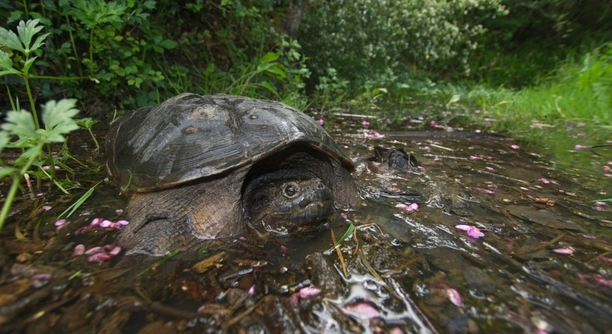
Common snapping turtles are known for their feisty behavior, especially in tanks with other tank mates. If you’re experiencing conflict between your snapping turtle and its companions, there are ways to help manage the aggression.
The best way to prevent snapping turtles from fighting their tank mates is to ensure that their environment is appropriately sized, with enough hiding spots and territories for each turtle. A proper diet and regular monitoring of water quality are also essential.
There are several tips you can use to reduce aggressive behavior, such as adjusting their tank setup and making sure all tank mates have enough space. These steps will help improve the overall harmony of the aquarium.
Tank Size and Space Management
When setting up a tank for a snapping turtle, size matters more than anything else. These turtles are large and need plenty of room to roam. A small tank can easily lead to stress, which often triggers aggression. It’s recommended to have a tank that’s at least 75 gallons for one adult snapping turtle. With more room, your turtle will have space to establish its own territory, reducing the chances of fights.
A larger tank with areas for the turtle to hide also helps. Snapping turtles are territorial and might feel threatened by other creatures in the tank. Providing hiding spots with rocks or submerged logs can give them a sense of safety.
If your snapping turtle is sharing the space with others, ensure they’re all placed in a tank where they can move freely. The more space they have, the better. A cramped tank can result in constant stress and aggression, which might escalate into fighting. When it comes to snapping turtles, bigger is always better.
Tank Mates and Compatibility
Choosing the right tank mates can make a huge difference in maintaining peace. Not every aquatic creature is compatible with snapping turtles.
Snapping turtles are naturally aggressive and territorial, which means they do best with tank mates that can handle their behavior. Fish like koi, goldfish, or larger species can be good options, while smaller or more timid creatures are likely to be bullied. It’s also important to avoid adding creatures that will compete for food, as this can increase aggression.
Pay close attention to their interactions. If you notice your snapping turtle picking on another animal, it might be time to separate them. Even though they can live with others, snapping turtles often prefer to be alone or only with species that won’t challenge their dominance.
Proper Diet and Feeding Schedule
A balanced diet is key to keeping your snapping turtle calm and healthy. Feeding them regularly with high-quality food can reduce irritability that leads to aggression. Avoid overfeeding, as it can cause stress and territorial behavior. Stick to a consistent feeding schedule.
Snapping turtles can be fed a variety of foods like fish, insects, and even some leafy greens. However, it’s crucial to offer the right portions to avoid overeating. Overfeeding can lead to aggression, not just from hunger but because they feel crowded in the tank. Consistent feeding routines will also help reduce territorial disputes over food.
Proper nutrition can also prevent health issues that might make your snapping turtle more prone to aggression. A healthy turtle is less likely to act out in its tank. Keep track of their diet and make sure they are getting everything they need. This will help maintain balance and prevent fighting.
Water Quality and Filtration
Water quality has a significant impact on your snapping turtle’s behavior. Poor water conditions can stress the turtle and increase aggressive tendencies. Regularly check the water’s temperature, pH levels, and cleanliness.
Snapping turtles require clean, well-filtered water to stay healthy and calm. Inadequate water quality can cause discomfort, leading to stress and fights. Using a good filtration system will not only keep the water clear but also help maintain the right chemical balance. Clean water will reduce the chances of your snapping turtle becoming agitated or territorial.
Perform regular water changes to keep the tank in top condition. Regular testing of the water is also essential, as imbalances can create problems for your turtle and its tank mates. If water quality is poor, your turtle may act out, which can lead to more frequent fights.
Tank Decorations and Hiding Spots
Adding decorations and hiding spots can make a big difference in reducing aggression. Snapping turtles feel safer when they have places to retreat to. This allows them to establish their own space within the tank.
Use rocks, logs, or aquatic plants to create areas where your turtle can hide. These hiding spots give them the comfort of being alone when they need it. Without these, snapping turtles may feel exposed, which can lead to defensive or aggressive behavior. Ensuring enough hiding places for each turtle will help maintain peace in the tank.
Tank Lighting and Heat
Proper lighting and heat are essential for your snapping turtle’s health and mood. Ensure the tank has both a basking light and a UVB light to provide necessary warmth and support their well-being.
A basking light helps maintain the ideal temperature, while the UVB light supports the turtle’s shell and overall health. Without these, your turtle can become stressed or lethargic, which may increase aggression. Make sure the light setup replicates natural sunlight patterns to ensure comfort. Inadequate lighting can lead to poor health, which makes snapping turtles more likely to act out in defense of their territory.
Regular Tank Maintenance
Regular maintenance helps prevent many issues that might lead to fighting. Clean the tank regularly, check the filter, and remove uneaten food to avoid water contamination.
Keep an eye on tank conditions, from water clarity to the temperature, ensuring everything remains stable. If anything is off, it can cause discomfort to the turtles and prompt territorial disputes. By keeping your tank in top shape, you’ll create a more peaceful environment where all creatures can thrive.
FAQ
Why do snapping turtles fight with other tank mates?
Snapping turtles are naturally territorial creatures. In the wild, they defend their space, and in a tank, they often react the same way. They might fight if they feel their territory is being invaded or if there’s not enough space. Additionally, if food is scarce or competition is high, it can also cause aggression. Ensuring there’s enough room and food for everyone can help reduce fighting.
Can snapping turtles live peacefully with other turtles?
Snapping turtles can live with other turtles, but it depends on their species and tank size. If there’s not enough room for all of them to have their own space, fights may break out. It’s also important to consider the size difference between turtles, as a smaller one might be intimidated by a larger snapping turtle. If you plan to keep multiple turtles, make sure to have a large tank and plenty of hiding spots.
What types of food should I provide to my snapping turtle?
A balanced diet is crucial. Snapping turtles are omnivores and should be fed a mix of protein, such as fish, insects, and worms, along with some leafy greens like kale or dandelion. You can also offer commercial turtle food for extra nutrients. Providing a varied diet will help prevent aggression linked to hunger or competition over food.
How can I tell if my snapping turtle is stressed?
Common signs of stress in snapping turtles include erratic swimming, aggression towards tank mates, loss of appetite, and hiding more than usual. Stress can be caused by poor water quality, insufficient space, or improper tank conditions. If you notice these behaviors, it’s important to check the tank setup and make adjustments as needed to reduce stress.
Can snapping turtles live with fish?
Snapping turtles can live with fish, but it depends on the species of fish. Larger fish, like koi or goldfish, may be more compatible, while smaller fish are at risk of being eaten. Even with larger fish, it’s essential to ensure the tank is spacious and that food is plentiful to avoid competition. You’ll also want to make sure the fish can handle the snapping turtle’s aggressive behavior.
How often should I feed my snapping turtle?
Adult snapping turtles should typically be fed every other day. Baby snapping turtles require more frequent feeding, around once a day. Overfeeding can lead to obesity and territorial aggression. It’s essential to stick to a feeding schedule to maintain your turtle’s health and prevent food-related fights with other tank mates.
How do I know if my snapping turtle is healthy?
A healthy snapping turtle will have clear eyes, a hard and smooth shell, and a strong appetite. They should be active and alert, not overly sluggish or hiding all the time. Any signs of lethargy, shell abnormalities, or loss of appetite should be addressed quickly by a veterinarian to avoid potential health issues that could lead to aggression or stress.
Can I use plants in the tank with a snapping turtle?
Yes, you can use plants, but you’ll need to choose the right ones. Snapping turtles are known to eat aquatic plants, so try to pick durable species that can withstand some nibbling. Plants also provide hiding spots and contribute to water quality. Make sure to choose hardy varieties that can handle the turtle’s active lifestyle and occasional grazing.
How can I reduce aggression in my snapping turtle?
To reduce aggression, ensure your turtle has plenty of space to establish its own territory. Add hiding spots and decorations to create a more comfortable environment. Keep the tank clean with proper filtration and regular water changes. A proper diet and feeding routine will also help prevent fights over food. Reducing stress in your turtle’s environment will lead to less aggression overall.
What is the ideal tank size for a snapping turtle?
For one adult snapping turtle, the tank should be at least 75 gallons. If you plan on keeping more than one turtle, the tank size should increase to accommodate the extra space needed for each one. A larger tank ensures that there’s enough room for each turtle to have its own territory, reducing the likelihood of fights. It also helps maintain water quality and provides more hiding spots.
Final Thoughts
Managing a snapping turtle’s aggression in a tank is about creating the right environment. These turtles can be territorial and aggressive if they feel cramped or stressed. Ensuring your tank is spacious enough and has plenty of hiding spots can significantly reduce fighting. When setting up your tank, remember that space, proper tank mates, and hiding areas are crucial for minimizing aggression. A peaceful environment benefits not just the snapping turtle, but also its tank mates, making it easier for everyone to coexist.
Another key factor is water quality. Snapping turtles are sensitive to their environment, and poor water conditions can lead to stress and health issues, which can contribute to aggression. Regular water changes, using a good filtration system, and monitoring the water temperature and pH levels are essential steps in keeping your turtle happy. Clean water not only keeps your turtle healthy but also reduces territorial behavior and discomfort that could lead to fighting.
Finally, a proper diet and feeding schedule will help maintain your snapping turtle’s health and reduce stress-related aggression. Overfeeding can lead to territorial disputes, while underfeeding can cause stress. By offering a balanced diet, you support their well-being and reduce the chance of them fighting over food. Paying attention to these factors will ensure your snapping turtle is content, healthy, and less likely to engage in aggressive behavior. With the right setup, you can provide a peaceful environment for your turtle to thrive.

Hello,
If you enjoy the content that we create, please consider saying a "Thank You!" by leaving a tip.
Every little bit helps us continue crafting quality advice that supports the health, happiness, and well-being of pets around the world, for pets of all shapes, sizes, and species.
We really appreciate the kindness and support that you show us!