
Are your angelfish chasing tank mates or claiming too much space in the aquarium? Territorial behavior can become a serious issue over time. Learning how to manage their environment helps create a calm, balanced tank.
Angelfish become overly territorial due to stress, overcrowding, and inadequate tank setups. Reducing competition, providing proper space, and ensuring ideal tank conditions are effective ways to manage aggression and promote a more peaceful aquarium environment.
Creating a stable environment can reduce tension and improve overall harmony, allowing your angelfish to thrive alongside other peaceful species.
Provide a Spacious Tank
Angelfish can become aggressive when they feel cramped. A small tank limits their ability to establish territory and triggers stress-related behaviors. A minimum of 20 gallons is recommended for a pair, but larger setups are better for groups. Tall tanks suit their body shape and swimming habits. Space gives each fish room to move without constant contact with others, reducing the need to defend a spot. Adding vertical decorations like driftwood or tall plants helps break lines of sight and allows weaker fish to avoid dominant ones. Providing swimming space and visual breaks creates a calmer tank. Angelfish are more relaxed when they don’t feel under pressure to protect territory or constantly assert dominance. Overcrowding often causes even normally peaceful fish to lash out. Preventing this with a spacious, well-structured tank setup makes a noticeable difference in behavior and harmony.
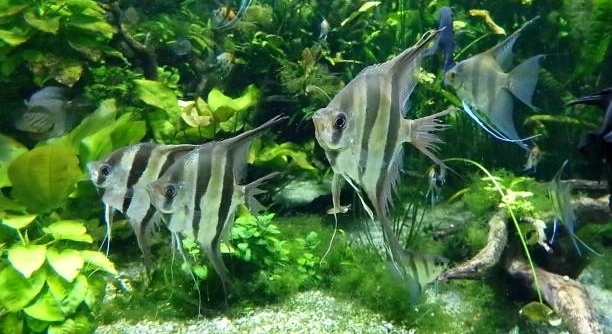
A bigger tank with tall plants and hiding spots gives angelfish space to feel secure without becoming defensive.
When planning your tank, consider not just the number of fish, but their size and behavior. Angelfish need vertical room and clear zones to claim as their own. This helps balance their natural instincts while maintaining peace in a community tank.
Limit the Number of Tank Mates
Keeping too many fish in one tank increases tension. Overpopulation often leads to aggression and stress, especially with species like angelfish.
Aim to keep tank mate numbers low and select peaceful fish that won’t challenge angelfish for space. Dither fish like small tetras can work well when grouped and monitored. Avoid housing multiple dominant or territorial fish together. Crowding causes angelfish to feel threatened, which brings out their defensive side. Proper stocking gives each fish enough space to swim, hide, and feel secure. Angelfish are more relaxed when they aren’t constantly forced to guard their territory or respond to perceived threats. Even if aggression isn’t visible right away, it can build up over time, especially during feeding or mating seasons. Keeping tank mates to a minimum makes it easier to manage behavior and spot issues early. It’s also easier to maintain water quality, which indirectly supports better behavior across all species.
Rearrange Decor and Plants
Changing the layout of your tank helps reduce territorial behavior. When angelfish become too attached to one area, moving plants and decorations can reset boundaries and reduce aggression.
Use tall plants, driftwood, and rocks to break up lines of sight and create distinct areas. This helps angelfish feel less threatened, especially when new fish are added. Rearranging the tank occasionally discourages them from becoming overly protective of one zone. Try not to move everything all at once, but shift a few items at a time. Watch how the fish respond to the changes. A calm reaction means the new layout works. If aggression continues, tweak the setup again. Keeping the tank dynamic without overwhelming the fish is key. Make sure each angelfish has access to hiding spots and open space, which helps balance interaction and rest.
Adjusting the tank layout keeps the environment interesting and reduces the chance of one fish dominating a specific area. This works especially well when combined with stable lighting and consistent feeding routines. Changing the structure disrupts rigid patterns of behavior and promotes peaceful coexistence, especially in community tanks. Even small adjustments can make a big difference over time.
Feed on a Regular Schedule
Irregular feeding times can trigger aggression in angelfish. When food is unpredictable, they may start guarding spots or bullying others to secure a meal. A reliable schedule helps them feel secure and reduces competition during feeding.
Feed angelfish at the same times every day. This builds a predictable rhythm that lowers anxiety and decreases the need for dominance. Offer small portions two to three times daily rather than one large meal. Spread the food across the tank to prevent stronger fish from monopolizing it. Include floating and sinking options so all fish have access. Monitor for leftover food, as excess can affect water quality. Stable nutrition supports calmer behavior and better health. Consistency helps angelfish stay relaxed and less likely to lash out. Stick to high-quality pellets and supplement with occasional frozen or live food to maintain interest and balance in their diet.
Introduce New Fish Carefully
Adding new fish too quickly can trigger territorial responses. Quarantine new arrivals before introducing them to the main tank. Once ready, release them during feeding to distract the angelfish and reduce attention on the newcomers.
Use a tank divider if needed to let the fish see each other without contact. This helps them adjust gradually and prevents sudden fights. Avoid adding too many fish at once, as it can overwhelm the tank’s balance and raise stress levels.
Keep Water Conditions Stable
Stable water quality plays a big role in angelfish behavior. Sudden shifts in temperature, pH, or ammonia levels can make them more aggressive or stressed. Perform weekly water changes and monitor parameters with a reliable test kit. Keep temperatures between 76°F and 82°F, and maintain a pH around 6.8 to 7.5. Avoid overfeeding, as decaying food impacts ammonia and nitrate levels. Use a good filter and clean it regularly without disrupting beneficial bacteria. When angelfish feel comfortable in their environment, they show fewer signs of dominance. A clean, balanced tank helps prevent irritability and supports overall health and harmony among tank mates.
Reduce Bright Lighting
Harsh lighting can increase stress. Use dimmer lights or add floating plants to soften the light entering the tank. A calm, shaded setup helps angelfish feel secure and reduces their urge to defend their space.
FAQ
How can I tell if my angelfish is being overly territorial?
Angelfish that display territorial behavior will often chase or nip at other fish, especially during feeding or in specific areas of the tank. They may also become more aggressive toward new fish, guarding certain spots or plants. If you notice these signs, it’s a good indication that they are trying to claim territory.
What is the best tank size for angelfish to prevent territorial behavior?
A minimum of 20 gallons is recommended for a pair of angelfish, but larger tanks are better if you have multiple fish. The bigger the tank, the more space your angelfish have to establish their boundaries. Larger tanks also help prevent overcrowding, which can lead to territorial disputes.
Can other fish live with angelfish without causing territorial issues?
Yes, angelfish can coexist with peaceful fish like tetras, corydoras, and gouramis. However, aggressive or similarly territorial species should be avoided. Choosing tank mates that don’t compete for the same space or food reduces the chances of territorial behavior.
How often should I rearrange the tank to reduce territorial aggression?
Rearranging the tank every few months can help reset territorial boundaries. Angelfish tend to become attached to specific spots, so changing the tank layout will disrupt their behavior. Don’t move everything at once, but shift items slowly to avoid stressing the fish too much.
Can angelfish become territorial over food?
Yes, food can trigger territorial behavior. When feeding, angelfish may try to dominate the area and prevent other fish from getting their share. To reduce this, feed smaller portions multiple times a day instead of one large meal. Also, scatter the food around the tank to give all fish access.
Are angelfish more territorial during breeding?
Yes, breeding angelfish are often more territorial. They will guard their eggs and space around them aggressively, sometimes chasing away other fish. To avoid conflicts, it’s best to separate breeding pairs from other fish or provide more hiding places for the other tank inhabitants.
Do angelfish need to be kept in pairs?
Angelfish don’t necessarily need to be kept in pairs, but they do better with a companion, especially in a larger tank. Keeping a single angelfish may result in more stress and aggression. If you keep more than one, ensure the tank is large enough to reduce territorial issues.
Can plants help with territorial behavior?
Yes, adding plants to the tank can reduce territorial aggression. Tall plants and driftwood give angelfish places to hide and break up the sightlines, allowing them to claim space without feeling threatened. Live plants also improve water quality, creating a more comfortable environment for all fish.
What type of water conditions do angelfish prefer?
Angelfish thrive in water temperatures between 76°F and 82°F and a pH of 6.8 to 7.5. Maintaining stable water conditions helps reduce stress and territorial behavior. Make sure the water is clean, with regular water changes and appropriate filtration. Poor water quality can lead to aggression and health issues.
How can I prevent angelfish from bullying other fish?
Prevent bullying by ensuring there’s enough space in the tank, and the fish are not overcrowded. Add plenty of plants and hiding spots, so weaker fish can escape if needed. Also, avoid introducing species that may challenge the angelfish’s territory. Regular feeding and consistent water conditions also help prevent aggression.
What should I do if my angelfish continues to act aggressively?
If aggression persists, consider adding more hiding spots, adjusting the tank layout, or separating aggressive fish into different tanks. You can also try increasing the number of tank mates to dilute territorial behavior, but only add peaceful species that won’t provoke the angelfish.
Do angelfish fight with each other?
Yes, angelfish can fight with each other, especially if they are not kept in a large enough tank or if there are multiple males. To reduce fighting, make sure there is enough space and consider keeping only one male or a breeding pair in the tank.
How long does it take for angelfish to calm down after territorial behavior?
It can take a few days to a few weeks for angelfish to calm down after territorial issues, depending on the cause. Ensuring a stable environment with proper tank size, water quality, and plenty of hiding spots will help them settle faster.
Can I use a divider to manage territorial behavior?
Yes, a tank divider can be a useful tool to manage territorial behavior, especially when introducing new fish or separating aggressive individuals. It allows fish to see each other without contact, reducing direct confrontations. However, ensure that the divider doesn’t overcrowd the tank or block essential filtration.
Final Thoughts
Preventing territorial behavior in angelfish requires a combination of strategies to ensure they remain calm and balanced. A key factor is providing ample space, as overcrowding can lead to stress and aggressive tendencies. When the tank is large enough, angelfish have more room to establish boundaries without feeling threatened. Additionally, maintaining a stable environment with proper water quality and temperature is essential for reducing stress. Angelfish are sensitive to water changes, and sudden fluctuations can trigger defensive behavior. Regular monitoring of water conditions and temperature helps keep aggression levels low.
Tank decorations also play a significant role in reducing territoriality. By rearranging plants and structures occasionally, you can break the territorial patterns that angelfish develop. Creating hiding spots and dividing the space allows fish to feel secure and limits the chances of conflict. The layout should be adjusted in a way that doesn’t disrupt the overall environment, keeping the fish comfortable and minimizing stress. This method is particularly useful when introducing new fish, as it helps reduce direct competition for space and food.
Lastly, keeping a consistent feeding schedule and providing adequate nutrition also contribute to peaceful tank dynamics. When angelfish are well-fed at regular times, they are less likely to become aggressive. Overfeeding or irregular feeding times can increase competition and territorial disputes. By focusing on these strategies—adequate space, proper water conditions, thoughtful tank layout, and a reliable feeding routine—you can create an environment where angelfish feel secure and less likely to exhibit territorial behavior.

Hello,
If you enjoy the content that we create, please consider saying a "Thank You!" by leaving a tip.
Every little bit helps us continue crafting quality advice that supports the health, happiness, and well-being of pets around the world, for pets of all shapes, sizes, and species.
We really appreciate the kindness and support that you show us!