
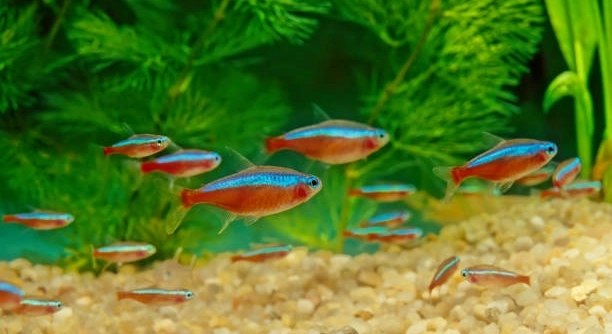
Feeding neon tetras the right amount is key to their health and happiness in your aquarium. This small, colorful fish can be tricky to care for if their diet isn’t properly managed.
Ensuring your neon tetras eat the right amount requires monitoring their feeding schedule and portion size. Overfeeding or underfeeding can lead to health issues. Observe their behavior, check water quality, and adjust their food intake as needed.
Balancing their diet helps maintain their health and supports their vibrant colors.
Understanding the Neon Tetra’s Nutritional Needs
Neon tetras are small fish with big nutritional needs. A well-balanced diet is essential to keep them active and vibrant. These fish thrive on a variety of foods, including flake, pellet, and live food options. Their small mouths require finely crushed food to make eating easier. Overfeeding can lead to poor water quality, while underfeeding can cause malnutrition. It’s important to feed them once or twice a day in small portions, ensuring that they consume everything within a few minutes. Proper feeding schedules help maintain the health of your fish and keep your tank environment clean.
Feed them a variety of foods that cater to their nutritional needs. This promotes a balanced diet and reduces the risk of deficiencies.
A healthy neon tetra requires a mixture of protein and plant-based foods. Protein-rich foods like brine shrimp or daphnia should be included in their diet. Plant-based foods, such as algae wafers or finely crushed vegetables, are just as important. Variety not only prevents boredom but also ensures they receive all the nutrients they need. Make sure to offer these foods in small, manageable portions, as neon tetras are not known for overeating. This ensures they get enough to stay healthy without causing tank imbalances.
Observing Feeding Behavior
Watching your neon tetra during feeding time is one of the best ways to assess their hunger.
If your fish are eagerly swimming to the surface and showing interest in the food, they’re likely healthy and ready to eat. If they ignore food or seem lethargic, it might indicate they’re overfed or not feeling well. Healthy neon tetras are active and curious. Keeping track of their feeding behavior helps you make adjustments. Monitoring their behavior in the aquarium allows for early detection of potential problems with their diet or overall health. If they seem disinterested in food, try varying the types of food you offer to see if their preferences change.
Proper Portion Control
Feeding your neon tetras the right amount is crucial. Overfeeding can quickly lead to water pollution and health issues. Use a small pinch of food for each meal, keeping it proportional to their size. Monitor how much they eat in a few minutes, adjusting portions accordingly.
Start by feeding them small amounts and observe if they finish within a few minutes. If some food remains, reduce the portion size next time. Remember that neon tetras are small and don’t need large meals. Over time, you’ll learn how much food they need without excess waste. Ensuring their portion control is a simple way to maintain tank health.
It’s easy to fall into the trap of overfeeding, especially when their tiny mouths make it seem like they need more. But keeping a strict portion control system will help maintain water quality. Always use a specific amount and be consistent with feeding times. This will prevent potential issues, making sure your tetras stay healthy.
Variety in Diet
A varied diet is key to providing your neon tetras with all the necessary nutrients. Mix different food types like flakes, pellets, and live foods. This ensures they get both plant and protein-based nutrients. It keeps them engaged and healthy.
Neon tetras thrive on diversity in their diet, and offering variety is easy. Rotate between flake food, freeze-dried options, and small live food like brine shrimp or daphnia. Providing this variety helps prevent dietary deficiencies. It also promotes better growth, brighter colors, and an active lifestyle. If you feed them the same food repeatedly, they may not get all the essential nutrients. Add different types of food each week, ensuring their diet is well-rounded.
A consistent but varied feeding routine keeps your fish healthy. Don’t forget to adjust portions based on the type of food. Some live foods are more filling than flakes, so keep an eye on your fish’s body condition. Regularly changing their food will encourage optimal growth and energy levels while supporting their immune system.
Feeding Frequency
Feeding neon tetras once or twice a day is sufficient. Their small stomachs can’t handle large portions, so spreading meals out helps maintain their health. Keep a consistent feeding schedule to avoid overfeeding or underfeeding.
Ensure the intervals between feedings are not too long. Neon tetras can be given a small meal twice daily or a slightly larger portion once. Consistency is key to their overall well-being. Adjust the feeding schedule if you notice any signs of overfeeding or hunger, but always keep portions small.
Neon tetras are not picky eaters, but they do need regular meals. Overfeeding can lead to uneaten food, which can lead to poor water conditions. Therefore, it’s important to strike a balance in frequency and portions. Stick to a feeding routine, and your fish will thrive.
Water Quality Impact
The health of your neon tetras is closely linked to water quality. Poor water conditions can make them sluggish or less interested in eating. Regularly test the water for ammonia, nitrites, and nitrates to ensure they are at safe levels.
Maintaining a clean tank is vital for healthy neon tetras. Dirty water can stress them out, causing a loss of appetite. Perform routine water changes and keep the filtration system running smoothly. Ensure that the temperature stays stable and that the pH level is within their preferred range. A healthy environment encourages eating and active behavior in your fish. Always monitor water parameters and act quickly if levels go out of balance.
Monitoring Health
If your neon tetras stop eating, it could be a sign of illness or stress. Observing their behavior closely can help you identify early signs of health problems.
Make sure your fish are swimming normally and eating without hesitation. If they appear sluggish, bloated, or stop eating, investigate possible water quality issues, parasites, or tank mates. Addressing health concerns quickly will prevent them from worsening.
FAQ
How do I know if my neon tetra is eating enough?
If your neon tetra is eating enough, it will actively swim to the food during feeding time and finish its portion within a few minutes. A healthy neon tetra will show interest in the food, and you should notice it eating consistently. If food is left over after feeding, it’s an indication that you may be overfeeding or giving too much at once. Additionally, monitor their behavior. Lethargy or loss of appetite could be signs of stress, water quality issues, or illness.
Can neon tetras eat flake food every day?
Yes, neon tetras can eat flake food every day, but it should be supplemented with variety. While flakes provide essential nutrients, a diet limited to just one type of food can lead to deficiencies. To ensure they get the necessary balance, add live or frozen foods like brine shrimp or daphnia. This variety supports their overall health and keeps their diet interesting. Always offer flakes in small portions, and ensure the fish eat everything within a few minutes to avoid water contamination.
How much should I feed my neon tetra each day?
The portion size should be small, about what your neon tetra can consume in two to three minutes. Overfeeding can quickly degrade water quality and lead to excess waste. Start by offering a pinch of food per feeding, observing how much they consume, and adjust accordingly. It’s better to feed them smaller portions more often than a large meal. Pay attention to their body condition—if they seem too thin or too bloated, adjust the amount of food they’re receiving.
Can I feed neon tetras live food?
Yes, neon tetras can eat live food, and they often enjoy it. Live food such as brine shrimp, daphnia, or worms provides extra protein and nutrients that promote vibrant colors and healthy growth. However, be cautious when feeding live food. Ensure the food is from a reliable source to avoid introducing parasites or diseases into your aquarium. Live food should be given in moderation, as part of a varied diet. It helps mimic their natural diet and keeps them active and engaged.
What if my neon tetras aren’t eating?
If your neon tetras aren’t eating, the cause could be a variety of factors. Start by checking the water quality. Poor water conditions, such as high levels of ammonia, nitrites, or an improper temperature, can cause stress and a loss of appetite. Also, check for signs of illness, such as discoloration, unusual swimming patterns, or lethargy. It could be stress from tank mates, insufficient hiding spots, or changes in the environment. If the problem persists, consider consulting an aquarium professional or veterinarian who specializes in fish.
Is it okay to overfeed neon tetras?
Overfeeding neon tetras is not recommended. It can lead to poor water quality, obesity, and other health issues. Neon tetras have small stomachs, so they only need small, frequent meals. It’s important to give them just enough food that they can eat in a couple of minutes. Leftover food will decompose and affect the water parameters. Regularly check the tank for uneaten food, and remove it promptly to prevent water contamination.
Can I feed neon tetras vegetables?
Yes, neon tetras can eat small amounts of vegetables. Vegetables such as spinach, zucchini, and peas are great sources of fiber. However, these should be finely chopped or blanched to make them easier for your tetras to eat. Vegetables should only be offered occasionally, as part of a balanced diet. Too much plant matter could affect their digestive system, so make sure to include them in moderation. Be cautious not to overfeed vegetables, as they may not be able to eat it all in one sitting.
Do neon tetras need to be fed at the same time every day?
Feeding neon tetras at the same time each day is not mandatory, but it can help maintain a regular feeding routine. Fish thrive on consistency, and feeding them at the same time each day can help keep their feeding habits predictable. This routine also helps avoid overfeeding, as you will be more likely to monitor how much food is consumed each time. If you feed them at different times, just ensure that you stick to appropriate portion sizes to maintain water quality.
What type of food is best for neon tetras?
Neon tetras require a balanced diet that includes both protein and plant-based foods. High-quality flakes or pellets designed specifically for small tropical fish are a great base. Additionally, live or frozen foods like brine shrimp, bloodworms, or daphnia are excellent protein sources. A variety of food helps ensure your fish get all the necessary nutrients. Adding plant-based options like algae wafers or finely chopped vegetables is also beneficial. Avoid feeding them food that is too large, as neon tetras have small mouths.
Should I feed my neon tetras before or after changing the water?
It is better to feed your neon tetras after changing the water. When you perform a water change, you may disturb the tank, which can cause stress to the fish. Giving them food afterward allows them time to settle and get comfortable in the cleaned environment. Additionally, feeding after water changes will prevent uneaten food from adding excess waste to the tank, keeping the water quality intact. Always ensure the water temperature is stable before feeding to avoid shocking the fish.
How often should I clean my tank if I feed neon tetras daily?
The frequency of tank cleaning depends on several factors, including the amount of food you provide and the number of fish in the tank. If you feed neon tetras daily, aim to perform partial water changes every 1-2 weeks. Vacuum the substrate to remove uneaten food and waste. Regular cleaning ensures that water quality remains stable and your fish stay healthy. Be sure not to over-clean the tank, as beneficial bacteria play an important role in maintaining a balanced ecosystem. Cleaning too frequently can disrupt the tank’s stability.
Can neon tetras eat freeze-dried food?
Yes, neon tetras can eat freeze-dried food, but it should not be their primary diet. Freeze-dried options like brine shrimp, bloodworms, or daphnia can provide added variety and nutrition. However, freeze-dried food can lose some nutrients during the drying process, so it should be offered in moderation and as part of a balanced diet. Always soak freeze-dried food before feeding it to avoid it expanding in the fish’s stomach, which could cause digestive issues.
Final Thoughts
Maintaining a proper feeding routine for your neon tetras is essential for their overall health and well-being. These small, colorful fish thrive on a balanced diet, which includes a mix of high-quality flakes, occasional live or frozen food, and even small amounts of vegetables. Consistency in feeding times and portion sizes helps ensure that they are getting the right amount of nutrition without overfeeding, which could lead to poor water quality and other health issues. It’s important to monitor their eating habits closely and adjust portions based on their activity levels and appetite.
Water quality plays a significant role in the health of your neon tetras. Poor water conditions can lead to stress, loss of appetite, and even illness. Regular water changes, along with maintaining appropriate levels of ammonia, nitrites, and nitrates, are necessary to create a safe environment for your fish. A clean tank supports healthy eating habits and allows your tetras to swim and explore freely. As you continue caring for your neon tetras, remember that a stable and clean environment is just as important as their diet in ensuring their long-term health.
Lastly, always keep an eye on their behavior. If your neon tetras stop eating or show signs of distress, it could indicate a problem with water quality, tank mates, or illness. Being proactive in identifying and addressing issues is key to keeping your fish happy and healthy. With the right feeding practices, water care, and attention to their behavior, your neon tetras will thrive and add color and life to your aquarium for years to come.

Hello,
If you enjoy the content that we create, please consider saying a "Thank You!" by leaving a tip.
Every little bit helps us continue crafting quality advice that supports the health, happiness, and well-being of pets around the world, for pets of all shapes, sizes, and species.
We really appreciate the kindness and support that you show us!