
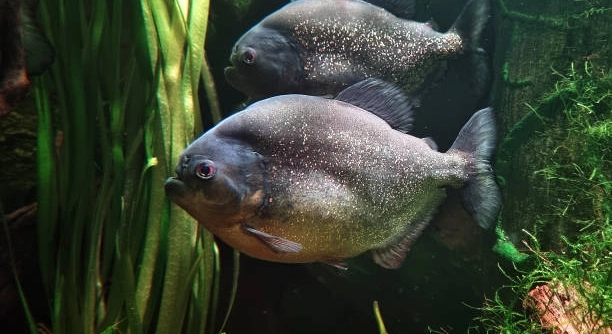
Piranhas are well-known fish that live in rivers, especially in South America. They have sharp teeth and a strong bite, but they also rely on their senses to survive. At night, their senses help them find food and avoid danger.
Piranhas use their senses such as smell, sight, hearing, touch, and special lateral lines to detect movement, vibrations, and chemical signals in the water at night. These senses allow them to hunt and communicate effectively in low light conditions.
Understanding how piranhas sense their environment at night reveals important details about their behavior and survival. This knowledge helps explain why they are such efficient predators in their habitat.
How Piranhas Use Their Sense of Smell at Night
Piranhas have an excellent sense of smell, which is very important for their nighttime activities. In dark water, where vision is limited, they rely on detecting chemical signals called pheromones. These help piranhas find food, sense other fish, and even identify threats. When prey is injured or bleeding, it releases chemicals that piranhas can smell from far away. This ability allows them to gather quickly and hunt more effectively. Their nostrils have specialized sensors that pick up these chemical clues, guiding them through murky waters with ease. The sense of smell helps piranhas stay aware of their surroundings and find food even when it’s too dark to see clearly.
At night, smell becomes one of the most reliable senses for piranhas to detect prey and other fish nearby.
Piranhas also use smell to communicate and coordinate with other members of their group. This sense helps maintain their social structure and safety by alerting them to danger or the presence of potential mates. Smell works together with other senses, making it essential for their survival during nighttime hunting and movement.
The Role of the Lateral Line in Nighttime Navigation
The lateral line is a special sense organ that runs along the sides of a piranha’s body.
This system detects tiny water movements and vibrations caused by other animals or objects nearby. At night, when light is limited, the lateral line helps piranhas sense the presence of prey or predators even if they can’t see them clearly. It allows them to feel changes in water pressure and direction, giving them a kind of “sixth sense.” This ability is crucial for moving around and hunting in the dark. The lateral line is made up of small sensors that respond to mechanical changes in the water, letting the piranha know where other creatures are. This sense helps them avoid obstacles and find food without relying solely on sight. Using the lateral line together with smell and hearing, piranhas are well-equipped to survive and hunt during the night.
How Piranhas Use Their Vision at Night
Piranhas have good night vision compared to many fish. Their eyes are adapted to low light, helping them spot movement even in dim water.
Their eyes contain more rod cells, which are sensitive to light, allowing them to detect shapes and motion in darkness. While they don’t see colors well at night, they can still track prey by noticing shadows or flashes. This ability helps piranhas react quickly to potential food or threats when visibility is poor. Their vision works together with other senses like smell and the lateral line to create a fuller picture of their surroundings. Despite the limited light, piranhas rely on this eyesight to help them navigate and hunt effectively in dark waters.
Night vision is vital but not the only sense piranhas use to survive after sunset.
The Importance of Hearing in Piranhas’ Nighttime Behavior
Piranhas use their hearing to detect vibrations and sounds in the water.
This sense helps them identify nearby prey, predators, or other piranhas, even when they cannot see or smell well. Their inner ears are sensitive to low-frequency sounds produced by movement or struggling fish. Hearing alerts piranhas to potential food or danger and helps them respond quickly. It also aids in communication within groups by picking up on noises made by other piranhas. Sound travels well underwater, so this sense gives piranhas an advantage when hunting or avoiding threats in the dark. Hearing works with other senses to keep piranhas aware of their environment and ready for action at night.
How Piranhas Use Touch to Sense Their Environment
Piranhas have sensitive skin that helps them feel vibrations and changes in water pressure. This sense of touch allows them to detect nearby movements when other senses may be less effective.
Their skin contains tiny nerve endings that pick up subtle shifts in water caused by swimming prey or predators. This helps piranhas stay alert and react quickly, especially in tight spaces or murky water. Touch works closely with their lateral line to give them detailed information about their surroundings at night.
Piranhas’ Use of Electroreception
Piranhas can detect electric fields generated by other animals. This sense helps them locate prey hiding in mud or plants.
Electroreceptors on their head sense weak electrical signals produced by muscle contractions of nearby creatures. This ability gives piranhas an edge when hunting in complete darkness or cloudy water, allowing them to pinpoint prey location accurately. It is a silent and efficient way to sense life around them without relying on sight or smell.
How Taste Aids Piranhas at Night
Piranhas use taste to help identify food once they bite. This sense ensures they consume the right kind of prey.
How do piranhas find food in complete darkness?
Piranhas rely on a combination of senses to find food when it’s completely dark. Their sense of smell detects chemical signals like blood or other fluids released by injured prey. Their lateral line picks up vibrations and movements in the water, helping them sense nearby animals. Hearing allows them to detect noises made by struggling fish or other creatures. Electroreception gives them the ability to sense electrical signals produced by muscle activity in other animals. Together, these senses compensate for the lack of light and help piranhas locate food even in pitch-black conditions.
Can piranhas see well at night?
Piranhas have better night vision than many fish, thanks to a high number of rod cells in their eyes. These cells are sensitive to low light, enabling piranhas to detect shapes and movement in dim water. However, their night vision is not perfect—they mainly see in shades of gray rather than color. This limited sight is enough to help them track prey and avoid obstacles. Despite their decent night vision, piranhas depend on other senses like smell and touch to navigate and hunt effectively in darkness.
What is the lateral line, and why is it important for piranhas at night?
The lateral line is a sensory system running along the sides of piranhas that detects water pressure changes and vibrations. It works like an early warning system by sensing movement nearby, even if the piranha cannot see or smell the source. At night, when visibility is poor, the lateral line becomes crucial for avoiding predators, finding prey, and swimming without bumping into things. This sense allows piranhas to “feel” their environment and respond quickly to changes, making it an essential tool for nighttime survival.
How does electroreception help piranhas hunt?
Electroreception allows piranhas to detect weak electrical signals emitted by the muscle contractions of nearby animals. This sense is useful when prey is hiding or when water is too dark or murky for sight or smell. By sensing electrical fields, piranhas can pinpoint the exact location of hidden prey and make quick strikes. This silent detection method gives piranhas an advantage during night hunting, allowing them to be precise and efficient even in difficult conditions.
Do piranhas use their hearing to communicate or just to hunt?
Piranhas use their hearing both to hunt and to communicate. They can detect low-frequency sounds and vibrations caused by movement or struggling prey. Hearing alerts them to nearby food or danger. Additionally, piranhas pick up sounds made by other members of their group, which helps with coordination and social behavior. This sense helps maintain group safety and can signal alarm or readiness to attack.
How does the sense of touch benefit piranhas at night?
The sense of touch helps piranhas detect subtle vibrations and changes in water pressure through their sensitive skin and lateral line. This is especially useful in dark or murky environments where vision is limited. Touch helps them sense nearby objects or animals, avoid collisions, and respond quickly to threats or prey. It complements other senses to create a fuller understanding of their surroundings after dark.
Why is taste important for piranhas?
Taste helps piranhas confirm if what they have bitten is edible. This is important because piranhas are opportunistic feeders and sometimes bite things to check if they are food. Once the taste receptors on their tongue confirm the prey is suitable, they continue feeding. This sense reduces wasted effort and helps them avoid harmful or inedible objects.
Can piranhas sense danger better at night using their senses?
Yes, piranhas use their combined senses to detect danger more effectively at night. Their lateral line picks up vibrations from predators, smell alerts them to nearby threats, and hearing detects noises of approaching animals. Electroreception may also sense sudden movements or electric signals from other creatures. These senses help piranhas stay alert and escape threats even when it’s dark.
Do all piranhas use these senses the same way?
While all piranhas have the basic sensory abilities, individual species and even individual fish may rely more on some senses depending on their environment. Fish living in murkier water might depend more on smell and lateral line, while those in clearer water may use vision more. The balance of senses used can vary, but generally, all piranhas combine these abilities to survive and hunt at night.
How do piranhas’ senses compare to other fish?
Piranhas’ senses are well-developed and adapted for their aggressive, hunting lifestyle. Their combination of sharp smell, strong lateral line, and electroreception makes them especially good at detecting prey and threats in low light. Compared to many other fish, piranhas have a more refined sense system that allows them to react quickly and coordinate attacks, particularly at night when many fish rely mostly on vision alone.
Piranhas are fascinating creatures that rely on many senses to survive, especially at night. Their ability to use smell, hearing, touch, and even electrical signals shows how well they have adapted to life in dark and murky waters. Each sense plays a special role, helping piranhas find food, avoid danger, and communicate with others. These combined senses make them effective hunters even when it is hard to see. Understanding how piranhas use their senses gives us a clearer picture of how they live and behave in their natural environment.
At night, the world underwater is very different, and piranhas must depend on more than just their eyes. Their smell allows them to detect prey or threats from a distance, while their lateral line senses water movement close by. Hearing helps them pick up sounds made by other fish or animals, and electroreception lets them find hidden prey by sensing electrical signals. Even their sense of touch helps by feeling changes in water pressure. All these senses work together to give piranhas an advantage in the dark, where visibility is limited. This teamwork of senses is one reason why piranhas are such successful fish.
Knowing how piranhas use their senses also helps us appreciate their behavior better. They are often seen as just aggressive fish, but their survival depends on being alert and careful. Their senses help them stay safe and hunt smartly, not just wildly. Learning about these skills makes it clear that piranhas are well-equipped for their environment. This knowledge can also be useful for anyone studying fish behavior or caring for piranhas in captivity. Overall, piranhas show us how animals can adapt to challenges and thrive using many different tools.

Hello,
If you enjoy the content that we create, please consider saying a "Thank You!" by leaving a tip.
Every little bit helps us continue crafting quality advice that supports the health, happiness, and well-being of pets around the world, for pets of all shapes, sizes, and species.
We really appreciate the kindness and support that you show us!