
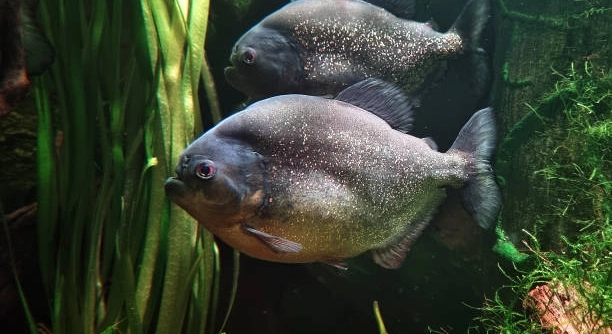
Have you ever watched a nature show and found yourself wondering how piranhas manage to live so close together without constant fighting? These small, sharp-toothed fish often share space in groups, yet rarely cause chaos.
Piranhas mark their territory through subtle body movements, sound production, and changes in coloration. These behaviors communicate dominance and space boundaries, helping to reduce physical conflict and maintain group structure in crowded freshwater environments.
Each of the seven behaviors they use plays a unique role in keeping peace. Let’s look at how these clever fish communicate underwater to claim their space.
Tail Flicks and Body Movements
Piranhas use quick tail flicks and full-body sways to communicate space boundaries. These actions are common when another fish enters their personal area. It’s a non-aggressive way to say “back off” without causing injury. The movement is usually sharp and intentional, meant to catch the attention of nearby fish. This display often escalates if ignored, but in most cases, it works effectively. Piranhas are highly aware of body language, and these signals help maintain order in dense groups. Watching them interact shows just how much they rely on movement before resorting to anything more forceful or physical.
These movements are usually short and repetitive. They help avoid direct fights and keep stress levels lower in shared spaces.
If a neighboring piranha continues to intrude, the flicks might become faster or turn into a gentle nudge. These early signs act as natural warnings, helping them avoid unnecessary conflict while keeping the group close but controlled.
Color Shifts and Visual Signals
Piranhas also shift their body coloration when they need to mark their space.
Color changes happen quickly and often reflect stress, warning, or dominance. A darker body tone might signal readiness to defend space, while lighter tones may show calmness or submission. These visual signals are easy for nearby fish to recognize. In a busy group, color becomes a reliable way to communicate without sound or movement. Some species show red around their jaws or fins when disturbed. This change is often temporary and will fade when the threat or tension passes. Piranhas use these shifts like a visual code, reading one another with a glance. Over time, this reduces how often they need to fight or chase. These color shifts keep the group functioning smoothly, especially in tight spots with limited space. It’s a silent system, but one that works. Watching these subtle changes gives insight into how detailed their communication really is.
Sound Vibrations in Water
Piranhas produce low-frequency sounds by contracting muscles near their swim bladders. These sounds serve as warnings when another fish comes too close. It’s a quick way to claim space and signal discomfort without escalating tension.
These sounds are not loud but carry well through water. When a piranha feels threatened, it releases a short burst of vibration. Other fish recognize this as a warning and will often back off. It’s especially useful in murky water where visibility is low. Sound becomes a key method for marking boundaries when visual cues don’t work. Each species produces slightly different sound patterns, but the purpose remains the same—establishing personal space clearly and quickly. Piranhas rely on these subtle tools to avoid direct conflict, keeping the group in balance with minimal aggression.
Even in quieter moments, sound can be used to test boundaries. A few pulses can prompt nearby fish to adjust their distance.
Nipping Without Wounding
Piranhas sometimes nip at nearby fish as a warning, not to harm but to send a message. These nips usually occur when personal space is ignored or when a fish wants to reinforce its position in the group.
The nips are quick and controlled, often targeting fins or scales. They don’t cause real injury but deliver a clear signal. When space is tight, and signals like body movement or sound are ignored, a nip becomes the next step. It’s common during feeding times or when a dominant fish wants to hold a preferred position. These interactions are brief and usually don’t escalate. Once the warning is understood, the behavior stops. Over time, group members learn to respond earlier to avoid being nipped again. It helps maintain a balance where each fish knows the limits and respects the space of others, keeping the group in order with minimal tension.
Fin Positioning and Posture
Piranhas often use the angle of their fins to signal discomfort or dominance. Raised or flared fins make them look larger and more threatening, discouraging others from coming closer. It’s a quiet but clear method of claiming space.
Subtle shifts in posture can also send a message. A stiff, forward-leaning body often means a fish feels challenged or irritated.
Chasing Without Contact
Piranhas sometimes chase each other to defend space without making physical contact. These short bursts are more about establishing boundaries than fighting. It’s a controlled action meant to redirect rather than injure. The chased fish usually backs away, understanding the signal.
Hovering in Preferred Spots
Remaining still in one area for long periods is another way piranhas mark territory. This hovering signals ownership. Other fish usually avoid pushing into these spaces unless absolutely necessary, respecting the quiet claim to the spot.
FAQ
Do all piranhas mark their space in the same way?
Not exactly. While most piranhas share similar behaviors like body movements and sound production, the way they use them can vary by species. Some may rely more on visual cues like color changes, while others may use more physical signals such as nipping or chasing. Environmental factors, such as the size of the tank or river section, also influence how strongly these behaviors show up. In more crowded or smaller spaces, territorial signals tend to become more frequent and pronounced. Each species adapts its communication style to suit its surroundings and group dynamics.
Are these behaviors aggressive?
Not really. Most of the space-marking actions used by piranhas are designed to avoid aggression. Flicking tails, hovering in place, or flashing color changes are subtle and meant to prevent direct confrontation. Even nipping and chasing are controlled actions, rarely leading to injury. These behaviors work like social boundaries, helping fish understand where not to go or when to back off. The goal is to keep the group functioning smoothly without constant fighting. True aggression is rare and usually only happens if multiple signals are ignored or if resources like food or space are too limited.
Why is marking space important for piranhas?
Marking space helps piranhas live together without chaos. These fish often swim in groups, so having a way to manage distance is necessary. Without space-marking, there would be constant conflict over food, shelter, or simply room to move. These behaviors create a sense of structure and reduce stress. It also helps dominant fish maintain their position while letting others know where they should or shouldn’t be. This balance allows them to conserve energy and stay healthier. In nature, calm group living helps them survive better as they can focus on feeding and avoiding predators instead of fighting one another.
Can these behaviors be seen in aquariums?
Yes, they can. In home aquariums or research tanks, piranhas still use the same signals. You might see one fish flashing a darker color, another hovering over a specific rock, or a quick chase around feeding time. Even though the space is smaller, they still try to maintain some personal area. Observing them closely reveals just how often they communicate through movement or posture. In fact, behaviors might become more obvious in a tank, since the limited space forces the fish to interact more frequently. It’s a good way to learn how these signals work in real time.
How early do piranhas learn to mark their space?
They begin showing signs of space awareness at a young age. Juvenile piranhas may not be as intense or precise, but they still flick tails, show posture changes, and avoid certain fish. As they grow and spend more time in groups, their communication improves. Adult behaviors like nipping or sound production become more noticeable with maturity. These social cues are likely learned through observation and repetition. Young fish watch how others react and adjust their behavior accordingly. With time, they develop the full range of signals used to maintain space and avoid conflict in more crowded environments.
Do females and males use the same signals?
In most cases, yes. Both male and female piranhas use the same body language and sounds to communicate space boundaries. However, during breeding periods, males might become more territorial and display stronger signals. They may darken in color more dramatically or chase more frequently to protect chosen areas. Outside of mating times, both sexes tend to behave similarly when it comes to maintaining distance. They share the same group rules and rely on the same set of tools to interact. This shared behavior helps keep communication clear and consistent among all members of the group.
Final Thoughts
Piranhas are often misunderstood as only aggressive creatures, but their behavior is more complex and structured than many assume. Marking space is one of the many ways they manage to live in groups without constant conflict. These behaviors—such as color changes, hovering, and chasing—are not random. They serve a purpose, allowing each fish to establish its position without the need for fights or injury. Observing these patterns gives us a better understanding of how piranhas communicate and keep order in their environment. It shows a form of intelligence and social awareness that often goes unnoticed in popular media.
Each method used by piranhas to mark territory reflects a balance between instinct and environmental adaptation. From subtle body shifts to controlled chases, these actions form a silent language that helps them survive and thrive. Whether in the wild or an aquarium, these signs appear regularly and offer insight into how space and social rules function underwater. Fish that respect these signals often avoid conflict, while those that ignore them may be met with warnings. This system works efficiently because it’s consistent and understood by all members of the group. It’s not just about dominance—it’s about cooperation, routine, and reducing stress.
Understanding these behaviors changes how we see piranhas. They’re not just fierce fish with sharp teeth. They are social animals that use communication and structure to avoid unnecessary conflict. Watching a piranha hold its position, flick a fin, or briefly chase another is like seeing a conversation unfold in silence. These actions are worth noticing, especially for those keeping piranhas in tanks or studying them in research settings. Respecting their need for space, offering enough room, and providing hiding spots can support healthier and more natural behavior. In the end, learning how piranhas mark their space helps us care for them better and appreciate the quiet, detailed ways that even fish organize their lives.

Hello,
If you enjoy the content that we create, please consider saying a "Thank You!" by leaving a tip.
Every little bit helps us continue crafting quality advice that supports the health, happiness, and well-being of pets around the world, for pets of all shapes, sizes, and species.
We really appreciate the kindness and support that you show us!