
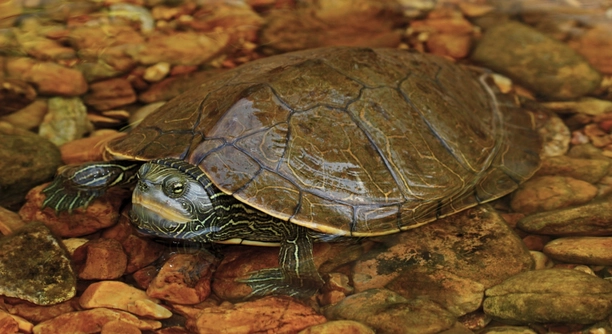
The Texas map turtle is a fascinating species known for its distinctive shell markings and behavior. In this article, we will explore seven unique features of this remarkable turtle, which make it stand out from other freshwater species.
The Texas map turtle is distinguished by its highly intricate shell pattern, a combination of yellow lines and spots on a dark background. Its unique markings help with camouflage in its natural river and lake habitats. Additionally, the species exhibits distinct behavioral traits.
From its unique shell design to its habits in the wild, this turtle has much to offer. Understanding these features will give you a better appreciation for the Texas map turtle’s role in nature.
Unique Shell Design
The Texas map turtle is immediately recognizable by its distinct shell design. Its carapace features yellow lines and patterns resembling a map, giving it a unique appearance. These intricate markings are not just for show, though. They help the turtle blend into its environment, providing camouflage in the water. This feature allows it to hide from predators while resting on rocks or submerged in shallow waters. Each turtle’s shell design is slightly different, creating a personalized map-like pattern.
The shell is tough and durable, offering protection against predators and environmental factors. As the turtle matures, its shell grows with it, becoming stronger and more resistant.
This striking appearance is one of the Texas map turtle’s most impressive features. Its design is more than just an aesthetic trait; it serves a clear purpose in the wild. The combination of the turtle’s physical appearance and behaviors makes it an efficient survivor in its natural habitat.
Habitats and Adaptability
The Texas map turtle is typically found in slow-moving rivers, lakes, and ponds, thriving in warm, freshwater environments. These turtles are most commonly located in the central and eastern parts of Texas, though their range extends into some areas of Louisiana. They prefer habitats with abundant vegetation, which provides cover from both predators and the sun. Additionally, they seek areas with submerged logs or rocks to bask on.
These turtles are well-suited to adapt to varying water conditions. They can handle different levels of salinity and temperature, but they prefer water that is clean and oxygen-rich. Despite this adaptability, the Texas map turtle is sensitive to pollution, which can threaten their survival. Over time, human activity such as habitat destruction and pollution has started to impact their populations. Conservation efforts focus on maintaining the integrity of their habitats and ensuring cleaner waterways.
Their preference for sheltered, quiet areas makes them especially vulnerable to environmental changes. Protecting these habitats is essential for maintaining a stable population.
Feeding Habits
The Texas map turtle has a varied diet, often feeding on both plants and small animals. Its diet includes aquatic insects, crustaceans, and mollusks, as well as algae and aquatic plants. This omnivorous diet helps it thrive in the wild, where food sources can change throughout the seasons.
Texas map turtles are excellent swimmers and are skilled at hunting for food underwater. They may also forage for food on land but prefer to stay near water sources for easier access to their preferred meals. This flexibility in their diet allows them to adapt to different environments.
While they are opportunistic feeders, these turtles also exhibit unique behaviors, such as flipping over rocks to search for food beneath them. This behavior showcases their intelligence and ability to make use of their surroundings to find nourishment. This adaptability plays a significant role in their survival.
Reproduction and Lifespan
The Texas map turtle typically lays eggs during the summer months, with females seeking sandy or soft soil to bury them. A female will often lay around 10 to 15 eggs per clutch, and after about 90 days, the eggs hatch. The hatchlings are left to fend for themselves once they emerge.
The young turtles are vulnerable to predation in their early stages of life, with many falling prey to birds or larger fish. However, the adults have fewer natural predators due to their protective shells. Over time, the turtles grow in size, gaining more independence and a stronger shell.
These turtles can live for several decades in the wild, with some reaching 40 years or more. Their lifespan is highly dependent on environmental factors, such as the availability of food and the quality of their habitat. By reaching full maturity, they can continue to reproduce, ensuring the continuation of their species.
Behavior and Social Structure
Texas map turtles tend to be solitary creatures, especially when it comes to basking. They often sunbathe on rocks or logs, either alone or in small groups. When they feel threatened, they retreat into the water, where they are more comfortable.
These turtles are known for being somewhat territorial, especially the males. Males often display aggressive behaviors, such as biting or chasing each other, during the mating season. However, they are not usually hostile toward females or other species of turtles.
Conservation Status
The Texas map turtle is listed as a species of concern in some areas, mainly due to habitat loss and pollution. Conservation efforts are in place to protect their environment and ensure their survival. These turtles rely on clean waterways and the preservation of their natural habitats to thrive.
Habitat destruction, especially from urbanization and water pollution, poses significant threats to the species. To prevent further decline, efforts focus on creating protected areas, raising awareness, and reducing pollutants in their natural habitats. When conservation practices are followed, the species can maintain a stable population over time.
FAQ
What do Texas map turtles eat?
Texas map turtles are omnivorous, feeding on a variety of foods. Their diet includes aquatic insects, small fish, crustaceans like crayfish, and mollusks such as snails. They also eat aquatic plants, algae, and algae-covered rocks. In their natural habitat, they can adapt their diet based on what is available in the environment. The variety in their diet helps ensure that they have enough nutrients to thrive. In captivity, they can also be fed commercial turtle food, vegetables, and occasional protein sources like mealworms or earthworms to mimic their natural eating habits.
Where do Texas map turtles live?
Texas map turtles primarily live in slow-moving rivers, lakes, and ponds. They are mostly found in central and eastern Texas, but their range extends into parts of Louisiana. These turtles thrive in environments with clean, oxygen-rich water and prefer habitats that offer plenty of vegetation. They often inhabit areas where there are submerged logs or rocks to bask on. This type of habitat provides the necessary elements for their survival: food, shelter, and a place to sunbathe. These turtles are also adaptable to different freshwater environments as long as there is enough food and cover.
How long do Texas map turtles live?
Texas map turtles have a long lifespan compared to many other species of turtles. In the wild, they can live up to 40 years or more, though the average lifespan is often around 20 to 30 years. Their longevity is influenced by factors like food availability, water quality, and the presence of predators. Turtles that live in protected environments, such as reserves or areas with minimal human disturbance, may have a longer life expectancy. Captive Texas map turtles, when provided with proper care, can also live for several decades.
Are Texas map turtles endangered?
While not classified as critically endangered, Texas map turtles face several threats. They are considered a species of concern in certain regions due to habitat loss, pollution, and over-collection for the pet trade. Their populations have declined in some areas because of these factors. However, the species is not globally endangered at this time. Conservation efforts are ongoing to protect their natural habitats and reduce the threats they face. Protecting the clean water sources where these turtles live is a priority for maintaining their population.
Can Texas map turtles be kept as pets?
Yes, Texas map turtles can be kept as pets, but they require a specific environment to thrive. They need a spacious aquarium with both water and basking areas. The water must be kept clean, and a filtration system is essential to maintain water quality. The tank should also be large enough to provide them with enough space to swim and explore. Providing proper lighting and a basking spot for sunning is also important for their health. As with all pets, it’s crucial to research their care needs to ensure a long and healthy life in captivity.
How do you take care of a Texas map turtle?
Taking care of a Texas map turtle requires attention to several aspects of its environment. First, ensure that the tank is large enough, with at least 40 gallons of water for an adult. A filtration system is necessary to keep the water clean, as these turtles are sensitive to polluted environments. The tank should have a basking area where they can dry off and soak up UVB light, which is essential for their shell and bone health. A diet rich in both plant material and animal protein will help meet their nutritional needs. Regularly monitor water temperature and cleanliness to maintain a healthy habitat.
Do Texas map turtles need a lot of space?
Yes, Texas map turtles need a considerable amount of space to thrive. In the wild, they have access to large bodies of water, and in captivity, they need enough room to swim and roam. A single adult turtle requires at least a 40-gallon tank, with extra space for multiple turtles. The tank should include both deep water areas for swimming and shallow areas where they can bask. A lack of space can lead to stress, health issues, and reduced life expectancy for the turtle.
What is the best temperature for a Texas map turtle?
Texas map turtles are ectothermic, meaning they rely on external temperatures to regulate their body heat. In captivity, they require a water temperature between 75°F and 80°F. The basking area should be slightly warmer, around 85°F to 90°F. Proper heating lamps should be used to maintain these temperatures, especially during colder months. Providing the right temperature range is essential for their digestion, metabolism, and overall well-being. Too cold or too hot water can cause stress and health problems.
Can Texas map turtles live with other types of turtles?
Texas map turtles can coexist with other turtles, but it’s important to consider their specific needs. When housed with other species, they should be given plenty of space to avoid territorial disputes, as Texas map turtles can be aggressive, particularly during mating season. They may also compete for basking spots and food. It’s best to house them with species that have similar care requirements, like other freshwater turtles. Additionally, care should be taken to ensure the tank is large enough for all the turtles to live comfortably.
What are the signs that a Texas map turtle is sick?
Signs of illness in a Texas map turtle can include a lack of appetite, lethargy, or unusual behavior such as floating or difficulty diving. You may also notice changes in the shell, such as soft spots or discoloration, or signs of infection around the eyes or nose. If a turtle has swollen eyes or appears to be wheezing, it could have a respiratory infection. Any changes in behavior or appearance should be addressed promptly, and a veterinarian familiar with reptiles should be consulted for proper diagnosis and treatment. Regular tank maintenance and a balanced diet help prevent many health issues.
Final Thoughts
The Texas map turtle is a unique species with a distinctive appearance and interesting behaviors. Its intricate shell pattern, designed to resemble a map, not only makes it easy to identify but also serves a practical purpose, helping the turtle blend into its surroundings. This camouflage is vital for avoiding predators in its natural habitat. The turtle’s ability to adapt to different types of freshwater environments and its varied diet help it survive in a range of conditions, from slow-moving rivers to lakes with abundant vegetation. Whether it’s basking on rocks or swimming in calm waters, the Texas map turtle has evolved to make the most of its habitat.
Caring for a Texas map turtle, whether in the wild or in captivity, requires understanding its specific needs. In captivity, a proper tank setup with enough space, clean water, and UVB lighting is crucial for its health and well-being. Their omnivorous diet, consisting of both plant and animal matter, should be carefully managed to provide the right nutrients. Regular tank maintenance, such as keeping the water clean and monitoring the temperature, is important to ensure that the turtle thrives. These turtles are relatively low-maintenance compared to other pets, but they still require attention to their environment and care routine.
Conservation efforts are essential to protecting the Texas map turtle’s natural habitat, as pollution and habitat destruction pose serious threats to its population. By preserving the clean, freshwater environments they rely on, we can help ensure their survival for future generations. While they are not currently considered endangered, protecting their habitats from urbanization and contamination will be crucial in maintaining healthy populations. Awareness and action are key to supporting these fascinating creatures, whether through conservation efforts or responsible pet ownership. With the right care, Texas map turtles can continue to thrive in both the wild and in the homes of those who admire them.

Hello,
If you enjoy the content that we create, please consider saying a "Thank You!" by leaving a tip.
Every little bit helps us continue crafting quality advice that supports the health, happiness, and well-being of pets around the world, for pets of all shapes, sizes, and species.
We really appreciate the kindness and support that you show us!