
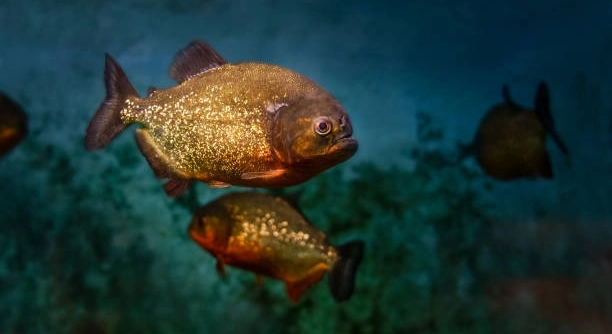
Piranhas are small but fierce fish known for their sharp teeth and hunting skills. They live in groups and use smart methods to catch their food. Understanding how they corner prey reveals a lot about their survival.
Piranhas use coordinated swimming, fast attacks, and strategic positioning to trap prey efficiently. Their teamwork and sharp instincts allow them to isolate and overwhelm targets, making their hunting both effective and precise.
Learning these hunting tricks helps us appreciate the complexity behind piranhas’ behavior beyond their fearsome reputation. The strategies they use offer insight into aquatic predator-prey dynamics.
Coordinated Swimming for Effective Surrounding
Piranhas often swim in groups called schools, which helps them surround their prey quickly. By moving as a unit, they create a tight formation that makes it hard for prey to escape. This teamwork increases their chances of catching food, especially in murky waters where visibility is low. The group moves with precision, closing in on the target from all sides. Each piranha adjusts its position to maintain the circle and keep the prey trapped inside. This strategy reduces the risk for individual fish since they share the effort and the reward. The synchronized swimming also confuses the prey, making it harder to predict which piranha will strike next. This tactic is an efficient way to hunt in their natural environment, ensuring that energy is saved and the chance of a successful catch is high.
The ability to swim together so closely requires strong communication and practice within the school. It is a key factor in their hunting success.
This group behavior shows that piranhas rely on more than just sharp teeth. Their coordinated swimming highlights intelligence in their hunting method. It allows them to trap larger prey that a single piranha could not manage alone. This also helps protect the school by reducing the chance of injury during hunts. Learning about this tactic changes how we see piranhas, from simple predators to skillful hunters working as a team. Their swimming pattern is not random but a carefully developed method for survival.
Sudden Fast Attacks
Piranhas strike quickly to catch prey before it can react.
They use bursts of speed to surprise and overwhelm prey. This sudden attack happens after the group has surrounded the target, limiting escape routes. Piranhas can accelerate rapidly, using their strong muscles and streamlined bodies. This swift movement prevents prey from dodging or defending itself effectively. The fast strike also causes panic, making prey more vulnerable to follow-up bites. Each piranha bites at different parts to weaken the prey quickly. These fast attacks work best in groups but sometimes happen individually when food is scarce. The combination of speed and group pressure makes it very difficult for prey to survive an encounter with piranhas.
This method is an important part of how piranhas secure food in competitive environments. It shows their ability to act decisively when the moment is right.
Using Sharp Teeth as Tools
Piranhas have sharp, triangular teeth that are perfect for gripping and tearing. These teeth work like scissors, allowing them to bite quickly and efficiently.
Their teeth are tightly packed and continuously replaced, ensuring they remain sharp. This helps piranhas make deep, precise bites that weaken prey quickly. The shape of their teeth allows them to cut through tough skin and flesh, making it easier to immobilize prey fast. Even when hunting in groups, each piranha relies on its teeth to deliver damaging bites. This natural design is essential for their hunting success.
Strong jaws support their teeth, giving piranhas the power to bite through bone and tough tissues. The combination of sharp teeth and strong jaws means piranhas can finish off prey in seconds, reducing the risk of injury during a hunt.
Surrounding Prey Quietly
Piranhas often approach prey silently to avoid warning it. This stealth approach increases their chances of a successful hunt.
They use slow, deliberate movements to get close without startling prey. The water helps muffle their approach, making it hard for prey to detect them early. By minimizing noise and vibrations, piranhas can position themselves perfectly before attacking. This quiet approach is especially useful in calm water or when prey is alert. Moving slowly also allows the group to maintain formation and coordinate their attack more effectively. Silent surrounding gives piranhas the element of surprise, crucial for cornering prey.
Stealth hunting requires patience and precision. Piranhas balance this quiet movement with the need to be ready for sudden, fast attacks once the prey is trapped. This tactic shows how piranhas use both calm and aggression in their hunting style.
Using Vibrations to Detect Prey
Piranhas sense vibrations in the water to locate prey. This helps them hunt even when visibility is low. Their lateral line system picks up movements, allowing them to track where prey is swimming nearby.
Detecting vibrations gives piranhas an advantage in murky or dark waters. It helps them stay alert to prey or threats without relying on sight alone.
Circling to Weaken Prey
Piranhas circle their prey repeatedly to tire it out. This constant pressure leaves the prey weak and easier to catch. Circling forces the prey to keep moving, using up energy quickly. The more exhausted the prey becomes, the slower it reacts. This technique increases the group’s success rate, especially with larger or stronger animals that might escape otherwise.
Strategic Positioning in the School
Each piranha takes a role within the group to block escape routes. This ensures no gaps are left for prey to slip through.
Group Intimidation
The size of the school can scare prey into freezing or fleeing into traps. This intimidation helps piranhas control the hunt.
How do piranhas communicate during a hunt?
Piranhas communicate mostly through body language and subtle movements in the water. They use changes in swimming speed and direction to signal each other. This silent communication helps maintain the school’s formation and coordinate attacks without alarming prey. Vibrations picked up by their lateral line system also provide feedback on each other’s positions. This allows the group to adjust quickly, ensuring a well-timed strike. While piranhas don’t make loud sounds during hunts, their synchronized actions are a clear form of communication that is essential for their hunting success.
Are all piranhas aggressive hunters?
Not all piranhas are aggressive hunters all the time. Their behavior depends on factors like hunger, group size, and the presence of threats. Piranhas can be cautious and avoid confrontation if food is abundant or if they feel threatened. Aggressive hunting usually happens when the school is hungry or defending territory. Some species of piranhas are less aggressive and rely more on scavenging than active hunting. Overall, piranha aggression is situational and varies across species and environments.
Do piranhas only hunt in groups?
Piranhas typically hunt in groups because it increases their chances of catching prey. Schools can corner and overwhelm prey more easily than a single fish. However, individual piranhas will hunt alone if necessary, especially when food is scarce. Solo hunting is less common and usually targets smaller or weaker prey. Group hunting is the preferred method since it offers protection and efficiency. The social nature of piranhas makes cooperative hunting a key survival skill.
How fast can piranhas swim during an attack?
Piranhas can swim at bursts of up to 25 miles per hour (about 40 kilometers per hour) during an attack. This speed helps them surprise and capture prey quickly before it can react. Their streamlined bodies and powerful muscles allow for these rapid movements in short bursts. After striking, they slow down to regroup or continue biting. The fast swimming combined with their sharp teeth makes piranhas efficient predators.
What role do piranhas’ teeth play in hunting?
Piranhas’ teeth are sharp, triangular, and tightly packed to grip and tear flesh effectively. They function like scissors, enabling quick, clean bites. The teeth help immobilize prey by causing deep wounds fast. Piranhas also use their strong jaws to apply significant biting force, even able to crush bones. Teeth are replaced constantly to keep them sharp, which is vital for repeated successful hunts. This dental design is central to their ability to capture and consume prey efficiently.
Can piranhas hunt prey larger than themselves?
Yes, piranhas can hunt prey larger than themselves, especially when working in groups. The coordinated attack and surrounding tactics allow them to isolate and weaken bigger animals. By biting repeatedly and circling their target, they tire out the prey until it becomes vulnerable. Larger prey may escape if attacked by a single piranha, but the school’s teamwork usually overcomes this. Hunting larger prey increases food availability but requires strategy and cooperation.
How do piranhas avoid injury during hunts?
Piranhas reduce injury risks by hunting in groups and using fast, coordinated strikes. Their sharp teeth help deliver quick, damaging bites without prolonged fights. Surrounding prey limits the chance of a counterattack. The school’s formation also protects weaker members. After biting, piranhas retreat briefly before attacking again, minimizing close contact. This careful balance of aggression and caution helps keep injuries low during hunts.
What types of prey do piranhas usually target?
Piranhas mostly target fish, insects, small mammals, and birds near the water’s edge. They prefer prey that is easier to catch and immobilize quickly. In some areas, they scavenge on dead animals or leftover food. Their diet can vary based on availability and habitat. Young piranhas often eat smaller prey like insect larvae until they grow stronger. The ability to target a range of animals makes piranhas adaptable hunters.
Do piranhas use their environment to trap prey?
Yes, piranhas use features like river plants, rocks, and shallow waters to corner prey. They guide prey toward natural barriers, limiting escape options. This environmental use works with their group tactics to trap animals in tight spaces. The combination of strategic positioning and the environment increases hunting success. Using surroundings shows how piranhas think beyond just speed and teeth during a hunt.
How important is teamwork in piranha hunting?
Teamwork is vital for piranhas to catch prey efficiently. Coordinated swimming, silent communication, and role distribution within the school allow them to corner and attack effectively. Without teamwork, a single piranha’s chance of success would drop significantly. The group’s strength lies in its ability to act as one unit, overcoming prey that would be impossible for an individual. This social hunting behavior is key to their survival.
Piranhas are often seen as dangerous and scary fish, but understanding how they hunt helps us see them differently. Their hunting methods are smart and well-coordinated. Instead of just biting randomly, piranhas use teamwork, sharp teeth, and fast attacks to catch their prey. This shows that their success depends on strategy, not just aggression. They work together as a group, which helps protect each other and makes hunting more effective. Their ability to surround and trap prey is a clear sign of how intelligent these fish are in their natural environment.
The way piranhas communicate and position themselves during a hunt is very important. They use quiet, careful movements to avoid alerting their prey. Then, when the time is right, they strike fast and in unison. This combination of patience and speed allows them to corner prey quickly and reduce the chances of escape. Their sharp teeth and powerful jaws finish the job efficiently. It’s interesting to know that piranhas don’t just rely on their teeth but also use their surroundings and group behavior to increase their chances of a successful hunt.
Overall, piranhas’ hunting techniques are more complex than most people realize. They depend on skills like sensing vibrations, silent communication, and working as a team to hunt successfully. These behaviors help them survive in tough environments where food can be scarce. By learning about these tricks, we can better appreciate the role piranhas play in their ecosystem. They are not just fierce predators but also skillful hunters using a variety of methods to catch prey. Understanding this helps us respect their place in nature and see them as more than just their reputation suggests.

Hello,
If you enjoy the content that we create, please consider saying a "Thank You!" by leaving a tip.
Every little bit helps us continue crafting quality advice that supports the health, happiness, and well-being of pets around the world, for pets of all shapes, sizes, and species.
We really appreciate the kindness and support that you show us!