
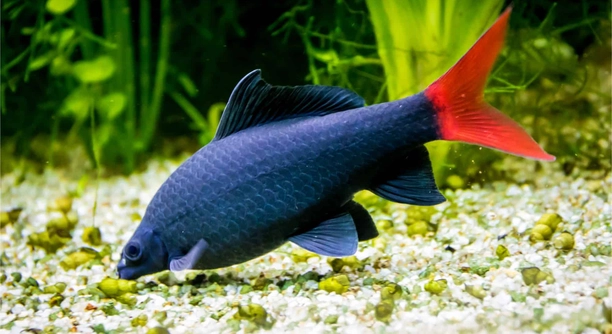
Is your rainbow shark causing trouble in your peaceful community tank, leaving other fish stressed and hiding more than swimming?
Preventing rainbow shark aggression involves providing ample space, minimizing territorial overlap, and selecting compatible tank mates. Hiding spots and visual barriers also reduce confrontations, while maintaining proper water quality helps limit stress-related behaviors that trigger aggression.
Simple adjustments in tank setup and fish selection can create a calmer environment and improve life for all your aquatic companions.
Give Your Rainbow Shark Enough Space
Rainbow sharks can become territorial in cramped tanks. A tank that’s too small often leads to stress and aggressive behavior, especially as the fish matures. The minimum recommended size for a single rainbow shark is 55 gallons. This provides enough room for swimming and helps reduce territorial instincts. If other fish are added, the need for space increases. A longer tank is better than a tall one, as rainbow sharks prefer horizontal swimming areas. Open swimming space paired with secluded areas creates balance. Hiding spots should not dominate the layout, but they should be available when needed.
Avoid placing rainbow sharks in tanks under 40 gallons. Limited space gives them fewer boundaries, which makes aggression more frequent and harder to control.
Make sure the tank is set up with long stretches of open water. Your rainbow shark should be able to swim without constantly running into other fish or objects.
Choose Peaceful and Fast Tank Mates
Rainbow sharks should not be housed with slow or timid fish.
Select tank mates that are quick, alert, and unlikely to provoke confrontation. Some good options include barbs, danios, and larger tetras. These fish can hold their own without becoming aggressive themselves. Avoid bottom dwellers like corydoras or loaches, as rainbow sharks may see them as competition. Fish that resemble rainbow sharks in body shape or swimming style can also trigger territorial behavior. Keep species variety in mind and avoid overstocking. The more balanced the group, the more likely your rainbow shark will stay calm.
Introducing tank mates at the same time is helpful. This allows everyone to establish their spots together rather than a rainbow shark defending a claimed area. If a rainbow shark is added last, it may have fewer instincts to take over. A peaceful community depends on compatible personalities and enough space for each fish to avoid conflict.
Add Hiding Spots and Visual Barriers
Hiding places help reduce stress and give fish the chance to escape aggressive behavior. Use rocks, driftwood, and plants to break up open areas and block direct lines of sight in the tank.
Rainbow sharks often claim territories, so visual breaks in the layout help limit how much of the tank they feel they must defend. Spread out the hiding spots to avoid congestion in one area. Caves, tunnels, and dense plant clusters can give other fish a place to rest without being disturbed. Try to create at least three separate zones. This lets tank mates move around more freely without crossing into the shark’s space too often. A varied environment also helps your rainbow shark feel secure, which can lower its need to chase other fish.
Avoid symmetrical layouts or wide open spaces. Uneven decorations make the tank feel larger and reduce stress by offering escape routes. Combine hardscape and plants to improve coverage.
Maintain Stable Water Conditions
Stable water parameters keep fish calm and help prevent aggressive behavior. Rainbow sharks are sensitive to sudden changes in temperature, pH, and ammonia levels.
Keep the water temperature between 75–81°F and the pH around 6.5 to 7.5. Make small adjustments if needed, but avoid sudden swings. Use a reliable filter and clean the tank regularly to prevent ammonia spikes. Weekly water changes of 25% are enough for most setups. Use a test kit to track levels, especially during seasonal temperature shifts. Balanced water keeps fish healthier and more tolerant of other species. Stress from poor water conditions often leads to irritability and chasing. Calm fish tend to interact better with tank mates.
Overfeeding or skipping maintenance can quickly change water quality. Monitor how your fish behave and respond to shifts in their environment. A peaceful tank depends on consistency as much as it does layout or population.
Avoid Keeping Multiple Rainbow Sharks
Rainbow sharks are naturally territorial and do not tolerate others of their kind. Keeping more than one in the same tank often leads to fighting and serious injuries. Even in large tanks, they rarely coexist peacefully.
If more than one rainbow shark is kept, constant chasing and stress become unavoidable. This creates a hostile environment for all tank mates.
Feed Consistently and Reduce Competition
Feeding all fish at the same time in different areas of the tank helps prevent food-based aggression. Rainbow sharks may chase others if they feel their access to food is threatened. Spread food evenly and choose a mix of sinking pellets and floating flakes to reduce conflict. Uneaten food can also pollute the tank, so remove leftovers quickly. Feed once or twice a day, based on how much your fish consume within two minutes. Regular feeding keeps your rainbow shark calm, focused, and less likely to see other fish as competition.
Monitor Behavior After Changes
Watch how your rainbow shark reacts after any tank changes. Rearranging decor or adding new fish can trigger aggression.
FAQ
Can rainbow sharks live with other bottom-dwelling fish?
Rainbow sharks generally don’t do well with other bottom-dwellers. They see the lower parts of the tank as their territory and will likely chase or harass any fish that linger there. Species like corydoras, loaches, and plecos often become targets. Even if these fish are peaceful, they occupy the same tank zones as rainbow sharks, which creates tension. If you want to avoid constant chasing and stress, it’s better to choose fish that prefer the upper or middle levels of the tank. This helps your rainbow shark feel less threatened and keeps the environment more peaceful.
Can I keep rainbow sharks in groups if the tank is large enough?
Even in larger tanks, rainbow sharks tend to be aggressive toward one another. Most hobbyists find that keeping a single rainbow shark is the safest choice. In tanks over 125 gallons, some advanced aquarists attempt to keep a group of juveniles raised together, but success is rare. They often fight as they mature and establish dominance. Unlike schooling fish, rainbow sharks are solitary and don’t form social bonds with their own kind. If peace and long-term stability matter, avoid keeping multiples—even in a big tank.
What signs show that a rainbow shark is being aggressive?
Typical signs include chasing other fish, blocking access to specific areas of the tank, or flaring fins as a warning. The rainbow shark may swim quickly toward other fish without physical contact, which is a display of dominance. In more serious cases, it might nip fins or force fish to stay hidden in corners or behind decorations. A stressed tank mate may eat less, lose color, or stay motionless to avoid attention. Keeping an eye on these behaviors early can help you prevent further conflict and make changes before injuries happen.
What should I do if my rainbow shark becomes too aggressive?
Start by checking the tank size and layout. Rearranging decor can sometimes break up established territories. Add extra hiding spots and increase visual barriers to help reduce tension. If that doesn’t help, try separating the most affected fish or moving the rainbow shark to a different tank. Avoid using aggression-reducing additives—they only mask the problem. Aggression usually comes from space issues, incompatible tank mates, or stress. Addressing the root cause works better than short-term fixes. In some cases, rehoming the rainbow shark may be the best solution.
How can I tell if my rainbow shark is stressed?
Signs of stress include faded color, erratic swimming, constant hiding, or loss of appetite. You might also notice that it becomes unusually skittish or reactive to movement outside the tank. Sometimes, stressed rainbow sharks become more aggressive as a way to protect what they perceive as their safe zone. Poor water quality, overcrowding, and sudden changes in the tank can all trigger stress. Monitor behavior closely after changes like adding new fish or rearranging the tank layout. A healthy rainbow shark is active, alert, and confidently patrolling its space—not hiding or chasing all day.
Can rainbow sharks live with other semi-aggressive fish?
It depends on the species. Some semi-aggressive fish like tiger barbs or certain types of gouramis may be able to share a tank with a rainbow shark if there’s enough space. But this still carries a risk. The tank must be large, with clear territories and enough hiding spots. Each fish should have a different swimming level or behavior pattern to avoid direct conflict. Always monitor their interactions closely, especially in the first few weeks. Just because a fish is labeled “semi-aggressive” doesn’t mean it’s compatible with all similar fish.
How old should a rainbow shark be before adding tank mates?
Young rainbow sharks tend to be less territorial, so introducing tank mates while they’re still juveniles can help reduce aggression later. Ideally, add other fish when the rainbow shark is under four inches in length. Avoid adding new tank mates after it has already established its territory for several months. Once a rainbow shark feels like it owns the tank, it’s much harder for it to tolerate newcomers. Introducing everyone at a young age gives the tank a better chance of staying calm as the fish grow together.
Final Thoughts
Preventing rainbow shark aggression takes planning, observation, and a balanced tank setup. These fish can be territorial, especially as they mature, so giving them enough space and the right environment is important. A 55-gallon tank or larger is the best starting point. Use plants, driftwood, and caves to create natural barriers that reduce line-of-sight and help divide the tank into zones. This helps your rainbow shark feel secure without needing to defend the entire space. Keeping only one rainbow shark in the tank also lowers the chance of conflict and helps other fish settle in without stress.
Choosing the right tank mates makes a big difference. Avoid slow-moving or bottom-dwelling species, and instead go with fast, mid-level swimmers that can easily avoid confrontation. Introduce all fish while they’re young, if possible, so the rainbow shark grows up without feeling like it owns the tank. Watch for signs of aggression like chasing, fin nipping, or blocking access to parts of the tank. Feeding all fish consistently, using multiple feeding zones, and keeping up with tank maintenance all contribute to a calmer and more stable setup. Good water quality reduces stress, which in turn lowers aggression.
If problems arise, rearranging tank decor or removing a fish may be necessary. Some rainbow sharks are naturally more aggressive than others, so personality plays a role. When issues become persistent and start affecting the health of your other fish, consider rehoming or separating your rainbow shark. Regular observation helps catch problems early before they grow. With the right approach, a rainbow shark can be a colorful and active addition to a community tank. A peaceful tank doesn’t just depend on luck—it comes from careful choices, proper care, and creating a space where each fish can thrive.

Hello,
If you enjoy the content that we create, please consider saying a "Thank You!" by leaving a tip.
Every little bit helps us continue crafting quality advice that supports the health, happiness, and well-being of pets around the world, for pets of all shapes, sizes, and species.
We really appreciate the kindness and support that you show us!