
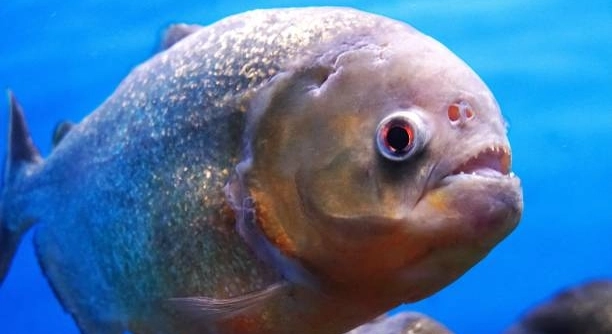
Piranhas are often seen as fast and fierce fish, but their quick reactions are surprising in many ways. These small predators have developed sharp instincts to catch food and defend themselves in their watery homes. Understanding their speed helps appreciate their unique behavior.
Piranhas react faster than many expect due to their highly sensitive nerve systems and sharp reflexes. These traits enable them to respond swiftly to threats and prey, often outpacing human reaction times in sudden situations within their environment.
Exploring these moments reveals how piranhas use their speed for survival and hunting, highlighting fascinating aspects of their natural instincts and environment.
Lightning-Fast Attack Responses
Piranhas have an impressive ability to react almost instantly when they sense movement or vibrations in the water. Their sharp eyesight and keen sense of smell help them detect prey or danger quickly. When a small fish or insect brushes past, piranhas can launch an attack in a split second. This speed is essential for their survival because they often hunt in groups, and a delayed reaction could mean missing a meal. Their jaws snap shut with remarkable force, making it nearly impossible for prey to escape once caught. These rapid responses also protect piranhas from larger predators by allowing them to dart away or group together for defense. Their nervous system is finely tuned to process signals rapidly, giving them the edge they need in their fast-paced environment.
This quick reflex system is vital for piranhas to capture food and avoid becoming prey themselves.
Understanding their attack speed shows how evolution has sharpened their instincts for survival.
Instant Group Coordination
Piranhas often swim and hunt in schools, which requires quick communication and coordination. When one piranha senses food or danger, the others react immediately, moving as a unified group. This collective response can overwhelm prey or confuse threats. The fish use subtle signals, like changes in movement and water pressure, to stay synchronized. This teamwork improves their chances of catching prey and defending against predators. Group reactions can be faster than any single fish acting alone because they multiply their sensory input. This makes the school a powerful hunting and defense unit.
Schooling behavior is an efficient strategy that depends on rapid reaction times from all members.
These moments of instant coordination highlight the importance of speed and communication in piranha survival.
Rapid Escape Reflexes
Piranhas have quick escape reflexes to avoid predators. When threatened, they dart away instantly, using bursts of speed. This fast reaction helps them survive in dangerous environments where predators lurk nearby.
Their muscles are built for sudden acceleration, allowing them to change direction quickly. This ability is essential when a predator attacks, as hesitation could lead to capture. Piranhas rely on sensory input from their lateral lines, which detect vibrations and pressure changes in the water. These signals trigger immediate movement, helping them evade danger fast. Their small size and agility also aid in quick escapes, making it harder for larger fish to catch them.
This rapid escape behavior is a key survival skill. It complements their hunting abilities and ensures piranhas stay safe in the wild.
Sharp Vision for Quick Decisions
Piranhas have excellent vision that helps them react fast to their surroundings. Their eyes are adapted to detect movement and changes in light, which is crucial in murky river waters where they live. Sharp eyesight allows them to spot prey or threats early, giving them more time to respond.
This visual advantage improves their hunting success. Piranhas can identify the slightest flicker of motion, making their attacks more precise. They also use vision to stay aware of nearby predators and school members, coordinating their movements smoothly. Having sharp vision supports their quick reflexes and contributes to their reputation as fast and efficient predators. It is an important factor in how they make split-second decisions in complex aquatic environments.
Sensory Lateral Line System
Piranhas use a lateral line system to sense vibrations in the water. This helps them detect nearby movement even in low visibility. It’s a crucial tool for quick reactions to prey or danger.
This system allows piranhas to respond faster than relying on sight alone. It provides constant feedback about their surroundings, alerting them to subtle changes.
Powerful Jaw Muscles
Piranhas have strong jaw muscles that enable rapid bites. This strength allows them to tear flesh quickly, minimizing the chance of prey escaping. Their jaws snap shut with impressive speed, which is essential for their feeding success.
Sudden Schooling Behavior
When threatened, piranhas can instantly form tight groups. This sudden schooling confuses predators and makes the group harder to attack. It’s an effective defense mechanism built on fast reaction times.
FAQ
How fast can piranhas react to danger?
Piranhas can react within milliseconds when sensing danger. Their nervous system processes signals from their senses extremely quickly. The lateral line system detects vibrations, while their sharp eyesight spots movement instantly. This combination triggers an immediate escape or defensive response, allowing them to avoid predators or threats almost without hesitation.
Why are piranhas able to bite so quickly?
Piranhas have powerful jaw muscles specifically designed for speed and strength. Their bite force is high, but the real advantage is how fast they can snap their jaws shut. This rapid biting helps them catch prey before it can flee. The fast bite also minimizes the time prey has to resist or escape.
Do piranhas react faster alone or in groups?
Piranhas often react faster in groups. When one senses food or danger, its quick movement sends signals through the school via water vibrations. This triggers a chain reaction, making the whole group move almost simultaneously. This collective response improves hunting efficiency and protection from predators.
How do piranhas sense prey in murky water?
In murky or dark water, piranhas rely heavily on their lateral line system, which detects changes in water pressure and vibrations. This sense complements their eyesight and helps them find prey that might otherwise be hidden. It allows piranhas to react quickly even when visibility is low.
Can piranhas recognize threats visually?
Yes, piranhas have sharp vision adapted to detect movement and shapes. They can recognize potential threats by spotting unusual shapes or rapid movement nearby. Their eyes help them decide when to flee or defend themselves, contributing to their quick reaction times.
What triggers the schooling behavior in piranhas?
Schooling is often triggered by sudden threats or the appearance of prey. When one fish senses danger or food, it moves rapidly, alerting others through movement and water vibrations. This causes the entire school to form a tight group, improving defense or hunting success through coordinated action.
Are piranhas faster than humans in reaction speed?
In their natural environment, piranhas can react faster than humans, especially to stimuli in water. Their nervous system is adapted for rapid responses essential to survival. While humans have good reaction times on land, underwater piranhas hold an advantage because their senses and reflexes are fine-tuned for quick aquatic responses.
How does the environment affect piranha reaction speed?
Water temperature, clarity, and current can impact how fast piranhas react. Warmer water generally increases their metabolism and reflex speed, while murky water makes them rely more on non-visual senses. Strong currents may slow or speed up their movements, but their reaction system remains highly efficient regardless.
Do young piranhas react as fast as adults?
Young piranhas have quick reactions, but adults typically respond faster. This is because adults have fully developed muscles and nervous systems. Still, even juveniles rely on sharp senses and reflexes to survive, using similar mechanisms to detect danger or catch prey quickly.
How do piranhas’ reaction times help them survive?
Fast reaction times help piranhas catch prey before it escapes and avoid becoming prey themselves. Their speed in attacking, escaping, or schooling increases their survival chances. These reactions are essential in the competitive and sometimes dangerous habitats where piranhas live.
Piranhas are often seen as fierce and fast fish, and their quick reactions play a big part in this reputation. Their ability to respond rapidly to movement, threats, and food helps them survive in their natural environment. These fish have developed strong muscles, sharp eyesight, and a sensitive lateral line system that work together to make them fast and effective hunters. Their speed is not just about attacking but also about escaping predators and moving with their group when needed. This combination of traits shows how well-adapted piranhas are to their aquatic surroundings.
The way piranhas react faster than we might expect is tied to their survival instincts. Whether alone or in a school, their rapid reflexes allow them to catch prey efficiently or protect themselves from danger. Their schooling behavior, in particular, is impressive because it depends on quick communication and fast movements from all members. This teamwork makes the group stronger and better at responding to sudden changes in their environment. These fast reactions are a key reason why piranhas thrive despite living in rivers with many other predators.
Understanding piranhas’ reaction speeds gives a clearer picture of how these fish live and survive. It also challenges some common ideas about them being only aggressive. Their speed and reflexes are part of a balanced system for hunting, defense, and social behavior. Recognizing these traits helps appreciate piranhas as complex creatures rather than just fierce fish. Their quick reactions are natural tools that have developed over time to help them fit into their ecosystem successfully.

Hello,
If you enjoy the content that we create, please consider saying a "Thank You!" by leaving a tip.
Every little bit helps us continue crafting quality advice that supports the health, happiness, and well-being of pets around the world, for pets of all shapes, sizes, and species.
We really appreciate the kindness and support that you show us!