
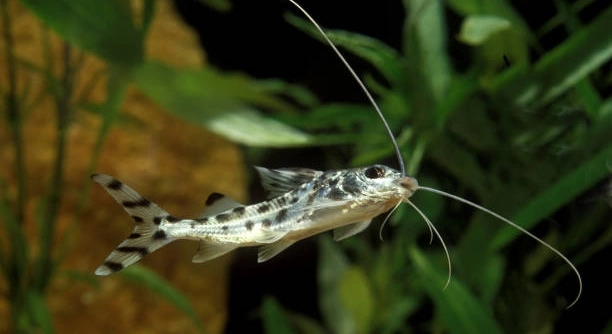
Pictus catfish are popular freshwater fish known for their distinct whiskers, called barbels. These whiskers play a crucial role in their daily life and survival. Understanding their use helps appreciate how these fish navigate their environment.
Pictus catfish use their whiskers primarily for sensing food, detecting changes in water currents, navigating dark environments, communicating with other fish, exploring surfaces, avoiding predators, and maintaining spatial awareness. These barbels are essential sensory organs for their survival.
Learning about these whisker functions reveals the complexity behind a seemingly simple feature. This knowledge adds depth to how we care for and observe pictus catfish in their habitats.
Sensing Food and Finding Meals
Pictus catfish rely heavily on their whiskers to find food in their environment. Since these fish often live in murky or dark waters, their eyesight alone is not enough to locate prey or edible particles. Their barbels are equipped with taste buds and sensory cells, which help them detect food by touch and taste. When a catfish moves along the riverbed or aquarium bottom, it sweeps its whiskers over the surface to find small insects, worms, and other edible material. This ability is especially important because their prey often hides under rocks or buried in sand. The whiskers give them an advantage in catching meals without relying on sight, which might be limited in their natural habitat.
These whiskers make feeding more efficient and reduce the chances of missing a potential meal.
Understanding this feeding behavior helps when setting up their tank, ensuring food reaches areas where the catfish can easily find it.
Detecting Water Currents and Navigating Darkness
The whiskers of pictus catfish are very sensitive to changes in water currents. These barbels can pick up vibrations and movement in the water, helping the fish understand what is happening nearby. In low light or completely dark environments, the catfish uses this information to move safely and avoid obstacles. It’s a way to “feel” the environment rather than see it.
This ability helps the fish maintain balance and direction when swimming. It also alerts them to potential dangers, such as predators or strong currents, giving them time to react appropriately. The whiskers act like an early warning system.
In tanks or natural settings, this sensitivity allows the catfish to explore its surroundings confidently. The whiskers help it avoid bumping into objects, which could cause stress or injury. This skill is vital for their well-being and comfort, especially since pictus catfish are nocturnal and active mostly at night. Their whiskers guide them through darkness, ensuring safe movement. Tank owners should keep the water clear of sharp objects to protect these delicate sensors.
Communicating with Other Fish
Pictus catfish use their whiskers to communicate with others. The barbels help them sense the presence and movements of nearby fish. This communication plays a role in social behaviors and establishing territory.
The whiskers can detect vibrations and signals from other fish, allowing pictus catfish to understand if others are nearby or behaving aggressively. They may also use subtle movements of their barbels to send signals during interactions. This sense of touch helps them maintain social order and avoid unnecessary conflicts in crowded environments.
In aquariums, this means pictus catfish can coexist peacefully when they sense each other clearly. Their whiskers provide a way to negotiate space and communicate nonverbally, which is important for their overall comfort and social health.
Exploring Surfaces and Avoiding Danger
The whiskers help pictus catfish explore surfaces around them. They sweep their barbels over rocks, plants, and tank walls to gather information. This helps them avoid sharp or dangerous objects. The whiskers are highly sensitive and protect the fish from injury.
This exploring behavior allows catfish to find safe resting spots and avoid threats. It also helps them become familiar with their environment, which reduces stress. The sensory feedback from the whiskers guides their movements, preventing accidents or harm.
The protective function of whiskers is important in captivity. Keeping tanks free from harmful objects ensures the catfish’s whiskers stay healthy, which supports their ability to explore confidently and stay safe. This natural behavior highlights how critical these whiskers are beyond just finding food.
Maintaining Spatial Awareness
Pictus catfish use their whiskers to understand their position in the environment. The barbels help them gauge distances and avoid collisions with objects or other fish.
This spatial awareness supports smooth swimming and efficient movement, especially in tight or crowded spaces.
Avoiding Predators
The whiskers act as an early warning system. They detect vibrations and changes in water caused by nearby predators, giving the catfish time to escape.
This sensory ability increases their chances of survival by helping them react quickly to threats.
Touching and Exploring
Whiskers serve as tactile tools. Pictus catfish touch surfaces and objects around them to explore their surroundings safely and learn about textures and shapes.
This sense of touch helps them interact better with their environment.
FAQ
How do pictus catfish use their whiskers to find food?
Pictus catfish rely on their whiskers, or barbels, to locate food in environments where visibility is low. These whiskers are packed with taste buds and sensory receptors that allow them to detect edible particles by touch and taste. When they sweep their whiskers over the tank bottom or riverbed, they can sense hidden prey like worms or insects, even in murky water. This method makes feeding much easier since they don’t depend solely on eyesight.
Can pictus catfish whiskers help them avoid danger?
Yes, their whiskers are very sensitive to vibrations and water movements. This helps them sense predators or sudden changes in their environment. The whiskers pick up subtle signals that warn the catfish to swim away or hide before danger arrives. It’s like having an early alert system, which is especially important because pictus catfish often live in dim or dark waters.
Do pictus catfish use their whiskers to communicate?
While pictus catfish don’t communicate like humans, their whiskers help them detect other fish nearby through vibrations and movement. This awareness helps them maintain social boundaries and avoid conflicts. Sometimes subtle movements of their barbels might send signals during interactions, supporting peaceful coexistence in groups.
What happens if a pictus catfish loses some whiskers?
Losing a few whiskers can temporarily reduce their ability to sense food and navigate. However, whiskers can regrow over time. It’s important to keep their environment safe and free from sharp objects to avoid damage. Providing a stress-free, well-maintained habitat helps whiskers heal and the fish stay healthy.
Why do pictus catfish move their whiskers so much?
Constant whisker movement allows the fish to explore their surroundings and collect sensory information. Moving the barbels helps them feel surfaces, detect food, and sense water currents. It’s a natural behavior that supports their survival by helping them understand what’s around them at all times.
How sensitive are pictus catfish whiskers?
Their whiskers are highly sensitive, containing many nerve endings. This sensitivity lets them detect very small changes in water pressure, vibrations, and textures. Because of this, they can find food hidden in the substrate and avoid obstacles or predators even when vision is limited.
Should I worry if my pictus catfish’s whiskers look damaged?
If the whiskers look frayed or broken, it could be due to rough tank decorations or aggressive tank mates. It’s important to check the aquarium for sharp objects or bullying fish. Keeping the tank environment gentle and safe will help protect their whiskers, which are essential sensory organs.
How do whiskers help pictus catfish at night?
Pictus catfish are nocturnal, meaning they are most active at night when light is low or absent. Their whiskers allow them to “see” by sensing vibrations and textures in the dark. This ability helps them find food and navigate without relying on sight, making whiskers vital for their nighttime activity.
Can whiskers affect the health of pictus catfish?
Yes, healthy whiskers are a sign of good overall health. Damaged or missing whiskers can cause stress and reduce the fish’s ability to find food and avoid danger. Proper tank care, good water quality, and safe decorations all contribute to maintaining the health of their whiskers and the fish itself.
Is it normal for pictus catfish to lose whiskers sometimes?
Whisker loss can happen occasionally due to injury or stress but should not be frequent. If whisker loss is common, it might indicate poor water conditions, tank aggression, or rough handling. Monitoring your fish and maintaining a safe environment can help prevent this issue.
Pictus catfish use their whiskers in many important ways that help them survive and thrive. These whiskers are not just simple decorations; they are vital tools for sensing food, avoiding danger, and exploring their surroundings. Because pictus catfish often live in environments where visibility is limited, their whiskers give them a big advantage. They can detect vibrations, tastes, and textures that help them find meals hidden under rocks or in murky water. This natural ability makes them very efficient at feeding, even when sight is not enough.
Besides finding food, the whiskers also help pictus catfish avoid predators and navigate safely. They are highly sensitive to movement and changes in water currents, allowing the fish to react quickly to any nearby threat. The whiskers also help pictus catfish communicate with each other through sensing vibrations and movement. This communication supports their social behavior and helps them share space without conflict. Whiskers are important for spatial awareness, helping the fish move confidently in their environment without bumping into objects or other fish. This sensitivity is especially helpful at night when these fish are most active and vision is limited.
Taking care of pictus catfish means paying attention to the health of their whiskers. Rough or sharp objects in the tank can damage these delicate sensory tools, affecting the fish’s ability to feed and navigate properly. Whiskers can regrow if damaged, but it is better to prevent injury by providing a safe, clean habitat. Healthy whiskers are a sign of a healthy fish, so keeping the environment stress-free and free of hazards is essential. Understanding how pictus catfish use their whiskers can help aquarium owners provide better care and appreciate these fascinating fish even more.

Hello,
If you enjoy the content that we create, please consider saying a "Thank You!" by leaving a tip.
Every little bit helps us continue crafting quality advice that supports the health, happiness, and well-being of pets around the world, for pets of all shapes, sizes, and species.
We really appreciate the kindness and support that you show us!