
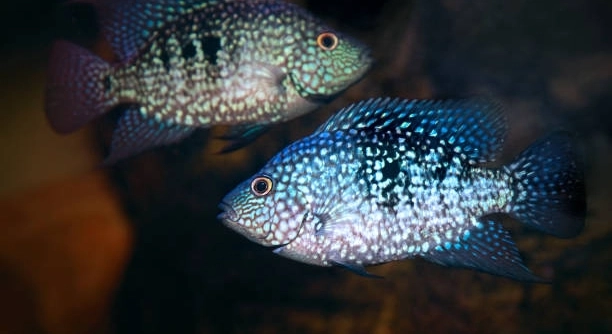
Subtle behavior changes in Jack Dempsey fish often signal upcoming spawning, and recognizing them early helps maintain calm tanks, healthier pairs, and better care decisions for aquarists observing breeding activity at home with confidence daily.
The pre-spawning signs in Jack Dempsey fish consist of intensified coloration, heightened territorial defense, substrate preparation, pair synchronization, reduced feeding variability, and increased site guarding, which collectively indicate reproductive readiness driven by hormonal shifts and stable environmental conditions within aquaria.
These insights support careful planning, improve spawning success, and promote long-term aquarium stability through informed observation and consistent husbandry practices.
Color Changes Become More Noticeable
One of the first signs I observe before Jack Dempsey fish begin spawning is a visible shift in body coloration. Their colors grow deeper, darker, and more defined, especially along the face, gill plates, and fins. This change develops steadily rather than overnight. The color shift acts as visual signaling between paired fish and also establishes presence within the tank. When water quality remains stable, these tones appear stronger and more consistent. Stress, poor lighting, or fluctuating parameters can reduce their intensity quickly. I have learned that watching these color changes closely helps determine when spawning behavior is approaching. This stage reflects internal hormonal activity tied directly to reproduction. Strong coloration often appears alongside increased confidence, slower swimming patterns, and heightened awareness of surroundings. These combined visual cues provide a reliable indicator that spawning conditions are aligning naturally.
Color changes tend to appear before other behaviors become obvious. This makes them a useful early indicator for preparation and observation.
Not all color shifts happen at the same intensity. Some fish show subtle darkening, while others display strong contrast depending on genetics, environment, and overall health.
Territorial Behavior Increases
Territorial behavior becomes more noticeable as spawning approaches. Fish begin guarding specific areas and may chase away tank mates more frequently.
As spawning nears, Jack Dempsey fish show clear territorial focus and space control. They often select a specific area, such as a flat rock or corner, and actively defend it. I notice increased chasing, flaring fins, and firm body posture. These actions are not aggressive without purpose. They serve to protect a potential spawning site and reduce disturbances. Tank layout plays a role here. Clear boundaries and hiding spaces help limit unnecessary stress. This behavior signals readiness to lay eggs and prepare for parental duties. Recognizing this shift early allows for better tank management and reduced conflict.
Substrate Cleaning Becomes Frequent
Before spawning, Jack Dempsey fish begin cleaning surfaces with focused attention. They scrape rocks, glass, or decorations using their mouths. This behavior removes debris and prepares a safe area for eggs. I often notice this repeated several times daily without distraction as spawning readiness continues to increase steadily over time.
Cleaning behavior is deliberate and consistent rather than random movement. Fish will return to the same spot repeatedly, even if other areas appear suitable. This signals site selection, which is critical for successful egg attachment. When I see this behavior paired with color darkening, spawning usually follows soon. Tank conditions should remain stable during this period. Sudden changes in décor or water chemistry can interrupt the process. Providing smooth surfaces and minimizing disturbance supports this natural preparation stage and reduces stress between breeding pairs. I have found patience helps maintain calm behavior throughout this sensitive phase of reproduction overall success.
Substrate cleaning may also coincide with reduced feeding interest. Fish stay near the selected site instead of roaming the tank. I have noticed they become less reactive to external activity and more focused on each other. This narrowed attention reflects internal hormonal shifts. Observing this stage helps prevent misinterpreting behavior as stress. It is a purposeful step tied directly to spawning readiness. Maintaining low lighting and a predictable routine encourages completion of this phase without interruption or unnecessary aggression from tank mates and environmental changes, allowing breeding behaviors to progress naturally and steadily until egg laying begins after this stage.
Pair Bonding Becomes Stronger
Pair bonding strengthens noticeably before spawning begins. The male and female stay close, swim in parallel, and mirror movements. I often see reduced hostility between them compared to other tank mates. This cooperation supports coordinated spawning and later egg protection. Clear pairing behavior indicates compatibility and readiness rather than dominance or random interaction during this phase, making observation helpful for timing tank adjustments and managing aggression levels within shared spaces carefully and consistently over time.
Bonded pairs often isolate themselves from the rest of the aquarium. They may ignore food temporarily and focus on maintaining proximity. I notice synchronized movements increase, especially near the chosen spawning site. This behavior reflects trust and shared purpose. Interference during this stage can disrupt spawning entirely. Providing visual barriers and adequate space helps maintain pair stability. Monitoring without interference is key. When bonding appears stable, spawning usually follows within days under consistent conditions. They become less reactive to external movement, lighting, and routine maintenance, which signals confidence in their environment. I have learned patience matters most here, since rushing changes often delays spawning and increases stress levels across the entire tank system during this sensitive period before eggs are finally laid and guarded closely.
Increased Flare and Fin Display
Jack Dempsey fish often flare their fins more than usual before spawning. The male especially shows extended fins and gill covers to assert dominance and attract the female. I notice these displays happen near the chosen spawning site and are repeated frequently throughout the day.
Flaring is a natural signal of readiness. Both male and female may perform short, synchronized displays, indicating mutual recognition and coordination. Observing these signs helps me confirm that hormonal changes are in full effect, and the pair is preparing for egg laying without unnecessary interference from other fish in the tank.
Appetite Changes
Before spawning, feeding habits often change. Jack Dempsey fish may eat less or become selective about food. I notice they often focus more on the spawning area than on daily feeding routines. Reduced appetite reflects hormonal shifts and preparation for reproductive activity.
Site Guarding Intensifies
Once a spawning site is chosen, the male will guard it rigorously. He patrols the area, chases intruders, and ensures the female remains nearby. I find this behavior becomes more persistent as egg-laying approaches, showing readiness for parental care and protection of future offspring.
Restlessness Increases
Fish may swim more frequently and change positions in the tank. This increased movement is often tied to spawning readiness and preparation of the chosen site. I notice restlessness is most pronounced during early morning and late evening hours.
What are the main signs that Jack Dempsey fish are about to spawn?
The main signs include intensified coloration, increased territorial behavior, frequent substrate cleaning, stronger pair bonding, reduced feeding, flaring fins, and heightened site guarding. I notice these behaviors often appear together, although the timing varies for each fish. Color changes are usually the first visible signal, followed by cleaning and guarding activities. Watching these signs helps me anticipate spawning without disturbing the tank. Recognizing patterns early allows me to make minor adjustments to water parameters, provide calm surroundings, and prepare for potential egg laying.
How can I tell if the pair is compatible for spawning?
A compatible pair stays close together, swims in parallel, and mirrors movements while ignoring other tank mates. I look for reduced aggression between them and repeated visits to the same site. Pair bonding is stronger when both fish show synchronized behavior near the prepared substrate. Compatible pairs usually exhibit coordinated flaring, site cleaning, and guarding without chasing each other. I have learned that interference or rearranging the tank during this stage can disrupt bonding, so it is best to observe quietly. When the pair maintains consistent interaction over several days, spawning is likely to occur soon.
Why do Jack Dempsey fish clean the substrate before spawning?
Substrate cleaning removes debris and prepares a smooth, safe surface for eggs to attach. I notice fish scraping rocks, glass, or decorations multiple times daily, returning to the same spots consistently. This behavior signals selection of a preferred spawning site and is driven by hormonal changes. Cleaning also reduces potential egg loss by minimizing unwanted particles in the egg area. I make sure water conditions remain stable during this stage because sudden changes can interrupt the process. Providing smooth surfaces and keeping the tank calm supports this natural preparation phase and encourages successful reproduction.
What does increased flaring and fin display indicate?
Flaring and extended fins are a sign of reproductive readiness. The male displays fins and gill covers to assert dominance and attract the female. I often see short, synchronized displays from both fish, indicating mutual recognition. These movements are not aggressive but purposeful, showing coordination and preparation for spawning. I have found that observing flaring along with site guarding and cleaning helps me predict when eggs will be laid. This stage reflects internal hormonal changes and is a reliable behavioral indicator of imminent spawning activity.
Why does appetite change before spawning?
Jack Dempsey fish often eat less or become selective during the pre-spawning period. I notice they may focus on the spawning site rather than food, which is normal. Reduced appetite is linked to hormonal shifts and energy being redirected toward reproductive behaviors. It also helps them maintain focus on site preparation and pair coordination. Feeding less is temporary and usually returns after eggs are laid or parental duties begin. I adjust feeding slightly by offering smaller portions and observing their response to avoid stress and maintain health.
How can I support site guarding behavior?
Providing ample space and hiding areas reduces unnecessary stress during site guarding. I leave the tank layout mostly unchanged while the pair patrols their chosen area. Guarding is a protective behavior where the male keeps intruders away and ensures the female stays nearby. Stable water parameters and minimal disturbances encourage consistent site defense. I notice that if other fish are too active, guarding becomes more aggressive, which can stress both the pair and the tank. Observing quietly and maintaining a calm environment supports natural guarding and improves the chances of successful egg laying and hatching.
When should I expect eggs to appear after pre-spawning behaviors begin?
Eggs usually appear within a few days after color intensifies, substrate cleaning is frequent, and the pair exhibits strong bonding. I track behaviors like flaring, guarding, and restlessness to estimate timing. Environmental stability, including clean water, proper temperature, and adequate lighting, also affects egg-laying speed. Patience is important because rushing changes can delay spawning. Observing these behaviors together gives a reliable indication that eggs will be laid soon. I find that when all seven pre-spawning signs are consistently present, egg-laying typically happens within three to five days.
How can I maintain a healthy tank during pre-spawning?
Keeping water quality stable, avoiding sudden changes, and providing calm surroundings is essential. I monitor temperature, pH, and ammonia levels carefully during this period. Minimal interference with decorations or tank mates reduces stress for the pair. Proper nutrition supports their energy without overfeeding, especially during appetite changes. Observing quietly while maintaining routine care allows pre-spawning behaviors to progress naturally. Providing adequate hiding spots and smooth surfaces for egg attachment improves success. I make small adjustments gradually, focusing on stability and safety to ensure the pair remains healthy and ready for reproduction without disruption.
What should I do if one fish becomes aggressive during pre-spawning?
Some aggression is normal, especially around territorial defense. I watch for excessive chasing or fin damage, which may indicate stress or incompatibility. If aggression becomes severe, separating the pair temporarily or providing more hiding spaces can prevent injury. I adjust tank layout carefully, keeping stress minimal. Gentle observation helps me decide whether intervention is necessary. Often, aggression decreases once the pair stabilizes their territory and bond. Understanding natural behavior patterns allows me to differentiate normal pre-spawning defense from harmful actions that require attention, maintaining both fish’s health and reducing risks of injury before egg-laying occurs.
How long does the pre-spawning phase usually last?
The pre-spawning phase can last several days to a couple of weeks, depending on environmental conditions and the pair’s readiness. I monitor color changes, cleaning, bonding, and guarding consistently to track progression. Stable water, calm surroundings, and proper nutrition influence duration. Patience is key, as rushing adjustments or disturbing the pair may extend the phase. I have observed that pairs completing all pre-spawning behaviors without interference usually lay eggs sooner and more successfully. Recognizing the timeline and supporting natural behaviors ensures that the pair is ready for reproduction while minimizing stress and improving overall spawning outcomes.
Observing Jack Dempsey fish before they spawn is an interesting and sometimes surprising process. The pre-spawning signs are subtle at first but become more noticeable over time. Changes in color, territorial behavior, and frequent substrate cleaning are the most visible indicators that the fish are preparing to reproduce. I have found that paying close attention to these behaviors helps create a calm environment that supports natural spawning. It is important to remember that each pair behaves slightly differently, so what happens in one tank may not happen exactly the same way in another. Patience and careful observation are key to understanding these patterns. Even small adjustments in lighting, tank layout, or feeding routines can affect behavior, so keeping things stable often produces the best results. Watching these fish interact in their pre-spawning phase can be a learning experience, showing how instinct, environment, and natural cycles work together to trigger reproduction.
Pair bonding and coordination between male and female Jack Dempsey fish are particularly interesting to observe. The synchronized swimming, mirrored movements, and mutual site guarding all demonstrate how these fish prepare for egg-laying and parental care. I notice that pairs that maintain close proximity and consistent behavior are more likely to spawn successfully, while those that show excessive aggression or avoidance may need intervention to reduce stress. Creating an environment that allows the pair to bond without disturbance is essential. Providing smooth surfaces for egg attachment, keeping water conditions stable, and reducing unnecessary interaction from other tank mates all contribute to a higher chance of successful spawning. Feeding should be adjusted carefully, as appetite often changes before spawning, and overfeeding can disrupt natural behaviors. Watching these stages closely can be rewarding because it offers insight into fish instincts and helps aquarists plan for a smooth spawning process while keeping the tank environment safe and stable for all inhabitants.
Understanding and supporting pre-spawning behavior in Jack Dempsey fish is a combination of observation, patience, and small adjustments. I have found that these fish respond well to consistent care and calm surroundings, allowing them to express natural behaviors fully. The seven main pre-spawning signs—color changes, territorial defense, substrate cleaning, pair bonding, appetite changes, flaring, and site guarding—provide reliable cues to anticipate spawning. By noticing these behaviors, aquarists can prepare tanks, maintain proper water conditions, and reduce stress to improve the likelihood of successful reproduction. Every tank and every pair is unique, so flexibility and careful monitoring are essential. Supporting natural instincts while minimizing disturbances not only increases spawning success but also helps maintain the overall health and well-being of the fish. Taking the time to understand these patterns makes breeding Jack Dempsey fish a more predictable and satisfying experience while giving the fish the best conditions to thrive.

Hello,
If you enjoy the content that we create, please consider saying a "Thank You!" by leaving a tip.
Every little bit helps us continue crafting quality advice that supports the health, happiness, and well-being of pets around the world, for pets of all shapes, sizes, and species.
We really appreciate the kindness and support that you show us!