
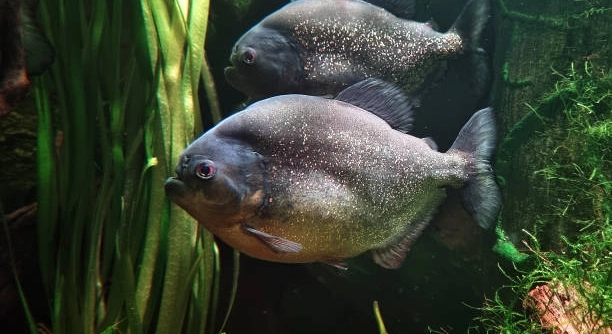
Some fish prefer to swim in groups, but not all piranhas follow this rule. These seven piranhas showed unusual behavior by choosing to stay apart instead of moving together. Their actions caught the attention of researchers and fish lovers alike.
Seven individual piranhas refused to swim together due to differences in behavior, territorial instincts, and social dynamics. These factors influenced their separation, highlighting how not all members of a species conform to group living patterns, even in typically social fish.
Understanding why these piranhas behaved differently reveals interesting insights into their nature and environment. Exploring this can help us appreciate the diversity of animal behavior beyond common expectations.
Why Some Piranhas Avoid the Group
Not all piranhas feel comfortable swimming in schools. Some prefer to be alone because of their natural instincts. These fish are often very territorial, especially when food or space is limited. When several piranhas are placed together, dominant individuals might chase others away to protect their area. This leads to smaller or less aggressive piranhas separating themselves to avoid conflict. Differences in age and size also play a role. Younger piranhas may avoid larger ones to stay safe. Sometimes, piranhas that don’t swim together have unique personalities that make them less social. These behaviors help maintain balance in their environment. Understanding these factors explains why a few piranhas refused to swim with the group and chose solitude instead.
The need for space and avoiding fights are strong reasons some piranhas don’t join schools. They tend to keep apart to stay safe and comfortable.
Recognizing these behaviors gives insight into how animals manage their social lives. It also reminds us that not every member of a species behaves the same way, even if they share a habitat.
Individual Behavior in Piranhas
Some piranhas display unique behaviors that make them stand out. They may not follow the typical social patterns seen in their species. This can happen due to genetic differences or environmental factors. When kept in captivity, these differences become more noticeable because space is limited, and interactions increase. Individual fish might prefer to explore or hide rather than swim with others. Stress or past experiences can also affect how a piranha behaves around others. These fish often show more independence and may have distinct ways of hunting or feeding. Observing these behaviors helps researchers understand how personality influences animal interactions and survival. It’s clear that individual piranhas can have very different ways of coping with their surroundings, making their behavior less predictable than expected.
Environmental Factors Affecting Group Swimming
Water conditions can impact whether piranhas swim together or not. Changes in temperature, oxygen levels, or water clarity often make fish act differently. When the environment feels unsafe or uncomfortable, piranhas may spread out.
In some habitats, low oxygen levels force piranhas to move separately to find better spots. Murky water can also reduce visibility, making it harder for them to stay close as a group. When food is scarce, competition rises, and fish may avoid each other to reduce fights. Human activity, like pollution or habitat changes, can disturb normal schooling behavior. These factors highlight how sensitive piranhas are to their surroundings and how it affects their social habits.
The habitat’s condition plays a big role in how piranhas behave. Healthy, stable environments encourage group swimming, but stressful conditions push fish to isolate. This shows how nature influences even basic social behaviors in fish.
The Role of Dominance in Piranha Groups
Dominance affects how piranhas form or avoid groups. Stronger, more aggressive piranhas usually control the best spaces and food sources. This can push weaker individuals away, causing separation.
Dominant piranhas often patrol and guard their territory, preventing others from joining their group. Subordinate fish avoid confrontations by keeping distance or living alone. This hierarchy helps reduce constant fights and injury among piranhas. It also allows dominant fish to secure resources for themselves and their mates. When several dominant individuals are present, the group can break apart as each defends its own area. This competition impacts how and when piranhas swim together. Recognizing dominance’s role helps explain why some piranhas choose to swim apart instead of in groups.
Social Structure Variations
Piranha groups are not always uniform in behavior. Social structure can vary widely between different schools. Some groups are more cooperative, while others have loose or weak social bonds.
Variations depend on factors like population density and individual temperaments. These differences influence how tightly piranhas stick together or if they separate.
Feeding Habits and Group Swimming
Feeding style impacts whether piranhas swim in groups or alone. Some piranhas hunt cooperatively, while others prefer to feed solo. When food is plentiful, groups form easily, but competition for limited food causes separation. Individual feeding needs shape their social behavior and swimming patterns.
Stress and Separation
Stress influences piranhas’ choices to swim apart. When stressed by predators or environmental changes, fish may isolate to reduce risk. This behavior helps them feel safer in uncertain conditions.
Why do some piranhas refuse to swim together?
Some piranhas avoid swimming in groups because of their natural instincts. Territorial behavior is a big factor—dominant fish protect their space and push others away. Differences in size, age, and personality also matter. Some piranhas simply prefer solitude to avoid fights or stress. Environmental factors like water quality and food availability can encourage them to separate as well.
Are piranhas always aggressive towards each other?
Not always. While piranhas have a reputation for aggression, their behavior varies widely. Aggression often depends on territory, hunger, and social hierarchy. In stable environments with enough space and food, piranhas can be relatively calm. Aggression usually increases when resources are scarce or when fish feel threatened.
Can piranhas live well alone?
Yes, some piranhas can thrive alone. Those that prefer solitude tend to avoid conflict and find their own food without competition. However, many piranhas are naturally social and do better in groups if the environment supports it. Solitary piranhas might show different behaviors but can still be healthy.
How does water quality affect piranha social behavior?
Poor water quality, like low oxygen or high pollution, stresses piranhas and changes their behavior. When conditions are bad, piranhas often spread out to find better areas. Clear, clean water encourages schooling since it’s easier to see and interact with other fish.
Does feeding method influence whether piranhas swim together?
Yes, feeding habits impact group behavior. Piranhas that hunt cooperatively tend to swim in schools to corner prey. When food is scarce or competition is high, fish may hunt alone to avoid fights. Feeding style is closely linked to how much they stick together.
What role does dominance play in piranha groups?
Dominance creates social hierarchies where the strongest fish control territory and food. Dominant piranhas keep others at a distance, leading some to separate. This hierarchy reduces constant fighting but also means some fish live alone to avoid conflict.
Can stress cause piranhas to separate?
Definitely. Stress from predators, poor environment, or overcrowding makes piranhas more likely to isolate. Swimming alone can be a defense to reduce attention or risk. Stress also affects their health and behavior, sometimes making them less social.
Are there differences between wild and captive piranha behavior?
Yes, captivity often changes piranha behavior. In smaller tanks, space limits natural schooling and increases aggression or separation. Wild piranhas have larger areas to swim freely, which supports more natural social patterns. Captive environments need careful management to reduce stress and promote group harmony.
Do all piranhas behave the same way?
No, individual differences matter a lot. Each piranha has its own personality, size, and experience that shape how it interacts. Some are more social, others more solitary. These differences mean behavior can vary widely even within the same species.
How can understanding piranha social behavior help in care?
Knowing why piranhas swim together or apart helps in creating better living conditions. It allows owners or researchers to manage space, food, and environment to reduce stress and aggression. Understanding their natural tendencies leads to healthier fish and less conflict.
The behavior of piranhas is more complex than many people think. Not all piranhas swim together or act the same way. Some prefer to be alone because of their natural instincts, environmental conditions, or social structure. These differences help them survive in the wild, where competition for food and space can be tough. Understanding that not all piranhas follow the same patterns gives us a clearer picture of how animals adapt to their surroundings. It also reminds us that animal behavior is varied and can change depending on many factors.
When we look at piranhas that refuse to swim together, we see how individual needs and situations shape their actions. Some fish avoid others to reduce fights or stress, while others separate due to changes in water quality or the presence of strong dominant individuals. This shows us that even animals known for being aggressive have ways to avoid conflict. Their choice to separate can be a way to protect themselves and find comfort. Observing these behaviors helps us understand the balance that exists in nature and how animals adjust to challenges.
In caring for or studying piranhas, it’s important to remember these behaviors. Creating environments that meet their needs can reduce stress and improve their well-being. Whether in the wild or captivity, factors like space, water quality, and social dynamics affect how piranhas act. Recognizing that not all piranhas are the same helps us be more thoughtful about how we interact with and care for these fish. Overall, the story of piranhas refusing to swim together is a good example of how animal behavior is complex and shaped by many different influences.

Hello,
If you enjoy the content that we create, please consider saying a "Thank You!" by leaving a tip.
Every little bit helps us continue crafting quality advice that supports the health, happiness, and well-being of pets around the world, for pets of all shapes, sizes, and species.
We really appreciate the kindness and support that you show us!