
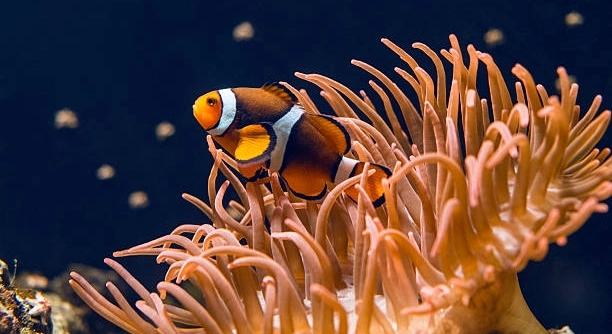
Have you ever been fascinated by the colorful world of clownfish but felt unsure about what behaviors are actually true?
Many common beliefs about clownfish behavior are based on outdated information or misinterpretations. Scientific research shows that these fish exhibit complex social structures, symbiotic relationships, and adaptive behaviors that are often misunderstood or oversimplified.
From gender roles to territorial habits, understanding what’s real and what’s myth can help you better appreciate these fascinating reef dwellers.
Clownfish Always Live in Pairs
Clownfish are often seen in pairs, but that doesn’t mean they always live this way. In their natural habitat, clownfish live in structured social groups consisting of a dominant female, a breeding male, and several non-breeding males. This structure helps reduce conflict and ensures the group’s stability. The female is always the largest, while the males are smaller and submissive. If the female dies, the dominant male changes sex and becomes the new female. Then, the next male in the hierarchy moves up to become the breeding partner. This behavior supports reproduction and keeps the group functioning smoothly.
Some clownfish may be seen in pairs simply because the rest of the group stays hidden.
Understanding this behavior helps explain how clownfish manage their space and survival. It’s not about romantic partnerships but about structure, dominance, and reproductive success in a tight environment.
Clownfish Are Born Male
All clownfish are born male, and some will eventually become female. This is called protandry. The largest male in a group transforms into a female if the current female is lost.
This sex-changing ability is not random—it’s tied to a strict hierarchy. The top fish becomes female to ensure breeding continues without disruption. Clownfish do not switch sexes back and forth; once a male becomes female, the change is permanent. Scientists believe this system evolved to support population stability in tight reef spaces where mates are limited. The change is controlled by hormonal signals triggered by shifts in group structure. The new female often doubles in size, while the breeding male remains smaller. This balance allows clownfish to adapt quickly to loss and maintain their reproductive cycle. Observing their behavior closely reveals just how organized and adaptive these fish really are.
Clownfish Are Aggressive by Nature
Clownfish may look harmless, but they can be territorial. Their aggression usually comes from defending their anemone home and maintaining their rank in the social group, not from naturally hostile behavior.
In a clownfish group, each fish knows its place. The dominant female keeps control, followed by the breeding male, then the smaller, non-breeding males. If a lower-ranking clownfish acts out of line, the dominant ones may chase or nip to restore order. This helps keep the group stable and avoids chaos. Most of the time, their aggressive displays are short and controlled, used as reminders rather than full-on fights. Outside threats like other fish entering their territory can also trigger defensive behavior. In aquariums, this can be mistaken for constant aggression, but it’s often just a reaction to space constraints or unfamiliar tank mates.
Understanding their social structure helps explain these behaviors. They’re not aggressive for no reason—they’re just highly structured and protective.
Clownfish Can Survive Without Sea Anemones
Clownfish can live without sea anemones, but their survival becomes harder. In the wild, the anemone provides protection, shelter, and food scraps. Without this relationship, clownfish are more vulnerable to predators.
In captivity, clownfish don’t need an anemone to survive. Many hobbyists successfully keep clownfish in tanks without them. These fish adapt well to stable tank conditions and artificial hiding spots. However, without an anemone, they may behave differently—less hiding, more open swimming, and sometimes stress during changes in lighting or tank mates. In the wild, the symbiosis offers more than shelter; clownfish defend the anemone from predators, while the anemone’s stinging tentacles protect the clownfish. This relationship boosts survival for both species. In aquariums, this natural pairing is often replaced with artificial alternatives or anemone-like corals. While not essential for health in captivity, an anemone does offer a more natural and secure environment, especially in stress-prone settings.
Clownfish Don’t Leave Their Anemone
Clownfish do leave their anemone from time to time. They swim short distances to feed, interact, or explore nearby areas.
These brief trips are normal and usually happen within a small, safe zone. They rarely stray far, keeping their anemone within view for quick return.
All Clownfish Behave the Same
Clownfish behavior can vary depending on the species and environment. Some are more territorial, while others are more social. The species’ size, habitat, and group structure all influence how they act. For example, Amphiprion percula tends to be calmer than Amphiprion clarkii, which can be more assertive and independent. Tank conditions, tank mates, and available space also impact how they interact. Even within the same species, individuals may behave differently. Their experiences, environment, and position in the social group shape their actions. Understanding these differences helps avoid confusion and sets realistic expectations for both wild observation and aquarium care.
Clownfish Are Active at Night
Clownfish are not active at night. They sleep by settling into their anemone and remain mostly still until morning.
FAQ
Do clownfish really change gender?
Yes, clownfish are protandrous hermaphrodites, which means they are all born male. In a group, the largest male becomes female if the current female dies. This change is permanent. The next male in the hierarchy then becomes the breeding male. This system helps the group maintain reproduction without needing to find a new mate. It’s a built-in adaptation that supports survival in small, isolated reef environments where finding another clownfish can be difficult.
Can clownfish live without an anemone in a home aquarium?
Yes, clownfish can live just fine without an anemone in captivity. While they naturally form a bond with anemones in the wild for protection, they adapt well to tank life without them. Many clownfish live happily in aquariums with rocks, artificial hiding spots, or even soft corals that offer shelter. They may not display the same behaviors without an anemone, but their health and survival won’t be affected if the tank is properly maintained and stress is minimized.
Why do clownfish stay close to their anemone?
Clownfish use anemones for protection. The stinging tentacles of the anemone keep predators away, while the clownfish’s mucus coating prevents them from being stung. This mutual relationship helps both species survive. The clownfish also feed on scraps and parasites from the anemone, and in return, they defend it from threats. That’s why they rarely leave it for long.
Are clownfish aggressive to each other?
Yes, clownfish can be aggressive, especially when establishing or maintaining their social rank. The female is the most dominant and may chase or nip at the males to reinforce her status. Males may also show aggression to each other if one tries to move up in the hierarchy too early. This behavior helps maintain order in the group. It’s normal and usually doesn’t lead to injury unless the tank is too small or overcrowded.
How do clownfish pick their anemone?
Clownfish choose their anemone based on species compatibility and availability. Not all anemones host clownfish, and not all clownfish species will accept every type of anemone. In the wild, they usually stay loyal to one host. In captivity, if given options, clownfish may try a few before settling. Some clownfish may even adopt soft corals or artificial structures if a suitable anemone isn’t present.
Do clownfish sleep?
Yes, clownfish sleep at night. They usually find a safe spot within the anemone and remain mostly still. Their breathing slows, and they stay close to the tentacles for protection. In tanks, they may even wedge themselves into corners or soft structures to feel secure. Nighttime is when they rest and recover.
Why do some clownfish look different in color or shape?
There are many species of clownfish, and each has its own pattern, size, and coloring. Some have thick white stripes, while others may be orange with thin bands or darker shades. Selective breeding in captivity can also result in designer clownfish with unique colors or markings. Environmental factors like lighting, diet, and stress can also slightly influence how vibrant their colors appear.
Can different species of clownfish live together?
It’s possible, but not always easy. Mixing species can lead to aggression, especially in smaller tanks. Some species are more dominant and territorial than others. If mixing species, the tank should be large enough to provide space and hiding spots. Introducing them at the same time may help reduce conflicts, but compatibility varies case by case.
Do clownfish need a lot of space?
Clownfish don’t require a huge tank, but they do need enough room to establish territory and avoid stress. A 20-gallon tank is usually the minimum recommended for a pair. Overcrowding or poor tank design can lead to territorial fights, stress, and health issues. Proper space and structure make a big difference in their behavior and wellbeing.
How long do clownfish live?
Clownfish can live up to 6–10 years in captivity with proper care. In the wild, their lifespan can be shorter due to predators and environmental risks. Clean water, good nutrition, and low-stress conditions all help them live longer and stay healthy. Some well-cared-for clownfish in home tanks have even lived over a decade.
Final Thoughts
Clownfish are often misunderstood because of how they are shown in movies and aquarium displays. Many people assume they always live in pairs, never leave their anemones, or act the same way no matter the situation. In reality, clownfish have a complex and flexible social structure. They live in groups with one female, one breeding male, and several smaller males. This setup helps them stay organized and ensures their group survives. If the female dies, the top male becomes the new female, and the others move up in rank. This natural system shows how clownfish can quickly adapt to changes around them.
Not all clownfish behave in the same way. There are different species, and each one has its own personality and patterns. Some are calmer, while others are more territorial. Their behavior also depends on their environment, whether they live in the wild or in a tank. Even the presence or absence of a sea anemone can affect how they act. In tanks, clownfish don’t need an anemone to survive, but it can help them feel more secure. It’s also important to give them enough space, hiding spots, and a stable environment. These small things can help reduce stress and support healthy behavior.
Knowing the truth about clownfish behavior helps you understand what they really need. They are not just colorful fish that sit in one place. They protect their home, follow a social order, and respond to the world around them. Learning about their natural habits makes it easier to care for them and enjoy their presence, whether in the ocean or in your home tank. When we move past the myths, we see how thoughtful and adaptable these fish truly are. Taking the time to understand their behavior leads to better care and a deeper appreciation for how they live.

Hello,
If you enjoy the content that we create, please consider saying a "Thank You!" by leaving a tip.
Every little bit helps us continue crafting quality advice that supports the health, happiness, and well-being of pets around the world, for pets of all shapes, sizes, and species.
We really appreciate the kindness and support that you show us!