
Piranhas are well-known fish with a fierce reputation, but not many people know about their lesser-known relatives. These related species share some features with piranhas but have their own unique traits. Learning about them can be interesting and eye-opening.
Several species related to piranhas exist, each with distinct behaviors and habitats. These fish often share physical similarities, such as sharp teeth and body shape, but differ in diet, size, and environmental preferences. Understanding these species helps broaden knowledge of freshwater ecosystems.
Exploring these lesser-known fish reveals surprising diversity beyond the common image of piranhas, offering new insights into aquatic life.
Pacu
The Pacu is often mistaken for a piranha because of its similar body shape and teeth. However, unlike piranhas, Pacus mostly eat plants and fruits rather than meat. They live in the same freshwater rivers of South America but tend to be larger and less aggressive. Their teeth are flatter, designed for crushing nuts and seeds instead of tearing flesh. Pacus are known for their peaceful nature, which makes them quite different from the fierce reputation of piranhas. People sometimes keep Pacus in home aquariums, but they can grow very large, so they need plenty of space. Despite their calm behavior, Pacus play an important role in their ecosystems by helping spread seeds through their droppings. This contributes to the health of river forests. Because of their plant-based diet, Pacus are less dangerous to other fish and humans.
Pacu’s diet and calm behavior set them apart clearly from piranhas. Their role in nature is quite beneficial and peaceful.
Learning about Pacus helps understand the diversity among fish that look similar but behave differently. Their gentle nature and unique diet reveal the balance in aquatic habitats. They remind us that appearances can be misleading and that not every fish with sharp teeth is a threat.
Red-Bellied Piranha
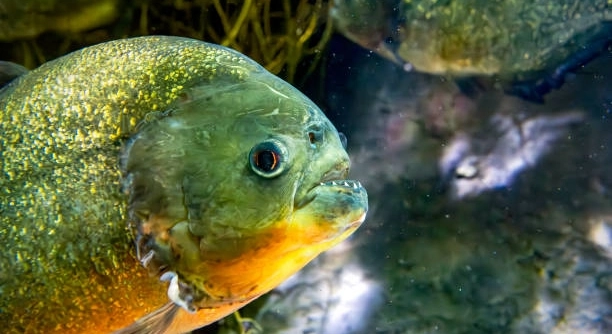
Red-bellied piranhas are the most famous among piranha species. Known for their bright red bellies and sharp teeth, they often get attention for their aggressive feeding behavior. These fish live in rivers across South America and can be found in both calm waters and fast-moving streams. They usually hunt in groups and have a strong bite. However, red-bellied piranhas mostly scavenge for food or hunt small fish rather than attacking large animals. They use their teeth to quickly tear apart prey or leftovers. Their sharp teeth continuously grow and are replaced, which keeps them effective hunters. Although their reputation as dangerous is common, attacks on humans are rare and usually happen when the fish feel threatened or are very hungry.
Despite their fearsome image, red-bellied piranhas are mostly scavengers and not constant predators.
Understanding the behavior of red-bellied piranhas highlights how their survival depends on group cooperation and opportunistic feeding. Their sharp teeth and powerful jaws support their scavenging habits. This species shows that aggression in nature often serves practical needs, like protecting territory or competing for food, rather than constant hunting. Recognizing this helps balance the view of piranhas as both fascinating and misunderstood creatures.
Black Piranha
Black piranhas are smaller than the red-bellied ones but are just as fierce. They live in South American rivers and have sharp, strong teeth. Their dark color helps them blend into murky waters.
Black piranhas are known for their strong bite relative to their size. They often hunt alone or in small groups, feeding mostly on fish and insects. Their teeth are designed to grip and tear, making them effective predators in their environment. Despite their size, black piranhas are quick and aggressive when hunting. They prefer darker, slower-moving waters where they can ambush prey. Their stealth and speed help them survive alongside other larger fish species.
The black piranha’s behavior is quite different from other relatives. They tend to be more solitary and less social, which changes how they interact within their ecosystem. This species reminds us that not all piranhas behave in the same way, and their hunting styles can vary widely depending on their environment and size.
Wimple Piranha
Wimple piranhas have a distinct, rounded body shape and are less aggressive than some of their relatives. They are mostly found in slow-moving rivers and floodplains. Their diet includes insects, small fish, and plants.
Wimple piranhas are notable for their adaptability. They can survive in varying water conditions, including areas with low oxygen. Their teeth are sharp but not as large or powerful as other piranha species, reflecting their more varied diet. These fish often feed on fallen fruits and seeds, contributing to the river ecosystem’s balance. They tend to live in small groups but are less territorial compared to other piranhas. This makes them less likely to display aggressive behavior toward humans or other fish.
The wimple piranha offers an example of how species related to piranhas can differ significantly in behavior and habitat. Their ability to thrive in different conditions shows the range of survival strategies among these fish. This adaptability helps maintain biodiversity and supports the health of freshwater environments.
Redhook Silver Dollar
Redhook silver dollars are peaceful fish with a round, flat body and silver scales. They have a bright red patch near their tail, which gives them their name. These fish live in South American rivers and prefer calm waters.
Unlike piranhas, redhook silver dollars are mostly herbivores. They feed on plants and algae, avoiding the aggressive hunting behavior common to many piranha relatives. Their peaceful nature makes them popular in aquariums, where they often swim in groups.
Sharptooth Characin
Sharptooth characins have sharp teeth similar to piranhas but are generally smaller and less aggressive. They feed on small fish and insects, using quick strikes to catch prey. This species is found in a variety of freshwater habitats across South America, adapting well to different environments.
Piraya Piranha
Piraya piranhas are large and powerful fish with a strong bite. They are aggressive hunters, feeding mostly on fish and other small animals. These piranhas live in fast-moving rivers and have sharp, pointed teeth designed for tearing flesh. Their behavior is similar to the more well-known red-bellied piranha.
FAQ
What makes these lesser-known species related to piranhas?
These species share a close evolutionary relationship with piranhas, often belonging to the same family, Characidae. They have similar body shapes and some share sharp teeth, but their diets and behaviors can differ widely. Their common traits include living in freshwater environments in South America and having similar physical features, like a laterally compressed body and a strong jaw structure.
Are all species related to piranhas dangerous?
No, many species related to piranhas are not dangerous to humans. While piranhas are famous for their sharp teeth and occasional aggressive behavior, some relatives like the Pacu or redhook silver dollar are mostly peaceful and feed on plants or small insects. Aggression levels vary depending on species, environment, and food availability.
Do these species share the same habitat?
Most of these species live in freshwater rivers and floodplains across South America. However, their exact habitats can differ — some prefer fast-moving rivers, while others thrive in slower, murky waters or floodplains. For example, the wimple piranha is adaptable to low-oxygen areas, while the red-bellied piranha prefers clearer, faster waters.
Can these fish be kept in home aquariums?
Some species related to piranhas can be kept in aquariums, but they require specific care. Pacus and redhook silver dollars are popular aquarium fish, but they grow large and need spacious tanks. Their diets and water conditions must be closely managed. Aggressive species, like the piraya piranha, are generally not recommended for home tanks due to their behavior and size.
What do these fish eat?
Diet varies widely among species. Some, like the Pacu, are mainly herbivores, feeding on nuts, seeds, and plants. Others, like red-bellied and black piranhas, are carnivores or scavengers, eating smaller fish and insects. Wimple piranhas have a mixed diet, consuming plants, insects, and small fish. Understanding their diet helps in caring for them in captivity and appreciating their role in nature.
How do their teeth differ from true piranhas?
True piranhas have sharp, triangular teeth designed for tearing flesh quickly. Some related species, like Pacus, have flatter teeth better suited for crushing plants and nuts. Others, like sharptooth characins, have sharp teeth but are smaller and less powerful. These differences reflect each species’ diet and feeding habits.
Are attacks on humans common?
Attacks on humans are rare for most species, including the well-known red-bellied piranha. Most fish avoid humans unless provoked or very hungry. Incidents tend to happen in areas where people enter water during dry seasons when food is scarce. The aggressive reputation of piranhas is often exaggerated.
How do these species contribute to their ecosystems?
Each species plays a role in maintaining the balance of their aquatic habitats. Herbivorous species like Pacus help spread seeds and keep plant growth in check. Predatory species control populations of smaller fish and insects. Together, they support biodiversity and the health of freshwater ecosystems.
Why is it important to learn about these lesser-known species?
Understanding these species broadens our view beyond the common image of piranhas as just fierce predators. It highlights the diversity of behaviors, diets, and roles within their ecosystems. This knowledge helps promote conservation efforts and appreciation for aquatic life that is often overlooked.
How do environmental changes affect these fish?
Changes like pollution, deforestation, and dam construction can harm their habitats, affecting water quality and availability. Some species are more adaptable, while others are sensitive and may decline in number. Protecting freshwater habitats is key to preserving these fish and their ecosystems.
The fish related to piranhas are much more varied than many people realize. While piranhas often get attention for their sharp teeth and aggressive behavior, their relatives show a wider range of habits and lifestyles. Some, like the Pacu, are peaceful and mostly eat plants. Others, such as the black piranha and piraya piranha, are more aggressive hunters. This variety shows that not all fish that look similar behave the same way. Understanding these differences helps us see how nature balances different species in the same environment.
Learning about these lesser-known species also helps us appreciate the important roles they play in their ecosystems. For example, herbivorous fish like the Pacu help spread seeds, which supports plant growth along riverbanks. Carnivorous relatives keep populations of smaller fish and insects in check, which helps maintain a healthy balance in the water. Each species has its place, and together they form a complex and interconnected system. This balance can be disrupted by human activity, so knowing more about these fish can help guide better conservation and protection efforts.
Finally, it is important to remember that appearances can be misleading. Just because a fish has sharp teeth or looks like a piranha doesn’t mean it is dangerous or aggressive. Many related species have peaceful behaviors and interesting habits that make them unique. Exploring these differences adds to our understanding of freshwater life and encourages respect for the diversity found in rivers and lakes. This knowledge is useful whether you are interested in fish care, wildlife, or simply learning more about the natural world.

Hello,
If you enjoy the content that we create, please consider saying a "Thank You!" by leaving a tip.
Every little bit helps us continue crafting quality advice that supports the health, happiness, and well-being of pets around the world, for pets of all shapes, sizes, and species.
We really appreciate the kindness and support that you show us!